What is an Altcoin? 10 Most Important Altcoins to Know in 2025: A Beginner's Guide
Understanding Altcoins: What They Are and How They Differ from Bitcoin
Imagine a world where Bitcoin is just the beginning of digital currencies. That's exactly what the reality of the cryptocurrency world looks like. Although Bitcoin remains the pioneer and the largest cryptocurrency, since its creation in 2009, thousands of alternative digital currencies have emerged. These alternatives are collectively known as "altcoins."
The term "altcoin" is a combination of "alternative" and "coin" and refers to any cryptocurrency that is not Bitcoin. Just as there are different types of vehicles serving different purposes, altcoins were created to solve different problems or offer features that Bitcoin does not provide.
The first altcoin was Litecoin, which appeared in 2011 and aimed to process transactions faster than Bitcoin. Today, the cryptocurrency ecosystem encompasses over 16,500 digital currencies, each with its unique features and applications. While Bitcoin currently accounts for approximately half of the total cryptocurrency market value, altcoins represent the other half, demonstrating their growing importance in the digital economy.
To properly understand altcoins, we must first clarify several basic concepts from the world of cryptocurrencies:
Coin is a cryptocurrency that operates on its own dedicated blockchain. Bitcoin operates on the Bitcoin blockchain, Ethereum on the Ethereum blockchain, and so on. These are the native coins of their respective networks.
Altcoin is any cryptocurrency that is not Bitcoin. However, some argue that altcoins are all cryptocurrencies except Bitcoin and Ethereum, since these two are the largest and most established.
Token, on the other hand, is a cryptocurrency that operates on another cryptocurrency's blockchain rather than its own. For example, many tokens operate on the Ethereum network, utilizing its infrastructure and serving various purposes.
Altcoins generally fall into two categories:
- Those based on similar code to Bitcoin but modified with new features
- Those built from scratch with completely different code and operating mechanisms
Most altcoins attempt to address certain Bitcoin limitations, such as transaction speed, energy consumption, privacy features, or universal applications. Each altcoin has its unique value proposition that distinguishes it from Bitcoin and other cryptocurrencies.
Types of Altcoins: From Stablecoins to Memecoins
The world of altcoins is incredibly diverse, with individual categories serving different purposes within the cryptocurrency ecosystem.
Stablecoins
Stablecoins are designed to minimize price volatility by pegging their value to assets with stable value, such as the US dollar or gold. Examples include USDC, USDT (Tether), and DAI. Unlike most cryptocurrencies, stablecoins aim to maintain a constant value, making them useful for everyday transactions and as a "safe haven" during periods of market volatility.
Utility Tokens
Utility tokens provide access to services within a specific blockchain network. They can be compared to digital keys that unlock features or services of a given platform. XRP, designed for cross-border transactions, and MATIC, which reduces transaction costs on the Polygon network, are examples of utility tokens.
Payment Tokens
These altcoins were designed specifically as a medium of value exchange. They focus on being an efficient payment method, offering fast transactions and low fees.
Governance Tokens
Governance tokens give holders voting rights on decisions concerning a blockchain project. Owning such tokens allows voting on protocol changes—similar to how owning stocks in a company grants voting rights. An example is Maker (MKR), which enables voting on the functioning of the MakerDAO platform.
Security Tokens
Security tokens represent ownership of external assets, similar to traditional securities. They can reflect shares in a company, real estate, or other investments. Such tokens are typically subject to securities regulations.
Memecoins
Memecoins started as a joke or social commentary but gained popularity through community support. Dogecoin (DOGE) and Shiba Inu (SHIB) are well-known examples that evolved from internet memes and gained a wide following. They often have a massive or unlimited supply, resulting in a low unit price.
Play-to-Earn Tokens
These tokens power blockchain-based games where players can earn cryptocurrency for in-game activity. Axie Infinity is a well-known example, where players breed, train, and battle fantasy creatures, earning tokens that can be exchanged for other currencies.
10 Most Important Altcoins in 2025: Market Leaders and Their Applications
Although thousands of altcoins exist, only a few have emerged as market leaders in terms of utility, adoption, and market capitalization. Here are the most important altcoins based on recent market data:
1. Ethereum (ETH)
Ethereum is the largest altcoin with a market capitalization of approximately 440 billion dollars. Unlike Bitcoin, which serves mainly as digital money, Ethereum introduced programmable "smart contracts" that execute automatically when specific conditions are met. This has enabled thousands of applications on its platform, from financial services to games and digital art markets.
2. XRP
Created by Ripple Labs, XRP aims to enable fast and inexpensive international transfers. It is primarily directed at financial institutions seeking to streamline cross-border transactions, offering an alternative to traditional systems such as SWIFT.
3. Solana (SOL)
Solana gained popularity due to very fast transactions and low fees. Its blockchain processes thousands of transactions per second, making it attractive for applications requiring high throughput, such as trading platforms and games.
4. Cardano (ADA)
Cardano is based on a scientific and research-driven approach, with strong emphasis on security and sustainable development. It uses a proof-of-stake consensus mechanism, which consumes significantly less energy than Bitcoin mining.
5. Litecoin (LTC)
Often called "the silver to Bitcoin's gold," Litecoin was one of the first altcoins, created in 2011. It offers faster transaction confirmation and a different hashing algorithm than Bitcoin. With over a decade of operation, Litecoin remains popular for everyday payments due to its low fees and wide acceptance.
6. Dogecoin (DOGE)
Originally a joke based on an internet meme, Dogecoin is today one of the most recognizable cryptocurrencies. Despite its humorous origins, it has gained a massive following and media interest. Its low unit price and unlimited supply make DOGE popular for micropayments and online tipping.
7. Tether (USDT)
The largest stablecoin by market capitalization, Tether maintains a 1:1 value relative to the US dollar. Each USDT token has corresponding reserves, making it a key tool for traders seeking to move funds between volatile and stable assets without exiting to fiat currencies. It is one of the most actively traded cryptocurrencies by daily volume.
8. USD Coin (USDC)
USDC is a rapidly growing, regulated stablecoin pegged to the US dollar. Created by the Centre consortium (founded by Circle and Coinbase), USDC is known for its transparency—reserve reports are published regularly. It has become key infrastructure for DeFi applications and cross-border payments.
9. Shiba Inu (SHIB)
Launched in 2020 as an alternative to Dogecoin, SHIB quickly gained significant popularity. Although it started as a memecoin, the project has evolved to include a decentralized exchange (ShibaSwap), an NFT platform, and other features. Its extremely low unit price attracts retail investors who can purchase millions or billions of tokens.
10. Uniswap (UNI)
Uniswap revolutionized cryptocurrency trading through an automated market maker (AMM) model. As one of the largest decentralized exchanges, it enables users to trade tokens directly from their wallets without intermediaries, and UNI token holders can vote on the protocol's future.
Each of these altcoins offers different features and benefits compared to Bitcoin, addressing specific market needs and applications.
Altcoin Dominance and Market Capitalization: Key Indicators for Cryptocurrency Investors
To make informed investment decisions regarding altcoins, one must understand two key market indicators: altcoin dominance and market capitalization.
Altcoin Dominance
Altcoin dominance refers to the percentage share of all altcoins in the total cryptocurrency market value. It is calculated using the formula:
Altcoin Dominance = (Total Cryptocurrency Market Cap – Bitcoin Market Cap) / Total Cryptocurrency Market Cap × 100%
When Bitcoin dominance falls, altcoin dominance rises—meaning more capital flows to alternative cryptocurrencies.
The altcoin dominance chart is a powerful tool for tracking market trends:
- Rising altcoin dominance (typically above 55%) often signals an altseason, in which alternative cryptocurrencies outperform Bitcoin
- Falling altcoin dominance usually indicates a Bitcoin-focused market, where investors favor the leading cryptocurrency
Historically, altcoin dominance peaked during the 2017–2018 bull market, reaching nearly 67%, and again in mid-2021, approaching 60%. These periods coincided with sharp increases in altcoin prices.
Altcoin Market Capitalization
Altcoin market capitalization is the total value of all altcoins in circulation. It is calculated by multiplying the current price of each altcoin by its circulating supply, then summing these values (excluding Bitcoin).
Historically, the total altcoin market capitalization has reached approximately 1.4 trillion dollars, representing about 55% of the entire cryptocurrency market.
Tracking the altcoin market capitalization chart provides valuable insights:
- Steady growth in total capitalization may indicate sustained interest in the broader cryptocurrency market
- Sudden spikes can signal excessive speculation or a potential bubble
- Comparing individual altcoin capitalizations helps assess their significance and adoption level
Many investors track the ratio of Bitcoin capitalization to altcoin capitalization to gauge capital flow between these market segments. When funds move from Bitcoin to altcoins, it often leads to price increases across the altcoin sector.
The Altseason Index: When and Why Alternative Cryptocurrencies Outperform Bitcoin
In the cryptocurrency world, there is a fascinating phenomenon known as "altseason." It refers to periods when altcoins collectively outperform Bitcoin, often experiencing sharp price increases in a short time.
What Triggers Altseason?
Altseason typically begins after a significant Bitcoin price increase, when it stabilizes or moves horizontally. Investors seeking higher returns move capital from Bitcoin to altcoins, reducing Bitcoin's dominance and triggering price increases among alternative cryptocurrencies.
How to Recognize Altseason
The Altseason Index is an indicator helping investors determine whether the market is entering an altseason phase. It considers:
- Relative Performance: if most altcoins outperform Bitcoin in a given period, it may suggest ongoing altseason
- Bitcoin Dominance: a decline in Bitcoin's share of total market capitalization usually means capital is flowing to altcoins
- Trading Volume: increased trading activity in altcoins compared to Bitcoin may signal the beginning of altseason
- Social Media Sentiment: growing interest in specific altcoins often precedes price increases
Historical Altseasons and Their Progression
Notable altseasons include:
- 2017–2018: Bitcoin dominance fell from 86.3% to 38.69%, coinciding with the ICO (Initial Coin Offering) boom
- 2020–2021: During the COVID-19 pandemic, retail investors began seeking alternatives beyond Bitcoin, leading to increased popularity of memecoins and the NFT market
How Long Does Altseason Last?
Altseasons typically last from several weeks to several months, depending on market conditions, investor sentiment, and broader economic factors. They can end as suddenly as they begin—with sharp price declines.
Investing in Altcoins: Potential Benefits and Risk Factors
Like any investment, altcoins carry both potential benefits and significant risks that should be considered.
Advantages of Investing in Altcoins
- Improvements Over Bitcoin: many altcoins were created to address specific Bitcoin limitations, such as transaction speed, energy consumption, or limited functionality
- Greater Growth Potential: because altcoins typically have smaller market capitalizations, they can offer higher percentage returns. A 1,000 dollar investment in a small but successful altcoin can yield greater profits than the same amount in Bitcoin
- Diverse Investment Options: with thousands of available altcoins, investors can choose projects aligned with technologies or industries that interest them
- Utility Beyond Currency Function: many altcoins serve not only as value storage but also as fuel for decentralized applications or voting tokens
Disadvantages of Investing in Altcoins
- Higher Risk: altcoins typically carry more risk than Bitcoin. Many projects fail completely, and investors lose their funds. The smaller the project, the greater the risk
- Market Volatility: altcoin prices can change dramatically, sometimes by 20–30% in a single day. This can be stressful and difficult to predict
- Lower Liquidity: most altcoins have lower trading volumes than Bitcoin, which can make it difficult to sell large quantities without affecting the price
- Regulatory Uncertainty: cryptocurrency regulations continue to evolve, and future regulations may seriously impact some altcoins, especially those that may be classified as securities
- Fraud and Failures: the altcoin space has experienced numerous scams and failed projects. Without thorough research, investors may fall victim to pump-and-dump schemes or projects that never materialize
How to Research Altcoins: A Framework for Evaluating Cryptocurrency Projects
Given the risks associated with altcoin investment, thorough research is essential before investing funds. Here are the key factors to consider:
1. Understand the Project's Purpose and Problem It Solves
- What real problem does the altcoin solve?
- Is there actual demand for this solution?
- How does it compare to existing solutions in the cryptocurrency world and beyond?
2. Assess the Team
- Check the experience and track record of team members
- Pay attention to transparency regarding their identity and qualifications
- Investigate whether they have previously delivered successful projects
- Check the number of active developers involved in the project
3. Read the White Paper
This document describes the project's technology, goals, and implementation strategy. Pay attention to:
- Clear and concrete technical explanations
- Explicit action plan with a realistic timeline
- Transparent tokenomics (how tokens are distributed and their purpose)
- Red flags, such as unclear descriptions, unrealistic promises, or poor content quality
4. Tokenomics Analysis
- What is the total token supply?
- How are they distributed (team, public sale, etc.)?
- Is there a mechanism to control inflation?
- Are team tokens subject to a lock-up period?
5. Market Metrics Assessment
- Market Capitalization: the total value of all tokens in circulation
- Liquidity: how easily one can buy/sell tokens without affecting the price
- Trading Volume: how many tokens are traded daily
- Price History: how the token has behaved over time
6. Community and Adoption
- Size and activity of the community on social media, forums, etc.
- Partnerships with recognized companies or organizations
- Real-world applications and adoption statistics
- Quality of communication from the project team
7. Security and Audits
- Has the code been audited by reputable security firms?
- Has the project experienced security breaches?
- How decentralized is the network?
Thoroughly analyzing these aspects will help you make informed decisions about which altcoins may be worth investing in and which to avoid.
How to Purchase and Trade Altcoins
After researching interesting altcoins, major cryptocurrency exchanges offer intuitive platforms to begin trading. Here's how to get started:
- Create an Account: Visit a major platform, register using your email, set a strong password, and enable two-factor authentication.
- Verify Your Identity: Complete a simple KYC process by submitting an identity document and a selfie.
- Fund Your Account: Deposit funds via credit/debit card, bank transfer, cryptocurrency transfer, or peer-to-peer markets.
- Begin Trading Altcoins: Go to the Markets section, search for your chosen altcoin among thousands of trading pairs, select the appropriate pair (e.g., SOL/USDT), choose your order type (market or limit), enter the amount, and confirm.
- Secure Your Investment: Keep small amounts in your exchange wallet for convenience; for larger sums, transfer them to external wallets (such as hardware wallets) for longer-term storage.
With competitive fees, high liquidity, and solid security, major platforms provide everything you need to effectively build your altcoin portfolio.
A Guide to Altcoin Wallets: How to Secure Your Investments
Securely storing altcoins is key to protecting your funds. Different wallet options offer different levels of security and convenience.
Types of Cryptocurrency Wallets
Hardware Wallets (Cold Storage)
- Physical devices that store private keys offline
- Examples: Ledger, Trezor, Tangem
- The most secure solution, recommended for large amounts
- Protects against online attacks
- Cost: typically from $50 to $200
Software Wallets
- Desktop applications (e.g., Exodus, Electrum)
- Mobile applications (e.g., Trust Wallet, MetaMask)
- Browser wallets (e.g., MetaMask as an extension)
- Convenient but less secure than hardware wallets
Exchange Wallets
- Storing funds directly on the exchange where they were purchased
- Most convenient but least secure
- Recommended only for small amounts or short-term holding
- The exchange controls your private keys
Paper Wallets
- Physical documents containing private keys
- Completely offline
- Very secure if properly generated, but difficult to use
- Not recommended for beginners
Best Security Practices
Regardless of which wallet type you choose, follow these basic security principles:
- Never share your private keys or recovery phrases
- Write down recovery phrases on paper and store in a safe place
- Use strong, unique passwords for all accounts related to cryptocurrencies
- Enable 2FA (preferably via app, not SMS)
- Use different wallet types – hot wallets for frequent transactions, cold storage for holding
- Regularly update your software
- Be cautious of phishing attempts
- Consider a dedicated device for crypto transactions
- Restore your wallet according to the creator's recommendations
- Always test with a small transaction before sending a large amount
As the saying goes in the crypto world: "Not your keys, not your coins." Securing your altcoins is your greatest responsibility as a participant in the cryptocurrency ecosystem.
Conclusion
The altcoin market has continuously evolved since 2011. As the industry matures, those projects offering real utility and practical applications will survive. Others will disappear from the market.
For beginners just starting their altcoin journey, major cryptocurrency exchanges with thousands of trading pairs, user-friendly interfaces, and solid security provide an ideal starting point. Especially during altseasons, when diversification opportunities are greatest.
Whether you want to track trends using altcoin dominance indicators or build your own diversified portfolio, leading platforms provide all the tools you need to navigate this exciting market effectively.
FAQ
What is an altcoin and how does it differ from Bitcoin?
Altcoins are cryptocurrencies other than Bitcoin. While Bitcoin is the first and largest cryptocurrency by market value, altcoins offer different features, technologies, and use cases. They may have faster transaction speeds, different consensus mechanisms, or specialized functions like smart contracts or privacy features.
What are the top 10 altcoins to know in 2025?
Top altcoins include Ethereum, Solana, Cardano, Polkadot, Ripple, Litecoin, Chainlink, Polygon, Dogecoin, and Avalanche. These offer diverse blockchain solutions and strong market fundamentals for 2025.
Which altcoins have the highest growth potential in 2025?
Ethereum, Solana, and Polkadot show strong fundamentals with expanding ecosystems. Layer-2 solutions and AI-integrated tokens demonstrate significant growth catalysts. Smaller-cap projects with innovative technology typically offer higher potential returns, though they carry greater volatility risks.
How do I choose which altcoins to invest in?
Research projects with strong fundamentals, active development teams, and real-world utility. Analyze transaction volume, market cap, and community engagement. Diversify your portfolio across different altcoin categories. Start with established projects before exploring emerging tokens.
What are the risks associated with altcoin investments?
Altcoin risks include high volatility, limited liquidity, regulatory uncertainty, technological obsolescence, and market manipulation. Many altcoins lack established track records, making them speculative investments. Smaller projects may experience sudden price crashes or abandonment, resulting in total capital loss for investors.
Can altcoins make significant returns compared to Bitcoin?
Yes, altcoins can deliver substantial returns. Early-stage projects often appreciate more rapidly than Bitcoin due to lower market caps. However, they carry higher volatility and risk. Success depends on project fundamentals, adoption potential, and market conditions. Many altcoins have generated 10x to 100x returns, though losses are equally possible.
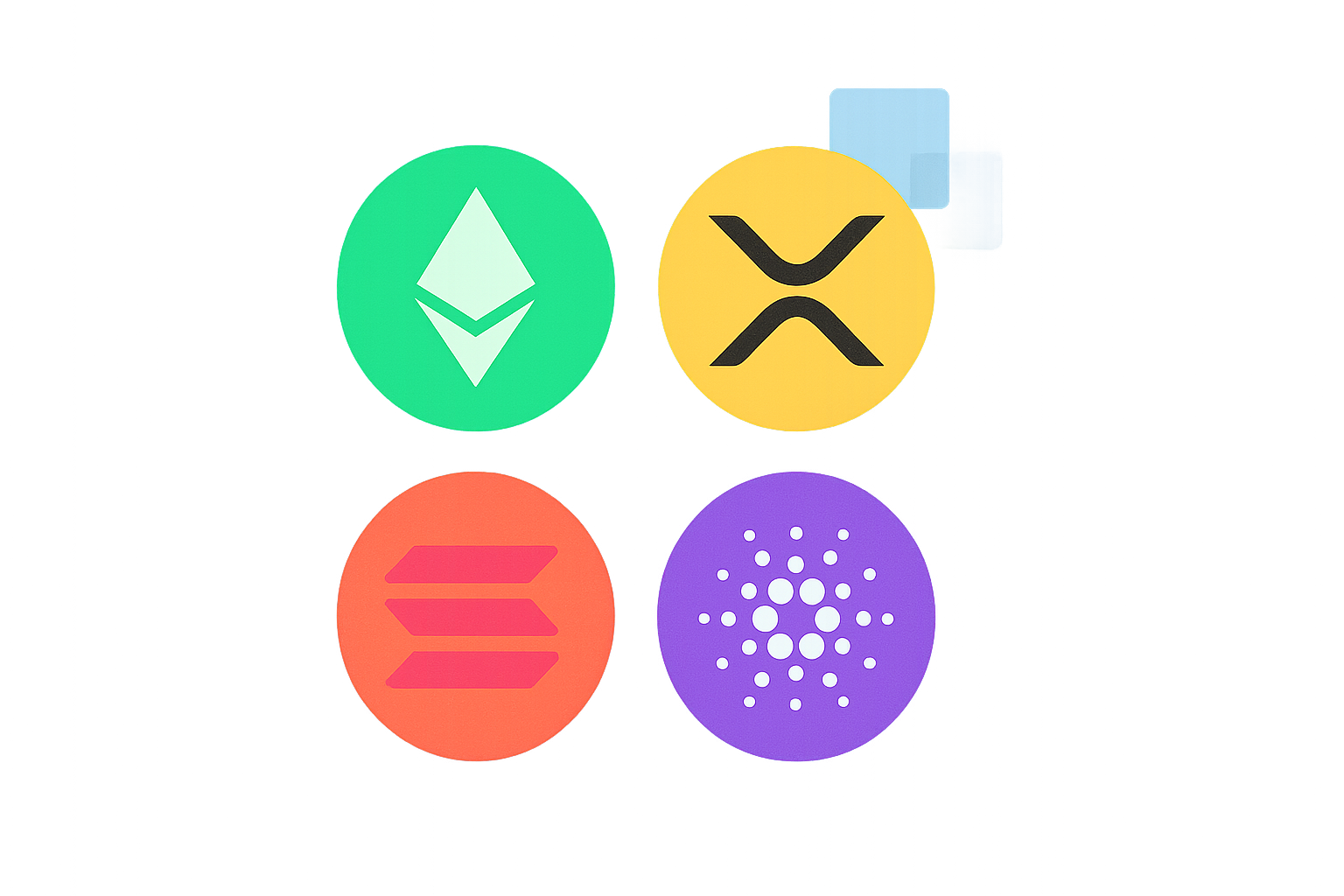
A Beginner's Guide to Understanding Altcoins
What is the crypto market overview by market cap ranking, trading volume, and liquidity in 2026?

What Are the Key Price Support and Resistance Levels for Crypto in 2025?

How Has the Crypto Market Volatility Affected Price Movements in 2025?

How Does Macroeconomic Data Influence Cryptocurrency Prices in 2025?

How Does Macroeconomic Interconnectivity Affect Cryptocurrency Prices in 2030?
How to Switch Between Different Languages?
Discover the zkSync Ecosystem

Experience Sei: The Next-Generation Layer 1 Blockchain for Digital Asset Exchange
Wizzwoods (WIZZ): What It Is and How to Buy the GameFi Pixel Farming Token
How to Mint TwitterScan NFTs with Multichain Web3 Wallets