What is Ethereum Sharding and How It Works?
What Is Sharding in Ethereum?
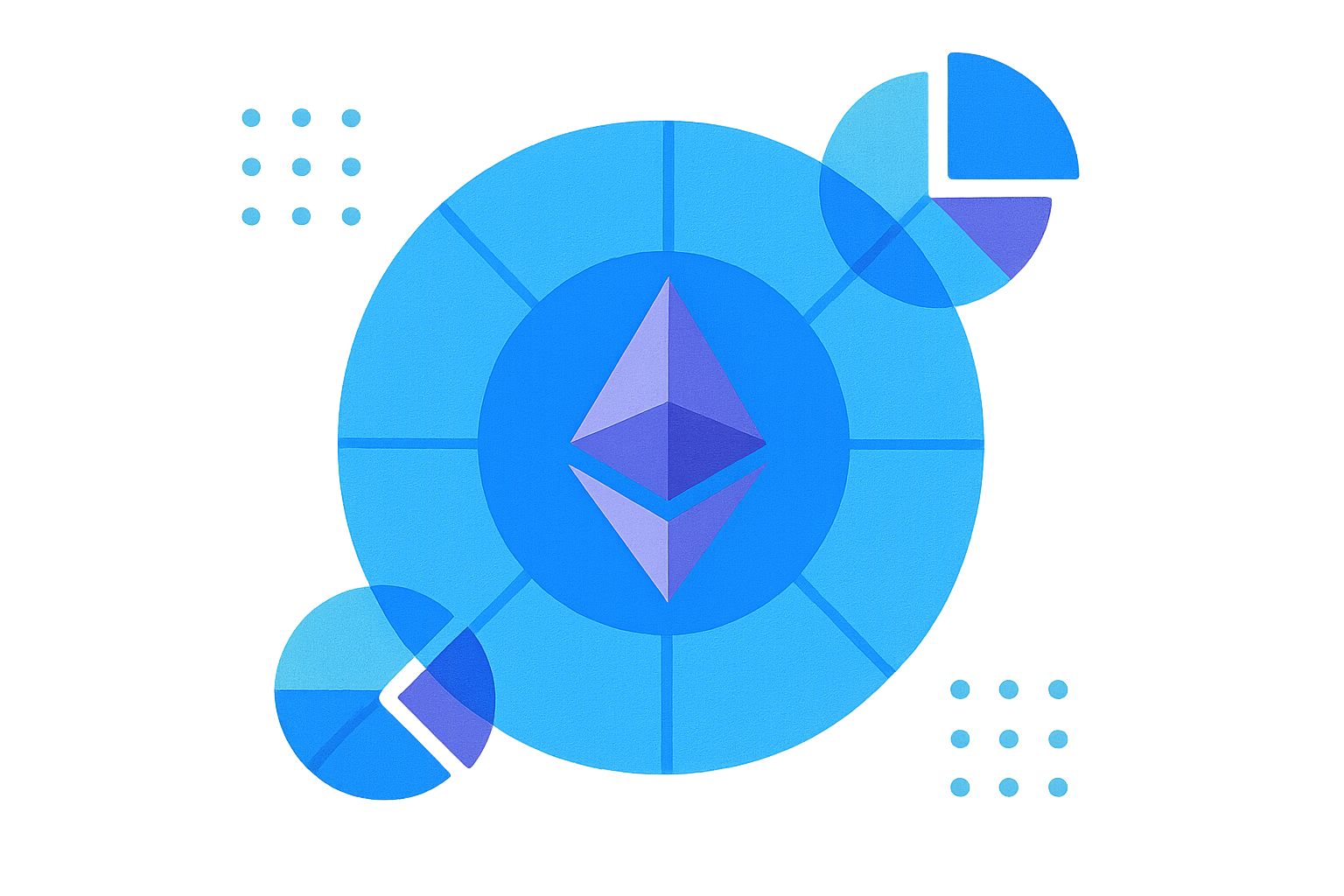
Sharding is a blockchain technique designed to split a network into smaller, more manageable parts called shards. In basic terms, sharding divides the Ethereum network into several mini-blockchains that can process transactions and data independently.
On Ethereum, sharding means the network will not rely on every computer processing every transaction. Instead, its workload is split into parallel segments, or shards, enabling considerable scaling potential. Each shard acts like a smaller blockchain within Ethereum, running its own processes but still secured by the main network.
This innovative approach introduces several key terms that are essential to understanding how the system works:
- Shard: A partitioned segment of the network processing its own subset of transactions and smart contracts. Each shard operates semi-independently while remaining connected to the broader Ethereum ecosystem.
- Network: The entire Ethereum blockchain, now composed of multiple shards plus the coordinating hub (Beacon Chain). This architecture allows for distributed processing while maintaining network integrity.
- Parallel Processing: The ability for many shards to execute transactions and store data at the same time, vastly increasing network efficiency. This is the core mechanism that enables Ethereum to scale beyond its current limitations.
Analogy: Sharding as Multi-Lane Highway
Think of Ethereum as a single, crowded highway where every car (transaction) must drive on the same road. Sharding turns this single lane into a network of parallel highways, where traffic (transactions) can flow in separate lanes (shards) concurrently. This simple change multiplies Ethereum's processing capacity, opening the door to more users and solutions. Just as adding more highway lanes reduces traffic congestion in a city, sharding reduces network congestion by distributing the workload across multiple parallel processing units.
Why Does Ethereum Need Sharding?
Ethereum's popularity has been a double-edged sword. As more users join, the network faces congestion and soaring transaction fees. During peak demand periods, it's not uncommon to see transactions cost $50 or more, and there are often long delays for confirmations. This creates significant barriers to entry for everyday users and limits the practical applications of the network.
Scalability is a fundamental blockchain challenge that has plagued the industry since its inception. Without a solution, Ethereum could struggle to support mainstream apps or billions of users. Research shows only about 15-20 transactions per second can be processed on the current, unsharded network—a bottleneck that hinders growth and prevents Ethereum from competing with traditional payment systems that handle thousands of transactions per second.
Alternatives, like increasing block sizes or relying solely on Layer 2 solutions, have serious downsides. Larger blocks can lead to centralization as fewer nodes can afford the hardware to process them. That's why sharding was chosen as a cornerstone of the Ethereum 2.0 vision: it provides horizontal scaling (adding more lanes) rather than just making one lane bigger or faster, preserving the network's decentralized nature while dramatically improving performance.
How Does Ethereum Sharding Work?
Implementing sharding in Ethereum is a complex technical process, but the underlying idea is straightforward: break the network into shards, process in parallel, then synchronize. This multi-step process requires careful coordination to ensure security and data consistency.
-
Shard Creation: The Ethereum network is divided into many shards (projected at 64). Each shard maintains its own state, handles its own transactions, and stores its own data. This division allows for specialized processing and reduces the burden on any single node.
-
Beacon Chain: The central "coordinator" known as the beacon chain manages validators, assigns them to shards, and orchestrates consensus between shards. It serves as the backbone of the sharded network, ensuring all parts work together harmoniously.
-
Validators: Instead of miners, Ethereum 2.0 uses validators (chosen by staking ETH) to verify transactions on each shard. These roles rotate regularly for security and decentralization, preventing any single group from gaining too much control over a particular shard.
-
Consensus & Data Management: The beacon chain ensures that data and transaction history remain consistent across all shards, enabling cross-shard communications via clever data sampling methods. This sophisticated approach maintains the integrity of the entire network while allowing independent shard operation.
-
Vertical vs. Horizontal Scaling: Classic blockchains scale vertically by making blocks or processors faster; sharding scales horizontally by adding more parallel units (shards). This horizontal approach is more sustainable and allows for virtually unlimited scaling potential.
Shard Structure and the Beacon Chain
The beacon chain is Ethereum's "traffic conductor," directing validators and coordinating all shards. Each shard is like a lane on a massive highway, but the beacon chain ensures cars can change lanes and data flows safely between them. Beacon chain validators are assigned duties across different shards, reducing the risk of single-shard attacks and boosting the security of the network as a whole. This randomized assignment mechanism is crucial for maintaining decentralization and preventing malicious actors from targeting specific shards.
Parallel Processing in Action
With sharding, multiple shards process transactions simultaneously, creating a truly distributed computing environment. For example, while one shard settles DeFi swaps, another confirms NFT trades, and a third tracks Layer 2 rollup data—all at once. This parallel processing unleashes a massive jump in throughput (potentially thousands of transactions per second) for the entire Ethereum ecosystem. The beauty of this system is that it scales naturally: as more shards are added, the network's capacity increases proportionally without requiring fundamental changes to the underlying architecture.
Benefits of Ethereum Sharding
Scalability: The biggest win is a multi-fold boost in throughput. Sharding allows thousands of transactions per second, compared to the current 15-20. This opens the door for mainstream, global apps and real-world adoption, enabling Ethereum to compete with traditional financial systems and support billions of users worldwide.
Reduced Congestion: With multiple shards sharing the load, Ethereum's infamous network slowdowns and backlogs will drop dramatically, improving transaction speeds and reliability. Users will experience faster confirmations and more predictable transaction times, even during periods of high network activity.
Lower Fees: As congestion falls, so too should transaction fees. More efficient use of bandwidth means users, traders, and dapps pay less to get their transactions confirmed—especially when combined with Layer 2 rollups. This fee reduction makes Ethereum accessible to users in developing countries and enables new use cases like micro-transactions that were previously economically unfeasible.
Stronger Decentralization: More validators can participate without massive hardware or bandwidth needs, making the network more open and secure. By reducing the technical barriers to entry, sharding enables a more diverse and geographically distributed validator set, which strengthens the network's resistance to censorship and attacks.
| Benefit | Impact for Users |
|---|---|
| Transaction Speed | Near-instant confirmations |
| Lower Average Fees | Cheaper ETH/Gas costs |
| Network Reliability | Less downtime/congestion |
| Greater Decentralization | Higher security |
Challenges and Limitations of Sharding
While sharding is transformative, it does introduce new complexities and risks that must be carefully managed:
-
Single-Shard Attack Risk: An attacker might target one shard to compromise its data or consensus. To combat this, validators rotate between shards frequently, making it extremely difficult for malicious actors to gain control. This rotation mechanism is randomized and enforced by the beacon chain.
-
Cross-Shard Data Integrity: Ensuring consistent data across shards is technically difficult. Bugs could lead to lost or inconsistent transaction histories, which would undermine trust in the network. Extensive testing and formal verification methods are being employed to minimize these risks.
-
Developer Complexity: Dapp developers must adapt their workflows to consider cross-shard communication, which can add design and testing complexities. Applications that need to interact with data or contracts on multiple shards will require new programming patterns and careful architecture design.
-
Adoption Obstacles: The full transition to sharded Ethereum is gradual, and many apps and networks must wait for mature infrastructure before moving fully onto shards. This phased rollout means that some benefits of sharding won't be immediately available to all users and developers.
Ethereum Sharding Roadmap & Upgrade Status
Sharding has been central to Ethereum's roadmap since its early days, but plans have evolved with advancing technology and the rise of rollups:
-
2017-2019: Sharding first outlined as a solution for scalability, with initial research papers and proof-of-concept implementations.
-
2020: Beacon chain launches, kickstarting Ethereum 2.0 and laying the foundation for the sharded network architecture.
-
2021-2023: Shift to a rollup-centric roadmap—sharding reprioritized for data storage rather than direct transaction execution. This strategic pivot recognized that Layer 2 solutions could handle execution while sharding focused on providing cheap, abundant data availability.
-
In Recent Years and Beyond: Proto-danksharding (EIP-4844) delivers first data sharding features. Full danksharding, enabling true sharded transaction processing, is in active research and development, with ongoing improvements and optimizations.
Currently, Ethereum is in the proto-danksharding phase: focusing on optimizing how rollups store and access data. Full transaction sharding is planned for future network upgrades, with the exact timeline dependent on research breakthroughs and community consensus.
Proto-Danksharding and Danksharding Explained
Sharding has evolved beyond its original design. You'll often hear about proto-danksharding and danksharding—what do these terms mean and why are they important for Ethereum's future?
-
Proto-Danksharding (EIP-4844): A stepping stone upgrade that introduces "blobs"—large, cheap data objects for rollups to store off-chain. This reduces the cost and congestion of mainnet data storage, directly benefiting Layer 2 protocols. Proto-danksharding provides immediate scaling benefits while the community works toward full sharding implementation.
-
Danksharding: The future, planned full implementation. It combines all the benefits of proto-danksharding plus true transaction sharding, where each shard can process transactions and state independently. This represents the ultimate vision for Ethereum's scalability, enabling the network to handle global-scale adoption.
-
Timeline: Proto-danksharding has been recently implemented. Danksharding is under active development, with no set mainnet date—but it's central to Ethereum's long-term scaling strategy and remains a top priority for the research and development community.
Both upgrades are designed to make Ethereum the most scalable, data-efficient blockchain for users and developers alike, enabling new categories of applications that were previously impossible due to cost and performance constraints.
Sharding vs Other Ethereum Scaling Methods
Sharding isn't the only solution for blockchain scaling, and understanding how it compares to other approaches is crucial:
-
Rollups (e.g., optimistic rollups, zk rollups): Layer 2 solutions that bundle many transactions off-chain and post them to Ethereum in batches. These solutions provide immediate scaling benefits and work synergistically with sharding.
-
Sidechains and Layer 2 Networks: Independent blockchains or protocols that interact with Ethereum but offer their own rules and consensus mechanisms. These provide flexibility and specialization but may sacrifice some security guarantees.
| Scaling Method | How It Works | Main Benefit |
|---|---|---|
| Sharding | Protocol splits mainnet into shards | Native, protocol-level throughput boost |
| Rollups | Bundles transactions off-chain, posts proofs | Low fees, quick settlement |
| Sidechains/L2 | Runs parallel blockchains/networks | Custom rules, flexibility |
Importantly, sharding and rollups are complementary rather than competing solutions. Sharding boosts the base layer's scale, while rollups and Layer 2s bring even more efficiency for end users. Together, they create a multi-layered scaling solution that can support millions of transactions per second while maintaining security and decentralization.
Real User Impact: Fees, Transaction Costs, and User Experience
For most users, the promise of Ethereum sharding comes down to reduced fees, faster transactions, and a smoother experience. High congestion and transaction costs have long limited access—sharding's rollout will help remove these frustrations and make Ethereum accessible to a global audience.
-
Fee Reduction: As the network splits into shards, each shard handles its own batch of transactions, easing mainnet congestion. While rollups already lower fees, sharding multiplies the potential savings by providing more data availability at lower cost. This creates a virtuous cycle where Layer 2 solutions become even more efficient.
-
DeFi & L2 Benefits: Rollup protocols and DeFi dapps will see even lower costs and higher speeds as they leverage sharded data storage—especially through proto-danksharding and eventually danksharding. This enables new DeFi primitives and more complex financial applications that were previously too expensive to operate.
-
Wider Accessibility: Everyday users, NFT collectors, and micro-traders stand to benefit most, with smoother DeFi app use and lower minimum trade sizes. Sharding democratizes access to Ethereum's ecosystem, enabling participation from users who were previously priced out by high fees.
Developer Workflow and Smart Contract Compatibility
Will sharding disrupt the way Ethereum dapp developers work? To some extent, yes. Developers must be ready to handle cross-shard messaging and adapt to a multi-chain "world" where smart contracts might live on different shards. However, this transition also brings exciting new opportunities.
-
Workflow Adjustments: Many popular frameworks will introduce tools to assist developers with sharded data and contract deployment, but new testing and security checks will be required. Developers will need to think carefully about data locality and cross-shard communication patterns when designing their applications.
-
Opportunities: Sharding unlocks new use cases, from high-frequency DeFi apps to low-latency gaming on-chain. Applications that were previously impossible due to throughput limitations become feasible, opening up entirely new categories of blockchain-based services.
-
Resources: Dive deeper with leading dev communities for insights and support. The Ethereum developer ecosystem is actively creating documentation, tools, and best practices to help developers navigate the transition to a sharded network.
Conclusion
Ethereum sharding is a fundamental shift, making Ethereum faster, more scalable, and accessible for users and developers worldwide. By splitting the network into shards, Ethereum will process more transactions at lower cost, opening doors for DeFi, NFTs, and mainstream adoption. Key takeaways:
- Sharding multiplies Ethereum's throughput, fighting congestion and driving down fees through parallel processing and distributed workload management.
- Proto-danksharding and danksharding are essential milestones in the Ethereum roadmap, representing both immediate improvements and long-term scaling solutions.
- Developers and users alike will benefit—though there are new complexities and risks to navigate. The transition requires careful planning and adaptation, but the rewards in terms of performance and accessibility are substantial.
As Ethereum continues to evolve, sharding remains a cornerstone technology that will enable the network to fulfill its vision of becoming a global, decentralized computing platform capable of supporting billions of users and countless applications.
FAQ
What is Ethereum Sharding and Why is Sharding Technology Needed?
Ethereum sharding divides the network into smaller segments, reducing node burden and increasing transaction throughput. Sharding enhances scalability, allowing parallel processing across multiple chains to significantly improve network efficiency and transaction speed.
What is the working principle of Ethereum Sharding and how does it improve network performance and transaction throughput?
Ethereum Sharding divides the network into multiple parallel shards, each processing independent transactions simultaneously. This distributed approach reduces latency and congestion, significantly increasing transaction throughput and overall network capacity without requiring every node to process all data.
What is the difference between Ethereum Sharding and Layer 2 scaling solutions?
Sharding scales on-chain by splitting the network into parallel chains, increasing throughput directly. Layer 2 scales off-chain by processing transactions externally, then settling on mainnet. Sharding enhances base layer performance; Layer 2 reduces main chain load.
How Does Sharding Technology Impact Ethereum's Security?
Sharding enhances Ethereum's processing capacity but introduces security considerations. It requires robust validator distribution across shards to prevent targeted attacks. While sharding nearly replicates traditional blockchain security, it demands careful management of adaptive attacks, network load increases, and validator client diversity to maintain protocol integrity.
When will Ethereum Sharding be fully implemented? What is the current progress?
Ethereum Sharding implementation began in 2021 and is projected to be fully realized by 2026. Currently, sharding is operating comprehensively, supporting smart contracts and all transaction types. Full deployment may take approximately two more years.
Do users and developers need to make changes after Ethereum Sharding?
Most users experience no significant changes; wallets and transactions work seamlessly. Developers must update smart contracts to handle cross-shard communication and implement idempotent operations for reliability across shards.

Enhancing Cross-Chain Connectivity with Advanced Bridge Solutions
Efficient Cross-Chain Asset Transfers to Base Platform

Maximize Cross-Chain Potential with Base Bridge Solutions

Understanding Ethereum Blobs: A Comprehensive Guide
How to Use a Cross-Chain Bridge to Transfer Assets from Base to Ethereum
Optimism Bridge Tutorial: A Step-by-Step Guide

Hamster Kombat Daily Cipher Code Guide: Unlock Million Coins with Morse Code

Pi Coin Contract Address: What You Need to Know
Best Crypto Trading Telegram Groups 2025
Is cryptocurrency mining legal in Spain?
EOS Price Prediction 2030: Can EOS Reach $50 or Even $100 in the Coming Decade?