What is IOTA token economics model: 6% annual inflation rate, staking rewards, and fee burning mechanism explained
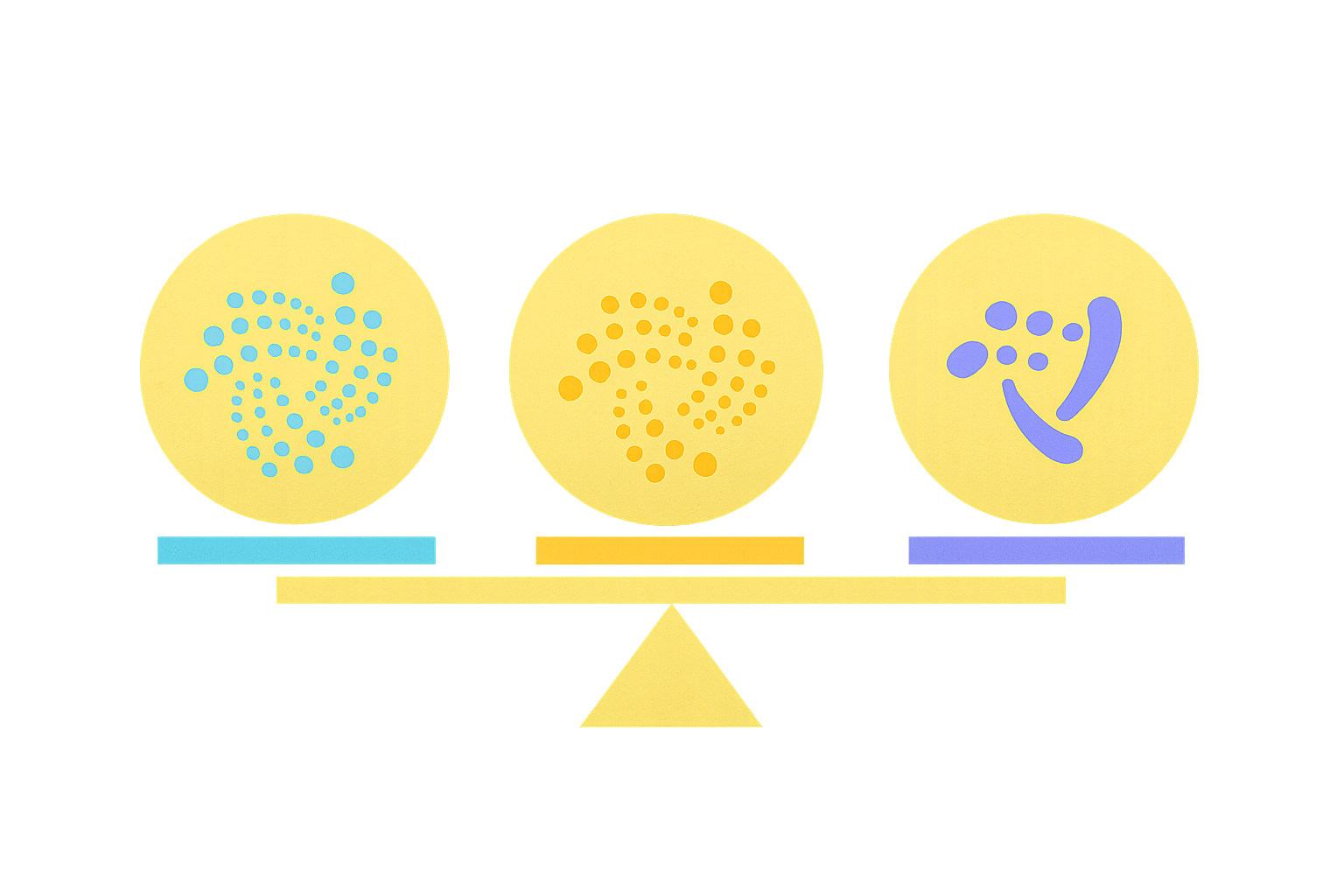
6% annual inflation with 767K IOTA daily minting balanced by automatic fee burning mechanism
IOTA implements a structured approach to token distribution through its epoch-based minting system, releasing 767,000 IOTA tokens daily to validators and delegators. This consistent daily minting rate translates to approximately 6% annual inflation, designed to incentivize network participation and maintain Delegated Proof-of-Stake security. Rather than creating indefinite supply growth, IOTA's innovative tokenomics model incorporates an automatic fee-burning mechanism that directly offsets minting inflation.
The balance between token inflation and fee burning creates a dynamic equilibrium for IOTA's total supply. When transaction fees exceed the daily minting volume of 767,000 tokens, the supply actually decreases, making the system deflationary during high network activity periods. Conversely, during lower activity phases, the daily minting provides consistent rewards that support validator incentives and network security. This bidirectional adjustment means IOTA has no fixed maximum supply—instead, the total supply fluctuates organically based on real network usage patterns and transaction volume.
This sustainable tokenomics framework achieves several objectives simultaneously. The fee-burning mechanism ensures that network growth and increased transaction volume directly strengthen the token economics rather than creating unlimited inflation. Validators receive meaningful daily rewards through minting, encouraging continued network participation, while users benefit from transaction-based deflation potential. The resulting model represents a thoughtful balance between rewarding network operators and maintaining long-term token value stability through organic fee destruction aligned with network utilization.
Delegated Proof-of-Stake rewards structure incentivizing validator participation and network security
IOTA's Delegated Proof-of-Stake model distributes approximately 1.767 million IOTA tokens per epoch across the network's validator ecosystem. This inflationary reward pool creates powerful incentives for validator participation without requiring users to pay transaction fees. The distribution mechanism operates on a stake-weighted basis, meaning validators with larger delegated stakes receive proportionally greater rewards from each epoch's allocation.
Validators earn compensation through two distinct channels. They receive a portion of newly minted IOTA from the inflationary pool and additionally collect commissions from their staking pools. For instance, a validator charging a 10% commission rate retains 10% of epoch rewards generated by their pool as additional stake objects. Delegators benefit from this structure by receiving rewards proportional to their contributed stake, though rewards require manual claiming at epoch boundaries.
This incentive architecture strengthens network security by aligning validator interests with network health. Validators must maintain minimum stake requirements and active validator status, creating natural selection pressure toward reliable node operators. The epoch-based reward distribution ensures predictable incentives that encourage consistent validator participation. By distributing inflation through staking rather than transaction fees, IOTA eliminates users' transaction costs while still rewarding the network participants who secure and validate the blockchain. This approach effectively combines DPoS governance with sustainable inflation economics.
Dynamic fee model and token deflation strategy offsetting inflation through transaction cost burning
IOTA's approach to sustainability extends beyond staking rewards through an innovative dynamic fee model that creates continuous token deflation within the network. When users execute transactions on the IOTA platform, a portion of the transaction fees generated enters a burning mechanism rather than being distributed entirely to validators. Specifically, 30% of all transaction fees are permanently removed from circulation through burning, while the remaining 70% goes to network validators as rewards.
This fee burning mechanism operates dynamically with every transaction, establishing continuous deflation that directly counteracts the inflationary pressure from the 6% annual staking rewards. The platform mints approximately 767,000 IOTA tokens daily to distribute as staking incentives, but this inflation is systematically offset by the transaction cost burning that occurs simultaneously across the network. As network activity increases, more transactions generate higher fee volumes, intensifying the token deflation effect and creating a natural equilibrium.
By combining these dual mechanisms, IOTA achieves a balanced offset inflation strategy that stabilizes token supply dynamics. The circulating supply reduction through burning helps preserve long-term value preservation while still rewarding network participants. This integrated approach demonstrates how modern blockchain tokenomics can balance stakeholder incentives with sustainable economic principles, ensuring neither excessive inflation nor artificial scarcity destabilizes the ecosystem.
FAQ
How does IOTA's 6% annual inflation rate work and what does it mean for token holders?
IOTA's 6% annual inflation rate generates approximately 767,000 new IOTAs per epoch as staking rewards. Token holders who stake earn these rewards, increasing their holdings over time while supporting network validation.
What is IOTA's staking rewards mechanism? How to participate in staking and earn returns?
IOTA staking rewards are earned through DeFi Yield by depositing IOTA tokens into DeFi platforms. Participants lend their IOTA to protocols to generate returns. The simplest way is to use eligible DeFi platforms that offer staking services for passive income.
How does IOTA's fee burning mechanism work? How does it impact the token's long-term value?
IOTA burns transaction fees through its dynamic fee mechanism, permanently removing tokens from circulation. This deflationary model reduces supply, supporting price stability and driving long-term value appreciation as network activity increases.
What are the main differences between IOTA's token economics model and Bitcoin and Ethereum?
IOTA differs fundamentally: it uses no mining, charges zero transaction fees, features 6% annual inflation with staking rewards, and employs fee burning mechanisms. Unlike Bitcoin's fixed supply and Ethereum's variable issuance, IOTA prioritizes IoT scalability and sustainability through its unique tokenomics design.
IOTA的通胀机制对代币价格和网络安全有什么影响?
IOTA的6%年通胀率可能对代币价格构成下行压力,但通过燃烧费用可部分抵消。由于IOTA不依赖挖矿,通胀对网络安全影响有限,主要威胁来自于系统本身的完整性而非经济激励。
As an investor, how should I understand IOTA's token economics model?
IOTA uses a DAG structure instead of blockchain, eliminating transaction fees through fee-burning mechanisms. The 6% annual inflation funds staking rewards, incentivizing network security while maintaining sustainable token economics and long-term value growth.

Exploring the Avalanche Blockchain: A Beginner's Guide to AVAX

How Does Avalanche's On-Chain Data Reveal AVAX's Growth Potential in 2025?

How to Analyze On-Chain Data: Active Addresses, Whale Movements, and Transaction Trends on Avalanche

Exploring Pulse Chain TVL: Evaluating Market Trends and Dynamics

What Are On-Chain Data Metrics for VeChain (VET): Active Addresses, Transaction Volume, and Whale Movements in 2026?
Top DeFi Choices for Crypto Investments in 2025

What Are ARC-20 Tokens: Your Comprehensive Guide

MPC Wallet: Experience a new level of secure and seamless crypto asset management

Roam Listing Details: Launch Date, Price Predictions, and How to Buy $ROAM

DePIN: Hardware Set to Transform Web3

MACD指標是什麼?