What is Lit Protocol ($LITKEY): How Chain-Agnostic Decentralized Key Management Secures Cross-Chain Apps

What is Lit Protocol ($LITKEY): What You Should Know?
Lit Protocol ($LITKEY) represents a paradigm shift in blockchain security, functioning as a utility token within a chain-agnostic decentralized network. Rooted in the principles of digital sovereignty, this protocol bridges traditional cryptographic methods with cutting-edge blockchain innovation. The project embodies three core values that define its mission:
- Digital Sovereignty: Empowering users to maintain complete control over their cryptographic keys and digital assets without relying on centralized custodians
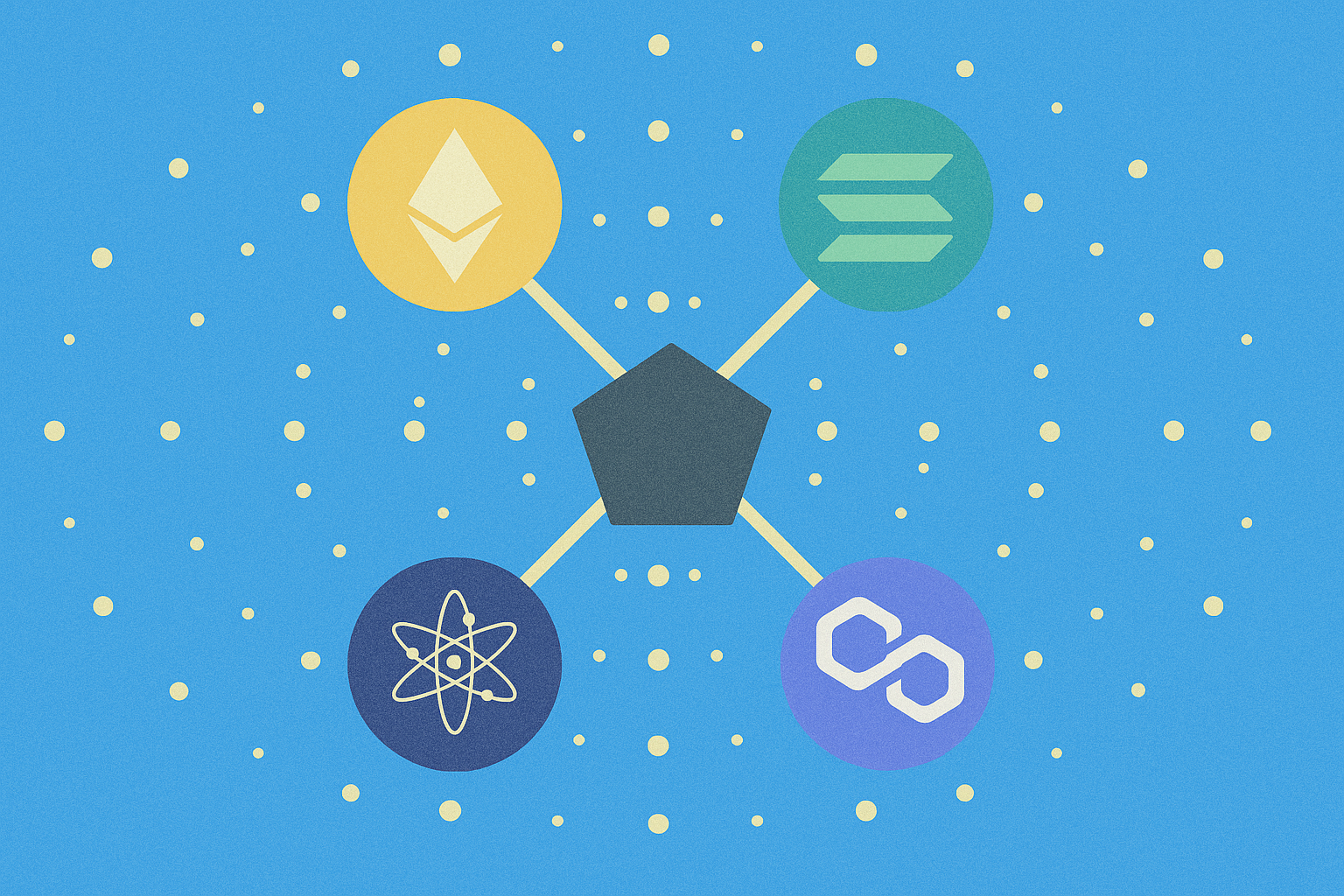
- Cross-Chain Interoperability: Enabling seamless security operations across multiple blockchain ecosystems including Ethereum, Solana, Polygon, and Cosmos
- Privacy-First Architecture: Implementing advanced cryptographic techniques such as threshold cryptography and Trusted Execution Environments (TEEs) to ensure data protection
Lit Protocol ($LITKEY) not only inherits the spirit of cryptographic innovation but also applies it to blockchain security and decentralized infrastructure to build a sustainable, trustworthy, and collaborative community. The protocol has successfully completed its community sale, raising $1.1 million through a decentralized fundraising platform. This capital will support the launch of its Lit v1 mainnet, codenamed Naga, planned for the near future. This release will introduce improved performance metrics, new signing algorithms with enhanced Solana support, and advanced scalability features like Shadow Splicing to boost decentralized key management capabilities across multiple blockchains.
Key Takeaways
- Lit Protocol ($LITKEY) is a chain-agnostic decentralized key management network that uses threshold cryptography, multi-party computation (MPC), and Trusted Execution Environments (TEEs) to enable secure, programmable signing and encryption across multiple blockchains
- It serves as more than just a token — acting as the foundation for programmable key management and helping users maintain control over data and assets in the digital economy
- The protocol's architecture eliminates single points of failure by distributing key management across a decentralized node network, where no single entity ever possesses complete access to private keys
- Paired with mainstream crypto wallets offering secure stablecoin storage, efficient trading capabilities, and seamless cross-chain experience, participants can engage confidently in Lit Protocol's growing ecosystem
Lit Protocol ($LITKEY) Listing Details and Launch Date
Key Listing Information
The Lit Protocol ($LITKEY) token listing details are being finalized in coordination with major cryptocurrency exchanges. Here are the important details about the upcoming listing:
- Exchange: To be announced through official channels
- Trading Pair: To be announced (expected to include major stablecoin pairs)
- Deposit Available: To be announced following exchange confirmation
- Trading Start: To be announced in accordance with exchange schedules
- Withdrawal Available: To be announced post-launch
Prospective participants are advised to monitor official Lit Protocol communication channels for the latest updates regarding listing schedules and supported trading platforms.
Lit Protocol ($LITKEY) Future Price Outlook: Long-Term Perspective
Market movements, project sustainability, technological advancement, and community engagement will shape Lit Protocol's ($LITKEY) value trajectory. Analysts examining the protocol's fundamentals suggest it could trade within a range reflecting its utility in the blockchain security sector. The token's value proposition is intrinsically linked to adoption rates of decentralized key management solutions across multiple blockchain ecosystems.
What Affects Lit Protocol ($LITKEY) Price?
- Investor Sentiment: Strong support from Web3 security advocates, institutional interest in decentralized infrastructure, and active developer engagement can significantly lift demand for the token
- Adoption & Demand: Increased utilization of Lit Protocol for decentralized key management across multiple chains drives fundamental utility. As more DeFi protocols, NFT platforms, and enterprise applications integrate Lit's security layer, demand for $LITKEY naturally increases
- Regulatory Influence: Privacy regulations and DeFi compliance frameworks could either accelerate adoption by legitimizing decentralized security solutions or create market headwinds through restrictive policies
- Technological Milestones: Successful deployment of the Naga mainnet, implementation of Shadow Splicing scalability features, and expansion of supported blockchain networks will directly impact market confidence
- Competitive Landscape: The emergence of alternative decentralized key management solutions and their market performance will influence $LITKEY's relative positioning
Future Price Prospects
If Lit Protocol successfully cements its role as the primary security layer for blockchain infrastructure and decentralized applications, demand may rise significantly over the coming years. The protocol's unique value proposition in solving critical security challenges across multiple chains positions it favorably for long-term growth. However, investors should account for inherent cryptocurrency market volatility, macroeconomic conditions, evolving regulatory frameworks, and technological competition before making investment decisions. The token's utility-driven model suggests that sustained adoption and network growth will be primary drivers of value appreciation.
Core Features of Lit Protocol ($LITKEY) and Why They Matter?
The standout features of Lit Protocol ($LITKEY) demonstrate its technical sophistication and practical utility in the blockchain security landscape:
1. Chain-Agnostic Decentralized Key Management
Lit Protocol employs threshold cryptography and multi-party computation (MPC) to manage cryptographic keys securely across multiple blockchains. This architecture eliminates single points of failure by distributing key shares across a decentralized network of nodes. No individual node ever possesses a complete private key, ensuring that even if multiple nodes are compromised, user assets remain secure. This design allows seamless interaction between different blockchain ecosystems including Ethereum, Solana, Polygon, Cosmos, and others, enabling users to manage assets across chains without maintaining separate security infrastructure for each network.
2. Programmable Signing with Lit Actions
Developers can embed conditional logic directly into cryptographic keys through JavaScript-based Lit Actions. This revolutionary capability enables automated, condition-based signing and encryption without exposing private keys to application layers or external systems. For example, a DeFi protocol can program a key to automatically execute trades when certain market conditions are met, or an NFT platform can implement dynamic access control based on token holdings or time-based conditions. This programmability opens the door for secure DeFi operations, sophisticated NFT gating mechanisms, and autonomous AI agent integrations that can interact with blockchain systems under strict cryptographic rules.
3. Privacy-First, Scalable Architecture
Leveraging Trusted Execution Environments (TEEs) and advanced features like Shadow Splicing, Lit Protocol ensures high security standards while scaling to meet the demanding requirements of modern cross-chain applications. TEEs provide hardware-level isolation for sensitive cryptographic operations, preventing unauthorized access even at the system level. Shadow Splicing technology enables the network to handle increased transaction throughput without compromising security or decentralization. This combination makes Lit Protocol ideal for enterprise-grade use cases requiring both stringent privacy guarantees and high-performance capabilities, such as institutional DeFi platforms, confidential computing applications, and large-scale NFT marketplaces.
How Lit Protocol ($LITKEY) Operates and What Benefits It Delivers?
Lit Protocol ($LITKEY) is powered by a chain-agnostic decentralized cryptographic network, ensuring security, scalability, and efficiency in its key management, signing, and encryption operations across multiple blockchain ecosystems.
Key Technological Components
Blockchain Network:
Lit Protocol operates on its own distributed node network that interfaces with multiple blockchains including Ethereum, Polygon, Solana, Cosmos, and other major ecosystems. This chain-agnostic design allows it to sign transactions, encrypt data, and manage cryptographic keys without being restricted to a single blockchain architecture. Each node in the network maintains a portion of the cryptographic key material, and these nodes coordinate through secure protocols to perform signing and encryption operations. This distributed architecture ensures that the protocol can adapt to different blockchain consensus mechanisms and transaction formats while maintaining consistent security guarantees.
Consensus Mechanism:
The protocol utilizes threshold cryptography combined with multi-party computation (MPC), where no single node ever holds the complete private key. A predetermined threshold of nodes must collaborate to sign transactions or decrypt data, providing both security and fault tolerance. For example, in a network requiring a 2/3 threshold, at least two-thirds of nodes must participate in any cryptographic operation, meaning the system remains functional even if one-third of nodes are offline or compromised. This approach eliminates single points of failure while maintaining operational efficiency, as the threshold can be adjusted based on security requirements and performance needs.
Smart Contracts:
Lit Protocol integrates smart contracts for access control and automation, enabling sophisticated use cases like token-gated content, automated DeFi strategies, and programmable wallet functionalities. These smart contracts enforce conditions for when and how cryptographic actions can be executed, creating a bridge between on-chain logic and off-chain security. For instance, a smart contract can specify that a signing operation should only occur if certain tokens are held in a wallet, or if specific time conditions are met, or if oracle data meets predetermined criteria. This programmability transforms static cryptographic keys into dynamic, intelligent security primitives.
Scalability Solutions:
With the upcoming Naga mainnet and features like Shadow Splicing, Lit Protocol is significantly improving transaction throughput, lowering latency, and supporting larger workloads. Shadow Splicing technology allows the network to process multiple signing requests in parallel without compromising security, effectively multiplying the network's capacity. This makes the protocol ideal for enterprise-grade applications and high-frequency cross-chain operations that require both security and performance, such as institutional trading platforms, real-time payment systems, and large-scale decentralized applications serving millions of users.
Who Leads Lit Protocol ($LITKEY) – Team & Key Partnerships
The Team
Lit Protocol ($LITKEY) is led by Lit Labs, a team with deep expertise in decentralized cryptography, blockchain infrastructure, and Web3 development. The team comprises cryptographers, distributed systems engineers, and blockchain security specialists who have contributed to major open-source projects and academic research in the field. Their mission extends beyond launching a token — they aim to position Lit Protocol as the foundational backbone of secure, programmable key management and encryption, championing the value of digital sovereignty across the entire blockchain ecosystem. The team's approach emphasizes rigorous security audits, transparent development practices, and active engagement with the developer community to ensure the protocol meets the highest standards of reliability and trustworthiness.
The Vision
At its core, Lit Protocol ($LITKEY) seeks to create a sustainable, chain-agnostic cryptographic network that empowers developers, enterprises, and individual users to retain full control over their digital assets and sensitive data. The long-term goal is to become the de facto security layer for decentralized applications, autonomous AI agents, and cross-chain systems, similar to how SSL/TLS became the standard for web security. By providing a universal security infrastructure that works across all blockchain networks, Lit Protocol aims to eliminate fragmentation in the blockchain security landscape and enable truly interoperable decentralized applications.
Partnerships
Lit Protocol ($LITKEY) has established strategic partnerships with Legion (for token distribution and community engagement), Chainlink (for secure oracle integration enabling off-chain data access), and multiple blockchain ecosystems including Ethereum, Solana, Polygon, and Cosmos to expand interoperability capabilities. These collaborations strengthen its position as a cross-chain security provider and broaden its adoption across DeFi protocols, NFT platforms, gaming applications, and enterprise blockchain sectors. Additionally, the protocol maintains relationships with academic institutions and security research organizations to ensure its cryptographic implementations remain at the forefront of industry best practices.
Lit Protocol ($LITKEY): Practical Applications & Use Cases
Lit Protocol ($LITKEY) serves a variety of critical purposes in the blockchain security ecosystem, including:
1. Decentralized Key Management
Securely handling cryptographic keys across multiple blockchains without relying on a central custodian. This eliminates the risks associated with centralized key storage, such as single points of failure, insider threats, and regulatory seizure. Organizations can manage keys for their entire blockchain infrastructure through Lit Protocol's distributed network, ensuring that no single entity has complete control while maintaining operational flexibility.
2. Programmable Signing & Encryption
Automating transactions, access control, and data protection using Lit Actions. Developers can create sophisticated conditional logic that determines when and how cryptographic operations are performed, enabling use cases like automated portfolio rebalancing in DeFi, time-locked asset transfers, multi-signature workflows with complex approval rules, and dynamic access control for digital content based on on-chain conditions.
3. Cross-Chain Interoperability
Enabling secure operations across Ethereum, Solana, Polygon, Cosmos, and other blockchain networks. Users can manage assets and execute transactions across different chains using a unified security layer, eliminating the need to maintain separate wallets and security infrastructure for each blockchain. This interoperability is crucial for the next generation of decentralized applications that leverage multiple blockchain networks simultaneously.
Why Utility Matters for Lit Protocol ($LITKEY)?
The $LITKEY token is fundamentally different from purely speculative assets — it powers Lit Protocol's node network, facilitates programmable signing operations, and underpins access control logic for decentralized applications. Node operators stake $LITKEY tokens to participate in the network and earn rewards for providing cryptographic services. This utility-driven model ensures ongoing demand for the token as the network grows, strengthens the network's economic security through staking mechanisms, and aligns incentives between token holders, node operators, and application developers.
Key Use Cases of Lit Protocol ($LITKEY)
Token-Gated Content & Services: Restrict access to digital assets, educational courses, exclusive communities, or NFT collections using on-chain conditions. Content creators can implement sophisticated access control that checks token holdings, NFT ownership, or other blockchain-based credentials before granting access.
Automated DeFi Strategies: Execute trades, yield farming operations, or asset reallocations without exposing private keys to smart contracts or external systems. Traders can program complex strategies that respond to market conditions automatically while maintaining complete security over their assets.
Secure AI Agent Operations: Allow AI agents to interact with blockchain systems under strict cryptographic rules. AI systems can execute transactions, manage assets, and interact with smart contracts while being constrained by programmable security policies that prevent unauthorized actions.
Enterprise Key Management: Organizations can use Lit Protocol to manage cryptographic keys for their entire blockchain infrastructure, implementing corporate governance policies, multi-level approval workflows, and compliance requirements while maintaining decentralization and security.
Privacy-Preserving Applications: Developers can build applications that encrypt sensitive user data using Lit Protocol's distributed key management, ensuring that no single party can access the data while still enabling authorized users to decrypt it when needed.
What's Next for Lit Protocol ($LITKEY)?
With the Naga mainnet launch planned for the near future, Lit Protocol will roll out enhanced scalability via Shadow Splicing technology, new signing algorithms including stronger Solana support and additional blockchain integrations, and expanded developer tools such as improved SDKs, documentation, and example applications. These advancements pave the way for deeper adoption in enterprise blockchain solutions, institutional DeFi platforms, and sophisticated Web3 applications that require both high security and high performance.
Lit Protocol ($LITKEY) Roadmap: Key Milestones and Expansion Plans
The roadmap for Lit Protocol ($LITKEY) outlines a clear path for growth and innovation:
| Phase | Roadmap |
|---|---|
| Phase 1 | Community sale completed, raising $1.1M through a decentralized fundraising platform to fund mainnet launch and ecosystem expansion initiatives. |
| Phase 2 | Final testing of the Lit v1 mainnet "Naga," integration of new signing algorithms supporting additional blockchains, comprehensive security audits, and onboarding of key development partners and early adopters. |
| Phase 3 | Official launch of Lit v1 mainnet "Naga" with enhanced Solana support, Shadow Splicing scalability features enabling higher throughput, expanded cross-chain capabilities including support for additional blockchain networks, and release of comprehensive developer tools and documentation. |
| Future Phases | Continued expansion of supported blockchain ecosystems, implementation of advanced cryptographic protocols, development of enterprise-grade features, and growth of the developer ecosystem through grants and technical support programs. |
Conclusion
Lit Protocol ($LITKEY) stands out as a chain-agnostic decentralized key management network, offering secure, programmable signing and encryption capabilities across multiple blockchain ecosystems. With its privacy-first architecture, advanced threshold cryptography, and upcoming Naga mainnet launch, the protocol is positioned to become a cornerstone of blockchain security and cross-chain interoperability.
Backed by strong community support, strategic partnerships with leading blockchain networks, and innovative technology that addresses fundamental security challenges in the Web3 space, $LITKEY delivers both substantial real-world utility and long-term growth potential. As the blockchain industry continues to evolve toward greater decentralization and cross-chain functionality, Lit Protocol's role as a universal security layer becomes increasingly critical, making it a project worth monitoring for anyone interested in the future of blockchain infrastructure and digital sovereignty.
FAQ
What is Lit Protocol? What are its core functions?
Lit Protocol is a decentralized key management and access control protocol enabling chain-agnostic encryption. Its core functions include managing cryptographic keys across multiple blockchains, controlling encrypted content access, and enabling conditional smart contract execution through threshold cryptography.
What is the function of $LITKEY token and what economic value does it have?
LITKEY serves as a utility token for paying network services, incentivizing node operators, and enabling governance participation in protocol development. Its economic value derives from ecosystem utility and network security mechanisms.
How does Lit Protocol achieve chain-agnostic decentralized key management?
Lit Protocol uses cryptographic technology and programmable key management across blockchains. It decentralizes key control, enabling users to manage assets and data without relying on any single chain or centralized entity.
What are the practical use cases for cross-chain applications using Lit Protocol?
Lit Protocol enables automated smart contracts and cross-chain asset transfers across multiple blockchains. Key use cases include DeFi protocols requiring cross-chain liquidity management, AI agents executing autonomous transactions, and applications demanding decentralized key management with user-controlled private keys and data sovereignty across different chains.
What are the advantages of Lit Protocol compared to other key management solutions?
Lit Protocol excels through decentralized MPC and TEE hybrid architecture, providing multi-layered security. It offers superior key protection, enhanced user control, privacy preservation, and robust resistance against security threats compared to traditional centralized solutions.
How to deploy and use applications on Lit Protocol?
Initialize your app with Lit, build using Vite, containerize with Docker, and deploy to cloud platforms like GKE. Use Nginx for routing. Integrate Lit's SDK for decentralized key management and cross-chain functionality in your application.
What are the security features and risks of Lit Protocol?
Lit Protocol employs advanced cryptographic mechanisms for decentralized key management, enhancing cross-chain security. However, risks include potential implementation vulnerabilities, ecosystem-wide security challenges, and hacking attempts. Users should ensure proper protocol usage and stay updated on security audits.
How to obtain $LITKEY tokens? Which exchanges are listed?
Obtain $LITKEY tokens by claiming airdrops on the Alpha activity page. $LITKEY is listed on major cryptocurrency exchanges with growing trading volume and liquidity across multiple platforms.
Lit Protocol supports which blockchain networks?
Lit Protocol supports major chains including Ethereum, Polygon, Avalanche, Arbitrum, Base, Fantom, Filecoin, and Celo, plus multiple testnets like Sepolia and Goerli, enabling cross-chain decentralized key management.
What is Lit Protocol's development roadmap?
Lit Protocol's roadmap focuses on three phases: strengthening payment and node ecosystems short-term, expanding cross-chain capabilities via AI agents medium-term, and becoming Web3 and IoT's cryptographic infrastructure long-term.

Top 5 Innovative Decentralized Identity Solutions in Web3

Understanding Sybil Attacks in Cryptocurrency: Prevention Strategies and Insights

Exploring Privacy-Preserving Computation in Web3: A Detailed Overview

Web3 Ecosystem Innovation Protocol: In-Depth Analysis and Guide to NEWT
What are the security risks and smart contract vulnerabilities in Worldcoin (WLD)?

What are the security risks and vulnerabilities in WLD smart contracts and biometric data storage?

Roam Listing Details: Launch Date, Price Predictions, and How to Buy $ROAM

DePIN: Hardware Set to Transform Web3

MACD指標是什麼?

Bitget Wallet Valued at $300 Million After Investment from Mainstream Exchange, Boasts 10 Million Users

How to Buy $LUNA Coin and What is the Lynk's Cat Token?