What is Pi Coin? Complete Guide on Value, Price & How to Sell Pi Coin

Pi Network
The Pi Network has emerged as one of the most accessible cryptocurrency projects in the digital asset space, allowing users to mine Pi coins directly from their smartphones without specialized equipment or technical knowledge. With millions of users worldwide and growing interest in its unique approach to cryptocurrency mining, many newcomers are seeking reliable information about what Pi is, how it works, and its potential value.
The project represents a significant shift in how cryptocurrency can be obtained, democratizing access to digital assets through a mobile-first approach. Unlike traditional mining operations that require expensive hardware and substantial electricity consumption, Pi Network enables anyone with a smartphone to participate in the cryptocurrency ecosystem. This accessibility has contributed to its rapid growth and widespread adoption across different regions and demographics.
What is Pi Coin (Pi Network)?
Pi Network is a blockchain-based platform that allows users to mine cryptocurrency through a mobile application without specialized equipment or technical expertise. Developed by Stanford graduates in 2019, the project aims to make digital currency accessible to everyday people who might be excluded from the cryptocurrency revolution.
The fundamental philosophy behind Pi Network centers on inclusivity and accessibility. The founders recognized that traditional cryptocurrency mining had become increasingly centralized and inaccessible to average users due to high costs and technical barriers. By creating a mobile-first solution, Pi Network addresses these challenges while maintaining the security and decentralization principles that define blockchain technology.
Unlike Bitcoin and other traditional cryptocurrencies that require energy-intensive mining and expensive equipment, Pi coins can be mined simply by opening the mobile app once daily and verifying your status. This innovative approach eliminates the need for constant computational work while still maintaining network security through a sophisticated consensus mechanism. The system rewards users for their participation and contribution to the network's growth rather than for computational power.
The Story Behind Pi Network
Pi Network was founded by two accomplished individuals: Chengdiao Fan and Nicolas Kokkalis. They established the project with a clear vision of creating a digital currency that is user-friendly and accessible to everyone, even those without technical knowledge about cryptocurrency.
The inception of Pi Network stemmed from observations about the growing centralization of cryptocurrency mining and the barriers preventing mainstream adoption. The founders sought to create a solution that would bring cryptocurrency to the masses while maintaining the core principles of decentralization and security. Their academic backgrounds and research experience at Stanford University provided the foundation for developing innovative solutions to these challenges.
Who are the Founders of Pi?
Pi Network was founded by Dr. Nicolas Kokkalis and Dr. Chengdiao Fan, both holding PhDs from Stanford University with expertise in different but complementary fields that proved essential for creating this innovative cryptocurrency platform.
Dr. Nicolas Kokkalis
Dr. Kokkalis holds a PhD in electrical engineering and conducted postdoctoral work in computer science, specializing in distributed systems and human-computer interaction. His technical expertise has been instrumental in designing Pi Network's consensus mechanism and overall architecture. His research background in distributed systems provided the foundation for creating a mobile-friendly mining solution that maintains security without requiring intensive computational resources. Dr. Kokkalis serves as the technical lead, overseeing the platform's development and ensuring its scalability as the user base grows.
Dr. Chengdiao Fan
Dr. Fan, who serves as Head of Product, holds a PhD in computational anthropology and applies her understanding of human behavior and social computing to create an inclusive ecosystem. Her expertise has been crucial in designing the user experience and community-building aspects of Pi Network. Dr. Fan's background in studying human social networks and behavior patterns influenced the development of Security Circles and the trust-based verification system. Her work ensures that the platform remains accessible and engaging for users from diverse backgrounds while maintaining security through social verification mechanisms.
The Relationship Between Pi and Pi Network
Pi Network is the overall ecosystem and cryptocurrency project focused on mobile usage, while Pi coin is the native digital currency that powers this network. Understanding this distinction is important for grasping how the platform functions and creates value.
The Pi Network serves as the infrastructure and platform that enables various activities, including mining, transactions, and application development. It encompasses the blockchain technology, consensus mechanism, user interface, and all the tools and features that make the ecosystem functional. Within this network, Pi coin acts as the medium of exchange and unit of value, facilitating transactions and incentivizing participation.
This relationship mirrors other blockchain ecosystems where the network provides the infrastructure while the native token serves as the economic driver. For example, just as Ethereum is the network and ETH is the token, Pi Network is the platform and Pi is the cryptocurrency that powers it. The network's success depends on both the technical infrastructure and the utility and adoption of its native token.
Key Features of Pi Network
1. Mobile-Focused Mining
Pi Network allows users to mine cryptocurrency directly from their smartphones without draining battery power or requiring specialized equipment. This revolutionary approach makes cryptocurrency mining accessible to anyone with a mobile device, regardless of their technical knowledge or financial resources.
The mobile mining mechanism works through a lightweight consensus protocol that doesn't require continuous computational work. Users simply need to verify their presence once every 24 hours by opening the app and tapping a button. This process confirms their participation in the network without consuming significant device resources or battery life. The system is designed to be as simple as checking social media, making it incredibly user-friendly while maintaining network security.
2. Community-Built User Roles
The Pi Network ecosystem is built around four primary user roles that work together to maintain and grow the network:
-
Pioneers: Regular users who mine Pi by simply verifying their status daily through the mobile app. They form the foundation of the network and contribute to its growth through consistent participation. Pioneers receive base mining rewards for their daily check-ins and help expand the network's reach.
-
Contributors: Users who create Security Circles by selecting trusted members to build a verification layer for network security. They play a crucial role in establishing trust networks and preventing fraudulent accounts. Contributors receive additional mining rewards for building and maintaining their Security Circles.
-
Ambassadors: Members who expand the network by inviting new users and growing the community. They are essential for network growth and receive bonus mining rewards for each active referral. Ambassadors help spread awareness and bring new participants into the ecosystem.
-
Node Operators: Experienced users who run validation software on computers to support the network's infrastructure. They contribute computational resources to maintain the blockchain and process transactions. Node operators receive additional rewards for their technical contributions and help ensure network decentralization.
3. Stellar Consensus Protocol (SCP)
Unlike Bitcoin's energy-intensive Proof-of-Work model, Pi Network uses the Stellar Consensus Protocol, which offers several significant advantages:
-
Low Energy Consumption: The protocol uses far fewer resources than traditional mining, making it environmentally sustainable and cost-effective. This efficiency allows mobile devices to participate without significant power consumption.
-
Better Scalability: SCP enables the network to process higher transaction volumes efficiently, supporting the platform's growth and increasing user base. The protocol can handle thousands of transactions per second, far exceeding traditional blockchain capabilities.
-
True Decentralization: The protocol maintains decentralized control while preserving network security through a federated Byzantine agreement system. This approach ensures that no single entity can control the network while maintaining fast transaction confirmation times.
The Stellar Consensus Protocol represents a significant advancement in blockchain technology, offering a balance between security, decentralization, and efficiency that traditional consensus mechanisms struggle to achieve.
4. Security Circles
Pi Network employs a unique social trust-building method through Security Circles, where users verify the authenticity of other network members they know personally. This innovative approach to security offers several benefits:
Security Circles prevent fake accounts and fraudulent activity by requiring personal verification from trusted contacts. Each user can designate 3-5 trusted individuals who they believe are real people, creating interconnected webs of trust throughout the network. These circles aggregate to form a global trust graph that helps identify and exclude bad actors.
The system builds a reliable trust network across the entire platform without requiring energy-intensive computational processes. This social verification method is more intuitive for users than traditional technical verification systems and leverages human relationships to maintain network integrity. The approach also makes attacks more difficult, as malicious actors would need to create extensive fake social networks to compromise the system.
5. No Financial Barriers to Entry
Unlike most cryptocurrency projects that require initial investment, Pi Network allows users to start participating without any financial burden. This democratization of cryptocurrency access is fundamental to Pi Network's mission of financial inclusion.
Users don't need to purchase expensive mining equipment, invest in cryptocurrency to get started, or pay any fees to begin mining. The only requirements are a smartphone and an internet connection, making participation possible for people across all economic backgrounds. This approach particularly benefits users in developing regions where traditional cryptocurrency mining is economically unfeasible.
The absence of financial barriers has contributed to Pi Network's rapid growth and diverse user base, creating a truly global community of cryptocurrency participants.
Benefits of Pi Network
1. Universal Accessibility
Pi Network makes cryptocurrency mining possible for anyone with a smartphone, breaking down the traditional barriers that have excluded billions of people from participating in the cryptocurrency revolution. This accessibility extends beyond just technical requirements to include ease of use and understanding, making cryptocurrency comprehensible for users without technical backgrounds.
2. No Hardware Investment Required
Users don't need to purchase expensive mining equipment, which can cost thousands of dollars for traditional cryptocurrency mining operations. This elimination of capital requirements opens cryptocurrency participation to people across all economic levels, promoting financial inclusion and democratizing access to digital assets.
3. Energy Efficiency
Pi Network's consensus algorithm uses significantly less energy than Bitcoin's proof-of-work system, addressing one of the major criticisms of cryptocurrency regarding environmental impact. The mobile-friendly approach means users can participate without contributing to excessive energy consumption or carbon emissions, making it a more sustainable option for cryptocurrency mining.
4. Financial Inclusion
The network's design may help regions with low banking infrastructure access decentralized financial systems. By providing a simple entry point into cryptocurrency, Pi Network can serve as a gateway to broader financial services for unbanked and underbanked populations. This potential for financial inclusion represents a significant opportunity to improve economic access in developing regions.
5. Simplified User Experience
The Pi Network app functions like any other smartphone application, with an intuitive interface that requires minimal learning curve. Users can start mining within minutes of downloading the app, and daily participation requires just seconds of interaction. This simplicity removes technical barriers and makes cryptocurrency accessible to non-technical users.
6. Enhanced Security Through KYC
Pi's Know Your Customer (KYC) process helps prevent fake accounts and ensures one account per person, maintaining network integrity and fair distribution of rewards. The KYC verification process, while adding a step for users, significantly enhances security and prepares the network for regulatory compliance as it transitions to full functionality.
7. Ecosystem Development Potential
With the mainnet launch, Pi Network allows developers to build and deploy decentralized applications (dApps), creating opportunities for innovation and utility within the ecosystem. This development potential means Pi coins can have real-world use cases beyond simple transactions, including gaming, marketplaces, and financial services.
How Does Pi Network Work?
Pi Network operates on the Stellar Consensus Protocol rather than Bitcoin's energy-intensive proof-of-work system. Users participate by creating "trust circles" where they nominate 3-5 trusted contacts, building a web of verification across the network.
The mining process rewards different types of participation with varying rates. Pioneers receive base rewards for daily check-ins through the mobile app, plus additional amounts for expanding their trust circles and bonuses for running full nodes on computers. This tiered reward system incentivizes multiple forms of contribution to the network.
The consensus mechanism works by having nodes agree on transaction validity through a federated Byzantine agreement process. Rather than competing to solve complex mathematical problems like in proof-of-work systems, nodes in Pi Network coordinate to reach agreement on the state of the ledger. This approach is far more energy-efficient while maintaining security through the trust networks established by Security Circles.
Since December 2021, Pi has operated on its Mainnet blockchain during a "closed" period, requiring users to complete Know Your Customer (KYC) verification before transferring mined Pi to the blockchain. This enclosed mainnet phase allows the network to ensure security and compliance before opening to external connections and broader trading.
How Does Pi Coin Work?
Pi coin functions as the native cryptocurrency of the Pi Network ecosystem, obtained through mobile mining activities and designed to power various transactions within the platform. The coin serves multiple purposes within the ecosystem, from rewarding participation to facilitating commerce.
Users earn Pi coins by performing daily check-ins through the mobile app, expanding their trust circles, and participating in network security. The earning rate depends on several factors, including the user's role (Pioneer, Contributor, Ambassador, or Node Operator), the size and activity of their Security Circle, and their referral network. This multi-faceted earning structure encourages diverse forms of participation and contribution to the network.
Within the network, Pi coins can be used for purchasing goods and services through Pi-enabled marketplaces, conducting transactions between users, and serving as payment within community-developed applications. As the ecosystem develops, additional use cases are emerging, including decentralized finance applications, gaming platforms, and social commerce features. The utility of Pi coins grows as more developers build applications and more merchants accept Pi as payment.
Tokenomics of Pi Network
The tokenomics of Pi Network are designed to promote community ownership and sustainable ecosystem development. The maximum supply of Pi is capped at 100 billion tokens, with a significant 80/20 distribution that favors the community over the Pi team.
Token Distribution
Community Allocation (80%)
The community receives 80 billion Pi tokens, divided into three main categories:
-
Mining Rewards (65 billion Pi): This is the largest portion allocated to active users both past and future. The distribution follows a diminishing supply schedule, with higher rewards in the early phases to incentivize initial adoption and network growth. As the network matures and reaches higher user milestones, the mining rate decreases, creating scarcity and potentially increasing value.
-
Community Organization and Ecosystem Building (10 billion Pi): This allocation funds community initiatives, developer grants, and targeted projects that enhance the Pi ecosystem. These funds support hackathons, development competitions, and grants for innovative applications built on Pi Network. The allocation ensures resources are available for long-term ecosystem development and community-driven innovation.
-
Liquidity Pool (5 billion Pi): This portion is reserved to provide liquidity within the Pi ecosystem, facilitating smooth trading and exchange operations. The liquidity pool helps stabilize prices and ensures that users can easily exchange Pi coins when needed, supporting the token's utility as a medium of exchange.
Core Team Allocation (20%)
The Pi core team receives 20 billion Pi as compensation for development work and technical maintenance of the network. This allocation is subject to lockup periods to align team incentives with long-term project success. The team's allocation rewards their ongoing efforts in developing the platform, maintaining infrastructure, and guiding the project's evolution.
Mining Reward Structure
Pi Network employs a diminishing reward structure to incentivize early user participation:
-
Decreasing Annual Supply Limits: The annual limit for mining rewards decreases over time, creating scarcity and potentially increasing value as the network matures. This approach mirrors successful cryptocurrency models while adapted for Pi's unique mobile-mining mechanism.
-
Granular Time Periods: Supply limits may be calculated in daily or smaller time periods, allowing for precise control over token distribution and preventing sudden supply shocks. This granular approach enables the network to adjust to changing conditions while maintaining predictable supply schedules.
-
Enhanced Rewards for Diverse Participation: Beyond basic mining, Pioneers receive rewards for various contributions including building Security Circles, referring new users, and operating nodes. This multi-dimensional reward system encourages users to engage with different aspects of the network, strengthening overall ecosystem health.
How to Sell Pi Coins?
Step 1: Complete KYC Verification and Migration
Before selling, ensure you have completed Know Your Customer (KYC) verification and successfully migrated your Pi coins from the enclosed mainnet. The KYC process verifies your identity and ensures compliance with regulatory requirements. This step is crucial as only verified and migrated Pi coins can be transferred to exchanges for trading.
The migration process involves transferring your mined Pi from the mobile app to the mainnet blockchain. This typically requires confirming your identity through the KYC process and accepting the mainnet terms. Once completed, your Pi coins become transferable and can be moved to exchanges for trading.
Step 2: Choose an Exchange
Several major cryptocurrency exchanges offer Pi coin trading, providing various options for selling your tokens. When selecting an exchange, consider factors such as trading fees, security features, withdrawal options, and supported payment methods. Research the exchange's reputation and ensure it operates legally in your jurisdiction.
Different exchanges may offer varying liquidity levels and trading pairs, affecting the price you receive for your Pi coins. Compare options across multiple platforms to find the best trading conditions for your needs.
Step 3: Transfer Pi to Your Exchange Wallet
The transfer process involves several careful steps:
- Open your Pi wallet through the Pi browser or mobile app
- Select the "Send" option from the wallet menu
- Copy the deposit address from your chosen exchange (ensure you select the correct network)
- Paste the address into your Pi wallet and specify the amount you want to transfer
- Double-check the address for accuracy, as cryptocurrency transactions are irreversible
- Confirm the transaction and wait for network confirmation
Transfer times may vary depending on network congestion and the exchange's processing requirements. Most transfers complete within minutes, but some may take longer during peak usage periods.
Step 4: Place a Sell Order
Once your Pi coins appear in your exchange wallet:
- Navigate to the trading section and select the appropriate trading pair (such as PI/USDT or PI/BTC)
- Choose between a market order (for immediate sale at current market price) or a limit order (to sell at a specific price you set)
- Enter the amount of Pi you want to sell
- Review the order details, including fees and expected proceeds
- Confirm your order and wait for execution
Market orders execute immediately at the best available price, while limit orders only execute when the market reaches your specified price. Consider market conditions and your urgency when choosing order types.
Step 5: Withdraw Your Funds
After successfully selling your Pi coins, you can:
- Keep funds in the exchange for future trading opportunities
- Convert to other cryptocurrencies if you wish to diversify your portfolio
- Withdraw to your bank account through available fiat withdrawal methods
Withdrawal options and processing times vary by exchange and payment method. Bank transfers may take several business days, while some exchanges offer faster withdrawal options through payment processors or digital wallets.
The Future of Pi Network
Pi Network is preparing for a significant transition from its current enclosed period to the open network phase, which will bring major developments to the project. This transition represents a crucial milestone in Pi Network's evolution from a closed ecosystem to a fully functional cryptocurrency platform.
The transition will allow external connections with blockchain and other cryptocurrency exchanges, enabling Pi coins to be freely traded and used. This openness will significantly increase liquidity and accessibility, potentially affecting the token's value and utility. The network's development team is carefully managing this transition to ensure security and stability while expanding functionality.
The network's growth strategy includes expanding the ecosystem of Pi-powered applications through hackathon programs supporting innovation in marketplaces, gaming, and financial services. The development community is actively building decentralized applications that leverage Pi coins for various purposes, from e-commerce platforms to gaming ecosystems. These applications will provide real-world utility for Pi coins, driving demand and supporting long-term value.
Future plans also include enhanced features for developers, improved scalability to handle growing transaction volumes, and potential partnerships with established businesses to increase Pi coin adoption. The network aims to create a comprehensive ecosystem where Pi coins serve as a practical medium of exchange for everyday transactions.
Is Pi Network Legitimate or a Scam?
Evidence Supporting Pi Network's Legitimacy:
-
Verified Founding Team: The project was founded by Stanford University PhDs with verifiable academic and professional backgrounds. The founders' credentials and public profiles add credibility to the project, as they have reputations to maintain in both academic and technology communities.
-
Gradual Development Approach: Unlike scams that promise instant wealth, Pi Network has followed a careful development plan over several years. The project has progressed through multiple phases, from concept to testnet to enclosed mainnet, demonstrating serious commitment to building a functional platform.
-
No Initial Investment Required: Pi Network doesn't ask users to invest money, eliminating a common characteristic of cryptocurrency scams. Users can participate freely without financial risk, removing the typical profit motive associated with fraudulent schemes.
-
KYC Verification: The implementation of Know Your Customer verification demonstrates commitment to regulatory compliance and serious intent to operate as a legitimate cryptocurrency platform. This process, while adding complexity for users, shows the project's dedication to preventing fraud and meeting legal requirements.
-
Achievement of Open Mainnet: The project has successfully transitioned to mainnet operation and gained listings on legitimate exchanges, demonstrating technical capability and market acceptance. These milestones represent significant achievements that scam projects typically cannot accomplish.
-
Continuous Development: Ongoing technical development and ecosystem expansion show sustained effort and investment in the platform's future. The regular updates, feature additions, and growing developer community indicate genuine project development rather than a quick cash grab.
While these factors support legitimacy, potential users should still conduct their own research and understand that all cryptocurrency investments carry risks. The project's ultimate success depends on continued development, adoption, and market acceptance.
Conclusion
Pi Network represents a unique approach to cryptocurrency that emphasizes accessibility, community growth, and real-world utility over speculative trading. By allowing mining through smartphones and building a community-focused ecosystem, Pi has created an entry point for millions of people who might otherwise be excluded from the cryptocurrency revolution.
The project's innovative use of mobile technology and social trust networks addresses significant barriers in traditional cryptocurrency mining, including high costs, technical complexity, and environmental concerns. Through its carefully designed tokenomics and multi-phase development approach, Pi Network aims to create a sustainable ecosystem with genuine utility.
With the transition to open mainnet and listings on major exchanges, Pi coin has begun realizing its vision of becoming a widely adopted cryptocurrency. The success of this vision will depend on continued ecosystem development, increasing real-world applications, and sustained community engagement. As the platform matures and more use cases emerge, Pi Network has the potential to demonstrate whether its accessible approach to cryptocurrency can achieve mainstream adoption and create lasting value for its global community of users.
The coming years will be crucial for Pi Network as it completes its transition to full functionality and proves its utility in real-world applications. Whether the project achieves its ambitious goals remains to be seen, but its innovative approach and large user base position it as a significant experiment in democratizing cryptocurrency access.
FAQ
What is Pi Coin and how does it work?
Pi Coin is a digital token within the Pi Network ecosystem designed for peer-to-peer transactions. Users mine Pi by participating in the network and inviting others through a mobile app. The coin operates on a distributed ledger system, enabling decentralized value exchange among community members.
What is the current price and value of Pi Coin?
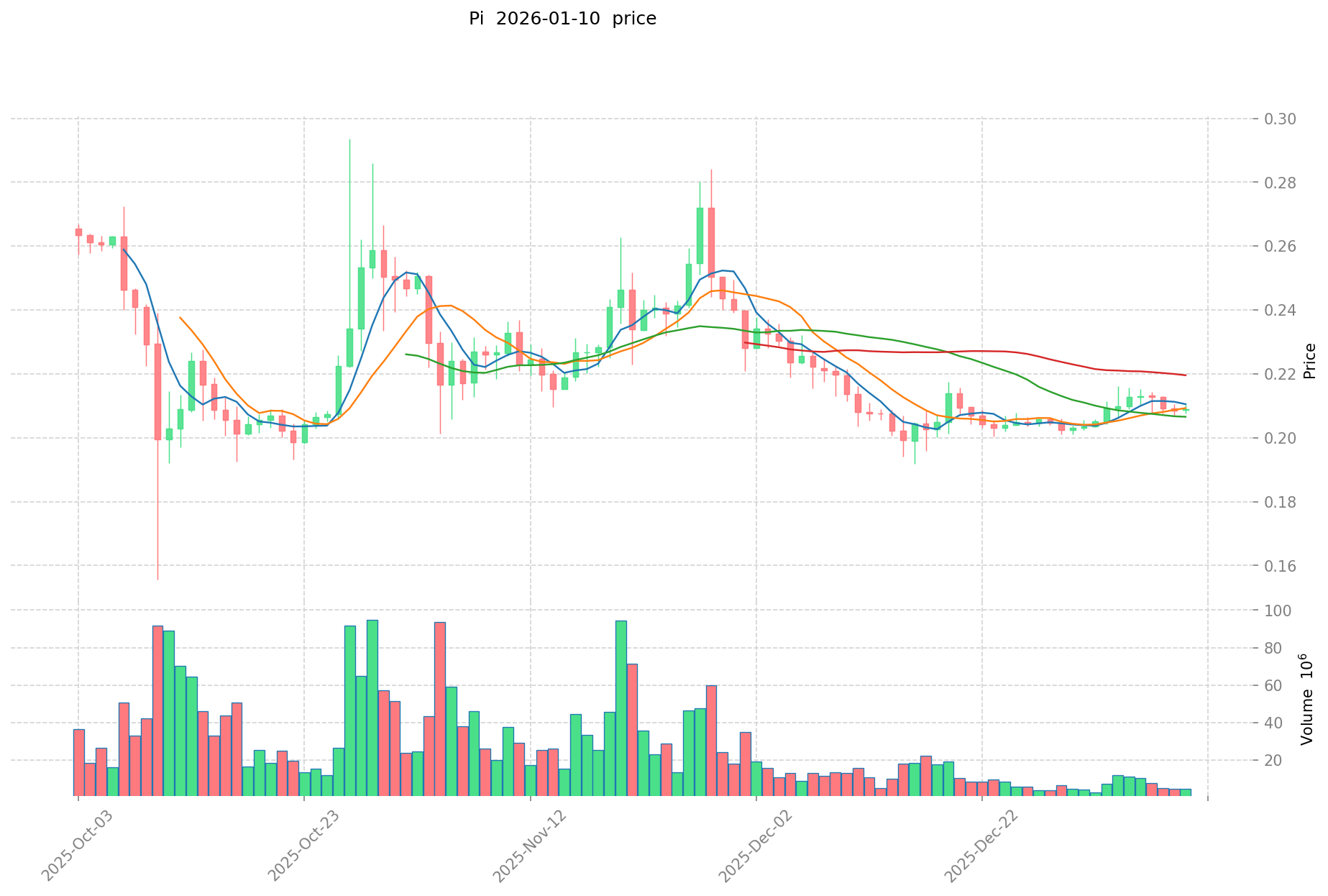
As of January 10, 2026, Pi Coin is trading at $0.2082 USD with a market capitalization of $1.75 billion. The price decreased 0.15% over the last 24 hours, reflecting stable market conditions.
How can I buy and sell Pi Coin?
Buy and sell Pi Coin on centralized exchanges like Gate.com, Bitget, OKX, or MEXC. Complete KYC verification first. Transfer your assets to a personal wallet for enhanced security after trading.
Is Pi Coin safe and what are the risks of investing in it?
Pi Coin presents risks including market volatility, regulatory uncertainties, and centralization concerns. As a relatively new project, it faces technical development challenges and liquidity risks. Investors should carefully evaluate these factors before participation.
What is the difference between Pi Coin and Bitcoin or other cryptocurrencies?
Pi Coin is a mobile-accessible cryptocurrency launched in 2019, allowing easy phone mining unlike Bitcoin's resource-intensive process. Bitcoin has a capped supply of 21 million coins with established market value, while Pi Coin remains in development with unproven market acceptance and value potential.

Discover the Pi Network Mining Process: A Beginner's Guide
Understanding Pi Network: A Comprehensive Guide to Pi Cryptocurrency

Complete Guide to Mining Pi Network Safely
Understanding Bitcoin Mining Pools: A Comprehensive Guide

Comprehensive Guide to Pi Network Mining: Unlocking New Possibilities

Comprehensive Guide to Pi Network Mining Basics

Who is Gemini Founder?

RPC (Remote Procedure Call)

Is Trading FOREX Haram?

How Cryptocurrencies Are Taxed in Germany
Hamster Kombat Daily Cipher Code Guide: Unlock Bonus Rewards