LCP_hide_placeholder
fomox
MarketsPerpsSpotSwap
Meme
Referral
More
Become a Smart Money on Tracker
Search Token/Wallet
/

What is STRK token and how does it compare to other staking coins in the crypto market?
2026-01-09 03:40:35
Altcoins
Crypto staking
Ethereum
Layer 2
Zero-Knowledge Proof
Article Rating : 4
86 ratings
This article provides a comprehensive overview of STRK token, the native utility asset powering the Starknet ecosystem, and its competitive positioning within the crypto staking market. It examines STRK's three core functions—staking, governance, and transaction fee settlement—while analyzing its 7.28% APR yield against established staking coins like Ethereum (2.87%), Solana (5.9-6.6%), and Avalanche (7-11%). The guide explores STRK's unique advantages through its STARK cryptographic proof technology, market valuation of $836.5 million, and multifunctional tokenomics. Readers will understand STRK's differentiation in the Layer 2 landscape, its staking mechanics launched in November 2024, and how it compares across performance, market share, and risk-reward dynamics, making it essential for investors evaluating emerging staking opportunities.
What is STRK token and how does it compare to other staking coins in the crypto market?

STRK Token Overview: Utility, Supply Mechanics, and Core Features in the Staking Ecosystem

The STRK token serves as the native utility asset powering the Starknet ecosystem, designed to facilitate three essential functions: staking, governance, and transaction fee settlement. With a maximum supply capped at 10 billion tokens, STRK was established to enable STARK-based scaling in a decentralized manner, distinguishing itself within the broader staking coin landscape. The token plays a pivotal role in securing the network through its staking mechanism, which went live in November 2024, allowing participants to lock their holdings and earn rewards while contributing to network validation and operations.

At its core, the STRK supply mechanics reflect a carefully designed tokenomics structure that incentivizes long-term participation. Validators and stakers receive rewards through a minting curve that adjusts based on the total amount of STRK locked within the protocol, creating a dynamic incentive system. Beyond staking, STRK holders gain governance rights, enabling them to participate in protocol updates and shape Starknet's development direction. The token also functions as a utility asset for transaction fees within the ecosystem, ensuring holders maintain economic participation in network operations. With approximately 50% of the total supply currently in circulation, the token maintains balanced distribution mechanics that support both current operations and future growth, positioning STRK as a multifunctional asset within the competitive staking coin ecosystem.

Competitive Landscape: STRK vs Major Staking Coins (ETH, SOL, AVAX) - Performance and Market Valuation Comparison

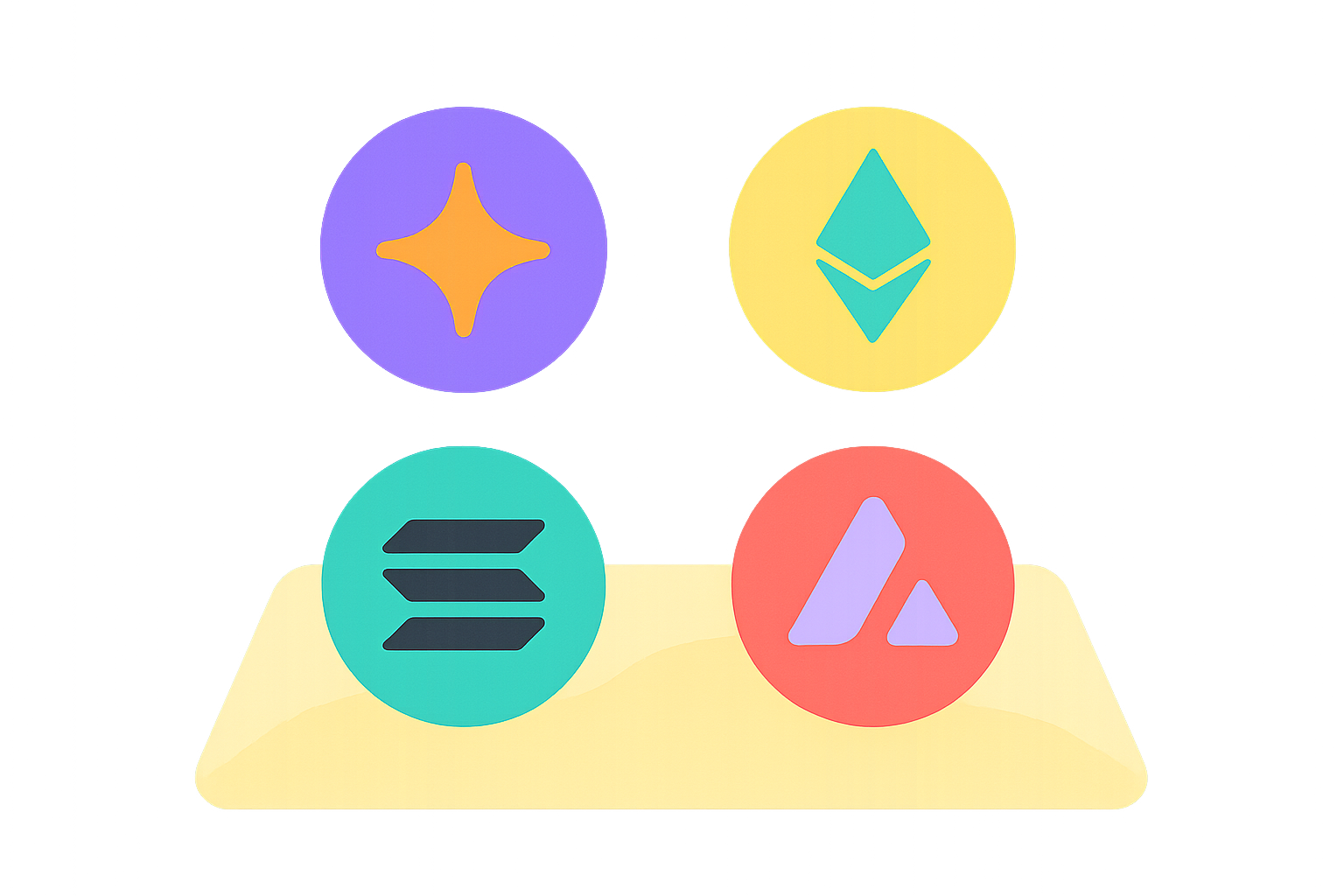
When evaluating STRK alongside established players in the staking ecosystem, the market valuation differences become immediately apparent. Ethereum maintains a dominant market presence with significantly larger capitalization, while Solana commands substantial institutional interest through its $70.32 billion market cap. STRK, as a ZK-Rollup Layer 2 solution, operates at a different scale with a $836.5 million market valuation and $1.39 billion fully diluted valuation, positioning it as an emerging player with considerable growth potential compared to more established staking coins.

The staking yield comparison reveals interesting dynamics across these platforms:

Coin APR Yield Market Cap Price
STRK 7.28% $836.5M $0.0843
ETH 2.87% $1.06T+ $3,984
SOL 5.9-6.6% $70.32B $124
AVAX 7-11% $5.96B $14.12

STRK's attractive 7.28% APR positions it competitively against Avalanche's 7-11% range, substantially outpacing Ethereum's conservative 2.87% yield. While STRK's token price remains modest, its relatively higher staking rewards and strategic positioning on Ethereum's security layer present distinct advantages for yield-focused participants evaluating the crypto staking landscape.

Market Position and Differentiation: STRK's Unique Advantages and Current Market Share Dynamics

Starknet distinguishes itself in the competitive Layer 2 landscape through its validity proof architecture and innovative Cairo VM framework. While competitors like Polygon and Arbitrum leverage different scaling approaches, STRK's implementation of STARK technology delivers cryptographically proven transaction validity rather than relying on assumption-based models. This technical foundation creates a meaningful differentiation point that appeals to security-conscious users seeking Ethereum's strongest guarantees.

The network's market positioning reflects this technical advantage. With a total market capitalization of $836.5 million and approximately $500 million in total value locked, Starknet commands a notable share among Ethereum Layer 2 solutions. The ecosystem maintains 51.3K active addresses executing transactions, indicating sustained user engagement beyond initial adoption phases. This growing participation demonstrates traction in a competitive environment where numerous scaling solutions compete for developer and user mindshare.

STRK tokens amplify the platform's competitive positioning through multifunctional utility. Holders participate in governance decisions, vote on protocol parameters, and earn staking rewards—creating economic incentives aligned with network security. This integrated approach to tokenomics differentiates STRK from purely transactional competitors, positioning the token as a genuine stake in Starknet's long-term success rather than a fee-payment mechanism alone.

FAQ

What is STRK token and what is its primary use case in the Starknet ecosystem?

STRK is the native token of Starknet, securing the network and enabling transactions. It incentivizes network participants and ensures proper network operations and functionality.

How does STRK staking work and what are the potential rewards for staking STRK coins?

STRK staking lets you earn rewards while securing the Starknet network. Stakers receive a percentage of transaction fees based on network conditions and staking terms. Higher stakes typically generate increased reward potential.

What are the key differences between STRK and other major staking coins like ETH 2.0, SOL, and ATOM?

STRK offers higher staking returns around 9.74 percent compared to ETH's 3-6 percent, SOL's 8 percent, and ATOM's 15 percent. STRK features distinct tokenomics and risk-reward dynamics tailored to Starknet's scaling solution architecture.

What is the tokenomics and supply information for STRK token?

STRK has a circulating supply of $1.39 billion with a fully diluted valuation of $19 billion. Less than 10% of total supply is currently in circulation, indicating significant long-term growth potential as more tokens enter the market over time.

Is STRK token a good investment compared to other staking cryptocurrencies and what are the risks?

STRK offers competitive staking yields exceeding 9.74%, outperforming Ethereum's 3-6% returns. However, investors face market volatility, liquidity risks, and regulatory uncertainties inherent to emerging crypto assets.

How does the Starknet network security model compare to other blockchain platforms that offer staking?

Starknet uses STARK cryptographic proofs for off-chain transaction validation, batching thousands of transactions into a single proof submitted to Ethereum. Unlike many blockchains relying on on-chain staking consensus, Starknet's validity-rollup mechanism combines STRK token staking with advanced cryptography for superior security and scalability compared to traditional staking models.
* The information is not intended to be and does not constitute financial advice or any other recommendation of any sort offered or endorsed by Gate.

Share

Content

STRK Token Overview: Utility, Supply Mechanics, and Core Features in the Staking Ecosystem

Competitive Landscape: STRK vs Major Staking Coins (ETH, SOL, AVAX) - Performance and Market Valuation Comparison

Market Position and Differentiation: STRK's Unique Advantages and Current Market Share Dynamics

FAQ

Related Articles
Understanding ZK Rollups: A Guide to Coins and Their Functionality
Understanding ZK Rollups: A Guide to Coins and Their Functionality

This article delves into the foundational concepts of ZK rollups, a leading layer-2 scaling solution that addresses Ethereum's challenges with congestion and fees. It explains the operational dynamics and advantages of ZK rollups, highlighting their enhanced security and efficient transaction handling. Readers will gain insights into the differences between ZK and optimistic rollups and understand the significance of ZK rollups coins like Polygon, StarkNet, and Immutable X. The article is particularly useful for traders, developers, and blockchain enthusiasts aiming to grasp the evolving Ethereum scaling solutions and identify investment opportunities in the cryptocurrency ecosystem.
2025-12-20 01:26:39
What is Ethereum (ETH) fundamental analysis: whitepaper logic, use cases, and technical innovations explained
What is Ethereum (ETH) fundamental analysis: whitepaper logic, use cases, and technical innovations explained

The article explores Ethereum's fundamental analysis, focusing on its revolutionary shift from Proof-of-Work to Proof-of-Stake, along with the implementation of EIP-1559's deflationary model. It delves into how Layer 2 solutions like Optimism, Arbitrum, and zkSync enhance Ethereum's network capability and value capture, and discusses the strategic technical upgrades that bolster scalability. With a comparative analysis against Solana, the article highlights Ethereum's staking dynamics and market dominance. This comprehensive overview benefits institutional investors, developers, and Ethereum enthusiasts seeking insights into its evolving infrastructure and economic implications. Keywords: Ethereum, Proof-of-Stake, EIP-1559, Layer 2, scalability.
2025-12-20 03:07:13
What is Monad (MON)? A Deep Dive Into the Layer 1 Blockchain's Whitepaper Logic, Use Cases, and 10,000 TPS Technology

What is Monad (MON)? A Deep Dive Into the Layer 1 Blockchain's Whitepaper Logic, Use Cases, and 10,000 TPS Technology

# Article Overview: What is Monad (MON)? Monad is an EVM-compatible Layer 1 blockchain delivering 10,000 TPS throughput through parallel execution architecture and MonadBFT consensus. This comprehensive guide explores how Monad achieves unprecedented performance while maintaining full developer compatibility, making it ideal for traders, developers, and institutional investors seeking high-speed blockchain solutions. The article examines Monad's groundbreaking technical architecture, $90M TVL ecosystem traction, MIT-led team credentials from Jump Trading, and strategic token economics with 50.6% lock until 2029. Readers will understand Monad's competitive advantages over Ethereum, Solana, and Polygon, discover real-world use cases in gaming and DeFi, and learn MON token staking opportunities on Gate. Whether you're evaluating Layer 1 investments or building next-generation dApps, this deep dive provides essential insights into why Monad represents a fundamental breakthrough in blockchain scalability.
2026-01-07 03:11:41
How Does Polkadot's DOT Compare to Ethereum in 2025?

How Does Polkadot's DOT Compare to Ethereum in 2025?

The article explores Polkadot's growth compared to Ethereum by 2025, highlighting DOT's $50 billion market cap accomplishment. It delves into staking participation rates, demonstrating Polkadot's 80% rate outperforming Ethereum's 20%. Readers will gain insights on DOT's transaction speed of 1000 TPS versus Ethereum's 15 TPS, showcasing scalability and efficiency advantages. The article targets blockchain adopters and investors interested in network performance and staking benefits. Key sections include market cap comparison, staking analysis, and transaction speed evaluation, optimizing readability and keyword focus for seamless understanding.
2025-11-07 02:52:29
What is STRK token's fundamentals: Does Starknet have strong fundamentals support for 2026?
What is STRK token's fundamentals: Does Starknet have strong fundamentals support for 2026?

This article evaluates STRK token's fundamentals and Starknet's growth potential through 2026. It examines four core pillars: zk-STARK technology providing Ethereum Layer 2 scalability through validity proofs, STRK token economics with 900 million staked tokens signaling strong community conviction, development roadmap achievements including zero downtime and 168% ecosystem growth, and institutional-grade team governance. The analysis demonstrates Starknet's strengthening fundamentals through tangible progress rather than speculation. Key 2026 catalysts include Staking v3 implementation, Stwo upgrade deployment, and expanding DeFi and gaming ecosystems. This comprehensive assessment reveals STRK maintains competitive advantages in zero-knowledge technology while positioning favorably against Arbitrum and Optimism for institutional capital attraction heading into 2026.
2026-01-14 03:50:24
How does WEMIX compare to competing blockchain platforms in market share and transaction fees?
How does WEMIX compare to competing blockchain platforms in market share and transaction fees?

This article provides a comprehensive comparison of WEMIX against leading blockchain platforms including Ethereum, Solana, and Polygon, focusing on market share positioning and transaction fee structures. WEMIX demonstrates significant competitive advantages through its SPoA consensus mechanism, delivering faster transaction finality and lower fees comparable to Solana and Polygon while maintaining superior decentralization through its 40 Node Council Partners governance model. The platform differentiates itself via advanced zk-rollup technology and cross-chain interoperability capabilities, enabling seamless multi-blockchain operations. Current market analysis reveals WEMIX holds 0.0062% market dominance with steady ecosystem growth, including 23% active address expansion in Q4 2025. Ideal for developers and users seeking cost-efficient, high-throughput blockchain infrastructure, particularly in gaming and DeFi applications, WEMIX positions itself as a comprehensive alternative to isolated network solutions
2026-01-13 07:02:05
Recommended for You
Crypto Tax Glossary

Crypto Tax Glossary

This comprehensive guide explores essential tax implications for cryptocurrency conversions and transactions. It covers critical concepts including cost basis determination, selection of cost basis methods (FIFO, HIFO, LIFO, Specific Identification), and proper reporting through IRS forms like Form 1040, Form 1099-DA, and Schedule 1. The article examines taxable events, from trading and staking to hard forks and NFT transactions, while detailing deduction strategies and loss harvesting techniques. Readers will understand how to calculate taxable gains, apply capital losses to offset income up to $3,000 annually, and navigate special situations like miscellaneous income reporting and Net Investment Income Tax. Whether you're a casual trader using Gate or active investor, this guide provides practical frameworks for accurate tax compliance and strategic tax planning in cryptocurrency activities.
2026-01-14 06:07:08
What is VRA token economics model: distribution, inflation, and governance explained
What is VRA token economics model: distribution, inflation, and governance explained

This comprehensive guide explores VRA token economics, covering its carefully structured allocation of 200 billion maximum supply distributed among team, investors, and community. The article details Verasity's deflationary mechanism powered by Proof of View revenue buybacks and token burning, which removed 50% of maximum supply in 2023. It examines attractive staking rewards offering 15% APY for long-term holders while enabling governance participation. The guide clarifies voting rights proportional to holdings, unlock schedules beginning February 2023, and unique economic incentives through video rewards and esports competitions. Ideal for crypto investors, protocol enthusiasts, and token holders seeking to understand sustainable tokenomics design and community-aligned governance models in blockchain ecosystems.
2026-01-14 06:07:06
What is VRA price volatility and how does Verasity token trading compare to Bitcoin
What is VRA price volatility and how does Verasity token trading compare to Bitcoin

This article examines VRA price volatility characteristics and compares Verasity token trading dynamics with Bitcoin. VRA demonstrates 7.95% volatility with a 1.14 beta coefficient, indicating 14% higher sensitivity to market movements than Bitcoin. The token exhibits a 24-hour trading range of $0.0001149 to $0.0001407, reflecting significant short-term fluctuations typical of mid-cap cryptocurrencies. Analysis reveals VRA maintains a 0.78 correlation coefficient with Bitcoin, showing substantial price co-movement in the cryptocurrency ecosystem. Technical analysis identifies progressive resistance levels, with long-term projections targeting $0.002965 by 2032. For traders on Gate and other platforms, understanding VRA's heightened volatility, liquidity constraints, and Bitcoin dependency is essential for effective risk management and strategic positioning in emerging token markets.
2026-01-14 06:05:27
How Many Sectors in Stock Market: Essential Guide
How Many Sectors in Stock Market: Essential Guide

This comprehensive guide explores the 11-sector framework that organizes the stock market according to the Global Industry Classification Standard. The article explains how sectors—from Technology and Healthcare to Energy and Utilities—respond differently to economic cycles and market conditions, making sector analysis essential for informed investment decisions. Readers will discover why sector allocation often outperforms individual stock selection, learn practical strategies for sector rotation, and understand how traditional market sectors correlate with cryptocurrency valuations. Whether you're building a diversified portfolio or analyzing market trends, mastering sector dynamics enables smarter capital allocation and improved risk management across both traditional equities and emerging digital assets.
2026-01-14 06:03:59
How to Check if a Bitcoin is Real

How to Check if a Bitcoin is Real

This comprehensive guide provides essential methods for verifying Bitcoin authenticity and security in the cryptocurrency landscape. It explores how blockchain technology's transparent ledger system enables transaction verification through public records and transaction IDs. The guide presents practical tools including blockchain explorers that allow independent verification without third-party reliance, alongside step-by-step verification processes requiring six confirmations for high-value transactions. It emphasizes selecting trusted exchanges and secure wallets as fundamental strategies for protecting authentic Bitcoin holdings. The content identifies common fraud indicators such as unrealistic return promises, high-pressure tactics, and unverified communication channels. Additionally, it covers professional authentication services for substantial holdings and institutional investors. By combining technical knowledge, security tools, and awareness of emerging threats, users can confidently navigate the Bi
2026-01-14 06:02:03
How Will CMC20 Price Volatility Impact Its $250 Target by 2026: Support Level at $192, Resistance at $197

How Will CMC20 Price Volatility Impact Its $250 Target by 2026: Support Level at $192, Resistance at $197

This article provides a comprehensive analysis of CMC20's price dynamics and viability of reaching the $250 target by 2026. Currently trading at $194.31 with 2.5% weekly gains, CMC20 operates between critical support at $192 and resistance at $197, with robust trading volumes of $2.6-4.8 million daily. Technical analysis reveals mixed signals with bearish moving averages suggesting near-term downside pressure toward $152 by February 2026. The 135% annualized volatility introduces significant risk but also opportunity for achieving price targets, contingent on favorable macroeconomic conditions and controlled leverage levels. The article examines how Federal Reserve policy, inflation, and derivatives market dynamics collectively influence CMC20's trajectory, providing traders with actionable support-resistance framework and risk assessment guidelines for navigating volatility on the path to $250.
2026-01-14 06:01:31