What Is Bitcoin Halving? An Easy-to-Understand Guide to Its Mechanism and Price Relationship
What Is the Bitcoin Halving?
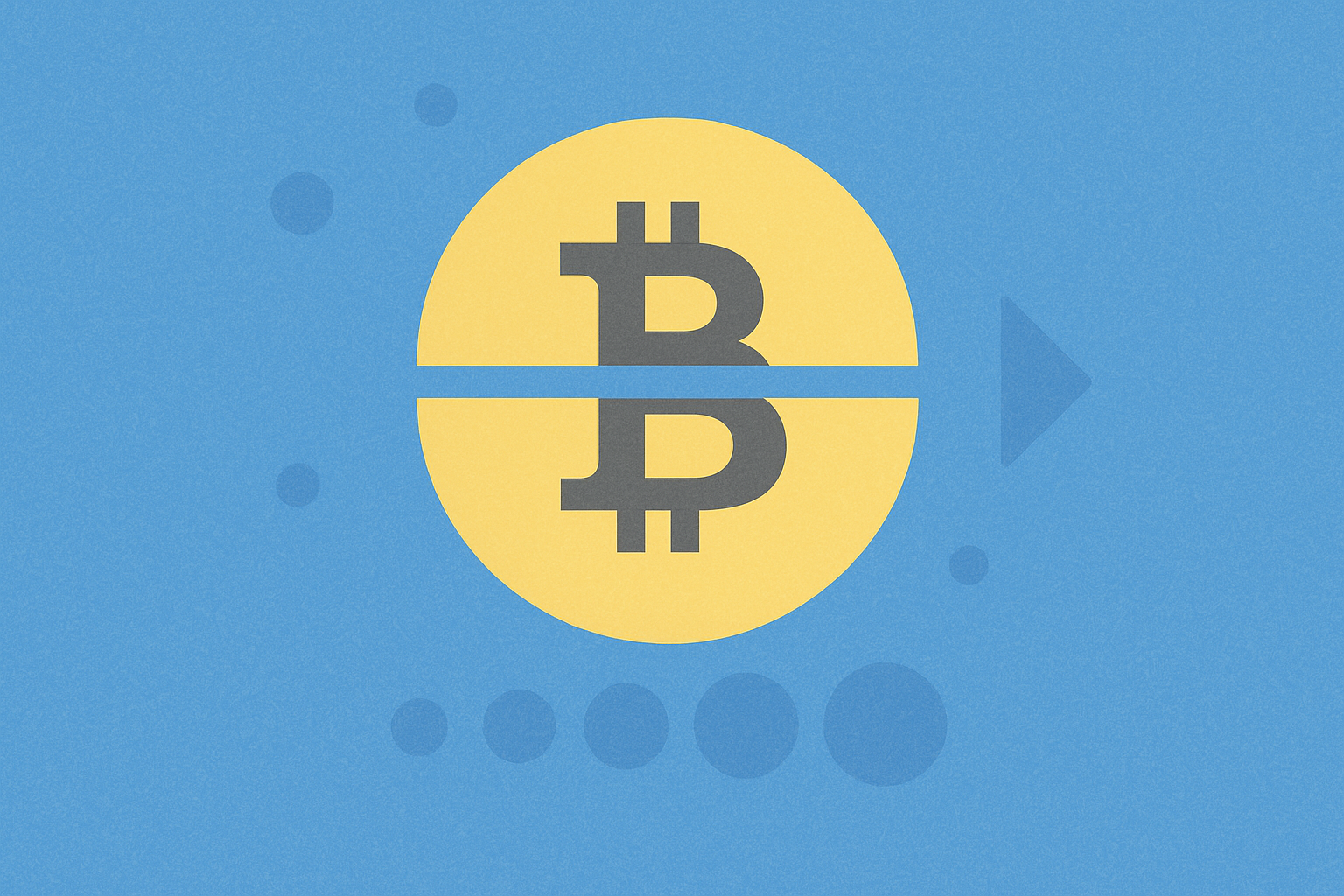
The Bitcoin halving is a predetermined protocol that gradually reduces the rate at which new bitcoin is issued. Approximately every four years, the number of new bitcoins generated is cut in half according to the system’s core rules.
This event is frequently discussed in the context of price movements. Many have heard that “prices went up after the last halving.” However, the link between the halving and price is not straightforward. In reality, market conditions, investor sentiment, and regulatory changes all interact to shape price dynamics.
Understanding the halving is crucial for grasping Bitcoin’s supply mechanism and is foundational for anyone taking a long-term view of the crypto asset markets.
How the Halving Works
Bitcoin is issued as a reward for verifying and recording new transaction blocks—a process known as mining. Mining secures the Bitcoin network using advanced computational methods.
Each time a new block is added through mining, miners receive newly created bitcoin as a reward. This reward is halved at predetermined intervals—a process called the “halving.”
Specifically, after every 210,000 blocks, the mining reward automatically drops by 50%. Since a block is mined roughly every ten minutes, this means a halving occurs about every four years. This reduction is hard-coded into the protocol and not subject to human intervention.
Initially, the reward per block was 50 BTC. It fell to 25 BTC after the first halving, 12.5 BTC after the second, 6.25 BTC after the third, and 3.125 BTC after the fourth.
This mechanism ensures the amount of newly issued bitcoin entering the market decreases gradually over time, increasing Bitcoin’s scarcity by design.
Why Does Bitcoin Have a Halving?
The halving exists to prevent an oversupply of bitcoin. By pre-programming a decelerating issuance schedule, Bitcoin avoids sudden dilution of value. This is similar to how precious metals like gold retain value due to their limited quantities.
From the outset, Bitcoin’s total supply is capped at 21 million coins. No new bitcoin can ever be created beyond this limit. This cap serves as a key anti-inflationary design, supporting long-term price stability.
The halving staggers issuance—more bitcoin is released in the early years, with diminishing amounts over time. This approach reduces the pace of new supply, smoothing out the impact on the market and avoiding sudden supply shocks.
This process is immutable—no entity can change it at will. Unlike fiat currencies, which central banks can manipulate, Bitcoin’s issuance schedule is fixed and transparent from day one. This predictability is a defining difference from traditional currencies.
Bitcoin Halving History and Price Trends
Whenever a Bitcoin halving approaches, one of the main questions is, “What happened to the price?” History shows significant price movements after past halvings. Analyzing prior data provides insights into the halving’s relationship with price action.
Historical Bitcoin Halvings and Price Movements
| Halving Year | Block Reward Change | Price Range Around Halving | Subsequent Price Trend |
|---|---|---|---|
| 1st: 2012 | 50 → 25 BTC | ~$12 | Substantial rise over several months to a year |
| 2nd: 2016 | 25 → 12.5 BTC | ~$650 | Continued rising into the next year |
| 3rd: 2020 | 12.5 → 6.25 BTC | ~$8,800 | New highs about 18 months later |
| 4th: 2024 | 6.25 → 3.125 BTC | ~$63,000 | Future trend will depend on market conditions |
This table confirms that prices have risen after certain halvings, especially after the first and second events, which saw notable surges. As a result, halvings are often seen as catalysts for price increases.
However, it’s important to recognize that Bitcoin’s price isn’t dictated by halving events alone. Instead, price formation involves multiple overlapping factors, including:
- Capital inflows (e.g., institutional investment)
- Global economic trends and interest rates (macroeconomic factors)
- Regulatory and legal developments (crypto policy worldwide)
- Investor sentiment and trading flows (market psychology)
- Technological advancements and network upgrades
Therefore, rather than viewing the halving as a “guaranteed price surge,” it should be understood as a key milestone in Bitcoin’s supply schedule. Past trends may not always repeat, so a prudent approach is necessary.
Impacts of the Bitcoin Halving
The halving’s impact extends beyond price. Reduced issuance alters Bitcoin’s underlying economics and affects the broader market. Let’s examine its multifaceted effects.
Impact on Miners and Mining
After a halving, mining rewards are instantly cut by half, slashing miners’ income. Mining is capital- and energy-intensive, so changes in profitability can force some operators out of business.
High electricity and equipment costs can render mining unprofitable in some regions. Around halving events, some miners—especially those with older equipment or in high-cost areas—may exit the industry.
Nevertheless, the situation often stabilizes over time. If the price rises or mining equipment becomes more efficient, profitability can recover. The introduction of next-generation mining hardware also improves the revenue per unit of electricity consumed.
Overall, halvings serve to reshuffle the mining landscape, weeding out less efficient operators and ensuring the network remains robust and competitive.
Impact on the Broader Crypto Asset Market
Bitcoin dominates the crypto asset market, representing a large share of total capitalization and acting as the “reserve currency” of digital assets. Consequently, each halving draws heightened market attention.
Bitcoin’s movements often drive capital flows into other cryptocurrencies. This dynamic can trigger so-called altcoin seasons—periods when non-Bitcoin assets come into the spotlight.
Conversely, during volatile periods, caution may prevail, risk aversion may rise, and the market may enter a correction phase.
While the halving itself doesn’t unilaterally move the market, it is a focal point for investor interest, often accompanied by increased media coverage and new participant inflows.
Shifting Supply and Demand Dynamics
The halving reduces the rate at which new bitcoin enters the market, slowing supply growth. According to basic economic principles, if supply decreases while demand remains steady or rises, prices tend to increase.
If demand is constant or rising while supply growth slows, the supply-demand balance shifts, influencing prices and market momentum. Institutional adoption and new financial products (like Bitcoin ETFs) can dramatically affect demand.
However, demand is shaped by factors beyond the halving, including regulatory shifts, macroeconomic trends, tech developments, and competition from other digital assets.
Thus, it’s essential to view the halving in the broader market context. While it introduces a predictable supply change, price ultimately reflects supply-demand interplay.
Summary
The Bitcoin halving is a crucial protocol feature that regulates issuance pace. Roughly every four years, new supply is cut in half, slowing the overall rate of bitcoin entering circulation. This design increases scarcity and supports long-term price stability.
Past halvings have often been followed by significant price moves. Historical data shows that price surges frequently occur after these events. Still, price is never determined by the halving alone—market forces, capital flows, and investor psychology all play pivotal roles.
Rather than treating halvings as price signals, they are best seen as key milestones for understanding Bitcoin’s supply schedule. Grasping this mechanism is vital for sound, long-term investment decisions.
Bitcoin halvings will continue on schedule, with the next expected around 2028. Each event will generate discussion, but the core principles remain unchanged. To navigate the market effectively, understand the halving’s many impacts and maintain a long-term perspective—avoid being swayed by short-term volatility.
With a solid understanding of the halving’s mechanics and background, investors can manage risk more effectively. The halving underscores Bitcoin’s transparency and predictability, providing a foundation for informed, strategic investment decisions.
FAQ
What Is the Bitcoin Halving?
The Bitcoin halving is an event where mining rewards are cut in half roughly every four years. This mechanism limits supply and increases scarcity, helping to drive long-term price appreciation.
How Does the Bitcoin Halving Work?
The Bitcoin halving occurs automatically every four years. The blockchain protocol reduces mining rewards by 50% each time a set number of blocks are produced. This limits new supply, boosts scarcity, and supports long-term price growth.
How Does the Bitcoin Halving Affect Price?
The halving cuts mining rewards in half, reducing the market supply and typically putting upward pressure on prices. Volatility often increases around halving events.
When Does the Bitcoin Halving Occur? When Were Prior Halvings?
The most recent halving occurred on April 20, 2024, reducing block rewards from 6.25 BTC to 3.125 BTC. The next halving is scheduled for March 2028, when rewards will drop to 1.5625 BTC.
How Does the Bitcoin Halving Impact Miners?
The halving cuts miners’ block rewards by 50%. This forces less efficient miners out of the market and improves profitability for those who remain. In the long run, it drives the industry toward more efficient operations.
What’s the Relationship Between the Bitcoin Halving and Supply?
Every four years, Bitcoin undergoes a halving, reducing miner block rewards by half. This slows new supply and guarantees that the total supply will never exceed 21 million BTC. The resulting scarcity supports upward price pressure.
When Is the Next Bitcoin Halving?
The next Bitcoin halving is expected in 2028. At that time, miner block rewards will fall from the current 6.25 bitcoins to 3.125 bitcoins.
Understanding Bitcoin Halving: Exploring Cryptocurrency Cycles and Their Frequency
Understanding the Mechanism and Impact of Bitcoin Halving

Understanding Bitcoin Halving Events and Their Effects on Cryptocurrency Markets
What Is Bitcoin Halving? A Clear Explanation of the Mechanism and Its Relationship to Price

Understanding Bitcoin's Supply Limit: How Many Bitcoins Exist?
Current Bitcoin Circulation and Supply Analysis

MPC Wallet: Experience a new level of secure and seamless crypto asset management

Roam Listing Details: Launch Date, Price Predictions, and How to Buy $ROAM

DePIN: Hardware Set to Transform Web3

MACD指標是什麼?

Bitget Wallet Valued at $300 Million After Investment from Mainstream Exchange, Boasts 10 Million Users