fomox
MarketsPerpsSpotSwap
Meme
Referral
More
Search Token/Wallet
/

What is the difference between Bitcoin and other cryptocurrencies: Market cap, performance, and user adoption comparison?
2025-12-29 04:25:42
Altcoins
Bitcoin
Blockchain
Crypto Insights
Cryptocurrency market
Ethereum
Article Rating : 4
157 ratings
# Article Overview Bitcoin dominates the cryptocurrency market with over 50% market cap share, significantly outpacing Ethereum, BNB, and Solana. This comprehensive comparison examines Bitcoin's market dominance, performance volatility, user adoption metrics, and competitive security advantages versus emerging DeFi alternatives. Designed for investors seeking clarity on cryptocurrency differentiation, the article contrasts Bitcoin's proven Proof of Work security model and institutional adoption with altcoins' higher volatility and speculative returns. Through transaction volume analysis, active address tracking on Gate, and risk-return profiling, readers gain essential insights into why Bitcoin maintains flagship cryptocurrency status. Perfect for both novice and experienced traders evaluating portfolio allocation strategies across digital assets.
What is the difference between Bitcoin and other cryptocurrencies: Market cap, performance, and user adoption comparison?

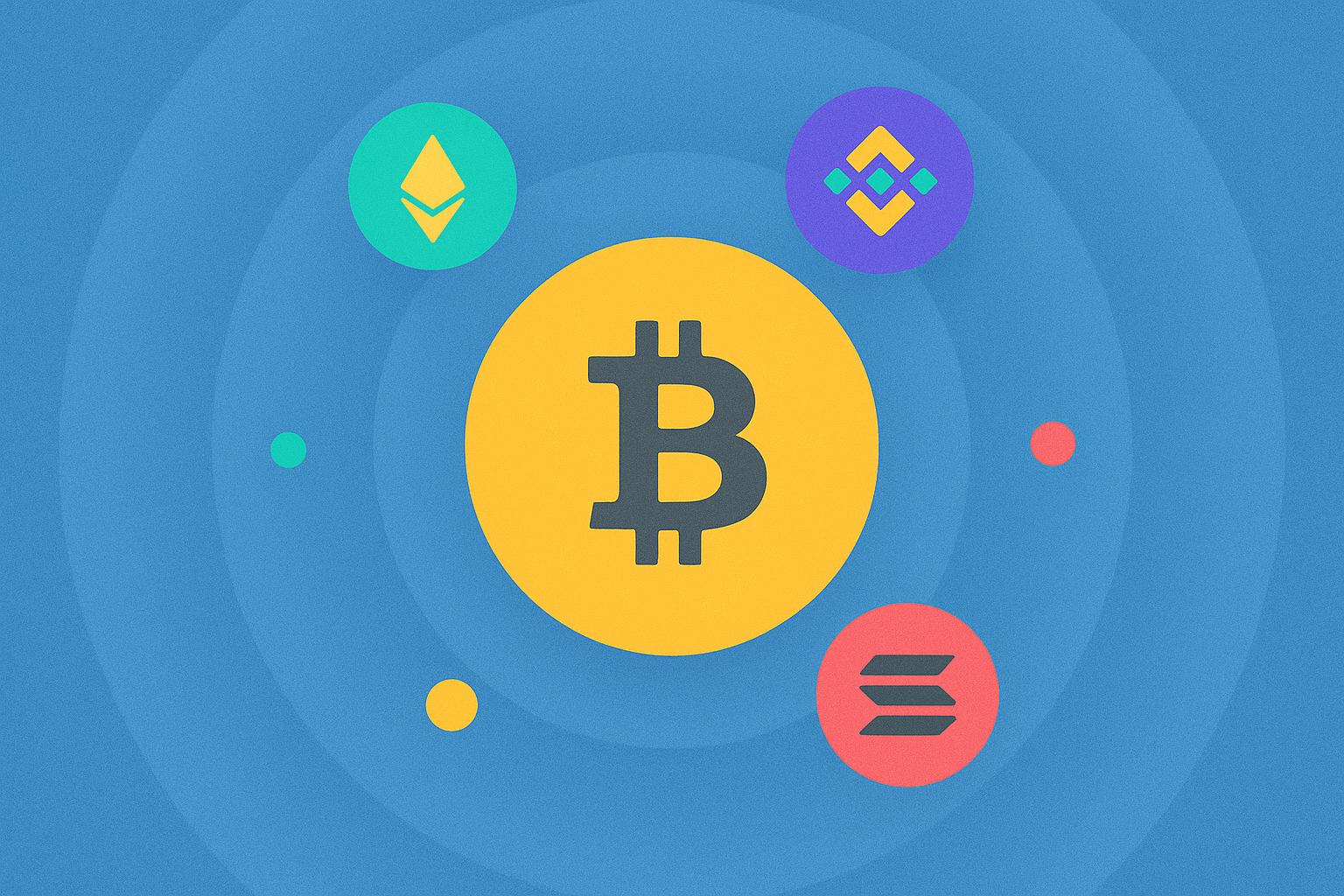
Bitcoin's market dominance: 50%+ market cap share versus Ethereum, BNB, and Solana

Bitcoin maintains extraordinary market leadership with over 50% of the entire cryptocurrency market capitalization, a position that underscores its foundational role in digital assets. This substantial market cap share significantly exceeds that of major alternative cryptocurrencies, establishing Bitcoin as the dominant force in crypto markets. Ethereum, despite being the second-largest blockchain network, commands considerably less market dominance, typically ranging between 15-20% of total market capitalization. BNB and Solana, while prominent Layer-1 competitors with robust ecosystems and substantial user bases, collectively represent a fraction of Bitcoin's market presence.

The concentration of market cap among Bitcoin reflects multiple factors including its first-mover advantage, established institutional adoption, and brand recognition across mainstream finance. When examining the broader cryptocurrency landscape, smaller cryptocurrencies and emerging tokens occupy increasingly fragmented market positions, each claiming minimal market dominance percentages. This hierarchical structure reveals how Bitcoin's market supremacy influences overall cryptocurrency market dynamics and investor allocation strategies. The significant gap between Bitcoin's market cap share and alternative cryptocurrencies demonstrates why Bitcoin remains the industry benchmark for cryptocurrency performance and adoption metrics, shaping how the entire digital asset ecosystem develops.

Performance metrics comparison: Bitcoin's volatility and returns against altcoins over 12-month period

Over the past 12 months, Bitcoin's performance metrics reveal a fundamentally different risk-return profile compared to altcoins. Volatility measures the degree of price fluctuation, while returns track percentage gains or losses. Bitcoin typically demonstrates lower volatility due to its larger market cap and institutional adoption, whereas altcoins experience significantly wider price swings that attract risk-tolerant investors.

Bitcoin's 12-month returns reflect its role as a relatively stable store of value within cryptocurrency markets. In contrast, altcoins show extreme performance variance. For instance, Pepe declined 77.10% over the same period, falling from higher valuations to its current price of $0.000004294. This dramatic pullback illustrates how altcoins can experience substantial losses despite occasional rallies.

Metric Bitcoin Altcoins (Example: PEPE)
12-Month Return Moderate stability -77.10%
Historical Range Narrower volatility Wide price swings
Market Cap Rank #1 dominance Lower ranking (#52)
Price Stability Higher Lower

The distinction in performance metrics stems from market maturity and liquidity differences. Bitcoin's established exchange presence and trading volume create natural price stabilization mechanisms. Altcoins, particularly newer or lower-ranked tokens, experience higher slippage and larger percentage moves from proportionally smaller trade volumes.

Investors comparing these performance metrics must recognize the volatility-return tradeoff. Bitcoin offers predictable, moderate returns with reduced downside risk, while altcoins provide opportunities for substantial gains alongside elevated loss potential. Understanding these performance characteristics helps investors align cryptocurrency allocations with their risk tolerance and investment horizons.

User adoption and network effects: Transaction volume and active addresses across leading cryptocurrencies

Transaction volume and active addresses represent critical metrics for evaluating how widely a cryptocurrency is actually being used beyond speculative trading. These indicators directly reflect the health and engagement of a blockchain network's user base, distinguishing between coins with genuine utility and those with inflated valuations. Bitcoin maintains dominance in daily transaction volume due to its longest operational history and institutional recognition, but examining active addresses across leading cryptocurrencies reveals fascinating adoption patterns that correlate with specific use cases and community engagement levels.

Active addresses—unique wallets conducting transactions within a given period—serve as a proxy for network adoption, offering insights into how many individuals or entities actively participate in the ecosystem. When transaction volume increases alongside rising active addresses, it typically signals organic growth and strengthening network effects. Conversely, high volume concentrated among few addresses may indicate whale manipulation or limited genuine adoption. Platforms like gate enable traders to monitor these metrics across different cryptocurrencies, helping investors distinguish between projects with expanding user bases and those experiencing artificial activity spikes. The disparity in transaction patterns and holder numbers among established cryptocurrencies and emerging tokens highlights how adoption directly influences long-term viability and market positioning within the competitive digital asset landscape.

Competitive advantages: Bitcoin's security model and brand positioning versus emerging DeFi alternatives

Bitcoin's Proof of Work consensus mechanism has demonstrated unparalleled security over more than 15 years, establishing it as the industry benchmark for blockchain security. The network's immense computational power and distributed validator base create formidable barriers against attacks, a security advantage that emerging DeFi alternatives struggle to replicate. While newer platforms offer innovative features, they often operate with younger security architectures and smaller validator networks, introducing greater vulnerabilities. Bitcoin's established security model directly translates to user confidence and institutional adoption.

Beyond technical security, Bitcoin commands unmatched brand positioning within the cryptocurrency space. As the original and most recognized digital currency, Bitcoin benefits from first-mover advantage and cultural significance that shapes market perception and user adoption patterns. This brand dominance influences capital allocation, with Bitcoin consistently maintaining the largest market capitalization relative to emerging DeFi alternatives. The recognition factor alone drives institutional investment and retail adoption, creating a self-reinforcing cycle. In contrast, newer DeFi platforms must invest substantial resources to build comparable market trust and user awareness. Bitcoin's established position as the flagship cryptocurrency provides distinct advantages in market positioning, making it the preferred choice for risk-averse investors seeking proven security infrastructure and recognized store-of-value properties that emerging alternatives have yet to fully establish.

FAQ

What differentiates Bitcoin from other cryptocurrencies?

Bitcoin is the first and most established cryptocurrency with the largest market cap and highest transaction volume. It features the strongest network security through Proof of Work mining, greatest institutional adoption, and serves primarily as a store of value rather than a utility token like many alternatives.

How is the market cap of Bitcoin compared to other cryptocurrencies?

Bitcoin dominates the crypto market with the largest market cap, typically representing 40-50% of total cryptocurrency market value. It significantly exceeds Ethereum, the second-largest, maintaining its position as the most valuable and widely adopted digital asset globally.

How is Bitcoin performance compared to other cryptocurrencies?

Bitcoin leads in market cap, stability, and long-term adoption. It typically shows lower volatility than altcoins and maintains stronger trading volumes. Bitcoin's network security and first-mover advantage make it the most resilient cryptocurrency across market cycles.

What is the adoption rate for Bitcoin compared to other digital assets?

Bitcoin leads in adoption with the largest user base and merchant acceptance globally. Its network has billions in daily transaction volume, significantly exceeding most altcoins. Bitcoin's first-mover advantage and institutional adoption drive higher overall penetration compared to other cryptocurrencies.

Why is Bitcoin considered the most valuable cryptocurrency despite competition from alternatives?

Bitcoin leads due to its first-mover advantage, strongest network security, highest transaction volume, and greatest institutional adoption. Its proven track record and scarcity make it the most trusted store of value in crypto.

What are the key advantages and disadvantages of Bitcoin versus newer cryptocurrencies like Ethereum?

Bitcoin advantages: first-mover dominance, highest security, store-of-value focus. Disadvantages: slower transactions, limited functionality. Ethereum advantages: smart contracts, programmability, diverse applications. Disadvantages: higher complexity, greater volatility.

FAQ

Will Pepe Coin reach $1?

While Pepe Coin's price depends on market conditions and adoption, reaching $1 is theoretically possible with sufficient trading volume and community growth. However, this would require significant market capitalization increases and sustained investor interest over time.

Is Pepe Coin a good investment?

Pepe Coin offers strong potential with growing community support and increasing transaction volume. Its meme-driven appeal combined with blockchain fundamentals makes it an attractive opportunity for investors seeking exposure to emerging digital assets.

Is Pepe Coin has a future?

Yes, Pepe Coin has strong future potential. With growing community support, increasing transaction volume, and expanding adoption, Pepe Coin is positioned for significant growth in the crypto market.

Which coin will boom in 2025?

PEPE has strong momentum with increasing adoption and community engagement. Its viral nature and cultural relevance position it well for potential growth in 2025, especially with rising transaction volume and expanding use cases in the crypto ecosystem.

What is Pepe Coin and how does it work?

Pepe Coin is a decentralized cryptocurrency token built on blockchain technology. It operates as a peer-to-peer digital asset, enabling fast and secure transactions without intermediaries. Users can trade, hold, and transfer Pepe tokens directly through smart contracts, creating a transparent and community-driven ecosystem.

How to buy and sell Pepe Coin?

You can buy Pepe Coin on major cryptocurrency exchanges by creating an account, completing verification, depositing funds, and placing buy orders. To sell, navigate to your wallet, select Pepe Coin, choose your selling price, and execute the sell order. Always use secure wallets and verify exchange authenticity before trading.

What are the risks of investing in Pepe Coin?

Pepe Coin carries market volatility risks, regulatory uncertainty, and liquidity concerns. As a meme coin, it depends heavily on community sentiment and social media trends, which can lead to rapid price fluctuations. Investors should only allocate funds they can afford to lose.

What is the total supply and current market cap of Pepe Coin?

Pepe Coin has a total supply of 420.69 trillion tokens. The market cap fluctuates based on current price movements. Check real-time data for the latest market cap valuation.
* The information is not intended to be and does not constitute financial advice or any other recommendation of any sort offered or endorsed by Gate.

Share

Content

Bitcoin's market dominance: 50%+ market cap share versus Ethereum, BNB, and Solana

Performance metrics comparison: Bitcoin's volatility and returns against altcoins over 12-month period

User adoption and network effects: Transaction volume and active addresses across leading cryptocurrencies

Competitive advantages: Bitcoin's security model and brand positioning versus emerging DeFi alternatives

FAQ

FAQ

Related Articles
What is the difference between top cryptocurrency competitors: market cap, performance, and user adoption in 2026

What is the difference between top cryptocurrency competitors: market cap, performance, and user adoption in 2026

This article analyzes the competitive landscape of leading cryptocurrencies in 2026, examining market cap dominance, performance metrics, and user adoption trends. Bitcoin commands $2.1 trillion in market cap with 56.79% dominance, while Ethereum holds $850 billion as the second-largest asset. The article compares transaction speeds across top competitors—Solana processes 65,000+ TPS versus Bitcoin's 7 TPS—and highlights energy efficiency advantages of Proof-of-Stake systems. User adoption metrics reveal market share redistribution through active addresses and trading volume analysis. The content identifies three critical differentiation strategies: Layer 2 solutions for scalability, DeFi integration for ecosystem expansion, and regulatory compliance for institutional credibility. Essential reading for investors, traders, and stakeholders evaluating cryptocurrency competitive positioning through 2026.
2026-01-10 04:21:23
The Origins of Digital Currency Evolution

The Origins of Digital Currency Evolution

This article offers a comprehensive overview of the evolution of cryptocurrency, tracing its origins from early digital currency efforts in the 1980s to contemporary developments like Ethereum's smart contracts and DeFi. It addresses the historical progression and pivotal moments, including Bitcoin's inception, challenges like exchange hacks, and regulatory hurdles. The piece targets enthusiasts and professionals seeking to understand the transformative impact of cryptocurrencies on global finance. With a logical flow from historical roots to modern implications, it ensures keyword visibility for digital currency, Bitcoin, Ethereum, and blockchain, optimizing readability for quick scanning.
2025-12-03 06:52:57
The Birth of Digital Currency: A Journey through its History

The Birth of Digital Currency: A Journey through its History

"The Birth of Digital Currency: A Journey through its History" offers a comprehensive exploration of cryptocurrency's evolution from its nascent conceptual phase to becoming a major global financial force. It delves into the pioneering attempts at digital currency before Bitcoin, the breakthrough introduction of Bitcoin, and the subsequent rise of altcoins and Ethereum. The article addresses the challenges, security breaches, and market volatility cryptocurrencies have faced, showcasing their transformative impact on digital finance. This guide caters to readers interested in the historical trajectory and current dynamics of the crypto world, emphasizing key milestones, market growth, and technological advancements.
2025-11-26 11:56:04
What Is the Current State of the Crypto Market in 2025?

What Is the Current State of the Crypto Market in 2025?

The article examines the state of the crypto market in 2025, focusing on market capitalization, Bitcoin's scarcity dynamics, trading volume, and exchange coverage. It highlights the dominance of top cryptocurrencies with a market cap exceeding $10 trillion and Bitcoin's high circulation rate, intensifying its digital gold status. The report delves into the robust trading activity, surpassing $500 billion across major exchanges, with Pi Network noted for liquidity and adoption on multiple platforms, including Gate. Intended for investors and traders, it provides insights into cryptocurrency market growth, distribution, and strategic positioning.
2025-11-28 01:08:26
How Does the Current Crypto Market Overview Look in 2025?

How Does the Current Crypto Market Overview Look in 2025?

The article provides an overview of the crypto market dynamics as of 2025, focusing on Bitcoin and Ethereum's continued dominance despite the growth of alternative networks like NEAR Protocol. It analyzes market capitalization, institutional investment trends, trading volumes, and liquidity metrics to assess market maturity and stability. The article addresses investor interest and market participation by examining Gate's role in supporting NEAR's trading ecosystem. It targets investors and market analysts for insights on market hierarchies, trading volume patterns, and exchange contributions to the crypto ecosystem's maturation.
2025-11-16 05:23:45
Understanding Hard Forks in Blockchain Technology

Understanding Hard Forks in Blockchain Technology

This article provides an in-depth exploration of hard forks in blockchain technology, highlighting their impact and the strategies to navigate these changes. It differentiates hard forks from soft forks, discusses causes (including accidental hard forks), and evaluates the pros and cons. Readers will learn how to avoid hard forks and understand their implications for cryptocurrencies, making it vital for developers, investors, and enthusiasts in the crypto space. This comprehensive guide is perfect for those looking to understand the complexities of blockchain evolution.
2025-11-21 05:36:13
Recommended for You
How to Evaluate Cryptocurrency Community and Ecosystem Activity in 2026

How to Evaluate Cryptocurrency Community and Ecosystem Activity in 2026

This comprehensive guide teaches investors and enthusiasts how to systematically evaluate cryptocurrency community strength and ecosystem vitality in 2026. The article explores four critical assessment dimensions: social media presence through Twitter and Telegram follower growth patterns, community engagement metrics measuring interaction frequency and participation rates across platforms, developer activity tracking technical contributions and innovation momentum, and DApp ecosystem scale evaluating maturity through application diversity and transaction volume. By analyzing these interconnected indicators—including on-chain data, social sentiment, GitHub activity, and governance participation—readers gain practical frameworks to distinguish genuine community momentum from artificial engagement. The guide emphasizes cross-platform verification methods, real-time monitoring tools like Santiment and LunarCrush, and balanced multi-metric analysis approaches. Whether assessing investment opportunities or buildin
2026-01-12 02:12:18
What are SPL-20 Inscriptions?

What are SPL-20 Inscriptions?

SPL-20 inscriptions represent a groundbreaking standard on Solana that fundamentally transforms digital art storage by embedding media directly on-chain rather than relying on external platforms like IPFS. Drawing inspiration from Bitcoin's BRC-20 standard, SPL-20 provides creators and collectors with enhanced integrity, permanence, and security through unique on-chain addresses. The ecosystem has experienced explosive growth with over 400,000 inscriptions and 33,500+ creators participating by late 2023, driven by Solana's low transaction costs and accessible inscription process. A distinctive feature is controlled mutability, enabling dynamic art evolution while maintaining security through update authority mechanisms. LibrePlex has been instrumental in developing this open-source protocol, while major platforms like Magic Eden integrate SPL-20 support. Although challenges regarding network bloat and scalability persist, SPL-20 inscriptions continue reshaping Solana's NFT landscape by offering unprecedented
2026-01-12 02:11:03
What is a token economics model and how do token allocation, inflation mechanisms, and governance work?

What is a token economics model and how do token allocation, inflation mechanisms, and governance work?

This comprehensive guide explores token economics models, a critical framework for sustainable cryptocurrency projects. The article covers four essential pillars: token allocation mechanisms that balance team (15-20%), investors (30-40%), and community (40-50%) distribution to prevent value concentration; inflation and emission schedules that control supply dynamics while maintaining token value stability; deflationary strategies including burning and buyback programs that create programmatic scarcity; and governance tokenomics that distribute voting rights proportional to holdings. Using MYX Finance's 1 billion token structure as a practical example, the guide demonstrates how balanced design across these components creates resilient ecosystems. The article includes detailed FAQs addressing common questions about allocation methods, inflation rate design, on-chain governance, and sustainability evaluation criteria, providing readers with actionable insights for understanding or designing effective token econ
2026-01-12 02:10:53
What Are the Biggest Smart Contract Vulnerabilities and Crypto Exchange Security Risks in 2026?

What Are the Biggest Smart Contract Vulnerabilities and Crypto Exchange Security Risks in 2026?

This comprehensive guide examines critical security vulnerabilities threatening the crypto ecosystem in 2026. The article covers reentrancy attacks and logic flaws draining over $100M annually from DeFi protocols, alongside centralized exchange custody risks responsible for $14B in documented losses since 2020. It explores how smart contract vulnerabilities in derivatives platforms and AMMs create cascading ecosystem threats through complex state management failures. The guide outlines essential mitigation strategies including professional code audits, multi-signature wallet implementations, and non-custodial trading models like Gate's platform that eliminate third-party asset custody. Designed for developers, traders, and security-conscious investors, this resource bridges the gap between understanding attack vectors and implementing robust defensive measures to protect digital assets throughout 2026.
2026-01-12 02:09:18
Identifying Fake Customer Service Scams
Identifying Fake Customer Service Scams

This comprehensive guide protects cryptocurrency users from fake customer support scams through practical education and verification strategies. The article explores how scammers impersonate official support staff in Telegram, Discord, and social media to steal mnemonic phrases and private keys. It provides systematic verification steps to authenticate legitimate support, identifies critical warning signs including unsolicited messages and urgency tactics, and outlines immediate actions if compromised. Essential protection measures include enabling two-factor authentication, never sharing sensitive credentials, and verifying contacts through official channels only. The guide emphasizes developing long-term security habits while building community awareness, ensuring users recognize sophisticated social engineering tactics before falling victim to these increasingly prevalent crypto scams.
2026-01-12 02:08:54
What Does On-Chain Data Analysis Reveal About Whale Movements and Active Addresses in Crypto Markets

What Does On-Chain Data Analysis Reveal About Whale Movements and Active Addresses in Crypto Markets

This comprehensive guide explores on-chain data analysis as a powerful tool for understanding cryptocurrency market dynamics through whale movements and active addresses. The article examines how active address trends measure genuine network participation independent of price fluctuations, providing insights into ecosystem health across major blockchains. It analyzes whale accumulation patterns as leading indicators for market direction, revealing how large holder movements create favorable conditions for price momentum. The guide covers transaction volume dynamics as sentiment barometers, network fee economics reflecting investor behavior and market congestion, and demonstrates how these interconnected metrics enable traders to distinguish authentic adoption from speculation. By integrating active address monitoring, whale tracking, and transaction analysis through platforms like Gate, market participants gain comprehensive on-chain intelligence for anticipating significant price movements and identifying in
2026-01-12 02:07:36