

LCP_hide_placeholder
fomox
MarketsPerpsSpotSwap
Meme
Referral
More
Smart Money Recruitment
Search Token/Wallet
/

What Is Token Economy Model: Distribution, Inflation, and Governance Mechanisms Explained

2026-01-16 05:07:47
Blockchain
Crypto Ecosystem
DAO
DeFi
Web 3.0
Article Rating : 3.5
half-star
24 ratings
This comprehensive guide explores the token economy model architecture, examining three core pillars that drive sustainable blockchain ecosystems. The article begins by analyzing token distribution strategies that balance allocations between teams, investors, and communities—demonstrating how fair distribution mechanisms build long-term trust and ecosystem engagement. It then explores inflation and deflation dynamics, explaining how staking rewards and token burning mechanisms maintain price stability while incentivizing network participation. The guide further examines governance integration with burn protocols, showing how community voting strengthens economic discipline and aligns stakeholder interests. Through practical examples from leading protocols on Gate and beyond, this resource provides actionable insights for understanding token supply management, voting mechanisms, and effective governance structures that create resilient crypto economies.
What Is Token Economy Model: Distribution, Inflation, and Governance Mechanisms Explained

Token Distribution Architecture: Balancing Team, Investor, and Community Allocation for Ecosystem Growth

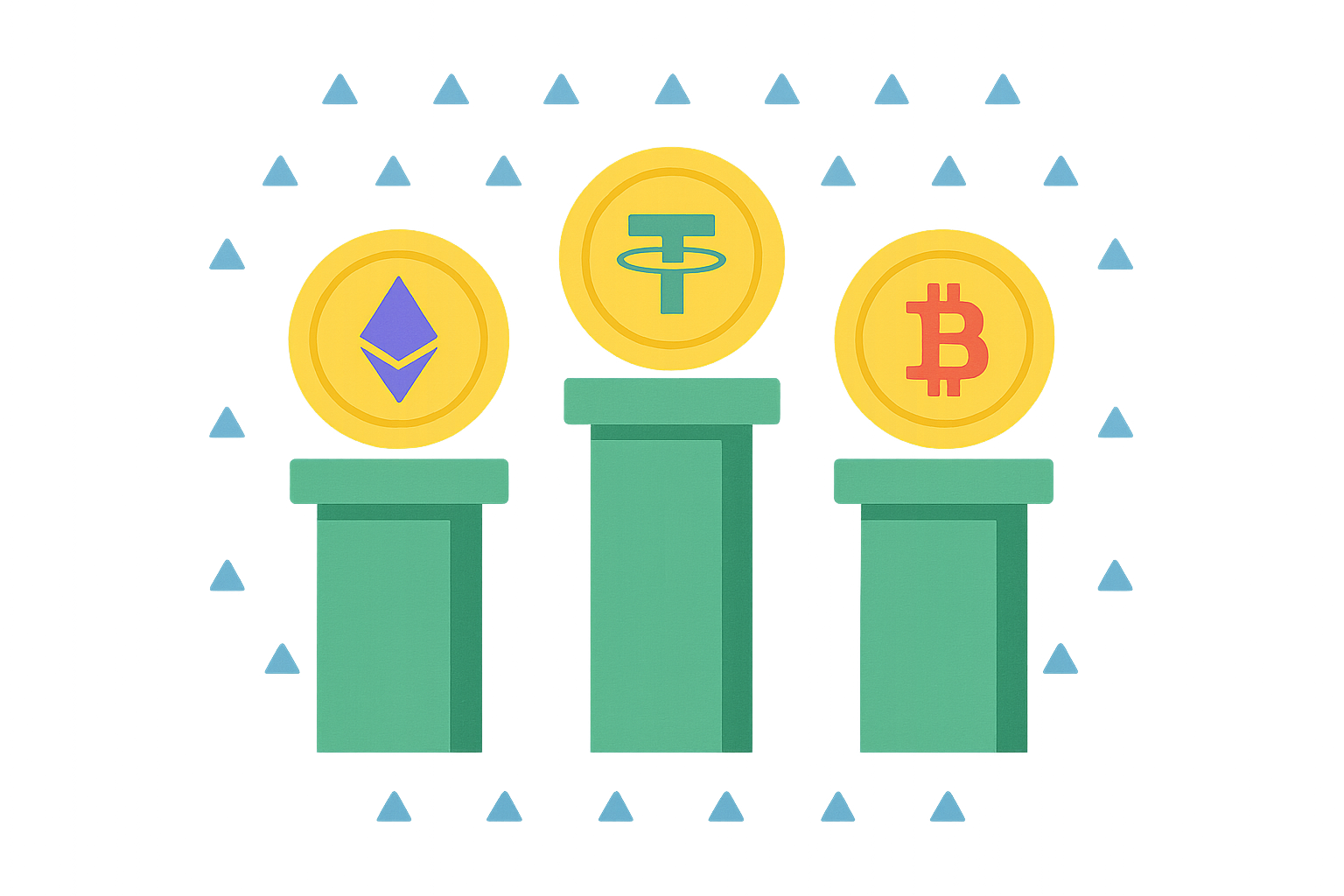
Effective token distribution architecture serves as the foundation for sustainable blockchain ecosystem development. The allocation strategy determines not only initial funding availability but also long-term incentives for all stakeholders involved. A well-designed distribution model acknowledges that each participant group—team members, investors, and community members—plays a distinct role in project success, requiring thoughtful balance to prevent conflicts and ensure equitable participation.

Consider how major projects structure their token economy allocation:

Allocation Category GRS Distribution Purpose
Ecosystem Development 38.5% Community growth and platform features
Team Allocation 27% Core development and operations
Investor Allocation 19.7% Early capital and strategic support

This distribution architecture directly impacts ecosystem growth trajectories. By dedicating over one-third of tokens to ecosystem development, projects signal commitment to community engagement and platform expansion rather than prioritizing team or investor returns exclusively. This approach has demonstrated effectiveness in building sustainable token economies where adoption rates correlate strongly with perceived fairness in initial allocation. Strategic allocation thus becomes a governance mechanism itself, establishing trust foundations that influence how communities perceive long-term project viability and their willingness to participate actively.

Inflation and Deflation Mechanisms: Designing Supply Dynamics to Maintain Long-term Token Value Stability

Effective supply management requires balancing two opposing forces: inflation that drives network incentives and deflation that preserves long-term value. Inflationary mechanisms introduce new tokens into circulation through emissions, staking rewards, and mining activities. This approach encourages active participation by rewarding users for securing the network or providing liquidity, which is essential during growth phases. However, unchecked inflation dilutes each token holder's relative share, potentially eroding value if supply expands faster than ecosystem utility grows.

Deflation counteracts this dilution through token burning—removing tokens from circulation permanently. When transactions trigger burns or protocol fees are destroyed, total supply decreases, creating genuine scarcity. This scarcity can drive value appreciation if demand remains stable or increases.

Successful token economies employ hybrid approaches that integrate both mechanisms strategically. Ethereum exemplifies this with staking rewards (inflationary) balanced against fee burns (deflationary), creating dynamic equilibrium. The key is calibrating emission rates to match ecosystem growth and user base expansion while simultaneously implementing burn mechanisms that respond to network activity. When designed thoughtfully, controlled inflation supports early-stage adoption and liquidity provision, while integrated deflation ensures long-term scarcity and value preservation. Projects that neglect either component risk either unsustainable value dilution or insufficient incentives for network participation, ultimately undermining ecosystem stability and token viability.

Burn and Governance Integration: Leveraging Destruction Protocols and Voting Rights to Strengthen Economic Models

Token burn mechanisms and governance structures create a powerful feedback loop that fundamentally strengthens economic models. When destruction protocols are directly subject to community voting, they establish transparent relationships between network performance and token economics. This integration aligns stakeholder incentives by giving token holders direct influence over supply discipline decisions.

The voting-burn integration works through locked token models that tie governance power to token commitment. For instance, projects implementing veRSR governance structures restrict voting rights to locked tokens, ensuring only genuinely invested participants influence burn schedules. This approach prevents speculative governance while reinforcing that voting rights carry real economic responsibility.

Quarterly burn cycles subject to community approval demonstrate this principle effectively. Each destruction event becomes a governance milestone where token holders collectively validate the protocol's economic trajectory. This mechanism transforms token burning from a unilateral corporate action into a decentralized decision, building trust through transparency and community participation.

The market impact validates this approach's effectiveness. When gate introduced fee switches combined with token burn mechanisms, it triggered substantial price movements as investors recognized the transition toward productive assets with embedded deflationary characteristics. Similar patterns emerge across successful protocols where governance-integrated burns consistently strengthen economic health.

This integration also deters malicious behavior by imposing real financial penalties on destruction-based protocols. Voting rights tied to locked tokens create cryptographic signals of ecosystem trustworthiness, where governance participants have tangible skin in the game. The result is more disciplined economic models where supply decisions reflect genuine community consensus rather than centralized authority.

FAQ

What is a token economic model? What are its core components?

A token economic model is the framework governing how cryptocurrencies are created, distributed, and utilized within a project. Core components include token supply mechanisms, distribution strategies, inflation rates, utility functions, and governance rights that ensure sustainable ecosystem development and participant incentives.

How is total token supply determined? What impact does inflation mechanism have on token value?

Token supply is determined by project design with fixed or dynamic models. Inflation increases supply, diluting value, while deflation through burns reduces supply and enhances scarcity. Balanced mechanisms maintain price stability and investor confidence.

How are tokens distributed to different stakeholders such as teams, communities, and investors?

Tokens are typically allocated to teams, investors, and communities through governance proposals. Investors usually receive around 5%, while the majority is reserved for project development, community incentives, and ecosystem growth managed through decentralized voting mechanisms.

What is the difference between governance tokens and utility tokens? How do token holders participate in governance decisions?

Governance tokens enable holders to vote on project decisions and shape protocol direction, while utility tokens provide access to specific services within the ecosystem. Governance token holders participate through voting on proposals and protocol changes.

What are the key differences between different token economic models such as Bitcoin, Ethereum, and Cosmos?

Bitcoin focuses on digital currency with Proof of Work consensus. Ethereum enables smart contracts using Proof of Stake. Cosmos creates an interconnected multi-chain ecosystem. Each model differs in consensus mechanism, design goals, and governance structure.

What are the common risks and pitfalls to avoid in token economy model design?

Common risks include unclear objectives, unverified assumptions, and complex dependencies. Avoid changing models without re-testing, ensure external parameters don't cause unexpected outcomes, and maintain clear abstraction barriers between components.

* The information is not intended to be and does not constitute financial advice or any other recommendation of any sort offered or endorsed by Gate.

Share

Content

Token Distribution Architecture: Balancing Team, Investor, and Community Allocation for Ecosystem Growth

Inflation and Deflation Mechanisms: Designing Supply Dynamics to Maintain Long-term Token Value Stability

Burn and Governance Integration: Leveraging Destruction Protocols and Voting Rights to Strengthen Economic Models

FAQ

Related Articles
Secure Blockchain Identity Verification: A Human-Centric Approach

Secure Blockchain Identity Verification: A Human-Centric Approach

The article explores the challenges of traditional KYC methods in the face of AI threats and presents decentralized identity verification as a solution. It highlights the need for robust proof of humanity systems to combat AI-powered fraud, targeting financial institutions and online platforms. The text outlines decentralized identity's advantages, such as user control, data sovereignty, and interoperability. It discusses innovative projects like World ID and Gitcoin Passport, emphasizing the shift towards secure digital identities. Key themes include AI, KYC vulnerabilities, decentralized identity, and proof of humanity.
2025-12-07 08:00:30
Web2 vs. Web3: Key Differences Explained

Web2 vs. Web3: Key Differences Explained

Experience the evolution from Web2 to Web3 in our in-depth comparison. Discover the essential distinctions, hurdles, and possibilities emerging as the internet advances. See how Web3 has the potential to revolutionize digital ownership, enhance privacy, and empower users, driving greater decentralization and prioritizing user control in the digital landscape.
2025-11-02 10:09:15
How Active is Polkadot's Community and Ecosystem in 2025?

How Active is Polkadot's Community and Ecosystem in 2025?

This article explores the vibrant growth and activity within Polkadot's community and ecosystem in 2025. It highlights its strong social media presence with 1.6 million Twitter followers, substantial developer engagement, and the deployment of over 100 DApps. Polkadot ranks second among blockchain platforms for developer activity, emphasizing its robust infrastructure and appeal. The article also examines a 30% rise in community engagement through inclusive governance proposals. Insights cater to crypto enthusiasts and developers interested in a thriving multi-chain protocol. Key themes include ecosystem expansion, community participation, and governance innovation.
2025-12-08 02:20:53
Exploring Consortium Blockchains for Enterprise Solutions

Exploring Consortium Blockchains for Enterprise Solutions

This article delves into the unique characteristics and benefits of consortium blockchains for enterprises, focusing on their semi-decentralized architecture that enhances data privacy and transaction speed. With examples from industries like finance and energy, it highlights how consortium blockchains can facilitate collaboration, reduce costs, and improve scalability. Addressing challenges such as centralization risks and governance complexity, the article underscores the need for robust cooperation among entities. Suitable for enterprises seeking efficient, shared governance blockchain solutions, this insightful analysis contributes to understanding and leveraging consortium blockchain technology.
2025-12-05 09:16:42
Understanding DeFi Insurance: A Comprehensive Guide to Decentralized Coverage Solutions

Understanding DeFi Insurance: A Comprehensive Guide to Decentralized Coverage Solutions

This article delves into the realm of DeFi Insurance, highlighting its innovative protection against crypto protocol risks. It explores the mechanics, advantages, and challenges of decentralized coverage, emphasizing transparency, efficiency, and accessibility. Designed for crypto traders and DeFi participants, the article addresses security concerns, liquidity management, and premium determination. Structured in a logical sequence, it covers the evolution of blockchain insurance, contrasting it with traditional models while forecasting its impact on the financial ecosystem. The guide serves as a practical resource for understanding and engaging with decentralized insurance solutions.
2025-12-20 17:06:18
How to Measure a Crypto Project's Community and Ecosystem Vitality?

How to Measure a Crypto Project's Community and Ecosystem Vitality?

The article examines the vitality of a crypto project's community and ecosystem by analyzing social media engagement, community interaction, developer contributions, and DApp ecosystem metrics. It addresses the needs of investors, developers, and stakeholders interested in assessing project legitimacy, user adoption, and technical progress. Beginning with social media analysis, the article progresses through interaction frequency, GitHub activity, and finally evaluates DApp ecosystem size and user adoption. This piece enhances keyword relevance for "crypto community vitality" and "blockchain ecosystem growth," ensuring optimal readability for quick scanning.
2025-11-29 04:33:00
Recommended for You
How does XLM compliance and regulatory risk impact crypto trading in 2026?

How does XLM compliance and regulatory risk impact crypto trading in 2026?

This comprehensive guide examines how XLM compliance and regulatory risks shape crypto trading strategies in 2026. The article addresses three critical dimensions affecting XLM traders: SEC classification risk and its impact on exchange listing stability, KYC/AML and Travel Rule compliance requirements creating liquidity constraints and asset freezing risks, and emerging regulatory tailwinds from MiCA driving institutional adoption and trading volume to $402 million daily. XLM benefits from non-security status, enabling unrestricted trading on major platforms including Gate, while stricter compliance frameworks concentrate liquidity among institutional-grade exchanges. The guide equips traders with actionable compliance strategies including KYC verification protocols, transaction monitoring, and cross-border regulatory navigation. Institutional recognition combined with regulatory clarity positions XLM as infrastructure-focused digital asset, offering traders compliance-ready exposure amid 2026's regulatory m
2026-01-16 06:39:50
What is Horizen (ZEN) price volatility: 21.31% volatility rate and 17.16% 7-day surge explained

What is Horizen (ZEN) price volatility: 21.31% volatility rate and 17.16% 7-day surge explained

This article analyzes Horizen (ZEN) price dynamics, explaining the 21.31% volatility rate reflecting high market sensitivity across 228 active trading pairs with $255M+ daily volume. The 17.16% seven-day surge stems from Horizen's successful Base network mainnet launch and the sector-wide privacy coin rotation in January 2026, with institutional investors recognizing compliant privacy features. Technical analysis reveals ZEN trades within a 24-hour range of $8.87-$10.8, providing key support and resistance levels for traders. Historical context shows ZEN declined 94.62% from its $168.15 ATH, yet current positioning creates long-term recovery opportunities. The article equips investors with volatility insights, technical trading references, and risk management strategies essential for navigating ZEN's dynamic market environment on Gate and understanding its blockchain ecosystem potential.
2026-01-16 06:37:27
What are the legal risks and compliance challenges facing Pump.fun in 2025?
What are the legal risks and compliance challenges facing Pump.fun in 2025?

Pump.fun faces critical legal jeopardy in 2025 centered on three interconnected compliance crises. First, the SEC alleges unregistered securities violations and inadequate KYC/AML protocols, with consolidated lawsuits expanding to RICO racketeering charges and demanding $500-600 million protocol fee forfeiture. Second, systemic market manipulation poses severe exposure: 98% of platform tokens are fraudulent, with retail traders experiencing 80%+ loss rates due to wash trading, pump-and-dump schemes, and spoofing tactics—exacerbated by absent audit disclosure and real-time surveillance infrastructure. Third, a $5.5 billion collective litigation filing (January 2026), UK regulatory bans, and founder admissions that "most people lose" create existential operational risks threatening platform sustainability. These multifaceted challenges—unregistered securities operations, market fairness deficits, and accumulating international enforcement actions—position Pump.fun as a cautionary case study in DeFi compliance v
2026-01-16 06:34:30
What is Official Trump (TRUMP) coin? Current price $5.40, market cap $1.1B ranked #66
What is Official Trump (TRUMP) coin? Current price $5.40, market cap $1.1B ranked #66

Official TRUMP coin ranks #66 globally with a $1.1 billion market capitalization and current price of $5.40, demonstrating substantial market recognition within the cryptocurrency landscape. The token maintains a controlled supply structure with 200 million circulating tokens out of one billion total, featuring a three-year linear vesting schedule that minimizes volatility from unlock events. With 24-hour trading volume exceeding $4.8 million and a price range of $5.38-$5.69, TRUMP exhibits healthy market liquidity and active trading participation. The coin trades across 48 major exchanges including Robinhood, Bybit, and Kraken, providing widespread accessibility for retail and institutional traders. This comprehensive guide explores TRUMP's market position, tokenomics framework, trading dynamics, and exchange infrastructure, offering investors critical insights into this meme coin's operational mechanics and liquidity profile.
2026-01-16 06:32:17
How does CMC20 compare to multi-coin ETFs in market share and performance metrics?

How does CMC20 compare to multi-coin ETFs in market share and performance metrics?

This comprehensive analysis examines CMC20 index tokens versus traditional multi-coin ETFs, comparing their market positioning, performance characteristics, and adoption trajectories. CMC20 operates as a decentralized on-chain portfolio tracking the top 20 cryptocurrencies on BNB Chain, while multi-coin ETFs provide regulated, centralized investment vehicles tailored for institutional participants. The comparison reveals critical distinctions: CMC20 exhibits high volatility (135% annual swings) with minimal transaction fees, whereas traditional ETFs deliver greater stability with higher annual expense ratios (0.14%-0.44%). Market share data through 2026 shows regulated crypto ETFs capturing substantially larger institutional flows, with CMC20's market capitalization reaching $6.68 million compared to explosive ETF growth. This article explores fee structures, volatility profiles, regulatory frameworks, and investor accessibility, helping both retail and institutional investors understand which diversified cry
2026-01-16 06:29:53
How Does Trust Wallet Work: A Comprehensive Guide

How Does Trust Wallet Work: A Comprehensive Guide

This article provides a comprehensive guide to Trust Wallet, a secure non-custodial mobile cryptocurrency wallet that empowers users with complete control over their digital assets across 70+ blockchain networks. Trust Wallet addresses the needs of both cryptocurrency beginners and experienced investors by offering key features including user-controlled private keys, multi-currency support, decentralized exchange access, staking capabilities, and NFT management. The article explores how the wallet operates, from setup and security procedures to DApp interaction and passive income generation through staking. While highlighting significant advantages such as enhanced security, user-friendly interface, and zero transaction fees, it also examines limitations like mobile-only availability and recovery responsibilities. Ideal for anyone seeking a reliable, accessible platform to manage diverse cryptocurrency portfolios with confidence and security.
2026-01-16 06:28:04