

LCP_hide_placeholder
fomox
MarketsPerpsSpotSwapMeme Referral
More
Smart Money Recruitment
Search Token/Wallet
/

What Would Have Happened If You Invested in Bitcoin in 2012?
2026-01-22 00:06:42
Bitcoin
Crypto Insights
Investing In Crypto
Article Rating : 3
173 ratings
This article examines Bitcoin's investment returns since 2012, providing crucial insights for investors and traders navigating cryptocurrency markets. It explores how a $1,000 investment in Bitcoin at $5 per coin would have generated extraordinary returns exceeding $4 million by 2017, while analyzing the psychological and financial challenges of holding through extreme volatility. Through real-world case studies, market cycle analysis, and historical data, the article demonstrates Bitcoin's outperformance against traditional assets like stocks and gold. It addresses the impact of technological advancements, regulatory developments, and market fluctuations on investment outcomes. Key takeaways emphasize the importance of early adoption timing, strategic risk management, emotional discipline, and long-term perspective when investing in disruptive asset classes like Bitcoin.
What Would Have Happened If You Invested in Bitcoin in 2012?

Importance of the Question for Investors, Traders, and Users

Understanding Bitcoin's historical performance is crucial for investors, traders, and users within the cryptocurrency market. It provides insights into volatility, potential returns, and risks associated with digital assets. This question is particularly significant as it highlights the potential of early investments in emerging technologies and the importance of timing in financial markets.

For both new and experienced investors, analyzing past investment outcomes can guide future investment strategies and risk management. The Bitcoin investment case from 2012 serves as a compelling example of how early adoption of disruptive technologies can yield extraordinary returns. However, it also demonstrates the importance of understanding market cycles, maintaining conviction during downturns, and implementing proper risk management strategies.

In recent years, the cryptocurrency market has matured significantly, with institutional adoption, regulatory clarity, and technological advancements reshaping the investment landscape. Examining historical performance helps investors contextualize current market conditions and make more informed decisions about portfolio allocation and risk tolerance.

Real-World Examples and Updated Insights

Case Studies of Early Bitcoin Investors

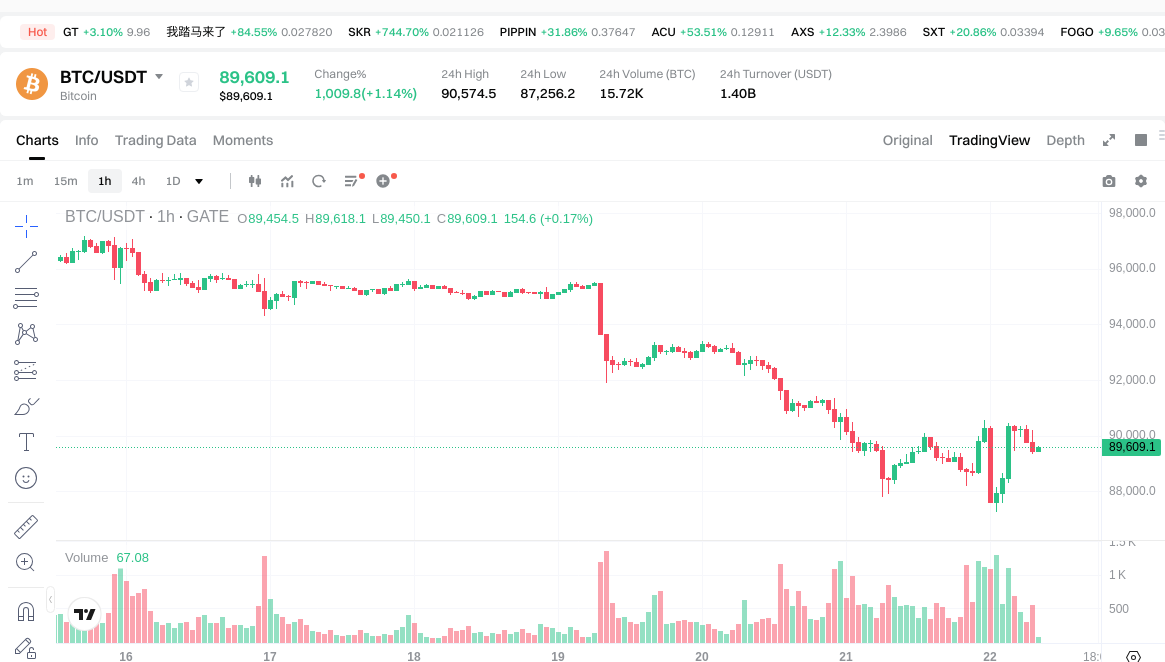
One of the most notable examples includes an early adopter who invested $1,000 in Bitcoin in 2012 when the price was approximately $5 per Bitcoin. By the end of 2017, when Bitcoin's price approached $20,000, this initial investment would have been worth approximately $4 million. image_url These examples underscore the unprecedented return potential of investing in cryptocurrencies at an early stage.
Another compelling case involves a technology enthusiast who purchased 100 Bitcoin in early 2012 for roughly $500. This individual held through multiple market cycles, experiencing the dramatic price surge of 2013, the subsequent correction, and the massive bull run of 2017. Even accounting for the volatility and periodic downturns, this investment demonstrated the power of long-term holding strategies in emerging asset classes.

Several early Bitcoin adopters have publicly shared their experiences, highlighting both the financial gains and the psychological challenges of holding through extreme volatility. Many emphasized the importance of conviction in the underlying technology and the ability to withstand significant drawdowns without panic selling.

Impact of Market Fluctuations

Despite the high returns, Bitcoin investors have faced significant volatility throughout the asset's history. For example, after reaching its peak in late 2017, Bitcoin's price dropped below $4,000 by the end of 2018, representing a decline of over 80% from its all-time high. However, it recovered in subsequent years, illustrating the cyclical nature of cryptocurrency markets and the importance of strategic investment and holding during downturns.

The market has experienced multiple boom-and-bust cycles, each characterized by periods of euphoric price appreciation followed by severe corrections. In 2013, Bitcoin surged from around $13 to over $1,000 before crashing back to $200 in 2015. This pattern repeated in 2017-2018 and again in 2020-2022, demonstrating the recurring nature of cryptocurrency market cycles.

These fluctuations have been driven by various factors, including regulatory announcements, technological developments, macroeconomic conditions, and shifts in investor sentiment. Understanding these cycles is essential for developing effective investment strategies and managing expectations regarding both potential returns and risks.

Technological Advancements and Regulation

In the past few years, advancements in blockchain technology and increased regulatory clarity have further shaped the investment landscape. These developments have contributed to stabilizing and growing the cryptocurrency market, making it more accessible and attractive to institutional investors and increasing the overall market capitalization of cryptocurrencies.

The introduction of Bitcoin futures and exchange-traded products has provided traditional investors with regulated exposure to cryptocurrency markets. Major financial institutions have launched cryptocurrency trading desks and custody solutions, signaling growing institutional acceptance. Additionally, improvements in blockchain scalability, security protocols, and user interfaces have enhanced the overall ecosystem's maturity.

Regulatory frameworks have evolved significantly, with many jurisdictions establishing clearer guidelines for cryptocurrency taxation, trading, and custody. While regulatory uncertainty remains in some regions, the overall trend toward regulatory clarity has reduced certain risks and encouraged broader participation in cryptocurrency markets.

Data and Statistics

Investing $1,000 in Bitcoin in 2012 would have purchased approximately 200 Bitcoin, assuming an average price of $5 per Bitcoin during that period. If held through the market cycles, this investment would have experienced exponential growth, with returns heavily dependent on the timing of sale.

For example, selling at the 2017 peak could have generated approximately $4 million, representing a return of 400,000% on the initial investment. Holding through the subsequent downturn and recovery cycles would have resulted in different values based on market conditions at various points in time. Even accounting for the significant volatility, the long-term trajectory has been overwhelmingly positive for early investors who maintained their positions.

The overall cryptocurrency market capitalization has grown from approximately $10 billion in 2013 to over $1 trillion in the past few years, highlighting the massive growth and interest in investments within the sector. Bitcoin has consistently maintained its position as the largest cryptocurrency by market capitalization, typically accounting for 40-60% of the total crypto market value.

Additional statistics reveal that Bitcoin has outperformed virtually all traditional asset classes over the past decade, including stocks, bonds, real estate, and commodities. However, this exceptional performance has come with significantly higher volatility, with annual price swings frequently exceeding 50% in either direction.

Conclusion and Key Takeaways

Investing in Bitcoin in 2012 would have been an extremely profitable venture for those who managed to hold their investments through market volatility. This historical analysis not only serves as a testament to the potential of cryptocurrencies as an asset class but also highlights the importance of timing, market sentiment, and technological and regulatory advancements in shaping investment outcomes.

Key takeaways include the importance of early investment in technology-driven assets, the need for strategic planning and risk management in volatile markets, and the significant impact of external factors such as technological progress and regulatory changes on market dynamics. For anyone considering cryptocurrency investment, these insights are invaluable for making informed decisions.

Investors should recognize that while historical performance has been exceptional, past returns do not guarantee future results. The cryptocurrency market continues to evolve, facing new challenges and opportunities including regulatory developments, technological innovations, competition from alternative cryptocurrencies, and integration with traditional financial systems.

Successful cryptocurrency investment requires a combination of factors: thorough research, understanding of underlying technology, risk management, emotional discipline, and realistic expectations. The journey of Bitcoin from 2012 to the present provides a fascinating case study on the risks and benefits associated with early investment in disruptive technologies and markets.

For prospective investors, the lessons from Bitcoin's historical performance emphasize the importance of diversification, dollar-cost averaging strategies, secure storage practices, and maintaining a long-term perspective despite short-term volatility. While the opportunity for 400,000% returns may not repeat, the cryptocurrency market continues to offer significant potential for those willing to navigate its unique challenges and risks.

FAQ

What was the price of Bitcoin in 2012?

In 2012, Bitcoin's price ranged from around $5 to $13. It started the year at approximately $5 and ended near $13, marking a significant bull market year for early cryptocurrency investors.

If you invested 1,000 USD in Bitcoin in 2012, how much would it be worth now?

A 1,000 USD Bitcoin investment in 2012 would be worth approximately 50-100 million USD by 2026, representing one of the most profitable investments in financial history, driven by Bitcoin's adoption and scarcity.

What was Bitcoin's market size and awareness level in 2012?

In 2012, Bitcoin's market capitalization was approximately $5 billion, with limited mainstream awareness. It remained largely unknown outside tech communities, traded at around $5-$13 per coin, and faced significant skepticism regarding its viability and adoption potential.

How did investing in Bitcoin in 2012 compare to investing in stocks or gold in terms of returns?

Bitcoin's 2012 returns vastly outperformed stocks and gold. Bitcoin surged over 8,000% by 2026, while stocks averaged 10-12% annually and gold gained roughly 300%. Bitcoin's decentralized nature and limited supply created exponential value appreciation unmatched by traditional assets.

What major price fluctuations has Bitcoin experienced from 2012 to now?

Bitcoin surged from $5 in 2012 to $1,100 by 2013, crashed to $300 in 2015, rallied to $20,000 in 2017, fell to $3,500 in 2018, recovered to $69,000 in 2021, dropped to $16,500 in 2022, and reached $100,000+ by 2025, showing extreme volatility driven by adoption, regulation, and market cycles.

What were the mining difficulty and reward rates for Bitcoin in 2012?

In 2012, Bitcoin mining difficulty ranged from 1.3 million to 3.1 million. Block rewards were 50 BTC per block until November, then halved to 25 BTC. Mining profitability depended on hardware efficiency and electricity costs, with GPU mining becoming less viable as ASIC miners emerged.

What risks and psychological pressure would you face if you held Bitcoin from 2012 to now?

Early Bitcoin holders experienced extreme volatility and multiple market cycles. You'd endure severe price fluctuations, including dramatic crashes like 2018 and 2022, testing conviction through 90%+ drawdowns. The psychological challenge involves resisting panic selling during bear markets and managing uncertainty about regulatory changes. However, those who maintained their positions through all cycles witnessed extraordinary returns, transforming modest investments into substantial wealth. Success required unwavering belief in Bitcoin's long-term potential despite constant doubt and external pressure.

* The information is not intended to be and does not constitute financial advice or any other recommendation of any sort offered or endorsed by Gate.

Share

Content

Importance of the Question for Investors, Traders, and Users

Real-World Examples and Updated Insights

Data and Statistics

Conclusion and Key Takeaways

FAQ

Related Articles
How Does On-Chain Data Analysis Reveal Bitcoin Market Trends in 2025?

How Does On-Chain Data Analysis Reveal Bitcoin Market Trends in 2025?

The article explores the significance of Bitcoin's on-chain data analysis to understand market trends in 2025. It examines key metrics like MVRV ratio, active addresses, and transaction volume, highlighting their implications for market dynamics. The discussion covers whale distribution impacts and the correlation of on-chain fees with market performance, providing insights useful for traders and institutional investors. The structured analysis offers a clear understanding of Bitcoin market trends through detailed examination of technical indicators and investor behavior. This content is tailored for financial analysts and cryptocurrency enthusiasts aiming to predict market movements effectively.
2025-12-02 01:03:31
Top Performing ASIC Miners for Maximum Profitability

Top Performing ASIC Miners for Maximum Profitability

This article explores the top-performing ASIC miners for cryptocurrency mining in 2025, focusing on maximizing profitability through efficient operations. It provides a comprehensive ranking and evaluation of nine leading ASIC models based on hash rate, power consumption, and market conditions. Designed for mining professionals and enthusiasts, it addresses key factors affecting miner profitability, such as electricity costs and network difficulty. By understanding these rankings and factors, readers can optimize their mining strategies and make informed investment decisions. The article emphasizes regular assessments to maintain competitive mining operations.
2025-12-05 04:39:17
How Does the Federal Reserve's Monetary Policy Impact Crypto Prices?

How Does the Federal Reserve's Monetary Policy Impact Crypto Prices?

This article examines how the Federal Reserve's monetary policy in 2025 affects cryptocurrency prices, highlighting a 15% drop in market cap due to policy tightening. It addresses investor reactions to inflation and Fed decisions, revealing a shift towards stablecoins and Bitcoin as inflation hedges. The article explores the evolving correlation between Bitcoin and the S&P 500, indicating institutional adoption of crypto as a financial tool. Ideal for investors and analysts, it provides insights into the macroeconomic impacts on the crypto market with enhanced readability and keyword optimization.
2025-12-04 06:06:49
Top Bitcoin Ownership: Discover the Biggest Holders

Top Bitcoin Ownership: Discover the Biggest Holders

This article delves into the major holders of Bitcoin, highlighting key entities such as individuals, companies, and countries with substantial BTC reserves. It examines the impact of "whales" like Satoshi Nakamoto and other notable investors like the Winklevoss twins and Tim Draper. Additionally, it discusses the Bitcoin acquisition strategies of companies like MicroStrategy and governments of countries such as the United States and El Salvador. Tailored for Bitcoin enthusiasts and investors, the article provides insights into Bitcoin's distribution, significant holders, and the evolving landscape of cryptocurrency ownership.
2025-11-18 12:08:35
Top Choices for Secure Hardware Wallets
Top Choices for Secure Hardware Wallets

This article explores the top choices for secure hardware wallets, emphasizing their crucial role in safeguarding cryptocurrency assets. It explains the operation and security advantages of hardware wallets over hot wallets, detailing the importance of offline private key storage. The guide is tailored for crypto holders seeking enhanced security features and long-term protection of digital assets, covering wallet options like Ledger, Trezor, and NGRAVE. With sections on wallet functionality, advantages, and top products, it provides an informative overview, supporting users in selecting an ideal crypto security solution.
2025-12-02 11:58:30
What Is the Current Market Overview for Bitcoin in 2025?

What Is the Current Market Overview for Bitcoin in 2025?

This article provides a comprehensive overview of Bitcoin's current market status as of December 2025, detailing its price movements, market sentiment, trading volumes, and historical significance. It addresses critical inquiries such as Bitcoin's consolidation phase, market dominance, and liquidity characteristics essential for traders and investors. The structure follows a logical sequence, highlighting recent price statistics, sentiment analysis, trading volume insights, and Bitcoin's pioneering role since 2009. Keywords optimizing the text enhance readability and quick scanning, focusing on Bitcoin price trends and market dynamics.
2025-12-06 01:01:35
Recommended for You
How Does Federal Reserve Policy and Inflation Data Impact Cryptocurrency Prices

How Does Federal Reserve Policy and Inflation Data Impact Cryptocurrency Prices

This comprehensive guide explores how Federal Reserve monetary policy and inflation data directly shape cryptocurrency valuations and market dynamics. The article examines the transmission mechanisms through which interest rate decisions impact Bitcoin and Ethereum prices, analyzing how CPI releases serve as leading indicators for market movements. Cross-asset correlation analysis reveals how S&P 500 and gold price movements telegraph crypto trajectories, demonstrating that digital assets remain intrinsically linked to macroeconomic conditions. The guide contrasts Fed tightening cycles—which reduce liquidity and risk appetite—with easing cycles that typically boost cryptocurrency prices by increasing liquidity and lowering opportunity costs. Whether you're a trader on Gate or institutional investor, understanding these macroeconomic relationships provides essential frameworks for navigating the intersection of monetary policy and digital asset investments, optimizing portfolio allocation strategies based on F
2026-01-22 01:54:28
What Is Cryptocurrency Regulatory Compliance and Why Does SEC Oversight Matter for Crypto Investors

What Is Cryptocurrency Regulatory Compliance and Why Does SEC Oversight Matter for Crypto Investors

This article provides a comprehensive guide to cryptocurrency regulatory compliance and SEC oversight, essential for modern digital asset investors. It explains how the SEC's Howey Test framework classifies cryptocurrencies as securities, fundamentally impacting market accessibility and trading restrictions. The article highlights that 90% of major exchanges now disclose audited financial reports, establishing institutional-grade compliance standards. It details KYC/AML implementation protocols that strengthen investor protection through enhanced due diligence on platforms like Gate. Additionally, the article analyzes landmark SEC enforcement actions that establish legal precedents, clarifying regulatory expectations and reducing investment uncertainty. By understanding these compliance frameworks, investors can make informed decisions about asset allocation, exchange selection, and regulatory risk assessment in an increasingly structured cryptocurrency ecosystem.
2026-01-22 01:52:34
What is the Fundamental Analysis of a Cryptocurrency Project: Whitepaper Logic, Use Cases, and Technology Innovation Explained

What is the Fundamental Analysis of a Cryptocurrency Project: Whitepaper Logic, Use Cases, and Technology Innovation Explained

This comprehensive guide explores fundamental analysis of cryptocurrency projects through four critical dimensions. It examines whitepaper core logic, including value propositions and tokenomics that drive network sustainability. The article evaluates real-world use cases and adoption potential by analyzing transaction volume, developer activity, and market metrics across 53 exchanges. It assesses technology innovation through scalability (10,000+ TPS), security mechanisms like Byzantine Fault Tolerance, and competitive differentiation. Finally, it analyzes team credibility and roadmap execution as viability indicators. The guide includes practical frameworks for investors to distinguish between speculative projects and those with genuine fundamental strength, supported by real-world examples and actionable evaluation criteria.
2026-01-22 01:50:47
What is a token economic model and how do allocation mechanisms, inflation design, and governance affect crypto value
What is a token economic model and how do allocation mechanisms, inflation design, and governance affect crypto value

This comprehensive guide explores token economic models—the foundational systems determining cryptocurrency sustainability and value. The article examines three critical pillars: token allocation mechanisms that distribute tokens among teams, investors, and communities (typically 20-30% each) to align incentives; inflation and deflation design strategies that balance supply growth with scarcity, using Render Network as a case study; and governance structures combined with burning mechanisms that enable community control over protocol evolution. These interconnected elements directly influence token scarcity, utility, and market performance. Perfect for investors, developers, and community members seeking to evaluate project sustainability and assess whether token economics genuinely support long-term value appreciation or face dilution risks.
2026-01-22 01:49:00
What Causes Crypto Price Volatility and How to Analyze Support and Resistance Levels

What Causes Crypto Price Volatility and How to Analyze Support and Resistance Levels

This article explores cryptocurrency price volatility drivers and technical analysis strategies for traders. Crypto markets experience extreme price swings due to market sentiment, regulatory news, trading volume, and macroeconomic factors—understanding these dynamics is essential for effective trading. The article explains how support and resistance levels function as critical price zones where buying and selling pressure concentrates, helping traders identify entry and exit points. Technical analysis frameworks reveal how historical price patterns and volume data pinpoint these key levels across digital assets. The guide examines real price performance correlation between altcoins and Bitcoin/Ethereum movements, demonstrating how volatility metrics like standard deviation and ATR enable risk assessment. Finally, practical strategies for using support and resistance levels combined with volatility indicators transform market uncertainty into measurable trading opportunities on platforms like Gate, equipping
2026-01-22 01:47:04
What is the fundamental analysis of a cryptocurrency project: whitepaper logic, use cases, and team background explained

What is the fundamental analysis of a cryptocurrency project: whitepaper logic, use cases, and team background explained

This comprehensive guide explains fundamental analysis of cryptocurrency projects through four essential dimensions. First, examine whitepaper core logic to understand the project's value proposition and problem-solving mechanism, exemplified by protocols like Owlto Finance addressing cross-chain inefficiencies. Second, evaluate real-world use cases and market adoption metrics—genuine projects demonstrate measurable traction across users and transactions. Third, assess technical innovation and competitive advantages by analyzing blockchain architecture and protocol improvements that create differentiation. Finally, evaluate team credibility through roadmap execution, milestone achievement rates, and track record in crypto industry. These interconnected factors determine whether a cryptocurrency project possesses sustainable value or merely speculative appeal, enabling informed investment decisions beyond price speculation and toward long-term ecosystem viability.
2026-01-22 01:45:08