Why is Solana Going Down

Market Volatility and Sentiment
One of the primary factors contributing to Solana's downward price trajectory is the inherent volatility and prevailing sentiment within the broader cryptocurrency market. The digital asset market is characterized by substantial price volatility, where valuations can experience dramatic fluctuations within relatively short timeframes. This volatility stems from multiple interconnected factors including regulatory developments, macroeconomic conditions, and investor psychology.
Over the past period, several concerns have emerged that have fostered a bearish sentiment across the cryptocurrency ecosystem. Regulatory uncertainties in major markets have created apprehension among investors, as governments worldwide continue to develop frameworks for digital asset oversight. Additionally, discussions surrounding the environmental impact of blockchain technology and energy consumption patterns have influenced market sentiment. Global economic uncertainties, including inflationary pressures and monetary policy shifts, have further contributed to risk-averse behavior among cryptocurrency investors.
These combined factors have created a challenging environment for many digital assets, including Solana. When market sentiment turns negative, even fundamentally strong projects can experience significant price corrections. Investors often react to broader market trends rather than project-specific developments, leading to correlated price movements across the cryptocurrency sector. This phenomenon explains why Solana's price decline often mirrors broader market downturns, regardless of the project's individual technological achievements or ecosystem growth.
Technical Issues and Network Congestion
Another significant factor impacting Solana's market performance relates to technical challenges and network congestion issues that the blockchain has encountered. As Solana gained popularity and attracted more users and applications, the network has faced increasing pressure to process a growing volume of transactions efficiently. These scalability challenges have manifested in several ways that have affected user experience and investor confidence.
The Solana blockchain has experienced periods of network congestion where transaction processing times increased substantially, and users faced higher transaction fees than anticipated. In some instances, the network has encountered performance degradation or temporary outages, which raised questions about the platform's reliability and ability to handle sustained high-volume activity. These technical difficulties have been particularly concerning for developers building applications on Solana and users who depend on consistent network performance for their operations.
The occurrence of these technical issues has prompted discussions within the cryptocurrency community about Solana's architectural choices and long-term scalability solutions. While the development team has worked to address these challenges through protocol upgrades and infrastructure improvements, the visibility of these problems has influenced some investors' perception of the project's stability. Network reliability is a critical factor for blockchain adoption, and any concerns in this area can lead to decreased investor confidence and subsequent price pressure.
Furthermore, the competitive landscape of blockchain technology means that technical issues can quickly impact market positioning. Users and developers have alternatives available, and persistent technical challenges may drive some participants to explore other platforms, potentially affecting Solana's ecosystem growth and token demand.
Competition and Market Dynamics
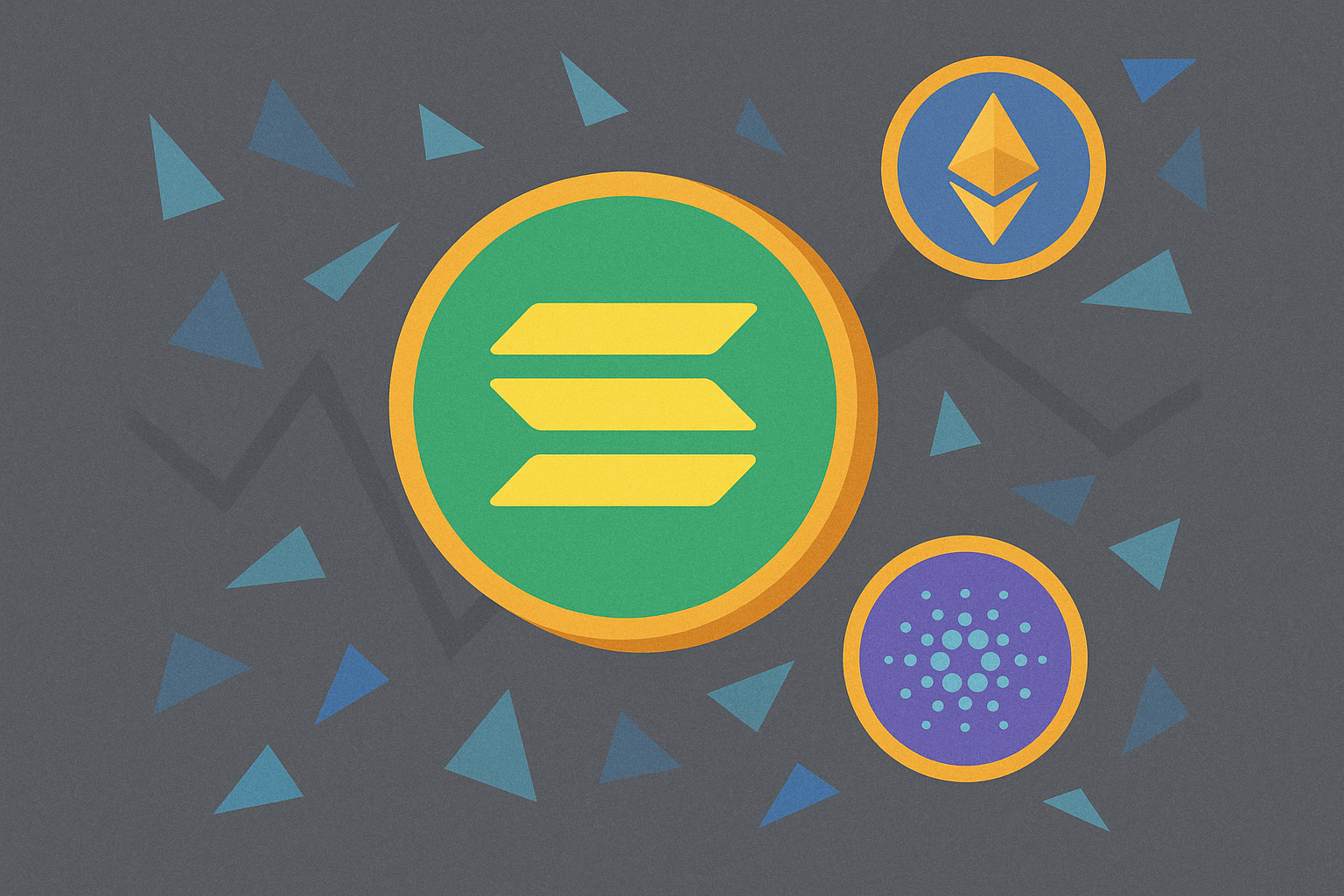
The competitive landscape within the blockchain industry represents another crucial factor influencing Solana's market performance. Solana operates in an increasingly crowded space where multiple blockchain platforms compete for developers, users, and capital. Established networks like Ethereum continue to dominate in terms of ecosystem maturity and developer activity, while emerging platforms such as Cardano and Polkadot offer alternative approaches to scalability and interoperability.
Ethereum, despite its higher transaction costs, benefits from first-mover advantage and the largest developer community in the blockchain space. The platform's extensive ecosystem of decentralized applications, DeFi protocols, and NFT marketplaces creates strong network effects that are difficult for competitors to replicate. Ethereum's ongoing transition to a proof-of-stake consensus mechanism has also addressed some of its historical limitations, making it more competitive on energy efficiency and scalability fronts.
Cardano and Polkadot have positioned themselves with distinct technological approaches that appeal to different segments of the market. Cardano emphasizes academic rigor and formal verification in its development process, attracting developers who prioritize security and systematic methodology. Polkadot's focus on interoperability and its parachain architecture offers unique capabilities for cross-chain communication and specialized blockchain deployment.
This competitive environment influences investor behavior and capital allocation decisions. Many cryptocurrency investors adopt diversification strategies, spreading their holdings across multiple blockchain platforms rather than concentrating on a single project. This approach to portfolio management means that capital flows can shift between different platforms based on technological developments, ecosystem growth, and market sentiment. As investors rebalance their portfolios to include various blockchain projects, individual platforms like Solana may experience periods of reduced demand and price pressure.
Market dynamics also reflect the evolving preferences of developers and users. As new platforms emerge with innovative features or improved performance characteristics, attention and resources may shift away from existing projects. This constant evolution in the competitive landscape creates ongoing challenges for maintaining market position and token valuation.
Investment Strategies During Market Downturns
For investors navigating Solana's price decline and broader market volatility, implementing sound investment strategies becomes essential for long-term success in the cryptocurrency space. Understanding how to manage risk and maintain perspective during market downturns can help investors make rational decisions rather than emotional reactions to short-term price movements.
Diversification remains a fundamental principle of prudent portfolio management. Rather than concentrating holdings in a single cryptocurrency or blockchain project, investors should consider spreading investments across different asset classes, including various cryptocurrencies, traditional financial instruments, and other investment vehicles. This approach helps mitigate the risk associated with any individual asset's performance and reduces portfolio volatility. Within the cryptocurrency allocation, diversification across different blockchain platforms, use cases, and market capitalizations can provide additional risk management benefits.
Risk management strategies should include clear position sizing guidelines that prevent overexposure to any single investment. Investors should determine appropriate allocation percentages based on their risk tolerance, investment timeline, and financial circumstances. Setting predetermined exit points or stop-loss levels can help protect capital during severe market downturns, though these should be balanced against the risk of being shaken out of positions during temporary volatility.
Maintaining a long-term investment perspective is particularly important in the cryptocurrency market, where short-term price fluctuations can be dramatic but may not reflect underlying project fundamentals or long-term potential. Investors should focus on evaluating blockchain projects based on technological innovation, ecosystem development, team capabilities, and real-world adoption rather than solely on price movements. Understanding the fundamental value proposition of projects like Solana helps investors distinguish between temporary market sentiment and genuine changes in project viability.
Continuous education and staying informed about market developments, technological advancements, and regulatory changes enables investors to make better-informed decisions. Following official project communications, analyzing on-chain metrics, and understanding broader market trends provides context for price movements and helps identify genuine opportunities versus speculative bubbles.
Dollar-cost averaging represents another effective strategy during volatile periods, where investors make regular fixed-amount purchases regardless of price levels. This approach reduces the impact of market timing and can lower average acquisition costs during downward trends while maintaining consistent market exposure.
In conclusion, while Solana's price decline reflects multiple factors including market volatility, technical challenges, and competitive pressures, investors who maintain disciplined investment strategies and focus on long-term blockchain technology potential can navigate uncertain market conditions more effectively. Understanding these dynamics and implementing sound portfolio management principles helps investors make informed decisions during periods of market turbulence.
FAQ
Solana价格下跌的主要原因是什么?
Solana价格下跌主要受多个因素影响:市场整体调整,交易额波动,网络性能问题,宏观经济环境变化,以及投资者风险偏好下降。长期来看,Solana生态发展和技术升级将支撑其价值恢复。
What technical issues has the Solana network experienced that caused performance degradation?
Solana has faced network congestion, validator instability, and ledger bloat issues. These caused transaction failures, network shutdowns, and reduced throughput. Recent upgrades focused on improving consensus mechanisms and validator performance to enhance network stability and transaction processing speed.
What are Solana's disadvantages compared to other blockchains like Ethereum and Polygon?
Solana faces occasional network instability and outages affecting reliability. Its validator distribution is more centralized than some competitors. Transaction finality can be slower during congestion. Developer ecosystem remains smaller than Ethereum's, limiting dApp variety and integration options.
How to assess Solana's security and stability?
Solana demonstrates strong security through its proof-of-stake consensus and validator network. Network uptime has improved significantly, with robust infrastructure and continuous protocol upgrades. Transaction finality and cryptographic standards ensure reliable operations for users and developers.
What risk factors should be considered when investing in Solana?
Key risks include network outages and technical vulnerabilities, competition from other blockchains, regulatory uncertainty in crypto markets, price volatility driven by market sentiment, and dependence on validator ecosystem stability. Monitor ecosystem developments and market conditions carefully.
How is the Solana team addressing current challenges and improving the network?
Solana team focuses on enhancing network stability through validator optimization, reducing transaction failures, and implementing runtime improvements. They're investing in infrastructure upgrades, developer tools, and ecosystem expansion to boost throughput and reliability while maintaining decentralization.

How Token Unlocks Could Affect Cryptocurrency Values in 2025
Top DeFi Choices for Crypto Investments in 2025

How Do Cardano's On-Chain Metrics Reveal ADA's Market Potential in 2025?
How Does On-Chain Data Analysis Reveal XNO (Nano) Network Activity in 2025?

What is the SUI Price Prediction for 2030 Based on Current Volatility?

How Does HYPE Token Price Reflect Hyperliquid's On-Chain Growth in 2025?
Major Daily Puzzle Durov for October 22, 2024

Who Funds Redacted: Unveiling the Mystery Behind Financial Backing in Cryptocurrency Projects
What is a Spot ETF Explained
Can Stellar Lumens Reach $100?

What is the fundamentals analysis of a cryptocurrency project: whitepaper logic, use cases, technology innovation, roadmap progress, and team background explained