Why Is XRP Not Moving: An In-Depth Analysis

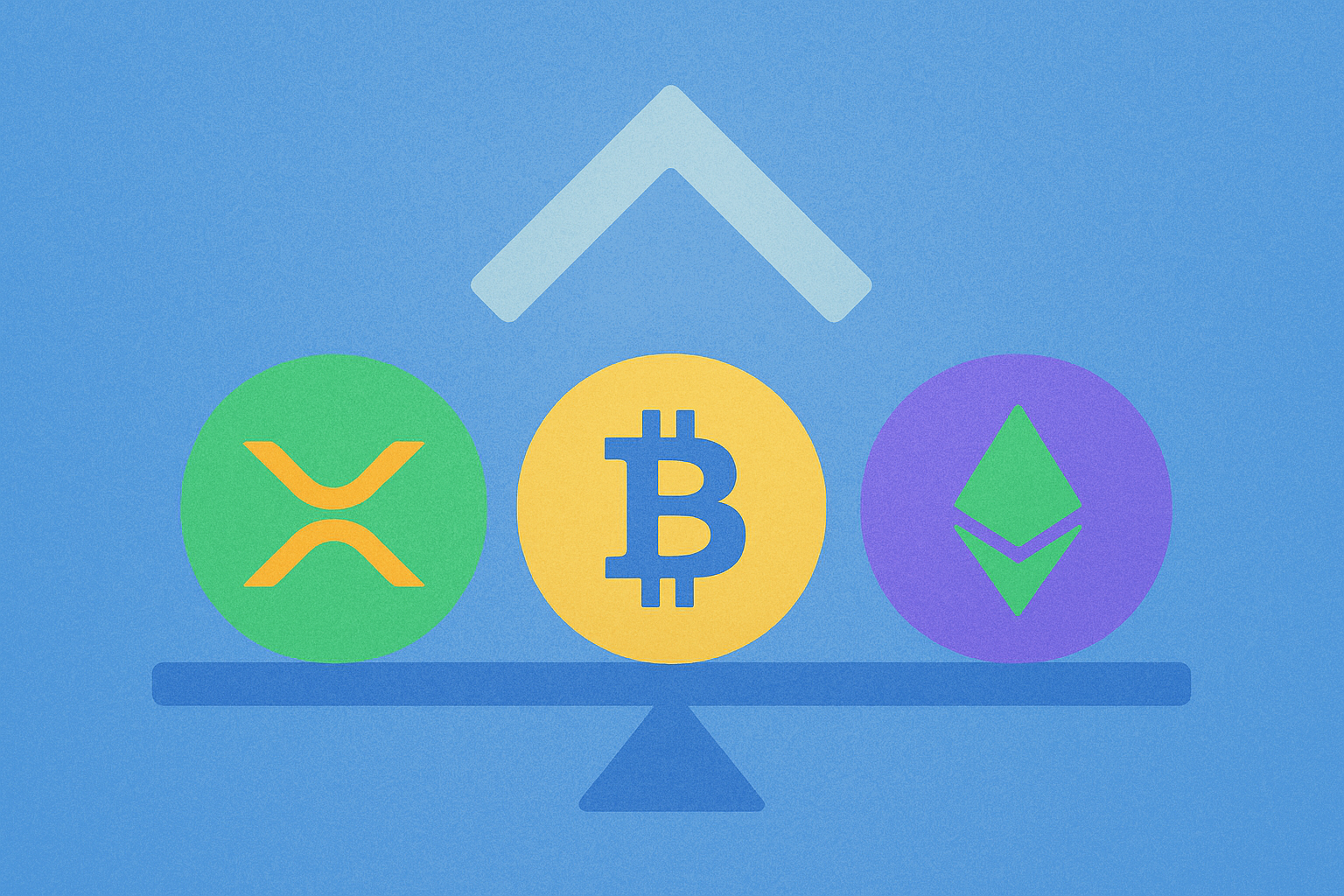
The XRP Landscape
The cryptocurrency market has long been characterized by its extreme volatility, with digital assets experiencing dramatic price swings driven by various market forces. However, Ripple's XRP presents an interesting anomaly in this landscape. Despite the broader market's dynamic nature, XRP has entered a period of relative stagnation, prompting widespread speculation and concern among investors and market observers. This phenomenon raises critical questions about the underlying factors constraining XRP's price movement and what this means for its long-term viability in the competitive cryptocurrency ecosystem.
What Is XRP?
XRP serves as the native cryptocurrency of the Ripple network, a blockchain-based payment protocol designed to revolutionize the traditional financial system's approach to cross-border transactions. The primary value proposition of XRP lies in its ability to facilitate international money transfers with unprecedented speed and cost-efficiency compared to conventional banking systems, which often involve multiple intermediaries and can take several days to complete.
What distinguishes XRP from many other cryptocurrencies is its governance structure. While most digital assets embrace a fully decentralized model where no single entity controls the network, XRP operates within a more centralized framework under Ripple Labs' influence. This architectural choice has sparked considerable debate within the cryptocurrency community, with proponents arguing it enables greater efficiency and stability, while critics contend it contradicts the fundamental principles of decentralization that underpin blockchain technology.
Overview of Recent Market Trends
When examining the broader cryptocurrency market landscape, a clear pattern emerges showing that major digital assets typically experience price movements that closely correlate with several key factors. These include shifts in investor sentiment, regulatory announcements, macroeconomic indicators, and technological developments within their respective ecosystems. Bitcoin, Ethereum, and other leading exchange tokens have all demonstrated significant volatility in response to these catalysts.
However, XRP's price action has been notably muted in comparison, displaying a resistance to both upward and downward movements that would typically affect other cryptocurrencies. This relative stability—or stagnation, depending on one's perspective—stands in stark contrast to the dynamic price discovery happening across the rest of the market. Understanding why XRP behaves differently requires examining the unique circumstances and challenges facing this particular digital asset, which extend beyond typical market dynamics to encompass legal, structural, and perception-based factors.
Key Reasons Why XRP Isn't Making Moves
1. Legal Challenges
The most significant factor constraining XRP's price movement is undoubtedly the ongoing legal battle between Ripple Labs and the U.S. Securities and Exchange Commission (SEC). Filed in December 2020, this lawsuit represents one of the most consequential regulatory actions in cryptocurrency history. The SEC's central allegation is that Ripple Labs conducted an unregistered securities offering by selling XRP, which, if proven, would subject the company and the token to stringent securities regulations.
This legal uncertainty has created a dark cloud over XRP that extends far beyond simple price implications. The case has become a litmus test for how regulators might treat other cryptocurrencies, making it a closely watched proceeding throughout the industry. For XRP specifically, the lawsuit has fundamentally altered its market dynamics and institutional acceptance.
Impact on Price Stability
The SEC lawsuit triggered an immediate and severe response from cryptocurrency exchanges worldwide. Major trading platforms, particularly those based in the United States or serving American customers, moved quickly to delist or suspend XRP trading to avoid potential regulatory complications. This mass delisting event dramatically reduced XRP's liquidity—the ease with which the token can be bought and sold—which is a critical component of price discovery in any market.
With reduced trading venues and lower overall volume, XRP's ability to experience significant price movements has been severely constrained. Even when positive or negative news emerges, the limited liquidity means that market reactions are dampened compared to more freely traded cryptocurrencies. Additionally, many institutional investors and cryptocurrency funds have adopted policies excluding XRP from their portfolios until regulatory clarity emerges, further limiting demand and price momentum.
2. Ripple's Centralization Concerns
Another fundamental issue affecting XRP's market performance relates to concerns about centralization. Ripple Labs maintains control over a substantial portion of the total XRP supply, with billions of tokens held in escrow and released according to a predetermined schedule. This level of control by a single entity stands in stark contrast to the decentralization philosophy that attracts many participants to the cryptocurrency space.
The centralization debate surrounding XRP is multifaceted. On one hand, Ripple's stewardship provides a level of organizational coherence and strategic direction that purely decentralized projects often lack. The company can forge partnerships with financial institutions, fund development initiatives, and maintain consistent messaging about the token's intended use cases. These capabilities have enabled Ripple to establish relationships with banks and payment providers that might be hesitant to work with completely decentralized protocols.
Decentralization vs. Trust
However, this centralized structure also introduces significant concerns that impact investor confidence and adoption rates. Critics argue that Ripple's control over XRP supply creates a central point of failure and potential manipulation. The company's ability to influence token distribution and potentially affect market prices runs counter to the trustless, permissionless ideals that many cryptocurrency enthusiasts value.
Furthermore, the centralization question intersects with the SEC lawsuit, as the degree of Ripple's control over XRP is a key factor in determining whether the token should be classified as a security. This regulatory uncertainty, combined with philosophical objections to centralization, has created a persistent headwind for XRP adoption among both retail investors seeking truly decentralized alternatives and institutions wary of regulatory risk.
3. Market Speculation and Sentiment
In the cryptocurrency market, where fundamental valuation metrics remain underdeveloped, speculation and sentiment play outsized roles in driving price movements. The narrative surrounding a particular cryptocurrency—whether it's perceived as innovative, disruptive, or aligned with emerging trends—can be as important as its actual technological capabilities or adoption metrics.
XRP faces significant challenges in this arena. The cryptocurrency market's attention has increasingly shifted toward newer projects and emerging sectors that capture investor imagination. Decentralized finance (DeFi) protocols, non-fungible tokens (NFTs), layer-2 scaling solutions, and other innovations have dominated market discourse in recent periods, drawing both capital and mindshare away from earlier-generation cryptocurrencies like XRP.
Waning Interest
The periodic waves of enthusiasm that sweep through the cryptocurrency market have largely bypassed XRP. While Bitcoin maintains its position as digital gold and Ethereum has established itself as the foundation for decentralized applications, XRP's narrative as a bridge currency for international payments has struggled to capture equivalent excitement. The token's association with traditional financial institutions, while potentially valuable for adoption, also positions it as less revolutionary or disruptive in the eyes of many cryptocurrency enthusiasts.
Additionally, prominent influencers, cryptocurrency analysts, and media outlets have increasingly focused their attention on other projects, creating a self-reinforcing cycle where reduced coverage leads to decreased interest, which in turn justifies less coverage. This attention deficit has contributed to XRP's price stagnation, as speculative capital flows toward assets generating more buzz and perceived momentum.
Lessons from Competing Coins
Examining the trajectories of other major cryptocurrencies provides valuable context for understanding XRP's challenges and potential paths forward. Ethereum and other leading exchange tokens have demonstrated significant price appreciation and sustained community engagement, driven by several common factors that XRP currently lacks or struggles to communicate effectively.
These successful cryptocurrencies share several characteristics: continuous technological development that introduces new capabilities and improvements; clearly articulated and expanding use cases that demonstrate real-world utility; robust developer ecosystems that foster innovation and application development; and strong community engagement that creates network effects and advocacy. Ethereum's transition to proof-of-stake, its thriving DeFi ecosystem, and its role as the foundation for NFTs and other innovations exemplify how ongoing development and use case expansion can drive sustained interest and value appreciation.
For XRP to regain momentum comparable to these competitors, similar efforts in innovation, ecosystem development, and community building appear necessary. The token's value proposition must evolve beyond its original conception to address current market demands and demonstrate clear advantages over both competing cryptocurrencies and traditional payment systems.
Technological Advancements and Use Cases
The path forward for XRP likely requires a renewed focus on technological innovation and use case development. While the Ripple network's core functionality—enabling fast, low-cost cross-border transactions—remains relevant, the cryptocurrency landscape has evolved considerably since XRP's inception. Modern blockchain projects offer increasingly sophisticated capabilities, from smart contract platforms to interoperability protocols, that expand their potential applications beyond simple value transfer.
Adopting cutting-edge technologies could enhance XRP's functionality and competitive position. This might include integrating with emerging blockchain standards, developing interoperability solutions that allow XRP to interface with other networks, or creating additional utility beyond payment facilitation. Such technological advancement would not only improve XRP's practical capabilities but also generate renewed interest from developers and investors seeking innovative projects.
Equally important is the expansion and clear communication of XRP's use cases. While cross-border payments remain the primary focus, demonstrating concrete adoption by financial institutions and quantifying the efficiency gains achieved through RippleNet would strengthen the value proposition. Additionally, exploring adjacent use cases—such as tokenization of assets, decentralized exchange functionality, or integration with emerging financial technologies—could broaden XRP's appeal and create new demand drivers that extend beyond its original payment-focused design.
What Lies Ahead for XRP?
Regulatory Clarity
The resolution of the SEC lawsuit represents the most significant near-term catalyst for XRP's future trajectory. A favorable outcome for Ripple would likely trigger an immediate and substantial positive market response, as it would remove the primary source of uncertainty that has suppressed XRP's price and limited its adoption. Such a resolution could prompt exchanges to relist the token, encourage institutional investors to reconsider their positions, and generally restore confidence in XRP's long-term viability.
Conversely, an unfavorable ruling could have severe implications, potentially classifying XRP as a security and subjecting it to regulations that would fundamentally alter its market dynamics and use cases. However, even a negative outcome would provide the clarity that markets value, potentially allowing Ripple to restructure its approach and move forward with a defined regulatory framework.
As Ripple continues its legal defense, emphasizing that XRP should not be classified as a security based on its decentralized distribution and utility as a medium of exchange, the case's outcome will undoubtedly play a pivotal role in determining XRP's future. Beyond the immediate impact on XRP, this case will likely establish precedents that influence how other cryptocurrencies are regulated, making it one of the most consequential legal proceedings in the industry's history.
Increased Adoption
Regardless of legal outcomes, XRP's long-term success ultimately depends on achieving meaningful adoption for its intended use cases. Ripple has consistently focused on its core mission of simplifying and improving cross-border transactions, positioning XRP as a bridge currency that can facilitate instant settlement between different fiat currencies without the delays and costs associated with traditional correspondent banking relationships.
Strategic partnerships with financial institutions worldwide remain central to this adoption strategy. Ripple has established relationships with numerous banks, payment providers, and remittance companies, particularly in regions where cross-border payment inefficiencies are most acute. However, for these partnerships to translate into sustained demand for XRP and consequent price appreciation, the token must be actively used within RippleNet and other payment corridors, rather than simply being a speculative asset.
Mass adoption faces several challenges beyond regulatory uncertainty. Financial institutions must be convinced that using XRP provides sufficient advantages over existing solutions to justify the operational changes and potential risks involved. This requires demonstrating not only technical superiority but also reliability, compliance capabilities, and cost savings that clearly exceed implementation expenses. As the cryptocurrency market evolves and institutional comfort with digital assets increases, XRP's opportunity to achieve meaningful adoption may expand, but converting this potential into reality requires continued execution and proof of value.
Strategic Partnerships
Ripple's global partnership strategy, particularly its strong presence in Asia and the Middle East, showcases the potential for XRP to transform international payment systems in regions where such innovation is especially needed. These partnerships represent more than mere endorsements; they provide practical testing grounds for XRP's utility and opportunities to demonstrate real-world value creation.
Leveraging these connections effectively could significantly expand XRP's reach and bolster its market position. As payment corridors utilizing XRP demonstrate measurable benefits—such as reduced settlement times, lower transaction costs, and improved liquidity management—additional financial institutions may be incentivized to join the network, creating positive network effects. The value of a payment network increases exponentially with the number of participants, meaning that successful early implementations could catalyze broader adoption.
Furthermore, strategic partnerships extend beyond traditional financial institutions. Collaborations with fintech companies, blockchain projects, and technology providers could open new use cases and integration opportunities for XRP. As the lines between traditional finance and decentralized systems continue to blur, positioning XRP at the intersection of these worlds could provide significant strategic advantages.
Looking at the horizon, XRP faces significant tests that will determine its future trajectory in the cryptocurrency ecosystem. The challenges are substantial—legal uncertainty, centralization concerns, and competition for market attention all present real obstacles to price appreciation and adoption growth. However, with challenge comes opportunity. The same legal proceedings that currently constrain XRP could, if resolved favorably, remove a major overhang and catalyze renewed interest. The partnerships and infrastructure that Ripple has built during this period of stagnation could provide the foundation for rapid scaling once regulatory clarity emerges.
As the cryptocurrency market continues to evolve and mature, Ripple's ability to navigate regulatory challenges, inspire market interest through innovation and adoption, and leverage technological advancements will be pivotal in determining whether XRP can break out of its current stagnation. While the token isn't experiencing the price movement that some investors might hope for at present, the fundamental shifts occurring beneath the surface—in regulatory frameworks, institutional adoption, and payment system infrastructure—could position XRP for significant future success if the company can successfully execute on its vision and overcome the obstacles currently constraining its progress.
FAQ
Why Is XRP Price Stagnating for a Long Time?
XRP's price stagnation stems from regulatory uncertainty, limited enterprise adoption despite Ripple's technology, and market saturation. However, upcoming regulatory clarity and increased institutional interest are expected to drive significant price appreciation in 2026-2027.
What are the main factors affecting XRP price?
XRP price is influenced by market sentiment, trading volume, regulatory developments, Bitcoin's performance, adoption by financial institutions, and macroeconomic factors like interest rates and global economic conditions.
Why does XRP perform worse compared to Bitcoin and Ethereum?
XRP's slower price growth stems from lower trading volume, reduced institutional adoption, regulatory uncertainties, and Bitcoin and Ethereum's stronger network effects. XRP's use case focuses on cross-border payments, limiting broader market appeal compared to Bitcoin's store-of-value narrative and Ethereum's smart contract ecosystem.
Ripple公司的法律诉讼对XRP价格有什么影响?
Ripple与美国SEC的诉讼结果对XRP价格影响深远。诉讼进展积极时,XRP价格通常上涨;不利判决则引发下跌。2024年后期的有利判决推动XRP价格显著上升,预计继续上涨。
What are XRP's technical advantages and application scenarios?
XRP excels in fast, cost-effective cross-border payments with settlement in seconds. Built on the XRP Ledger, it enables decentralized finance, tokenization, and institutional transfers. Its consensus mechanism ensures scalability and security for real-world financial applications.
What are the future price prospects for XRP?
XRP shows strong potential driven by increasing institutional adoption, regulatory clarity, and expanding use cases in cross-border payments. With growing blockchain integration and market maturation, XRP could experience significant appreciation as demand for efficient payment solutions rises globally.

How to Conduct a Comprehensive Fundamental Analysis of Crypto Projects in 2025?
Understanding Tokenomics in Cryptocurrency
XRP Tokenomics
When XRP Wins Lawsuit Price Prediction Guide
When Is ISO 20022 Going Live XRP: What to Expect

What is Project Fundamentals Analysis: Whitepaper Logic, Use Cases, Technology Innovation, Roadmap Progress, and Team Background Explained

Crypto Market Outlook: 5 Things to Watch in the Coming Year
How Much is 8 Figures in the Crypto Industry?

When Was Pepe Coin Made
When Did Shiba Inu Launch: The Rise of a Meme Coin

Crypto Crash Sparks Meme About McDonald's Hiring Surge, But No Evidence Found