Will Fetch AI Reach $10: An In-Depth Analysis

Understanding Fetch AI's Market Position
Fetch AI has emerged as a notable player in the blockchain and artificial intelligence sectors, driving innovation with its unique decentralized platform. The project represents a convergence of two transformative technologies, aiming to reshape how autonomous systems interact and conduct economic activities in the digital realm.
Fetch AI's integration of blockchain and AI aims to automate decentralized decision-making and economic empowerment by enabling autonomous agents to perform complex tasks. This innovative approach addresses fundamental challenges in traditional centralized systems, including inefficiency, lack of transparency, and limited scalability. By combining distributed ledger technology with machine learning capabilities, Fetch AI creates an ecosystem where intelligent agents can operate independently while maintaining security and trust.
Fetch AI's native cryptocurrency, FET, serves as a medium of exchange within its ecosystem, facilitating transactions between autonomous agents and incentivizing network participants. At the present stage, the question on many investors' minds is whether FET can achieve a significant milestone – reaching the $10 mark.
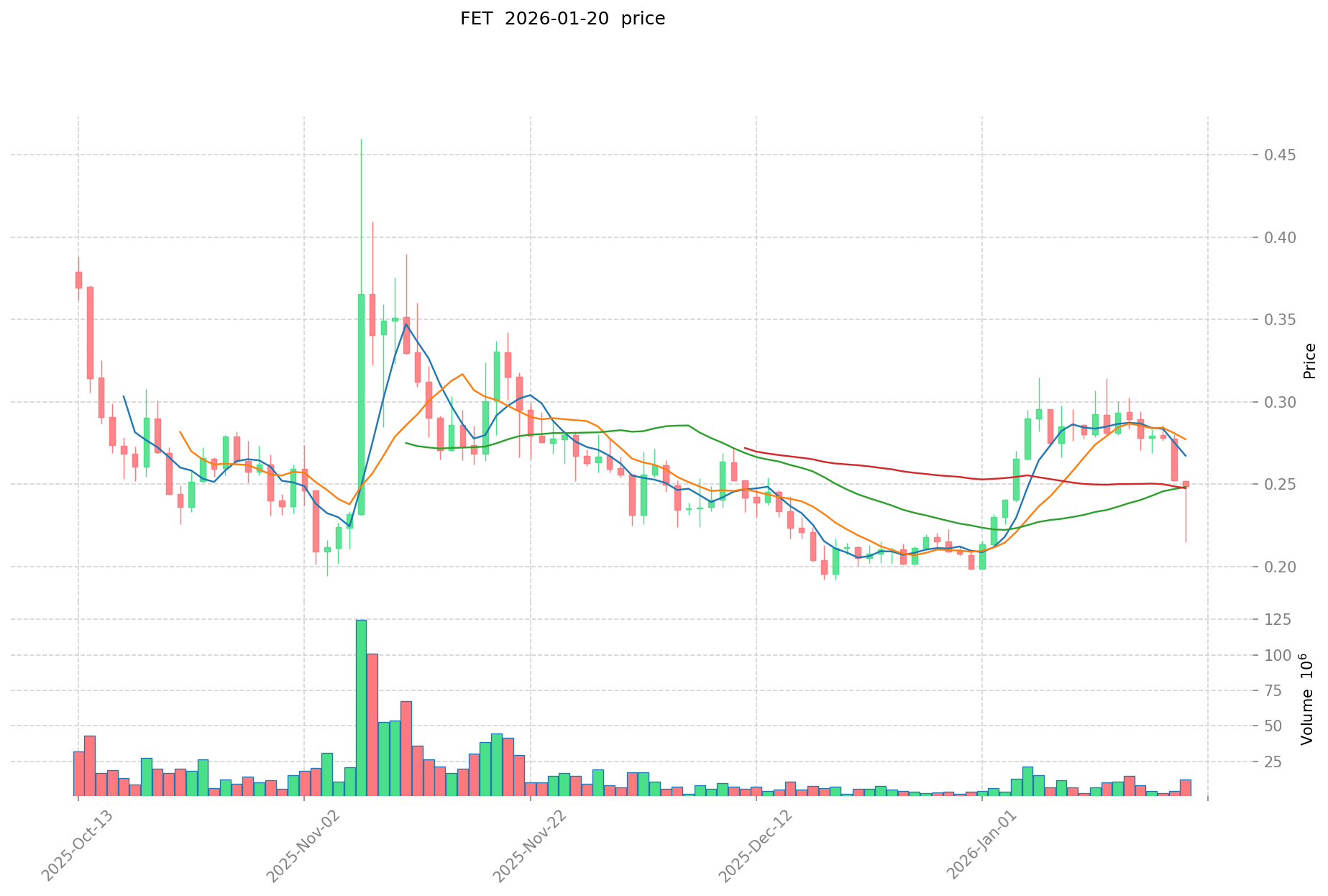 This price target represents not just a numerical goal but a reflection of the project's potential to deliver real-world value and achieve widespread adoption across multiple industries.
The Technological Edge of Fetch AI
Fetch AI's technological foundation is strong, with a focus on decentralized machine learning and secure, autonomous data sharing. The platform distinguishes itself through several innovative technical components that address real-world challenges in data processing, decision-making, and economic coordination.
The platform utilizes machine learning for complex problem-solving, which has numerous applications in logistics, finance, supply chain management, smart cities, and other industries. Unlike traditional centralized AI systems that require massive data centers and centralized control, Fetch AI enables distributed intelligence where multiple agents can collaborate and learn collectively while preserving data privacy and security.
Key Features Supporting Growth
Fetch AI's technological architecture incorporates several groundbreaking features that position it uniquely in the market:
Autonomous Economic Agents (AEAs): These are AI-driven entities capable of negotiating and executing contracts independently, opening new ways of conducting business in a digitized world. AEAs can represent individuals, organizations, devices, or services, acting on behalf of their owners to optimize outcomes and maximize value. For instance, in transportation logistics, AEAs can autonomously negotiate shipping routes, prices, and delivery schedules, significantly reducing operational costs and improving efficiency. These agents operate 24/7, making real-time decisions based on market conditions and predefined objectives.
Open Economic Framework: This framework facilitates collaborative decision-making and fair economic opportunities by leveraging distributed ledger technology. The framework ensures that all participants in the network can engage in economic activities transparently and equitably, without intermediaries extracting excessive value. This creates a more efficient marketplace where value flows directly between parties, reducing transaction costs and enabling new business models that were previously impossible under centralized systems.
AI Marketplace: Fetch AI's peer-to-peer network allows for secure, low-cost machine-learning model swapping, fostering an ecosystem of innovation. Developers and researchers can share, trade, and monetize their AI models and algorithms without relying on centralized platforms. This democratizes access to advanced AI capabilities, enabling smaller organizations and individual developers to leverage sophisticated machine learning tools that would otherwise be prohibitively expensive or inaccessible. The marketplace incentivizes continuous innovation by rewarding contributors who develop valuable models and solutions.
Market Dynamics and Strategic Partnerships
For Fetch AI to reach the $10 benchmark, several market and strategic factors need to align, creating a confluence of technological readiness, market demand, and ecosystem development.
Adoption and Demand: A growing acceptance and integration of blockchain and AI can drive FET demand significantly. Industries are increasingly recognizing the efficiency and cost advantages offered by these technologies, potentially leading to higher adoption rates. The global shift toward digital transformation, accelerated by recent technological advances, has created fertile ground for solutions that combine automation, intelligence, and decentralization. Enterprises seeking to optimize operations, reduce costs, and gain competitive advantages are actively exploring blockchain-AI hybrid solutions, positioning Fetch AI favorably in this expanding market.
The practical applications of Fetch AI's technology span multiple high-value sectors. In supply chain management, autonomous agents can track goods in real-time, predict disruptions, and automatically reroute shipments to minimize delays. In financial services, AEAs can execute complex trading strategies, manage portfolios, and provide personalized financial advice. Smart city applications include optimizing energy distribution, managing traffic flows, and coordinating public services more efficiently. Each of these use cases represents substantial market opportunities that could drive demand for FET tokens.
Partnerships and Collaborations: Fetch AI has already embarked on various collaborations that enhance its ecosystem and expand its reach into new markets. More partnerships with leading tech firms can accelerate its market presence and credibility, providing validation of the technology and opening doors to enterprise adoption. Strategic alliances with established corporations bring not only technical resources and expertise but also access to existing customer bases and distribution channels. Collaborations with academic institutions and research organizations further strengthen Fetch AI's technological foundation and contribute to continuous innovation.
Building a robust partner ecosystem is crucial for achieving the $10 price target. Partnerships that result in real-world implementations and revenue-generating use cases demonstrate tangible value creation, which directly impacts investor confidence and token valuation. Additionally, integration with other blockchain networks and interoperability initiatives can expand Fetch AI's addressable market and utility.
Analyzing the Competitive Landscape
While Fetch AI presents innovative solutions, it operates in a competitive environment with other blockchain-based AI projects vying for market share. The intersection of blockchain and artificial intelligence has attracted numerous projects, each claiming unique advantages and capabilities. Having a clear edge through differentiated technology and strategic alliances can play a crucial role in Fetch AI capturing greater market attention and establishing itself as a category leader.
To gain an advantage, investing in research and development and cultivating partnerships with enterprises that seek AI-powered solutions will be crucial. Fetch AI must continuously innovate to stay ahead of competitors, addressing emerging use cases and incorporating cutting-edge technologies such as advanced machine learning algorithms, improved consensus mechanisms, and enhanced scalability solutions. The project's ability to demonstrate superior performance, ease of integration, and clear return on investment will be decisive factors in winning enterprise clients and developers.
Differentiation also comes from community strength, developer ecosystem vitality, and the quality of documentation and support tools. Projects that make it easy for developers to build applications and for enterprises to implement solutions tend to gain adoption more quickly. Fetch AI's focus on creating comprehensive development tools, providing excellent documentation, and offering robust technical support positions it well in this regard.
Moreover, the competitive landscape includes not only other blockchain-AI projects but also traditional tech giants exploring similar territories. Fetch AI's decentralized approach offers advantages in terms of data privacy, censorship resistance, and elimination of single points of failure, which can be compelling differentiators against centralized alternatives.
The Role of Community and Ecosystem Growth
The power of a robust community cannot be underestimated in the blockchain space. Fetch AI must nurture its user base and maintain active engagement through clear communication and governance inclusivity. A thriving community serves multiple functions: it provides feedback for product development, creates content and educational materials, develops applications and use cases, and acts as advocates spreading awareness about the project.
Community Incentives: Encouraging active participation and development in the network via incentives will foster a thriving ecosystem. Rewarding developers and users can lead to more innovations and real-world solutions that expand the platform's utility and value proposition. Incentive mechanisms might include grants for promising projects, bug bounties, staking rewards, and governance tokens that give community members a voice in the project's direction. These incentives align the interests of all stakeholders and create a positive feedback loop where increased participation leads to greater value creation, which in turn attracts more participants.
Developer incentives are particularly important, as they directly contribute to ecosystem expansion. Hackathons, accelerator programs, and technical challenges can stimulate innovation and attract talented developers to build on the Fetch AI platform. Each new application or integration increases the network's utility and creates additional demand for FET tokens.
Education and Awareness: Improving understanding of Fetch AI's potential benefits can enhance investment confidence and drive adoption. Community-driven education campaigns can be a catalyst for adoption and network robustness. Many potential users and investors may not fully grasp the technical sophistication or practical applications of blockchain-AI solutions. Clear, accessible educational content that explains how Fetch AI works, what problems it solves, and how different stakeholders can benefit is essential for broadening the project's appeal.
Educational initiatives should target multiple audiences: developers need technical documentation and tutorials, enterprises need case studies and ROI analyses, and general investors need clear explanations of the project's value proposition and growth potential. Webinars, workshops, online courses, and comprehensive documentation all contribute to building awareness and understanding.
Risks and Challenges
Reaching $10 is an ambitious goal, and there are inherent risks and challenges that Fetch AI must navigate successfully. Acknowledging and addressing these challenges proactively is essential for long-term success and sustainable growth.
Regulatory Environment: The evolving regulatory landscape surrounding cryptocurrencies could impact Fetch AI's operations and token valuation. Governments worldwide are developing frameworks to regulate digital assets, and these regulations vary significantly across jurisdictions. Proactive engagement with regulators and compliance measures will be essential to ensure the project can operate legally in major markets. Fetch AI must stay ahead of regulatory developments, adapting its operations as necessary while advocating for sensible regulations that protect consumers without stifling innovation.
Regulatory clarity can actually benefit projects like Fetch AI by providing certainty and legitimacy that attracts institutional investors and enterprise clients. However, overly restrictive regulations or sudden policy changes could create obstacles. Maintaining flexibility in the project's structure and being prepared to adjust to different regulatory regimes will be important risk management strategies.
Market Volatility: Crypto markets are known for their volatile nature, and investor sentiment can significantly affect price movements regardless of fundamental value. Solid fundamentals paired with a strategic vision can mitigate volatility effects, but they cannot eliminate them entirely. Fetch AI must build resilience through diversified revenue streams, strong treasury management, and consistent delivery of technological milestones that demonstrate ongoing progress.
Market cycles in cryptocurrency can be extreme, with periods of euphoria followed by extended downturns. During bear markets, even fundamentally strong projects can see significant price declines. Fetch AI's ability to maintain development momentum, retain key team members, and continue building partnerships during difficult market conditions will be crucial for long-term success.
Technical Challenges: Implementing complex blockchain-AI systems at scale presents significant technical hurdles. Issues such as network scalability, transaction throughput, latency, and interoperability with other systems must be continuously addressed. As the network grows and more agents operate on the platform, maintaining performance while ensuring security becomes increasingly challenging.
Competition and Market Saturation: The blockchain and AI spaces are both highly competitive with rapid innovation cycles. New projects continuously emerge, and existing competitors evolve their offerings. Fetch AI must maintain its technological edge and continue to differentiate itself to avoid being commoditized or surpassed by competitors with superior solutions or better execution.
Looking Ahead: Predicting Fetch AI's Trajectory
Predicting Fetch AI's journey to $10 involves analyzing technological readiness, market conditions, and stakeholder intentions across multiple dimensions. Enhancing blockchain solutions with scalable AI technology positions Fetch AI uniquely, but reaching financial milestones hinges on execution and market dynamics coming together favorably.
Have we reached the stage where blockchain and AI can substantiate their market potential to a degree where reaching a $10 mark becomes a feasible reality? Stakeholders are optimistic, but success depends on strategic execution and global market interactions. The convergence of several trends suggests favorable conditions: increasing enterprise adoption of blockchain, growing recognition of AI's transformative potential, rising demand for data privacy and decentralization, and maturing infrastructure for digital assets.
To capitalize on these opportunities, Fetch AI must continue pushing innovation and fostering a sustainable environment that aligns market needs with cutting-edge technology. This requires balancing multiple priorities: advancing the technology, building partnerships, growing the community, managing resources prudently, and navigating regulatory landscapes. Each of these elements contributes to the overall value proposition and ultimately to token valuation.
The path to $10 will likely not be linear. It may involve periods of rapid appreciation followed by consolidation, influenced by broader market cycles, technological breakthroughs, major partnership announcements, and regulatory developments. Key milestones to watch include successful deployment of large-scale enterprise applications, expansion into new industry verticals, significant increases in network activity and transaction volume, and growing adoption of FET tokens for real economic purposes beyond speculation.
Fetch AI may not be an overnight sensation, but its pathway to $10 could shape the future of autonomous, decentralized systems – a journey that will undoubtedly galvanize both current and prospective investors. The project's success will serve as a case study for how blockchain and AI can be effectively combined to create genuine value, potentially inspiring a new wave of innovation in decentralized intelligent systems. Investors and observers should monitor not just price movements but also fundamental indicators of adoption, technological progress, and ecosystem health as more reliable predictors of long-term success.
FAQ
What is Fetch AI? What are its main functions and application scenarios?
Fetch AI is an autonomous AI agent platform enabling intelligent automation across various industries. It features decentralized machine learning, smart contract integration, and autonomous economic agents. Applications include supply chain optimization, energy trading, IoT device coordination, and financial services automation.
What is Fetch AI's current price and market cap? How far is it from $10?
As of January 2026, Fetch AI trades around $2.50-3.50 with a market cap near $3-4 billion. To reach $10, the price needs 3-4x appreciation. Strong AI adoption and ecosystem growth could drive significant gains toward that target in coming years.
What factors could potentially drive Fetch AI price to $10?
Fetch AI price could reach $10 through increased adoption of its autonomous agent technology, growing transaction volume, strategic partnerships, expanded enterprise integration, positive regulatory developments, and strengthened market sentiment within the Web3 ecosystem.
How does Fetch AI's technical advantage compare to competitors?
Fetch AI excels in autonomous agent technology and AI-blockchain integration. Its decentralized machine learning framework, superior scalability, and unique tokenomics create significant competitive advantages over rivals in the Web3 AI sector.
What is the likelihood of Fetch AI reaching $10? What conditions are needed?
Fetch AI reaching $10 is achievable with sustained ecosystem growth, increased transaction volume, enterprise adoption, and successful AI integration. Key requirements include expanding use cases, strengthening developer community, achieving technological breakthroughs, and maintaining market momentum through 2026-2027.
What are the main risks of investing in Fetch AI?
Market volatility, regulatory uncertainty, competition from other AI projects, technology execution risks, and adoption challenges are primary concerns. Token price fluctuations, liquidity risks, and dependency on partnerships also present investment considerations for Fetch AI.
How is Fetch AI's tokenomics and supply structured?
Fetch AI has a maximum supply of 1.15 billion FET tokens. The tokenomics features a deflationary mechanism through staking rewards and network fees. Token distribution includes ecosystem development, team allocation, and community rewards. The supply dynamics support long-term value appreciation through reduced circulation and increased utility.
What distinguishes Fetch AI from other AI-related crypto projects?
Fetch AI stands out through its autonomous agent technology and decentralized machine learning infrastructure. Unlike competitors, it focuses on real-world applications via its AEA framework, enabling agents to perform complex tasks independently while maintaining privacy and efficiency in the Web3 ecosystem.

How Does FET Compare to Its Competitors in Performance and Market Share?

What are the Key Elements of an Effective Competitor Benchmarking Analysis?
Understanding DAG: Revolutionizing Blockchain with Directed Acyclic Graphs

Exploring the Polkadot Ecosystem: A Comprehensive Guide to Blockchain Innovation
How to Benchmark Competitors on TAO: A Step-by-Step Guide for 2025

What is the Current Market Overview of FET: Price, Market Cap, and Volume in 2025?

What Are the Best Crypto Technical Indicators for Trading: MACD, RSI, KDJ, and Bollinger Bands Explained
What Causes Crypto Price Volatility and How Does It Compare to BTC and ETH

How to Evaluate a Crypto Project's Community Activity and Ecosystem Health in 2026

What is the current crypto market cap ranking and trading volume for top cryptocurrencies

What is a token economic model and how does cryptocurrency distribution, inflation mechanisms, and governance work