Will Loopring Reach $100
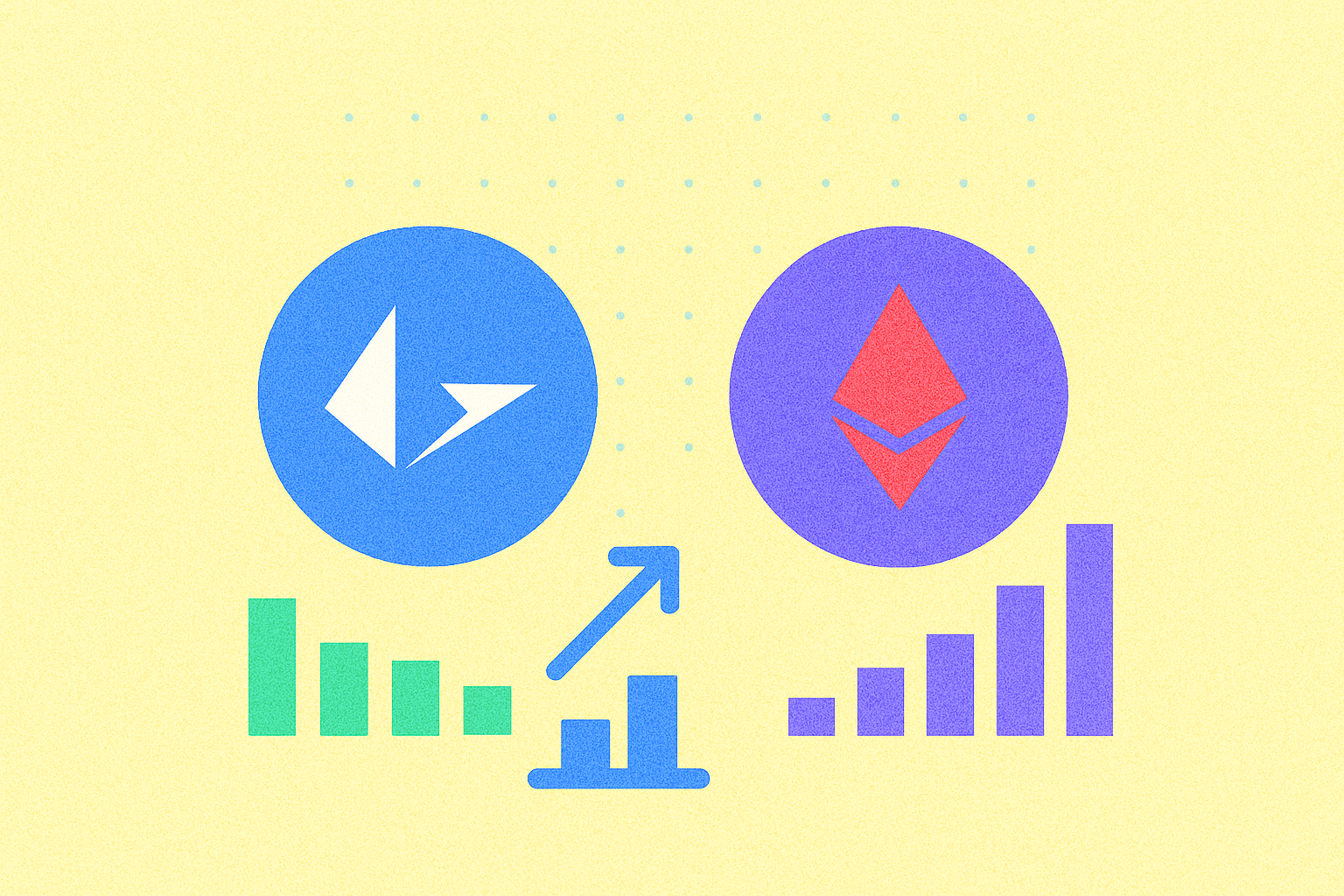
Market Overview
The cryptocurrency market has consistently demonstrated its capacity for rapid evolution and significant volatility, creating both opportunities and challenges for investors and developers alike. Among the thousands of digital assets competing for market dominance, Loopring (LRC) has carved out a distinctive position within the decentralized finance (DeFi) sector through its innovative technological approach.
As a Layer 2 scaling solution built on Ethereum, Loopring leverages zkRollup technology to address one of the most pressing challenges facing blockchain networks: scalability. This technology enables Loopring to process transactions off the main Ethereum chain while maintaining the security guarantees of the underlying network, resulting in significantly faster transaction speeds and dramatically reduced gas fees.

The explosive growth of DeFi protocols and decentralized applications over recent years has created a favorable environment for Loopring's development. During recent market cycles, LRC attracted considerable attention from both retail and institutional investors due to its scalable and efficient trading capabilities. These features have become increasingly critical as the cryptocurrency industry continues its transition from centralized to decentralized infrastructures, with users demanding the security and privacy benefits of decentralized exchanges (DEXs) without sacrificing the speed and cost-effectiveness of traditional platforms.
The broader DeFi ecosystem has experienced remarkable expansion, with total value locked (TVL) in DeFi protocols reaching unprecedented levels. This growth has been driven by users seeking greater control over their assets, enhanced privacy, and the ability to participate in innovative financial products unavailable in traditional finance. Loopring's positioning as a high-performance Layer 2 solution places it at the intersection of these trends, potentially benefiting from the continued migration of trading activity to decentralized platforms.
Financial Analysis or Predictions
The prospect of Loopring reaching the $100 price milestone represents a significant appreciation from its historical trading ranges and requires careful analysis of multiple interconnected factors. This ambitious target necessitates a confluence of favorable market conditions, technological advancement, and widespread adoption.
Adoption Surge: The migration of users from centralized exchanges to DEXs represents one of the most significant potential catalysts for Loopring's growth. As awareness of security vulnerabilities and privacy concerns associated with centralized platforms increases, more traders are exploring decentralized alternatives. Loopring's superior transaction speeds and low fees compared to Layer 1 DEXs position it advantageously to capture this growing user base. For example, while traditional Ethereum-based DEXs might charge $50-100 in gas fees during network congestion, Loopring's Layer 2 solution can process similar transactions for a fraction of a dollar, making it economically viable for retail traders and small-scale transactions.
Innovation and Development: Continuous technological advancement remains crucial for maintaining competitive advantages in the rapidly evolving DeFi landscape. Loopring's development team has demonstrated consistent commitment to protocol improvements, including enhanced smart contract functionality, improved user interfaces, and expanded compatibility with various DeFi applications. The platform's ability to attract developers and projects seeking to leverage Layer 2 solutions creates a network effect, where increased development activity leads to more sophisticated applications, which in turn attracts more users and further development.
Market Sentiment: Cryptocurrency valuations remain heavily influenced by market sentiment and broader economic conditions. Heightened interest in DeFi protocols, driven by factors such as regulatory clarity, institutional adoption, or technological breakthroughs, could propel LRC's value significantly. Historical market cycles have demonstrated that sentiment-driven rallies can result in exponential price increases within relatively short timeframes, though such movements often prove volatile and subject to correction.
Strategic Partnerships: Forming alliances with emerging DeFi projects, established financial institutions, or major blockchain platforms could substantially boost Loopring's valuation and utility. Partnerships that integrate Loopring's technology into widely-used applications or provide access to new user bases would enhance both the token's fundamental value and market perception. For instance, integration with major wallet providers or collaboration with prominent DeFi protocols could expose Loopring to millions of potential users.
While some market analysts identify Loopring as an undervalued asset with significant growth potential, others urge caution regarding speculative expectations. Historical patterns in cryptocurrency markets demonstrate that while rapid appreciation is possible, sustainable growth depends on tangible utility, consistent user adoption, and the ability to maintain technological relevance amid fierce competition. The path to $100 would require not only favorable market conditions but also Loopring's continued execution of its technological roadmap and successful capture of market share in the competitive DEX landscape.
Historical Insights
Loopring's evolution reflects the broader maturation of blockchain technology and the DeFi sector. The project was initially conceived to address liquidity fragmentation across different exchanges, a persistent challenge in the early cryptocurrency ecosystem. The original protocol aimed to enable order sharing across multiple platforms, allowing traders to access deeper liquidity pools and achieve better execution prices.
As the blockchain industry evolved and Ethereum's scalability limitations became increasingly apparent, Loopring pivoted to focus on optimizing transaction throughput while maintaining low fees. This strategic shift aligned with the growing recognition that Layer 2 solutions would be essential for blockchain technology to achieve mainstream adoption. The adoption of zkRollup technology marked a pivotal moment in Loopring's development, enabling the platform to process thousands of transactions per second while inheriting Ethereum's security guarantees.
zkRollup technology works by bundling multiple transactions together and generating cryptographic proofs that verify their validity without requiring the main Ethereum network to process each transaction individually. This approach allows Loopring to achieve scalability improvements of 100x or more compared to Layer 1 Ethereum, while maintaining the decentralization and security properties that make blockchain technology valuable.
Historical analysis of cryptocurrency markets reveals that technical innovations addressing fundamental blockchain challenges often experience dramatic value appreciation when market conditions align favorably. Projects that successfully solve real-world problems and achieve meaningful adoption have demonstrated the potential for substantial long-term growth. Loopring's recent developmental strides, including protocol upgrades, expanded functionality, and growing transaction volumes, suggest the project is following a trajectory similar to other successful Layer 2 solutions.
The platform has also benefited from Ethereum's transition to proof-of-stake and the broader ecosystem's emphasis on Layer 2 scaling solutions. As Ethereum's roadmap increasingly relies on Layer 2 networks to handle the majority of transaction volume, Loopring's strategic positioning becomes more valuable. The project's early entry into the Layer 2 space and accumulated technical expertise provide competitive advantages as the market continues to mature.
Conclusion
As blockchain technology continues its evolutionary trajectory, Loopring's innovative approach and strategic initiatives position it as a noteworthy project within the DeFi ecosystem. While predicting specific price targets remains inherently speculative given the cryptocurrency market's volatility and complexity, the combination of sound technological foundations, favorable market trends, and potential for strategic partnerships creates a compelling case for significant growth potential.
Investors considering exposure to Loopring should adopt a diligent approach, maintaining awareness of market trends, technological developments, and competitive dynamics. The DeFi sector's rapid evolution means that sustained success requires continuous innovation and adaptation. Loopring's ability to maintain its technological edge, expand its user base, and form strategic partnerships will be critical factors determining whether it can achieve ambitious price milestones.
Given cryptocurrency's inherent volatility, significant price movements can occur rapidly, presenting both substantial opportunities and considerable risks. Prudent investors should consider factors such as portfolio diversification, risk tolerance, and investment timeframes when evaluating Loopring's potential. Whether LRC ultimately reaches the $100 threshold depends on numerous variables, many of which remain uncertain. However, the project's innovation-driven approach, technical capabilities, and strategic positioning within the growing DeFi sector suggest it will continue to play a significant role in the decentralized exchange landscape.
For those interested in Loopring's long-term prospects, monitoring key metrics such as transaction volumes, total value locked, protocol development activity, and partnership announcements can provide valuable insights into the project's trajectory. As the cryptocurrency industry matures and regulatory frameworks become clearer, projects with strong technological foundations and genuine utility are likely to emerge as long-term winners, and Loopring's characteristics align with these criteria.
FAQ
What is Loopring (LRC)? What are its core technologies and application scenarios?
Loopring is a layer-2 scaling solution using zkSNARK technology for Ethereum. It enables high-speed, low-cost transactions and decentralized exchanges. Core applications include DEX trading, payment settlements, and token swaps with significantly reduced gas fees and faster confirmation times compared to mainnet transactions.
What is Loopring's current price? What is its all-time high price?
As of January 2026, Loopring trades at approximately $3.50-$4.20. The all-time high was around $52.00, reached in May 2021 during the crypto market peak. Prices fluctuate based on market conditions.
According to expert analysis, is it possible for Loopring to reach $100 in the future? What conditions are needed?
Yes, Loopring reaching $100 is possible. Key conditions include: significant adoption of Layer 2 scaling solutions, increased trading volume on the platform, broader institutional participation, and favorable market conditions for cryptocurrency assets overall.
What are Loopring's advantages compared to other Layer 2 solutions like Arbitrum and Optimism?
Loopring offers ZK-Rollup technology for superior security and faster finality. It excels in trading volume with lower fees, better capital efficiency, and direct DEX functionality. Its optimized design delivers faster transaction settlement than optimistic rollups.
What are the main risks of investing in Loopring? How should this project be evaluated?
Loopring faces market volatility, regulatory uncertainty, and competition risks. Evaluate it by analyzing protocol adoption, transaction volume trends, technology innovations, team experience, and community strength. Monitor Layer 2 scaling adoption rates and ecosystem partnerships to assess long-term viability.
What is Loopring's token economic model? What are the circulating supply and maximum supply?
Loopring (LRC) has a maximum supply of 1.3 billion tokens. The circulating supply is approximately 590 million tokens. LRC employs a deflationary model where transaction fees are partially burned, reducing total supply over time. Token holders can stake LRC to earn rewards and participate in protocol governance.

Top Decentralized Exchange Aggregators for Optimal Trading

Comprehensive Guide to Effective DeFi Yield Farming Strategies
Solana Network: Your Ultimate Guide to Top Decentralized Exchange Aggregators

Comprehensive Overview of Cryptocurrency Aggregators and Their Benefits

Layer 2 Scaling Made Easy: Bridging Ethereum to Enhanced Solutions

How Does Solana (SOL) Compare to Ethereum and Bitcoin in 2025?

Best Crypto Pump Telegram Groups: A Detailed Guide
How Much Does Michael Saylor Own of MicroStrategy?
USDC Staking: How to Earn Rewards on Your Stablecoin?
Coinaxis.com: Configuring Linux and Building Cgminer for Bitcoin
Crypto Market Correction: Contained Shock or Systemic Risk?