Will Solana Overtake Ethereum in the Coming Years?

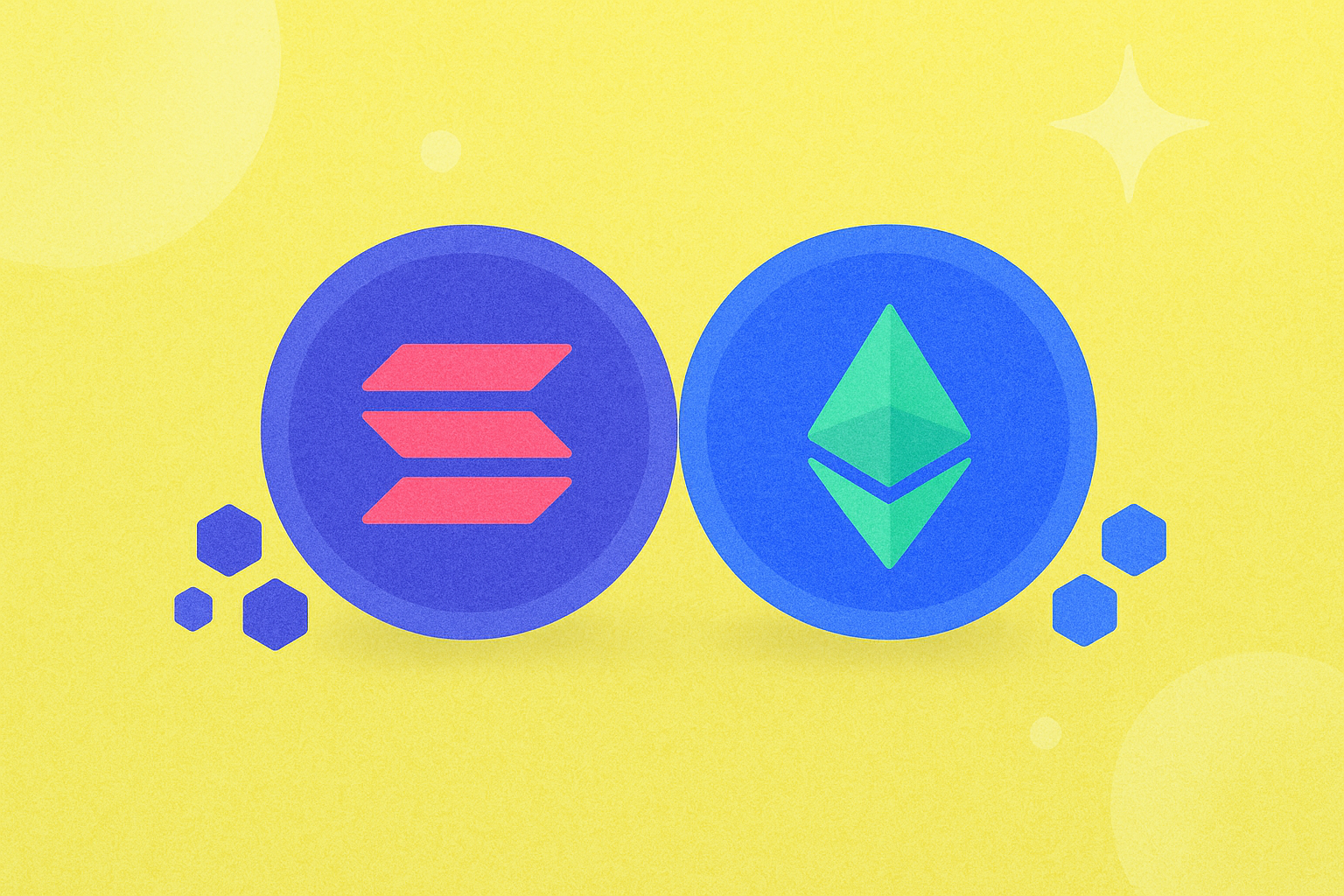
Introduction: Solana's Rising Momentum in the Blockchain Space
Solana has been making significant headlines in the blockchain industry, with its NFT sales volume surpassing Ethereum's for the first time in the past period. This remarkable spike in popularity is not merely a coincidence but rather a clear reflection of the evolving trends within the cryptocurrency market landscape.
The question on everyone's mind is whether Solana is positioned to overtake Ethereum as the dominant force in decentralized finance (DeFi) and non-fungible tokens (NFTs). To answer this, we need to examine the fundamental dynamics driving Solana's rapid ascent and carefully assess its potential to fundamentally reshape the blockchain ecosystem. This analysis will explore the technical advantages, ecosystem development, and market positioning that have contributed to Solana's growing prominence in the competitive blockchain space.
The Demand for Scalability and Low Fees
Ethereum, widely recognized as a pioneer in the blockchain sector, has long grappled with persistent challenges related to network congestion and prohibitively high gas fees. As the demand for decentralized applications (dApps) and DeFi protocols experienced exponential growth, Ethereum's inherent limitations became increasingly apparent and problematic for users.
Users frequently encountered frustratingly slow transaction times and exorbitant costs, which significantly limited their ability to actively participate in the rapidly developing DeFi ecosystem. These barriers to entry became particularly pronounced during periods of high network activity, when gas fees could reach hundreds of dollars for a single transaction.
Solana has emerged as a compelling and viable solution to address these critical challenges. Its innovative Proof of History (PoH) consensus mechanism, when strategically combined with a high-performance blockchain architecture, enables lightning-fast transaction speeds and substantially lower costs compared to Ethereum. This powerful combination has sparked a significant influx of users and developers actively seeking a more efficient, cost-effective, and scalable blockchain experience.
Several high-profile projects have already migrated to or launched directly on Solana, specifically citing its superior scalability advantages. For instance, Serum, a prominent decentralized exchange (DEX) built on Solana's infrastructure, demonstrates exceptional throughput and minimal fees, enabling users to trade seamlessly without the friction experienced on other platforms.
Similarly, numerous NFT marketplaces have strategically chosen Solana as their platform of choice, providing creators and collectors with a significantly more affordable and accessible alternative to Ethereum's often prohibitive fee structure. This migration pattern demonstrates the practical advantages that Solana's technical architecture provides to real-world applications.
The Rise of "DeFi 2.0" on Solana
While Ethereum undeniably pioneered and established the foundational DeFi movement, its persistent constraints have created substantial opportunities for a new generation of innovation on Solana, commonly referred to as "DeFi 2.0." Ethereum's slow transaction speeds and hefty gas prices have significantly hampered the overall user experience and effectively stunted innovation in complex financial products and sophisticated services.
The DeFi ecosystem on Solana has moved swiftly and strategically to overcome these fundamental limitations. Innovative protocols, such as Raydium, an advanced automated market maker (AMM), have evolved to provide rapid and highly efficient trading with minimal slippage. These improvements represent a substantial upgrade over the trading experience available on congested networks.
Yield farming platforms on Solana enable users to earn attractive rewards with considerably lower transaction costs compared to Ethereum, making DeFi participation economically viable for a much broader range of users. This accessibility has democratized access to sophisticated financial instruments that were previously cost-prohibitive for smaller investors.
Furthermore, Solana's impressive high throughput capacity has facilitated the development of increasingly complex DeFi products, including decentralized derivatives platforms and synthetic asset protocols. These advanced financial instruments require rapid transaction processing and low latency, characteristics that Solana's architecture is specifically designed to provide.
These technological advances have not gone unnoticed, with users and developers increasingly flocking to Solana's DeFi ecosystem in pursuit of a more seamless, cost-effective, and feature-rich experience. The total value locked (TVL) in Solana's DeFi protocols has increased dramatically over time, serving as a clear indicator of its growing popularity and substantial potential for continued expansion.
The NFT Explosion on Solana
Ethereum initially dominated the NFT landscape, with major marketplaces like certain prominent platforms and well-known projects capturing the overwhelming majority of market attention and trading volume. However, the combination of significantly lower costs and faster transaction processing on Solana has made it an increasingly popular choice for both NFT creators and collectors seeking more economical alternatives.
The introduction of Solana-based NFT marketplaces like Magic Eden, along with highly successful projects such as DeGods and Okay Bears, has catalyzed a substantial surge in Solana NFT activity and community engagement. These platforms have demonstrated that high-quality NFT experiences can be delivered without the cost barriers that have historically limited participation.
The platform's remarkably low fee structure has effectively democratized NFT creation, enabling artists and creators with modest financial means to actively participate in the market without facing prohibitive entry costs. This accessibility has opened the NFT space to a much more diverse range of creative voices and artistic expressions.
Collectors have similarly benefited from these reduced costs, making it considerably easier and more economically feasible to purchase and trade NFTs on a regular basis. The lower transaction costs enable more frequent trading and collecting activity, contributing to increased market liquidity and dynamism.
This favorable economic environment has resulted in the emergence of vibrant and passionate communities around Solana NFT projects, which foster a strong sense of belonging and active collaboration among participants. The enthusiasm and dedication evident in these communities have accelerated the growth of Solana's NFT ecosystem, attracting more users and spurring continuous innovation in the sector.
The Developer's Choice: Solana vs Ethereum
When it comes to selecting an optimal platform for dApp development, both Solana and Ethereum present distinct advantages and trade-offs that developers must carefully consider based on their specific project requirements.
Ethereum benefits from a mature and well-established development ecosystem featuring extensive resources, comprehensive tools, and robust frameworks that have been refined over years of use. Its programming language, Solidity, is well-documented and extensively utilized throughout the blockchain community, with a large pool of experienced developers available. However, Ethereum's slow transaction speeds and high gas fees can significantly hinder developers seeking to create scalable and cost-effective applications, particularly those requiring frequent user interactions.
Solana, by contrast, places strong emphasis on developer experience through its high-performance architecture and Rust-based smart contract development environment. Its exceptional speed and scalability provide substantial advantages for building complex dApps that demand real-time interactions and high throughput capabilities. The platform's technical specifications make it particularly well-suited for applications requiring rapid transaction processing and low latency.
However, Solana's development community, while growing rapidly, is still expanding and maturing, and its ecosystem remains less extensively developed compared to Ethereum's established infrastructure. This means developers may encounter fewer ready-made solutions and need to build more components from scratch.
The ultimate decision between Ethereum and Solana fundamentally depends on each project's unique requirements and priorities. Developers seeking a battle-tested platform with a diverse ecosystem of proven tools and extensive resources may naturally gravitate toward Ethereum. Those who prioritize speed, scalability, and cost-effectiveness as primary considerations may find Solana's technical advantages more compelling and aligned with their objectives.
The Future of Blockchain Landscape
The blockchain ecosystem is rapidly evolving and transforming, and the future will most likely be characterized by a multi-chain paradigm, with distinct platforms catering to specific use cases and varied user demands. This diversification represents a natural maturation of the blockchain industry.
Ethereum is actively working to address its scalability challenges through ongoing development efforts and planned future improvements, including continued rollout of layer-2 solutions and protocol upgrades. These initiatives demonstrate Ethereum's commitment to maintaining its competitive position in the evolving blockchain landscape.
However, Solana's dramatic growth trajectory and increasingly vibrant ecosystem clearly indicate that it has established a sustainable position in the market and is positioned for long-term success. The platform's technical advantages and growing community support suggest it will continue to attract significant development activity and user adoption.
While Solana may not completely replace Ethereum in the near future, it is exceptionally well-positioned to carve out a significant and influential niche for itself, attracting users and developers seeking a high-performance, cost-effective, and innovative blockchain platform. The two platforms may ultimately serve complementary rather than directly competing roles.
The ongoing competition between Ethereum and Solana will ultimately drive innovation across the entire industry and benefit the broader crypto ecosystem, providing users with expanded options and continuously pushing the boundaries of what blockchain technology can achieve. This competitive dynamic encourages both platforms to improve and innovate continuously.
As both platforms continue to progress and mature, it remains critical for investors and users to stay informed about the latest developments and emerging trends in the blockchain space. Utilizing a secure and versatile multi-chain wallet that supports both Ethereum and Solana can help users navigate this evolving landscape effectively and maximize the opportunities presented by these leading blockchain platforms.
FAQ
What are the main differences between Solana and Ethereum in terms of technical architecture?
Solana uses Proof of History and Proof of Stake consensus, while Ethereum uses Proof of Work transitioning to Proof of Stake. Solana achieves higher throughput and lower transaction fees through parallel processing, whereas Ethereum prioritizes security and maturity. Solana's smart contracts use Rust and C compiled to BPF bytecode, differing from Ethereum's EVM-based approach.
Solana相比Ethereum有哪些优势和劣势?
Solana Advantages: Lower transaction fees, higher throughput, faster finality. Disadvantages: Centralization concerns, network outages, potential MEV risks. Ethereum Advantages: Stronger security, regulatory approval, mature ecosystem. Disadvantages: Higher fees, scalability challenges, Layer 2 fragmentation.
As of 2026, what is the current ecosystem development status of Ethereum and Solana? Which one is stronger?
Ethereum and Solana both maintain robust ecosystems. Ethereum leads in DeFi and smart contract diversity, while Solana excels in scalability and transaction speed. Neither dominates entirely—Ethereum remains the standard for decentralized applications, while Solana captures users seeking faster, cheaper transactions.
Solana有可能在未来超越Ethereum成为最大的智能合约平台吗?
Solana具备超越Ethereum的潜力,凭借更快的交易速度和更低的费用。随着技术进步和生态扩展,到2026年这种竞争可能性确实存在。
Which offers lower risk and greater potential: investing in Solana or Ethereum?
Ethereum carries lower risk as the established DeFi leader with proven security, while Solana offers higher growth potential but with greater volatility. Choose based on your risk tolerance and market outlook.
Does Solana remain competitive after Ethereum 2.0 upgrade?
Yes, Solana maintains strong competitiveness through superior scalability and significantly lower transaction fees. While Ethereum 2.0 improves efficiency, Solana's innovative consensus mechanism supports higher throughput with faster transaction speeds. Its growing ecosystem and strong institutional backing further reinforce its competitive position.
How Does Ethereum Compare to Polygon and Solana in the DeFi and NFT Space?

How Does Solana (SOL) Compare to Ethereum and Bitcoin in 2025?

Guide to Cross-Chain Bridge Solutions for Seamless Blockchain Connectivity
Monthly Active User Statistics for a Leading Web3 Wallet

Understanding ENS: A Comprehensive Guide to Ethereum Name Service
How Does On-Chain Data Analysis Reveal Aptos Network Growth in 2025?
How does macroeconomic interconnectivity impact crypto prices through Fed policy, inflation data, and traditional financial market volatility in 2026?
What is MOT token fundamentals analysis: whitepaper logic, use cases, and technology innovation 2026?
How Does Macroeconomic Policy Impact Crypto Prices: Understanding Federal Reserve, Inflation, and Traditional Market Effects

What is AIC: How does the debt-to-equity-to-direct-equity investment model reshape fintech in 2026?
What is token economics model: How do token allocation mechanisms, inflation design, and governance utility work in crypto tokens?