


2026 Most Secure XRP Cold Wallet Recommendations
Why You Should Use a Hardware Wallet for XRP
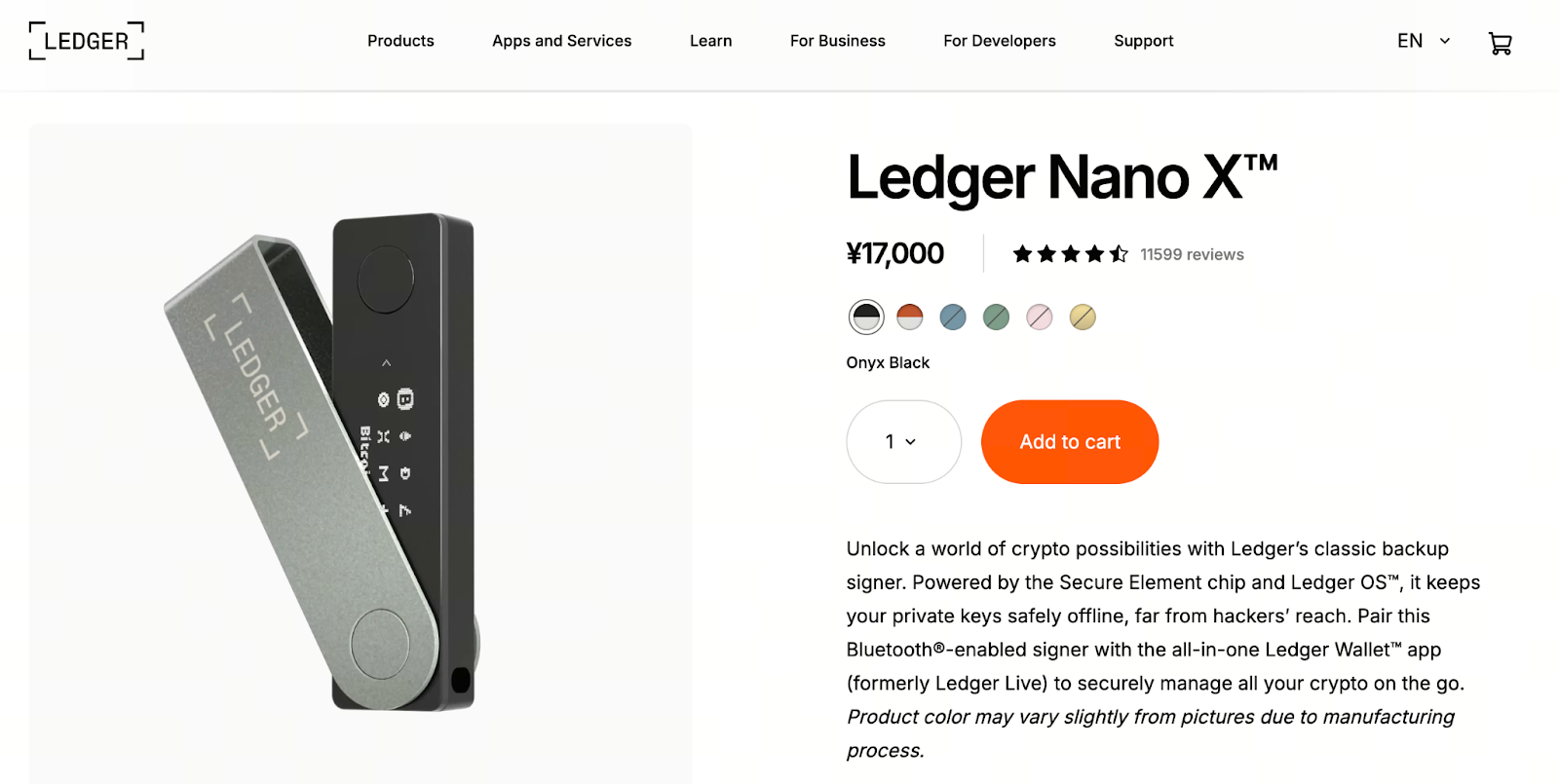
Image: https://shop.ledger.com/products/ledger-nano-x
As XRP adoption grows in payments and cross-border settlements, the number of holders continues to rise. Yet, custody remains one of the biggest risks in crypto asset management. Storing XRP on exchanges or hot wallets exposes your private key to the internet, increasing vulnerability to hacking, exchange freezes, or bankruptcy.
The main advantage of hardware wallets is that your private key never connects to the internet. These devices use secure chips, physical isolation, and firmware verification to ensure signatures can’t be intercepted or altered. This makes hardware wallets the safest solution for long-term XRP storage, and the standard choice for institutional investors.
Top XRP Hardware Wallets to Watch in 2026
By 2026, all major hardware wallet brands will support XRP and offer enhanced security features, making them leading contenders for the best hardware wallet for XRP. The following devices stand out for their security, stability, and strong community reputation:
1. Ledger Series – Industry Standard for XRP Cold Storage
Ledger is widely recognized as the gold standard for XRP storage. Its devices use secure element chips, enforce firmware verification, and offer long-term compatibility with the native XRP ecosystem.
Ledger Live enables direct management of XRP balances and transactions, which is a key reason many holders choose Ledger.
Best for: Users seeking a stable ecosystem, simple operation, and support for multiple cryptocurrencies.
2. Trezor Series – For XRP Users Who Value Transparency and Open-Source Security
Trezor’s standout feature is its open-source design. Most firmware, software, and processes are publicly available, allowing for community audits and high transparency. While managing XRP usually requires third-party apps, Trezor is still a top-tier cold storage option for users who prioritize verifiability and transparency.
Best for: Users who value open-source, security transparency, and maximum control.
3. OneKey Series – Simple, User-Friendly, and Ideal for Long-Term XRP Storage
OneKey is very popular in Asia, designed for “set once, store long-term” cold storage. With a battery-free metal casing and stable firmware, it’s a preferred choice for many long-term holders.
Best for: XRP users seeking dedicated long-term cold storage with minimal interface and speed requirements.
4. CoolWallet and Other Portable Hardware Wallets
Card-style wallets like CoolWallet provide superior mobile management via Bluetooth signing. These devices offer a balance between cold storage security and mobile convenience, ideal for users who need frequent access to XRP balances without compromising safety.
Best for: Holders who need to check assets frequently from mobile devices.
How to Choose the Best XRP Cold Wallet for Your Needs
When choosing the best hardware wallet for XRP, evaluate these four aspects:
1.Security Architecture (most important)
- Does it use a Secure Element chip?
- Is the firmware verifiable?
- Are self-destruct or side-channel protection features present?
- Does it support offline signing?
2.Ecosystem Compatibility
- Is XRP natively supported?
- Does it support XRPL ecosystem apps (such as wallet management software)?
- Is firmware updating convenient?
3.User Experience
- Is mobile support available?
- Does it support Bluetooth or USB-C?
- Is it easy to back up and recover your seed phrase?
4.Long-Term Holding Costs
- Device price
- Service life and stability
- Is a third-party service required for XRP management?
Key Security Practices for Storing XRP with Hardware Wallets
Even with top-tier hardware wallets, improper setup can introduce risks. Use these best practices to maximize asset security:
- Buy devices only from official websites or authorized retailers
- Never photograph your recovery phrase
- Store recovery phrases separately, in different physical locations
- Update firmware regularly to fix vulnerabilities
- Avoid public computers or unknown software environments
- Distribute large XRP holdings across multiple wallets
These tips apply to all crypto assets, but are especially vital for XRP due to its broad utility and large user base.
Summary: Minimizing XRP Risk for Long-Term Holders
A reliable hardware wallet for XRP should offer a secure chip, robust ecosystem compatibility, simple operation, and trustworthy firmware.
Ledger, Trezor, OneKey, and CoolWallet are all strong choices for security. The most expensive device isn’t always the best; choose the one that fits your usage habits. When used correctly, hardware wallets let long-term XRP holders reduce dependence on exchanges and keep assets securely in their own hands.
Related Articles

2026 Stablecoin Classification Deep Dive: From Fiat-Collateralized to Algorithmic Stablecoins, Market Landscape and Future Trends

What Are Fractional NFTs? Understanding the Mechanics of NFT Fractionalization and Its Real-World Use Cases

Top Telegram Games to Watch in 2026: The New Web3 Gaming Frontier and Investment Strategies

The Next 100x Coin? Low-Cap Crypto Gem Analysis

What Is Jupiter? A Complete Guide to Solana’s Leading Decentralized Exchange Aggregator
