


2026 Rune Protocol Bitcoin Runes Latest Developments and Long-Term Value Analysis
Introduction: The Rise of Rune Protocol
Rune Protocol, also known as the Bitcoin Rune Protocol, is a new token standard operating on the Bitcoin network designed to streamline token issuance and lower on-chain interaction costs. Developed by Casey Rodarmor, the creator of Ordinals, Rune Protocol aims to provide the Bitcoin ecosystem with more robust and cost-effective options for on-chain asset issuance and exchange. The protocol went live following the 2024 Bitcoin halving and quickly drew attention due to large-scale minting activity and rising transaction fees.
Initial data shows a surge in transactions and miner fees within the first days of the protocol’s launch, indicating strong early market enthusiasm. Runes quickly emerged as a focal point, seen as a new model for native asset issuance on the Bitcoin blockchain.
Decline in Activity and Transaction Data
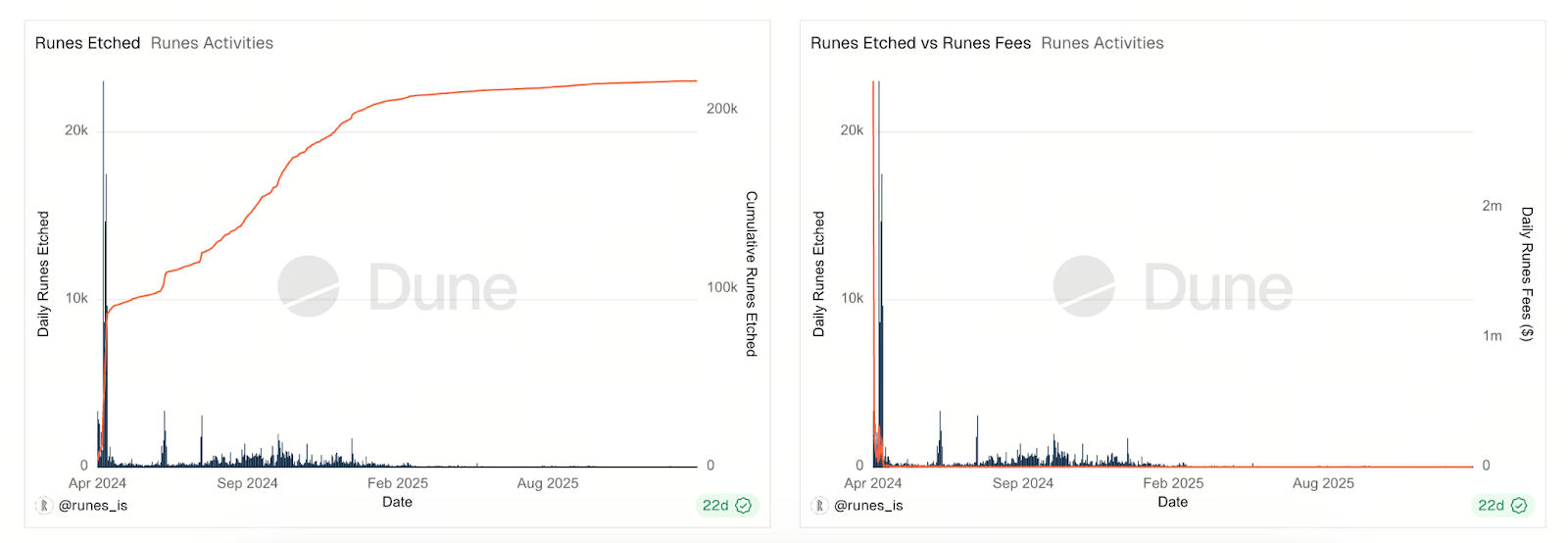
Chart: https://dune.com/runes_is/runes
Despite its rapid rise in popularity, Rune Protocol’s on-chain activity declined sharply in a short period. On-chain analytics indicate that since May 2024, both daily active addresses and fee revenue have dropped significantly, with only a handful of days exceeding the million-dollar threshold for on-chain fees. Overall, transaction and minting activity have cooled.
According to CoinDesk, the protocol saw nearly 85,000 minting events and generated over $3 million in fees within its first ten days, but these figures fell by more than 50% in the following weeks, signaling a steep drop in user engagement.
This shift reflects not only waning market enthusiasm but also highlights challenges in real-world adoption and user retention for the protocol.
On-Chain Economy and Protocol Fee Performance
Although activity has declined, Rune Protocol continues to generate consistent fee revenue on the Bitcoin blockchain, indicating ongoing usage by certain users and projects. However, compared to overall Bitcoin network transactions and other asset activity, the revenue growth from Runes has slowed considerably.
Fee income only surpassed the million-dollar mark on a few occasions. While notable, this is not particularly significant relative to the overall transaction volume of the Bitcoin chain. The ongoing drop in daily activity suggests that future revenue may face additional downward pressure.
Technical Logic and User Value
Rune Protocol was designed to simplify asset creation and on-chain interactions, offering greater efficiency and lower costs than the established BRC-20 standard. It eliminates the need for external off-chain storage or complex data references, allowing users to issue and manage tokens with greater flexibility.
While this technical approach theoretically represents an upgrade for Bitcoin’s native asset standards, whether these advantages will drive broader user adoption and ecosystem growth remains uncertain.
Comparison with BRC-20 and Other Standards
Compared to BRC-20, Taproot Assets, and similar standards, Rune Protocol offers a more streamlined approach to on-chain issuance. However, not all analysts view its technical innovations as groundbreaking. Some argue that the practical value Runes delivers has yet to be realized at scale.
The slowdown in protocol activity reinforces this perspective: community interest may be driven more by novelty and speculation than by sustained technical progress and ecosystem development.
Future Outlook and Risk Considerations
The future prospects of Rune Protocol depend on several factors:
- Application ecosystem development: The emergence of more practical DApps supporting the Runes standard could drive renewed growth;
- Community and developer engagement: Sustained developer contributions to protocol optimization and iteration;
- Macro market conditions: Volatility in the broader crypto market significantly impacts user participation.
It’s important to recognize that excessive early speculation may trigger brief spikes in price and activity, while long-term, stable growth will require ongoing technical and value support.
Conclusion: A Rational Perspective on the Runes Ecosystem
Rune Protocol once captured significant attention for its technical innovation and market momentum, but on-chain data now shows a decline in both activity and economic performance. For investors and technology analysts, the focus should shift toward the protocol’s depth of integration and application within the ecosystem rather than short-term hype. As blockchain technology continues to evolve, Rune Protocol may find niche applications, but its future will depend on sustained development and robust ecosystem support.
Related Articles

2026 Stablecoin Classification Deep Dive: From Fiat-Collateralized to Algorithmic Stablecoins, Market Landscape and Future Trends

What Are Fractional NFTs? Understanding the Mechanics of NFT Fractionalization and Its Real-World Use Cases

Top Telegram Games to Watch in 2026: The New Web3 Gaming Frontier and Investment Strategies

The Next 100x Coin? Low-Cap Crypto Gem Analysis

What Is Jupiter? A Complete Guide to Solana’s Leading Decentralized Exchange Aggregator
