Claude Code Source Code Leak: In-Depth Industry Analysis—Anthropic's Vision Extends Far Beyond Just an AI Coding Assistant
A routine release error unexpectedly gave the public an early glimpse into the future of Claude Code. Around March 31, 2026, Anthropic’s npm package @anthropic-ai/claude-code version 2.1.88 was discovered to include a cli.js.map file. Because this source map contained extensive sourcesContent, researchers managed to reconstruct a substantial portion of the original TypeScript source code. The incident quickly circulated within the developer community and media.
On the surface, this looks like an engineering slip-up. But from an industry perspective, the real significance of the Claude Code source code leak isn’t the “leak” itself—it’s that, for the first time, outsiders could observe, at the code level (not just through official demos), what Anthropic is actually building with Claude Code.
The takeaway is clear:
Anthropic’s ambitions go far beyond building an AI CLI that writes code. The company is developing an agent system capable of continuous operation, proactive execution, multi-agent coordination, and true integration into the development workflow.
What Did the Claude Code Source Code Leak Reveal?
Let’s clarify the facts.
Based on public information, these points are clear:
- The affected package is @anthropic-ai/claude-code version 2.1.88.
- The leak was most likely caused by a build or packaging configuration error, not a hacker attack.
- The source map exposed a large amount of source code to external parties.
- Anthropic stated that no customer data or credentials were leaked—only internal source code was exposed.
What does this mean?
While embarrassing, this incident is not fundamentally a user data security crisis. Instead, it’s an “unexpected product roadmap disclosure.” For those following the AI industry, this kind of information is often more valuable than a press event—because source code is more honest than marketing copy. What a team truly values usually shows up directly in code, feature toggles, and system prompts.
From Source Code: Claude Code Is Evolving from Tool to System
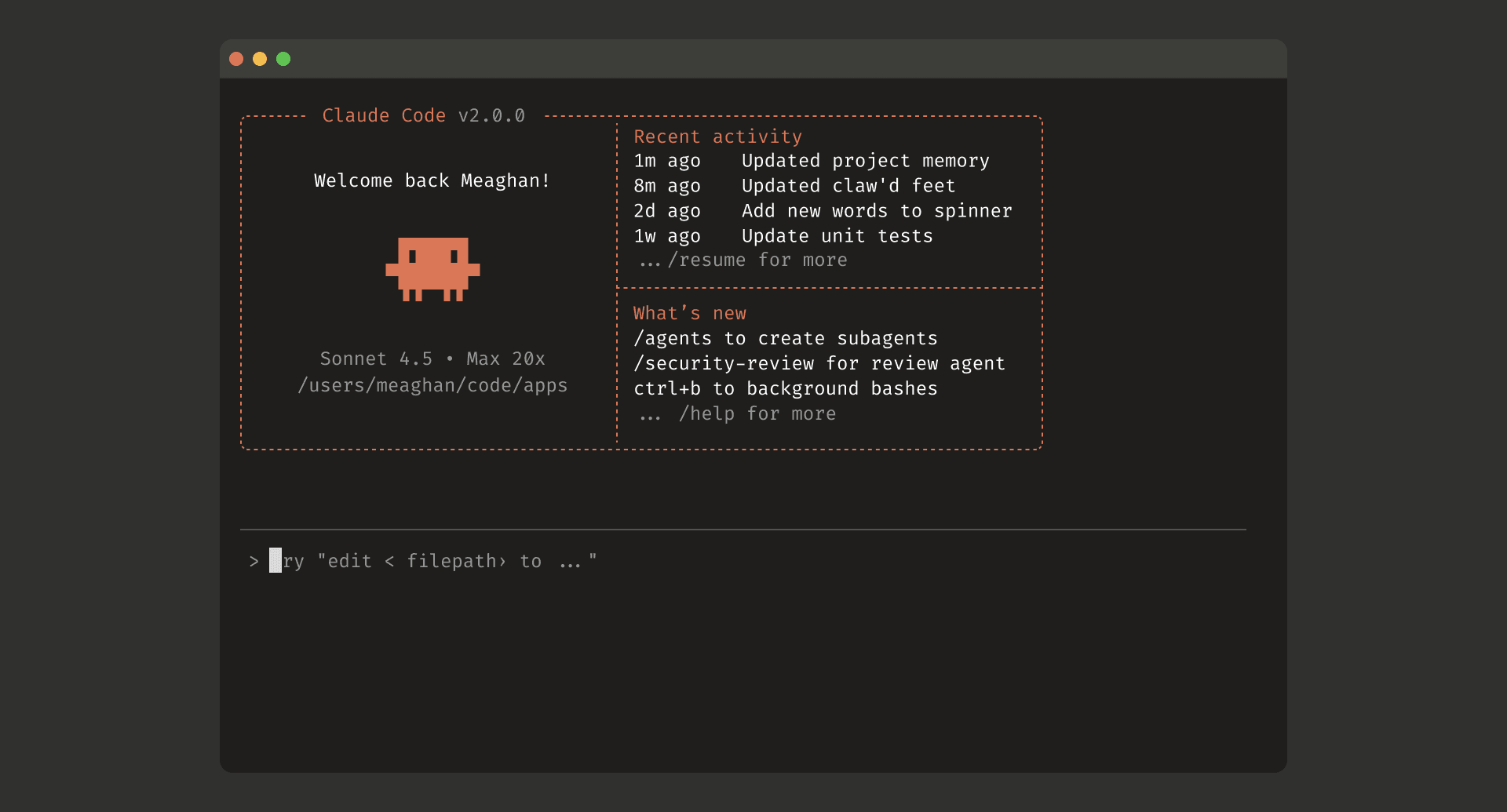 Looking at the features identified so far, it’s clear they’re not scattered capabilities—they’re built around a unified direction.
Claude Code is transitioning from a “reactive programming assistant” to a “continuously running agent system.”
Earlier AI coding tools typically worked like this:
- The user issues a request.
- The model returns code or suggestions.
- The interaction ends.
- The user must manually trigger the next round.
But clues from the leaked code show Anthropic is moving to the next stage. The new focus isn’t just “smarter answers,” but whether the system can autonomously and persistently drive tasks forward.
That’s the most significant shift for Claude Code.
KAIROS, PROACTIVE, and COORDINATOR—Anthropic’s Plan for Claude Code as a True Agent
Among the most discussed elements in the leak are several high-frequency feature flags: KAIROS, PROACTIVE, and COORDINATOR_MODE.
The names themselves aren’t the main point—it’s what they mean for the product.
KAIROS: Keeping Claude Code Online Long-Term
Public analysis suggests KAIROS is a form of autonomous background mode. In simple terms, Claude Code would no longer be just a temporary “question-and-answer” tool, but could persist in the background, maintain context, listen for events, integrate memory, and keep working under certain conditions.
This shows Anthropic is trying to transform Claude Code from a callable program into a system that’s always present.
This is a critical shift for users. Real development work doesn’t end with a single prompt—many tasks span hours, days, or longer. If AI can only provide one-off answers, it remains just an assistant. But if it can follow up continuously, it starts to become more like a “colleague.”
PROACTIVE: Taking Initiative Without Waiting for User Input
PROACTIVE mode signals something even more direct: Claude Code may not just wait for user input, but could continue processing tasks and seek the next actionable step—even when users are inactive.
Put simply, Anthropic is trying to solve a long-standing AI product challenge:
Will the AI take initiative?
Most AI tools today are “you ask, I answer.” But truly efficient workflows can’t rely on constant manual triggers. What people need is a system that, once given a goal, can break it down, advance autonomously, report back, and only involve the user at critical points.
If Anthropic succeeds, Claude Code’s product form will fundamentally change.
COORDINATOR: One Claude Isn’t Enough—Collaboration Among Multiple Claudes
COORDINATOR_MODE suggests Anthropic no longer sees complex tasks as single-agent problems, but as requiring multi-agent collaboration.
In this mode, Claude acts as a coordinator—assigning research, coding, and validation tasks to different worker agents, then collecting and integrating the results. The logic mirrors real-world teams: some members oversee, others execute, and others verify.
This shows Anthropic understands the future of AI products:
The most valuable systems won’t necessarily have the single most capable model, but will orchestrate multiple agents in the most stable, controllable way.
What’s Next for Claude Code?
From an industry analysis perspective, Anthropic is likely to advance Claude Code in four key directions.
1. Upgrading from “Command-Line Tool” to “Resident Development Environment”
Right now, Claude Code’s most intuitive form is a CLI, but it’s unlikely to remain just a CLI.
The CLI is simply an entry point, as developers are most comfortable there. In the long term, Anthropic will likely enhance Claude Code’s “resident capability,” making it more like a background-running development environment component. You’ll be able to invoke it from the terminal, but it won’t be limited to the terminal. It could connect to GitHub, notification systems, task status, and team memory, and keep working even when users aren’t actively monitoring it.
This means Claude Code will shift from a “command-line tool” to “development workflow infrastructure.”
2. Evolving from “Single-Generation” to “Continuous Task Advancement”
Anthropic is likely to further strengthen proactive execution.
Why? Because this is one of the most important competitive points for the next generation of AI coding products. Many tools today can already write code, so the differences are shrinking. The real differentiator is who can see a complex task through to completion, not just generate code snippets.
So, the next step for Claude Code is not just improving code completion, but enhancing these capabilities:
- Automatically breaking down tasks
- Continuously invoking tools
- Self-checking during tasks
- Reporting back to users at critical points
- Maintaining context continuity for long-running tasks
This would make Claude Code more like a “self-driven system” rather than a “question-answering model interface.”
3. Transitioning from “One AI” to a “Multi-Agent Orchestration Platform”
The coordinator concept revealed in this leak is especially significant.
Complex software engineering isn’t suited to a single-threaded AI. Reading code, modifying, testing, and validating are inherently parallel, multi-role processes. Anthropic will likely keep refining the “main agent + worker agents + verification agents” structure.
If this direction continues, Claude Code may eventually look like this:
- A main agent understands goals and creates plans
- Multiple sub-agents execute different subtasks in parallel
- Independent verification agents perform adversarial checks
- Users only intervene at a few critical points
This isn’t just a chat upgrade—it’s a workflow overhaul.
4. From “Able to Act” to “Controllable Action”
If you’ve seen many agent products, you’ll notice a common challenge: it’s not about making them work, but about preventing them from acting unpredictably.
That’s why permissions, sandboxing, and security checks have drawn much attention. Anthropic will likely keep balancing “automation” with “controllability.” It’ll minimize user interruptions but won’t grant unlimited autonomy.
The next focus for Claude Code will likely be:
- Smarter permission hierarchies
- Finer-grained risk assessments
- More stable operational boundaries
- Improved auditing and traceability
Once agents truly enter enterprise development workflows, security and responsibility boundaries become more important than “showcasing capabilities.”
This Incident Shows the Competition in AI Coding Tools Has Shifted
The Claude Code source code leak is worth examining because it highlights a major industry trend: competition among AI coding products is shifting from “who writes better code” to “who can deliver a complete work system.”
Previously, the focus was on model capabilities: whose code generation was most accurate, whose context window was longer, whose benchmarks were higher. Now, the competition is about system capabilities: who can integrate more tools, minimize interruptions, operate continuously, orchestrate multiple agents, and fit seamlessly into team workflows.
In short, the future winner won’t be the one “most like a chatbot,” but the one “most like a work operating system.”
In this sense, Anthropic’s direction for Claude Code is clear. The goal isn’t just to build a programming assistant plugin, but to define the “AI-native development environment.”
What Does This Mean for Users?
For developers and teams, this has two major implications:
- Efficiency Opportunity: If Anthropic truly evolves Claude Code into a background-running, proactive, multi-agent collaborative system, the relationship between developers and AI will change. You’ll no longer need to write every step as a prompt. Instead, you’ll provide goals, constraints, and boundaries, and let the system handle the details.
- Control Challenge: The more proactive the AI, the more users need to know what it’s doing, why it’s doing it, whether it has permission, and who’s responsible if something goes wrong. Future key metrics for AI coding tools will be not just “can it do the job,” but “can you trust it to do the job.”
That’s why the real competitive advantage for Claude Code will not just be model upgrades, but product engineering and system governance.
Conclusion
The Claude Code source code leak may look like an embarrassing engineering mishap, but in reality, it’s an accidental product preview. It gave the public an early look at Anthropic’s vision for Claude Code—which is likely not just a stronger AI coding assistant, but a long-running, proactive, multi-agent system that can be safely integrated into real-world workflows.
If this proves true, Claude Code’s future won’t just be “helping you write code”—it will be “continuously advancing your development work.”
And what Anthropic is truly aiming for isn’t just a higher spot in model rankings, but ownership of the next-generation AI development workflow.
Related Articles
What Is ERC-8183? Exploring the AI Agent Commercial Standard and the Infrastructure of the Decentralized Agent Economy
AI Agents Becoming Economic Actors: What Infrastructure Gaps Can Blockchain Fill?
What Is RoboForce? An In-Depth Analysis of the Technical Path and Industrial Prospects of an AI Robotic Workforce Platform

How to Reduce Token Costs in the AI Era: Practical Strategies from Prompt Optimization to Model Selection
What is Athene Network (ATN)? Exploring AI-Blockchain Integration