


What Are Fractional NFTs? Understanding the Mechanics of NFT Fractionalization and Its Real-World Use Cases
What Is a Fractional NFT Marketplace
Source: https://coinmarketcap.com/academy/article/what-are-fractional-nfts-f-nfts-and-how-do-they-work
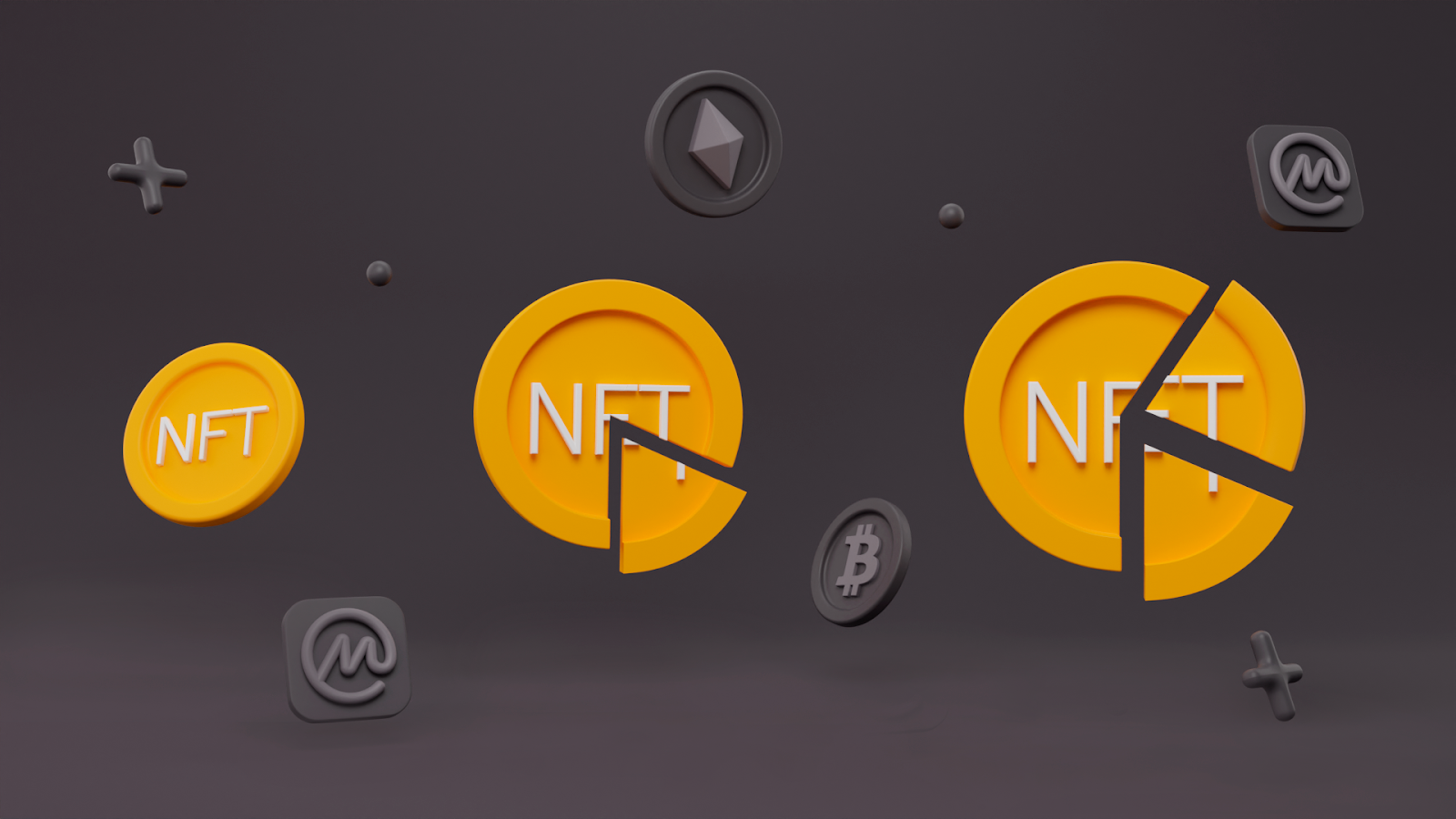
A Fractional NFT Marketplace—commonly referred to as an NFT fractional trading platform in Chinese—is a platform model that enables users to divide a single NFT into multiple tradable shares.
Traditionally, an NFT can only be wholly owned by a single address. Its liquidity and accessibility are often restricted by price. Fractionalization addresses these issues by locking an NFT in a smart contract and issuing a corresponding amount of fungible tokens (such as ERC-20), with each token representing a portion of ownership in that NFT.
These tokens trade freely on secondary markets like standard cryptocurrencies, allowing multiple users to collectively own a single NFT.
Why Fractionalize NFTs?
Fractionalizing NFTs is not about solving technical challenges. It responds to three practical needs:
- Limited liquidity for high-value NFTs: Many blue-chip NFTs are priced at tens of thousands or even millions of dollars, and actual trading activity is low. Fractionalization makes it possible for more participants to trade these assets.
- Lowering the entry barrier for typical users: Not every user can afford a whole high-value NFT. Fractionalization allows for small-scale participation.
- Asset allocation and risk diversification: Compared to buying a single NFT, fractionalization enables investors to allocate the same amount of capital across multiple asset shares.
How Fractional NFTs Are Implemented Technically
The mainstream technical process for fractional NFTs generally involves these steps:
- Deposit the original NFT into a smart contract for locking
- The contract mints a fixed number of divisible tokens
- These tokens represent fractional ownership of the NFT
- Shares can be freely traded on decentralized exchanges (DEXs) or within the platform’s internal marketplace
- When someone repurchases all shares, they can redeem the complete NFT
Technically, fractional NFTs are straightforward—a combination of NFT and ERC-20 tokenization.
Key Use Cases for Fractional NFTs
Currently, fractional NFTs are primarily applied in these scenarios:
- High-value digital art: Multiple users jointly own a single expensive piece
- Virtual land and metaverse assets: Reducing the cost of entry into virtual real estate
- Collectibles and IP-based NFTs: Breaking up scarce assets for trading
- Community asset sharing: DAOs collectively holding NFT assets
It’s important to note that these use cases remain experimental and have yet to reach unified, mature adoption.
Current State of the Market
Overall, the NFT market has entered a more rational phase, with trading volume and speculative activity well below early peak levels.
Within this context, Fractional NFT Marketplaces remain a niche sector characterized by:
- Limited user base
- Generally shallow trading depth
- Liquidity highly dependent on individual projects
- Not yet a “platform-level essential”
At present, fractional NFTs serve mainly as a supplementary tool, rather than the mainstream method for NFT trading.
Advantages and Limitations of Fractional NFTs
Advantages:
- Lowers the entry threshold for high-value NFTs
- Enhances trading flexibility for individual NFTs
- Supports share-based asset allocation
- Fits community co-management models
Limitations:
- Share prices are closely tied to the valuation of the original NFT
- Liquidity is not always reliable
- Multi-party ownership complicates governance and asset disposition
- Legal and copyright boundaries remain ambiguous
Who Should Use Fractional NFT Marketplaces
Fractional NFT Marketplaces are best suited for:
- Users seeking to invest small amounts in NFT assets
- Individuals interested in high-value NFTs but with limited capital
- DAO or community asset co-owners
- Digital asset investors focused on diversification
For users focused solely on short-term trading profits, fractional NFTs may not offer clear advantages.
Conclusion
Fractional NFT Marketplaces are not disruptive innovations in the NFT sector. Instead, they provide a structural solution to liquidity and participation barriers.
In today’s market, they function primarily as foundational tools rather than as the core of mainstream NFT narratives. Whether they scale further will depend on sustained real-world demand for NFT applications.
Related Articles

2026 Stablecoin Classification Deep Dive: From Fiat-Collateralized to Algorithmic Stablecoins, Market Landscape and Future Trends

What Are Fractional NFTs? Understanding the Mechanics of NFT Fractionalization and Its Real-World Use Cases

Top Telegram Games to Watch in 2026: The New Web3 Gaming Frontier and Investment Strategies

The Next 100x Coin? Low-Cap Crypto Gem Analysis

What Is Jupiter? A Complete Guide to Solana’s Leading Decentralized Exchange Aggregator
