


How Decentralized Identity (DID) Is Driving New Transformations in Crypto | The Convergence of Blockchain and Self-Sovereign Identity
1. What Is DID? Definition and Core Advantages
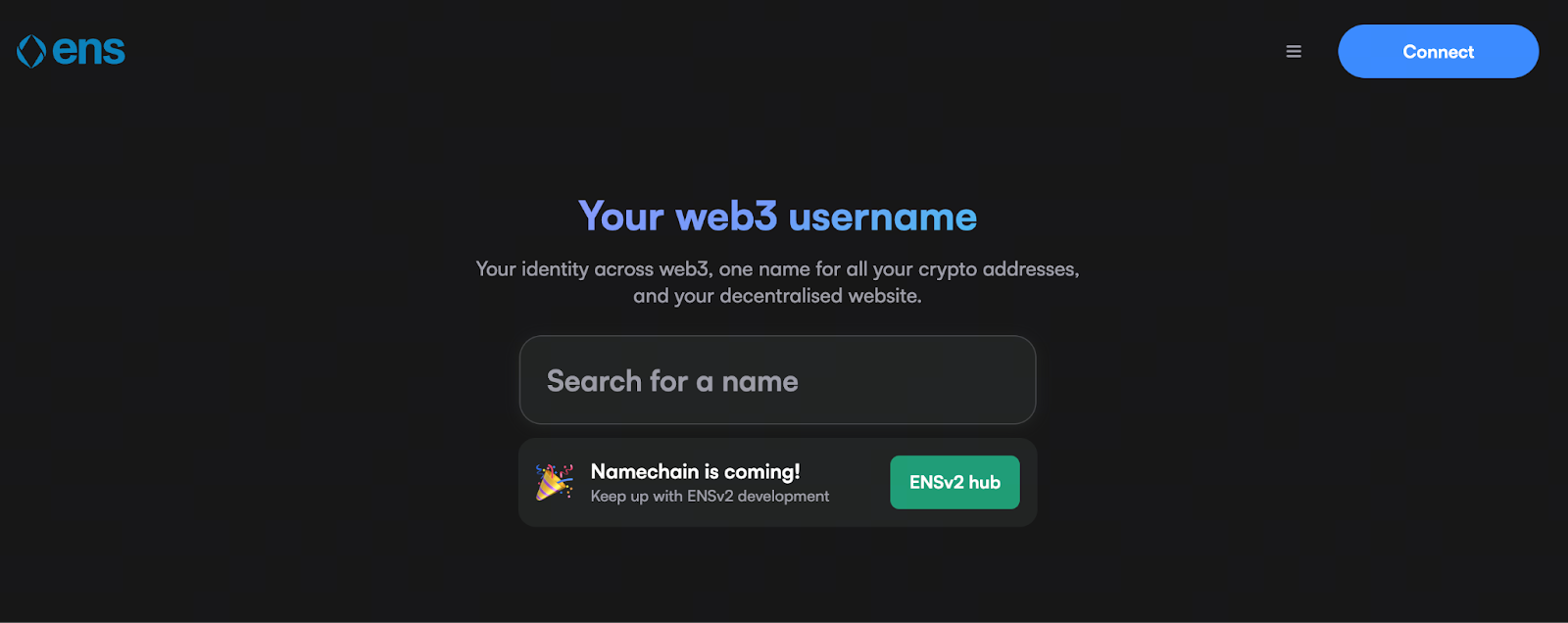
Image source: https://app.ens.domains/
DID, short for Decentralized Identifier, is a standardized, verifiable digital identity used to identify individuals, organizations, or devices—without relying on centralized service providers like major tech companies. DIDs typically work alongside Verifiable Credentials (VCs), enabling identities to be verifiable, persistent, and privacy-preserving. This marks a fundamental shift from traditional identity systems that depend on centralized databases.
Within the crypto ecosystem, DID offers several core advantages:
- User autonomy: Identities are not controlled by centralized platforms.
- Privacy protection: Adheres to the principle of minimal information disclosure.
- Cross-application interoperability: A single identity can be used across multiple on-chain services.
These advantages lay the foundation for a more secure and transparent digital identity infrastructure.
2. The Real-World Value of DID in Crypto
Identity verification remains a foundational yet complex issue in the crypto ecosystem. Traditional KYC (Know Your Customer) processes require users to submit significant personal information, which centralized service providers store—creating risks of data breaches. DIDs allow users to cryptographically prove their identity without sharing raw personal data. This privacy-first approach to verification appeals strongly to both crypto projects and users.
For instance, some DID initiatives are integrating with crypto community behavior and reputation systems. By leveraging Verifiable Credentials, they establish more trustworthy user ranking systems and improve transparency in community governance.
3. DID Drives Interoperability Across Web3 Ecosystems
The Web3 ecosystem consists of multiple independent blockchains and protocols. Without a unified identity system, users face repeated registrations and fragmented data. DID acts as a “unified identity layer” across decentralized applications (DApps), decentralized finance protocols (DeFi), and DAO platforms, significantly enhancing overall interoperability.
National-level projects, such as Bhutan’s migration of its national digital identity system to the Ethereum blockchain, demonstrate that DID’s potential impact extends beyond single-use cases and is evolving into foundational infrastructure.
4. DID, Privacy Protection, and Compliance Frameworks
Compliance and privacy protection are central concerns for DID in both domestic and international markets. In China, national DID systems like the China RealDID project propose real-name DID solutions that integrate blockchain technology with regulatory requirements, protecting user data privacy while fulfilling real-name policy mandates.
Globally, privacy regulations such as the GDPR set higher standards for decentralized identity applications. This drives the need for DID standards to further align technology with legal frameworks.
5. DID Technical Architecture and Core Components
A typical DID system includes three layers: the blockchain layer, decentralized network layer, and trusted exchange layer. The blockchain layer anchors DID Documents and public key associations. The decentralized network layer boosts performance, while the trusted exchange layer manages credential exchange and verification.
DID systems also require components such as DID Resolvers, identity wallets, and credential issuance and verification modules. Together, these technologies deliver a comprehensive identity management solution.
6. Future Trends and Industry Challenges
In the coming years, DID will become a core pillar of Web3 identity architecture. Key trends may include:
- Deep integration with DeFi, NFT, and DAO ecosystems.
- Standardization and enhancement of cross-chain DID and interoperability protocols.
- Integration with privacy computing and zero-knowledge proof technologies.
However, DIDs still face challenges, including inconsistent compliance frameworks, high user experience barriers, and scalability issues in certain scenarios.
Related Articles

2026 Stablecoin Classification Deep Dive: From Fiat-Collateralized to Algorithmic Stablecoins, Market Landscape and Future Trends

What Are Fractional NFTs? Understanding the Mechanics of NFT Fractionalization and Its Real-World Use Cases

Top Telegram Games to Watch in 2026: The New Web3 Gaming Frontier and Investment Strategies

The Next 100x Coin? Low-Cap Crypto Gem Analysis

What Is Jupiter? A Complete Guide to Solana’s Leading Decentralized Exchange Aggregator
