


ICP Wallet Guide: How to Safely Store Your ICP (Internet Computer)
What Is ICP and an ICP Wallet
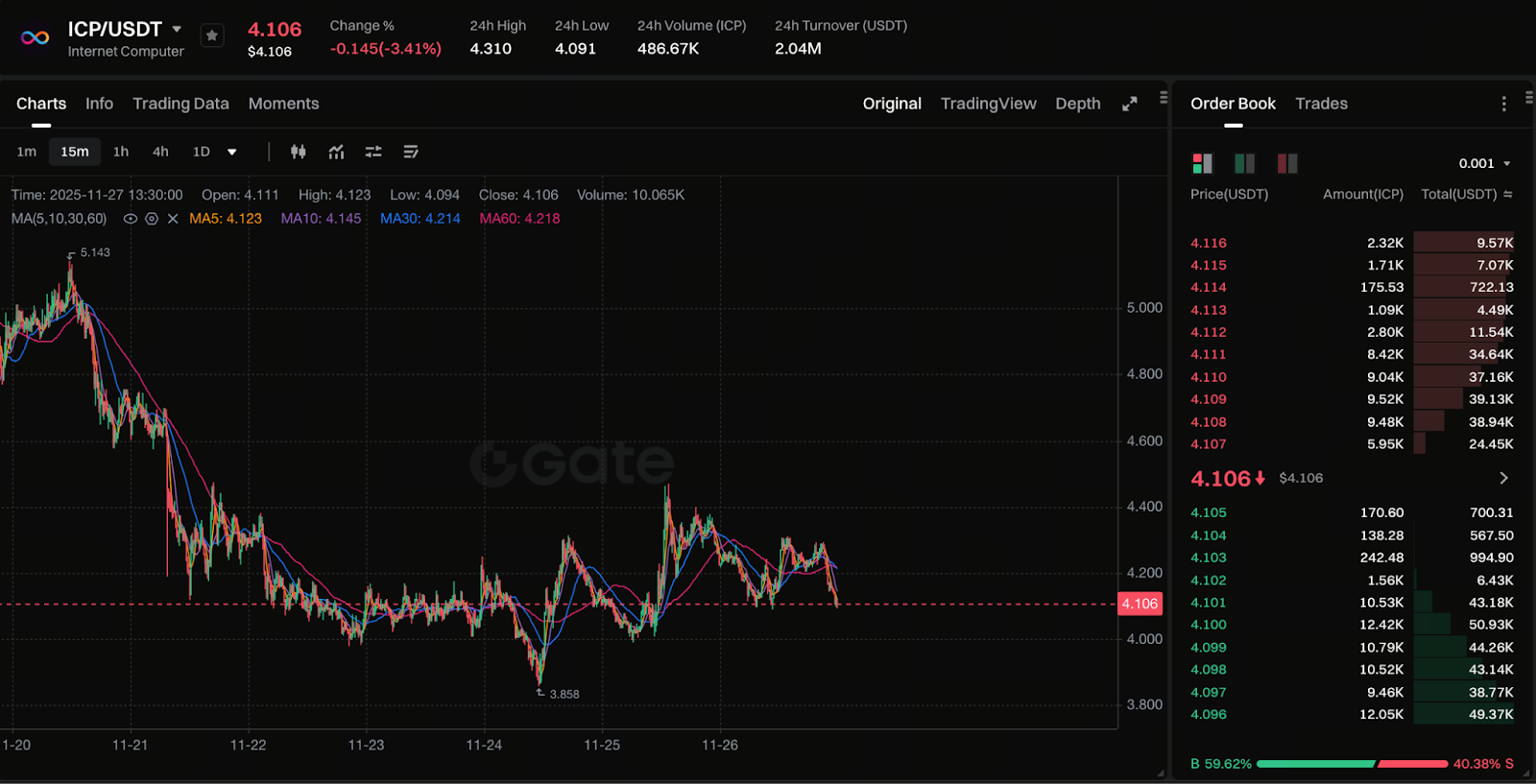
Image: https://www.gate.com/trade/ICP_USDT
ICP, the native token of the Internet Computer, is a digital asset used to pay network fees, participate in governance, and execute smart contracts. As ICP adoption and trading volumes rise, more users are seeking the best ways to safeguard their assets. As a result, users are increasingly interested in ICP wallets. An ICP wallet is fundamentally a private key management tool for signing transactions and storing assets. By using a wallet instead of keeping tokens on an exchange, users reduce their exposure to risks like exchange hacks or asset freezes.
Common Types of ICP Wallets
- Software Wallets — These are typically browser extensions or mobile/desktop apps. They offer convenience and are ideal for everyday transactions and holding smaller amounts.
- Hardware Wallets — These store private keys on offline devices, providing the highest level of security. They are best suited for long-term holding or large asset balances.
- Official, Community, or Cold Wallets — Some wallets are designed specifically for ICP and may support offline storage, making them a strong choice for long-term backup solutions.
How to Set Up an ICP Wallet (Software and Hardware Wallet Examples)
- Choose a reputable wallet provider and download the official version.
- After installation, generate a new private key or mnemonic phrase and back it up securely. For example, you should write the mnemonic phrase down and store it offline; never take screenshots or save it to the cloud.
- If using a hardware wallet, store the mnemonic and private key on the device and keep it disconnected from the internet.
- Import your ICP address or private key into the wallet to enable sending and receiving ICP.
- Enable additional security features, such as passwords and two-factor authentication, if available.
ICP Wallet Security Best Practices
- Never use unverified browser extensions or fake wallets—malicious plugins specifically targeting ICP have been reported.
- Always store your mnemonic phrase and private key offline. Do not upload them to the cloud, take screenshots, or store them in electronic notes.
- Diversify your holdings by storing the majority of your ICP in a hardware wallet and keeping only a small portion for daily transactions.
- Regularly update your wallet software to protect against known vulnerabilities.
- Avoid operating your wallet on public networks or shared devices to prevent man-in-the-middle attacks and keylogging threats.
Why Choosing an ICP Wallet Is Crucial
Using an ICP wallet instead of an exchange or third-party custodian gives you greater control and security over your digital assets. This is especially critical during periods of market volatility, increased hacking activity, and the prevalence of fake plugins. For long-term ICP holders, using a hardware wallet together with an offline mnemonic backup is essential for asset protection and preservation.
Related Articles

2026 Stablecoin Classification Deep Dive: From Fiat-Collateralized to Algorithmic Stablecoins, Market Landscape and Future Trends

What Are Fractional NFTs? Understanding the Mechanics of NFT Fractionalization and Its Real-World Use Cases

Top Telegram Games to Watch in 2026: The New Web3 Gaming Frontier and Investment Strategies

The Next 100x Coin? Low-Cap Crypto Gem Analysis

What Is Jupiter? A Complete Guide to Solana’s Leading Decentralized Exchange Aggregator
