


In-Depth Analysis of XRP Liquidity and Price Dynamics: Market Reality and Future Expectations
1. The Importance and Measurement of XRP Liquidity
In the crypto market, XRP liquidity serves as a crucial metric for assessing how easily an asset can be bought or sold. High liquidity means orders execute more smoothly and spreads are narrower, reducing slippage risk. Conversely, low liquidity can intensify price volatility. For XRP, liquidity encompasses both the order book depth on traditional exchanges and the size of on-chain AMM (Automated Market Maker) pools.
2. Latest XRP Price Trends and Market News
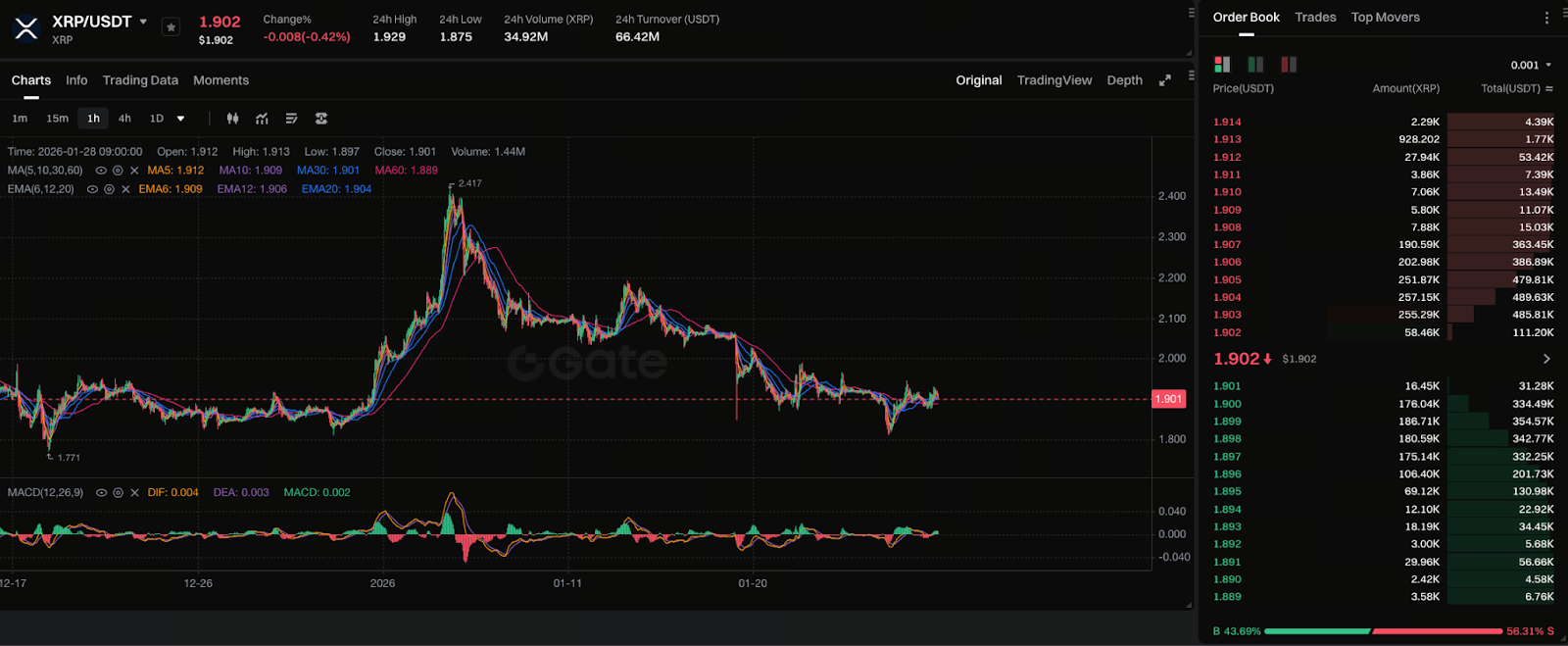
Chart: https://www.gate.com/trade/XRP_USDT
XRP has shown notable activity in early 2026, surging roughly 25% during the first week of January and reaching levels above $2.30 before pulling back. While most crypto assets also saw gains, XRP’s performance was particularly strong.
Meanwhile, analysts have pointed to a potential short squeeze in the near-term technical outlook, which could act as a catalyst for the price to break through previous highs.
As of January 28, 2026, XRP has declined to around $1.90.
3. On-Chain XRP Liquidity and Trading Depth
On-chain, AMM pools on the XRP Ledger have aggregated over 11 million to 13 million XRP in liquidity, supporting decentralized trading and market depth.
This indicates that, in addition to deep order books on centralized exchanges (CEX), on-chain decentralized liquidity is also expanding, giving traders more options. Since the launch of the XRPL AMM mechanism, both the number of participating pools and the total capital have shown steady growth.
4. Exchange Reserves and Shifts in Liquidity Supply and Demand
Recent data indicates that XRP reserves on major exchanges have been fluctuating. Some observers believe that a portion of holdings is moving out of exchange wallets, which could impact tradable liquidity and bring the market closer to a functional zero inventory scenario.
This reduction in reserves could tighten supply and demand over the long term, but may also lead to sharper short-term price swings, especially if trading depth is insufficient to absorb large orders.
5. Key Price Ranges and Future Trend Analysis
In the short term, XRP’s liquidity hotspot is around the $2.25–$2.30 range, where significant order flow and rebalancing pressure create a potential resistance zone.
If the price can break through this area and attract new liquidity, it could drive another upward move. Otherwise, the price is likely to remain volatile within this range. Over the long term, liquidity and support near the $2.00 level will also be closely watched by the market.
6. Risk Advisory, Compliance, and Institutional Participation Impact
Investors should be aware that shifts in market liquidity, whether contraction or expansion, are often accompanied by significant price swings. Regulatory developments, institutional participation (such as ETF inflows), and strategic changes by Ripple could all reshape the XRP liquidity landscape in the future.
In summary, XRP liquidity reflects both current trading depth and price trends. Understanding these dynamics can better inform investment strategy decisions.
Related Articles

2026 Stablecoin Classification Deep Dive: From Fiat-Collateralized to Algorithmic Stablecoins, Market Landscape and Future Trends

What Are Fractional NFTs? Understanding the Mechanics of NFT Fractionalization and Its Real-World Use Cases

Top Telegram Games to Watch in 2026: The New Web3 Gaming Frontier and Investment Strategies

The Next 100x Coin? Low-Cap Crypto Gem Analysis

What Is Jupiter? A Complete Guide to Solana’s Leading Decentralized Exchange Aggregator
