NFT Worthless? Rethinking the Value of Digital Collectibles
Preface
 (Source: OpenSea)
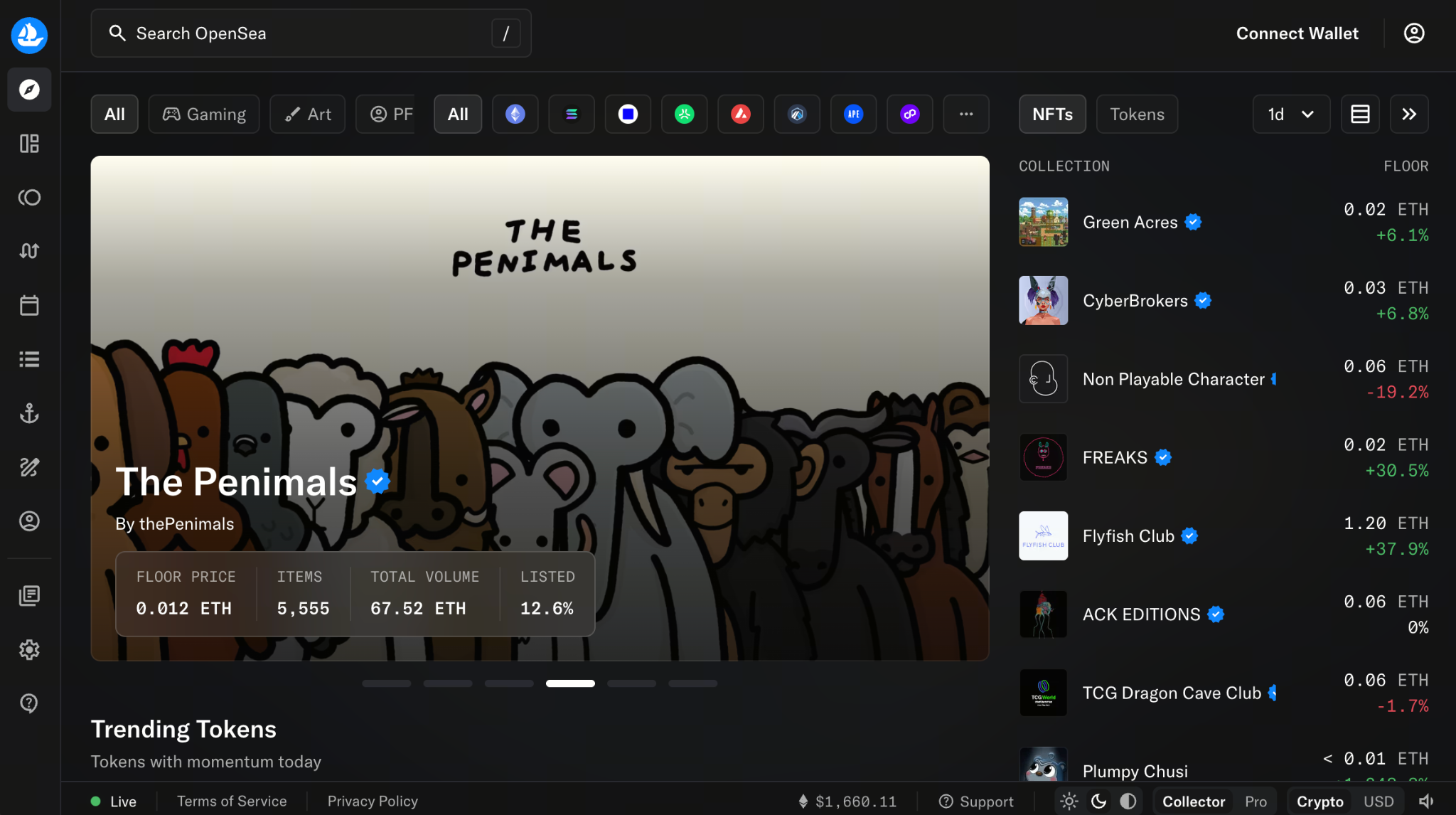
NFTs took the world by storm between 2021 and 2022. Beeple’s digital artwork sold for tens of millions, PFP projects were swept up in frenzied minting, and OpenSea’s trading volume briefly topped billions. At its peak, NFTs were hailed as the next frontier of crypto. But as time passed, the market cooled, and countless NFT projects lost liquidity—many even being dismissed as “NFT worthless.”
What Are NFTs and Why Did They Take Off?
An NFT (non-fungible token) is a blockchain-based asset that uses smart contracts to stamp digital content—images, videos, music, in-game items—as unique and immutable. Unlike Bitcoin or ETH, which are interchangeable, each NFT is one of a kind. During the crypto bull run, several factors fueled the NFT explosion:
- Digital Scarcity: Blockchain technology gives digital files verifiable uniqueness and ownership.
- Community Driven: NFTs were more than collectibles—they were membership passes. Communities like BAYC and CryptoPunks drove intense FOMO.
- Celebrity Hype: Major stars and athletes jumped in, amplifying buzz and speculation.
- Institutional Capital: Large sums from funds and institutions created a perfect storm.
These factors sent NFT prices soaring, but also planted the seeds of a massive correction.
How Are NFTs Different from Traditional Collectibles?
Many see NFTs as the digital equivalent of art or collectibles, but key differences set them apart. Traditional collectibles—paintings, limited sneakers, rare cards—rely on physical scarcity. NFTs, on the other hand, use blockchain to prove ownership and authenticity. Transactions happen globally and instantly, without borders. This opens up a whole new way to collect, giving creators direct access to a worldwide audience.
Where Does the “NFT Worthless” Narrative Come from?
When the crypto market turned bearish in 2022, NFT trading volume cratered. Investors soon realized their holdings were nearly impossible to sell, often dropping to near zero. The reasons behind the “NFT worthless” sentiment include:
-
Overhype
Prices were driven purely by speculation, with little real utility or sustainable value—hence the inevitable crash. -
Low Liquidity
Outside a handful of blue-chip projects, most NFTs have almost no buyers. -
Failed Projects and Rug Pulls
Many teams raised funds, missed deliverables, or simply vanished with the money, shattering trust. -
Wrong Investment Mindset
Most buyers treated NFTs as short-term bets. Once the trend faded, prices collapsed. -
Lack of Real-World Use Cases
Beyond collecting and flipping, NFTs had few practical applications to sustain long-term value.
Not All NFTs Have Lost Their Value
The plunge in most NFT prices doesn’t mean all NFTs are worthless. Some blue-chip projects—those with a strong community, brand power, or real utility—still hold attention and trading volume. This mirrors the traditional startup world: during a boom, many companies emerge, but only a few with real long-term strength survive. So the NFT market’s cooldown can be seen as a natural maturation process.
The NFT Market Today
By 2026, NFTs have moved well beyond the early days of profile pictures and pure speculation. While overall volume is still far below 2021’s highs, the industry’s focus has shifted to practical applications and business integration. The market no longer chases price pumps; instead, it’s exploring how NFTs can solve problems like digital ownership, identity verification, and content licensing.
Current development is concentrated on several fronts. In gaming and virtual worlds, more blockchain titles use NFTs as proof of ownership for characters, gear, and land, letting players truly own their in-game assets. In brand loyalty, international companies are turning NFTs into membership cards, event passes, or limited-edition vouchers to build direct customer relationships. Music, film, and content creation are adopting NFTs for copyright management, revenue sharing, and fan engagement. Some businesses are even pairing NFTs with physical products for authenticity checks and after-sales service. Though the “NFT worthless” label persists among some, the direction has clearly shifted—from speculative asset to digital infrastructure, and the criteria for valuing NFTs are changing with it.
Common Misunderstandings about NFTs
Many still think of NFTs as just JPEGs, believing their value lies entirely in the image. But the real value of an NFT isn’t the picture—it’s the blockchain-based proof of ownership and rights. The image is simply the most visible early form.
NFTs can represent any unique digital or physical asset: memberships, event tickets, game items, digital identities, copyright licenses, even title deeds to real-world goods. When businesses and developers start applying NFTs to real scenarios, value will come from the rights and functions they represent, not just market sentiment.
So the real question isn’t “Are NFTs worthless?” but “Which NFTs create long-term, sustainable demand?” The projects that survive will be those built on product value and solid business models, not just scarcity and hype.
From Speculation to Infrastructure
After several market shakeouts, NFTs are evolving from speculative assets into a core part of Web3 infrastructure. Developers increasingly treat them as tools for managing digital ownership, not just collectibles. Key future directions include digital identity (DID), on-chain memberships, digital rights management, and tokenization of real-world assets. For example, NFTs can act as personal credentials for identity verification, or integrate with DeFi as collateral or access keys. And with the RWA (Real World Asset) market booming, NFTs could become a crucial bridge linking physical assets to blockchain.
In the long run, NFT value will stem from the rights and functions they convey, not just their market price. This shift could redefine the “NFT worthless” view and solidify NFTs as a key piece of the digital economy’s infrastructure.
How Should Investors Think about NFTs?
After several market cycles, investors have become more sophisticated. Instead of chasing short-term gains and hype, they now look for real utility, a stable community, a sustainable business model, and long-term potential. When evaluating an NFT project, consider: Does it have a clear product? Does it keep users engaged? What role does the NFT actually play in the ecosystem? If an NFT relies only on hype and scarcity, its long-term value is fragile. But if it creates genuine demand and use cases, it has a much better chance of surviving market swings.
As Web3 matures, the investment logic for NFTs is shifting from “collectible thinking” to “digital asset and rights instrument thinking.” For investors, understanding what rights and value an NFT actually represents matters more than watching price charts.
Future Outlook
NFTs will increasingly intersect with Web3, AI, digital identity, and RWA. As blockchain infrastructure matures, NFTs will evolve from digital collectibles into key tools for managing digital ownership and value transfer.
We can expect to see more NFTs used in membership programs, event ticketing, copyright management, supply chain tracking, and tokenized real-world assets. For businesses, NFTs create direct customer relationships; for individuals, they become carriers of digital identity and assets. Though the wild speculation phase is over, the industry is entering a new cycle of real-world application and commercial validation. NFTs with genuine utility will still play a significant role in the digital economy.
Conclusion
The NFT journey—from wild hype to bubble burst to a return to real-world value—mirrors the natural path of any emerging technology moving from proof of concept to practical deployment. The “NFT worthless” chorus comes more from disappointment in the speculative crash than from any failure of the technology itself. As digital identity, membership economies, gaming assets, copyright management, and RWA continue to grow, NFTs are transforming from speculative toys into vital digital infrastructure. For investors, the key isn’t whether all NFTs have value—it’s which ones create real demand and long-term worth. As NFTs integrate deeper into more industries, their market role and perceived value will likely be redefined once again.
Related Articles

Will Sidra Break $1,000? A Realistic Look at Sidra Chain Price Claims in 2026–2027

BlockDAG (BDAG): A High-Speed and Secure Layer 1 for the Next Era

Rising Prices but Bearish Funding Rates: Is Crypto Entering a “Layered Bull Market” After Wall Street Capital Inflows?

Fractional NFTs: Lowering Barriers and Enhancing Liquidity
What is USDC? A Complete Guide to One of the Most Trusted Stablecoins