Non Custodial Wallets: The Key to True Web3 Asset Ownership
In the early days of cryptocurrency, most investors stored their assets on centralized exchanges, entrusting the platform to manage private keys and security. As Web3 applications like DeFi, NFT, GameFi, DAO, and RWA (Real World Assets) have rapidly evolved, more users are recognizing the importance of asset sovereignty—making non-custodial wallets a key gateway to the Web3 ecosystem.
Over the past two years, innovations such as Account Abstraction (AA), Smart Wallets, MPC (Multi-Party Computation), and Passkey have matured, transforming non-custodial wallets from simple crypto storage tools into core accounts that integrate identity, payments, asset management, and on-chain interactions. By 2026, many Web3 applications are expected to natively support Smart Wallets, lowering the barrier to blockchain entry for everyday users and further elevating the role of non-custodial wallets.
The Key to Web3 Asset Sovereignty
In Web3, “Not your keys, not your crypto” is a foundational principle. If your assets are held on an exchange or third-party platform, you don’t truly control them—the platform does. Non-custodial wallets solve this by allowing users to manage their own private keys and directly control their crypto assets, enabling transfers, trades, investments, and on-chain participation without reliance on banks or centralized platforms. Even if a platform shuts down, as long as you hold your private key or recovery phrase, you can access your assets with another wallet.
As the Web3 ecosystem matures, non-custodial wallets are evolving from “crypto wallets” into “on-chain identity gateways.” In the future, asset management, DAO voting, RWA investments, and even AI Agents executing on-chain actions on behalf of users may all be handled through non-custodial wallets.
What Is a Non-Custodial Wallet?
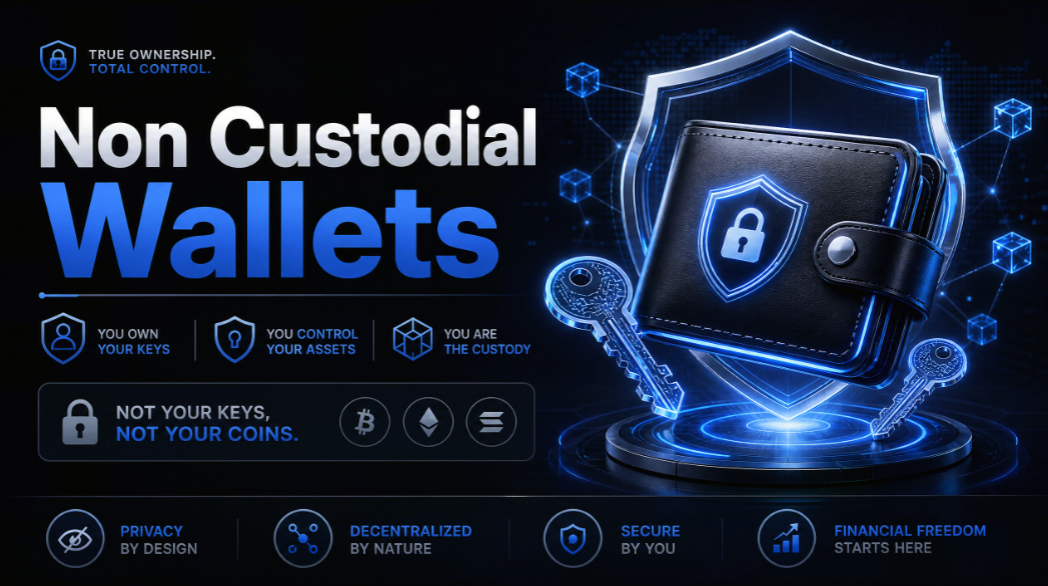
A non-custodial wallet is a digital wallet where you manage your own private keys and recovery phrases—retaining full control of your assets, rather than relying on an exchange or third-party custodian. Unlike centralized exchange accounts, platforms cannot access your assets or freeze or transfer funds without your authorization. This grants users a high degree of autonomy, but also means you are responsible for safeguarding your private keys.
Recently, the user experience of non-custodial wallets has improved dramatically. With Account Abstraction and Smart Wallet technology, many next-generation wallets now support Passkey, biometric login, social recovery, and gas fee sponsorship—making it easier for newcomers to use Web3 applications, even without deep knowledge of private key management.
Core Features of Non-Custodial Wallets
The primary function of a non-custodial wallet is to help users securely manage crypto assets—including Bitcoin, Ethereum, stablecoins, and other tokens. Because you control your private keys, you can transfer, receive, or manage assets without third-party involvement. Non-custodial wallets are also essential for accessing DeFi. By connecting your wallet to decentralized exchanges, lending platforms, or liquidity protocols, you can participate directly in staking, yield farming, lending, and other on-chain financial services—without transferring assets to centralized platforms.
As NFTs and on-chain identity become more widespread, non-custodial wallets now manage NFT collections, enable Web3 platform logins, facilitate DAO governance, and grant airdrop eligibility. Many wallets also support multi-chain management and chain abstraction, allowing users to operate assets across blockchains without frequent network switching, significantly enhancing the user experience.
Advantages of Non-Custodial Wallets
The key advantage of non-custodial wallets is true asset autonomy. With proper private key management, anyone can freely control their digital assets—without platform restrictions and with reduced risk of exchange collapse, asset freezes, or withdrawal limits. Non-custodial wallets are also indispensable for engaging with the Web3 ecosystem. Whether for DeFi, NFT, GameFi, DAO, or rapidly emerging RWA and AI Agent applications, wallets are required for identity verification and authorization. For those seeking deeper involvement in Web3, owning a non-custodial wallet is essential. In addition, compared to traditional financial accounts, non-custodial wallets typically do not require a bank account or extensive personal information, providing equal access to digital finance worldwide and embodying the core values of decentralization and open finance.
Security Considerations for Non-Custodial Wallets
While non-custodial wallets offer greater autonomy, users must take full responsibility for asset security. The greatest risk is loss of private keys or recovery phrases. If lost and not backed up, assets cannot be recovered—making secure storage of recovery phrases the top safety rule.
Another common risk is phishing and malicious authorization. Hackers may use fake websites, malicious DApps, or social engineering scams to trick users into signing risky transactions or granting asset permissions. Always verify official URLs before connecting to any on-chain application, and regularly review wallet authorization records. For users with significant holdings, it’s widely recommended to pair with a hardware wallet—storing major assets offline and using hot wallets for daily transactions. Many Smart Wallets now also offer multi-factor authentication, social recovery, and MPC technology, allowing secure account recovery even if a device is lost.
Looking Ahead
As Web3 adoption accelerates, non-custodial wallets will play an even larger role. The market is shifting from traditional EOAs (Externally Owned Accounts) to Smart Wallets. In the future, users will log in with fingerprint recognition, Face ID, or Passkey—eliminating the need to remember complex recovery phrases and dramatically lowering the barrier to entry. Chain abstraction is also emerging as an industry trend. Soon, users may not need to know which blockchain their assets reside on; a single wallet will enable seamless cross-chain transactions, gas fee payments, and asset management—delivering a frictionless Web3 experience.
The rapid rise of AI Agents is also unlocking new possibilities for non-custodial wallets. In the future, AI could, with user authorization, automatically handle asset allocation, payments, yield management, and on-chain interactions—with the non-custodial wallet serving as the core authorization hub. Ultimately, non-custodial wallets are poised to become not just crypto management tools, but the digital identity, payment gateway, and asset management center of the entire Web3 world.
Summary
Non-custodial wallets are more than just crypto storage—they are the foundation for realizing asset sovereignty in Web3. By holding your own private keys, you can freely manage assets, participate in DeFi, NFT, DAO, and on-chain applications, and truly embrace decentralized finance. As Smart Wallets, Account Abstraction, MPC, and chain abstraction mature, non-custodial wallets are becoming more accessible and feature-rich. In the future, they’ll be not only the asset management tool for every Web3 user, but also the core gateway connecting identity, payments, AI Agents, and on-chain services. For those committed to the Web3 ecosystem, understanding how non-custodial wallets work and practicing robust security are crucial steps in building digital asset management skills.
FAQ
Q1: What’s the difference between a non-custodial wallet and an exchange wallet?
The biggest difference is private key management. With a non-custodial wallet, you control your private keys and have full asset control. With an exchange wallet, the platform manages your private keys—making it more convenient, but your assets depend on the platform’s custody.
Q2: Do non-custodial wallets always require a recovery phrase?
Traditional non-custodial wallets usually require a recovery phrase for backup. However, many Smart Wallets now support Passkey, MPC, and social recovery, reducing the complexity of managing recovery phrases while maintaining both security and convenience.
Q3: Are non-custodial wallets suitable for beginners?
With ongoing improvements in wallet interfaces and security, beginners can get started step by step. Still, before using a wallet, it’s important to understand private keys, recovery phrases, and transaction authorization, and to develop habits like backing up information and avoiding phishing sites to safely participate in Web3.
Related Articles

Will Sidra Break $1,000? A Realistic Look at Sidra Chain Price Claims in 2026–2027
BlockDAG (BDAG): A High-Speed and Secure Layer 1 for the Next Era

Rising Prices but Bearish Funding Rates: Is Crypto Entering a “Layered Bull Market” After Wall Street Capital Inflows?

Fractional NFTs: Lowering Barriers and Enhancing Liquidity
What is USDC? A Complete Guide to One of the Most Trusted Stablecoins