


What Is a Bear Flag? In-Depth Analysis of Its Meaning in Crypto Markets and Latest Price Trends
What Is a Bear Flag?
In cryptocurrency technical analysis, a Bear Flag is a widely recognized chart pattern that signals the potential continuation of a downward price trend. The pattern originates from classic technical analysis theory and is named for its visual resemblance to a flagpole and an upward-slanting flag: prices first drop sharply (the flagpole), then enter a brief consolidation phase (the flag), followed by continued decline.
For many traders, the Bear Flag is a key indicator for assessing the persistence of bearish momentum. In the highly volatile crypto market, this pattern helps reveal short-term directional bias and trend continuation signals.
Core Structure of the Bear Flag in Technical Analysis
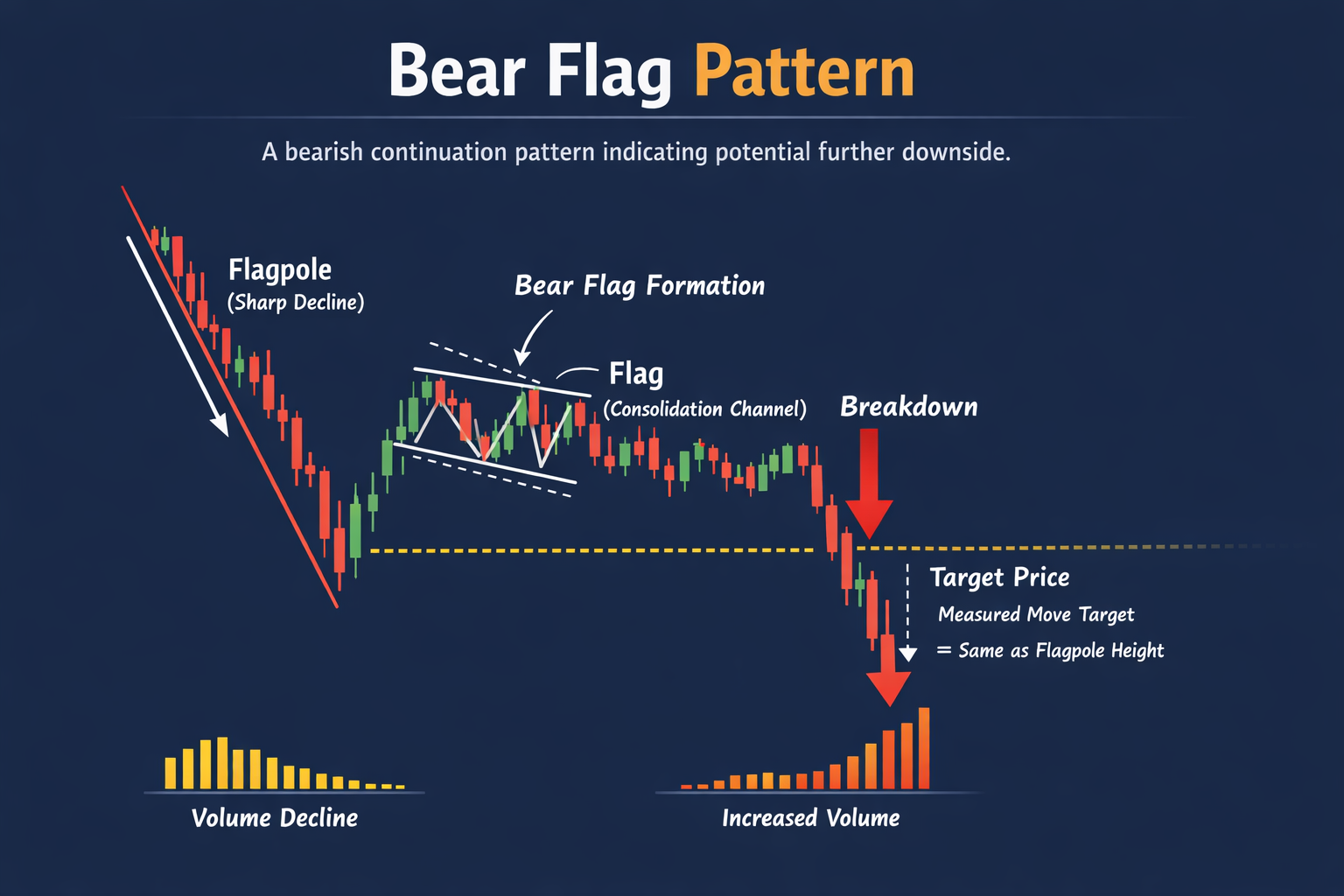
The Bear Flag pattern typically consists of two components: the flagpole and the flag.
- The flagpole represents the steep slope formed by a rapid price drop.
- The flag is the consolidation phase that follows, often showing a brief upward or sideways movement.
This structure illustrates a shift in market dynamics: bears aggressively drive prices lower, then buyers and sellers reach a temporary equilibrium, forming a consolidation zone. If the price subsequently breaks below the lower edge of the flag, the Bear Flag pattern is confirmed, signaling a continuation of the bearish trend.
Technical traders commonly use volume, RSI, moving averages, and other indicators to validate Bear Flag patterns. Typically, trading volume decreases during the consolidation phase, while a breakdown accompanied by rising volume indicates renewed bearish strength.
How the Bear Flag Influences Cryptocurrency Price Movement
In the cryptocurrency market, Bear Flags are generally viewed as bearish continuation patterns. When prices break downward from the consolidation zone with increased trading volume, a new round of declines may follow.
Bear Flag price targets are typically calculated using the measured move method:
- Measure the length of the flagpole (the sharp decline).
- Project an equal drop from the breakout point to estimate the next target.
For example, if a token drops rapidly from $120,000 to $100,000, forming a $20,000 flagpole, and then breaks down after consolidating, the theoretical next target could be around $80,000. Although Bear Flags do not always reach their projected targets, they are often regarded as probabilistic trading signals in strong downward momentum markets.
Bitcoin: Latest Bear Flag Price Action and Analysis
Recently, Bitcoin (BTC) has again displayed a Bear Flag pattern on both daily and weekly charts, drawing significant market attention. Analysis shows that BTC has formed a distinct downward flagpole, followed by a relatively narrow consolidation period—this is the classic Bear Flag structure.
According to current market analysis:
- Some analysts believe that if BTC confirms a Bear Flag breakdown, the downside targets may be around $76,000 and $50,000, both key price levels.
- Others suggest that a breakdown from consolidation could push BTC further down to approximately $75,000, requiring a retest of critical support.
- Earlier analyses have also indicated that a Bear Flag could drive BTC as low as $67,000.
These forecasts differ, but all reflect the core logic of the Bear Flag: if support fails, the bearish trend may intensify.
Keep in mind that market sentiment, macroeconomic factors, and trading volume all influence the effectiveness of the Bear Flag pattern.
Bear Flag: Practical Trading Strategies
For technical traders, the Bear Flag offers clear strategies for entry, stop-loss, and profit-taking:
- Short after confirmation: Wait for prices to decisively break below the flag’s lower edge with increased volume before opening short positions.
- Stop-loss: Commonly set above the flag’s upper edge or recent highs to guard against false breakouts.
- Profit targets: Use the measured move method to set targets, or take profits incrementally at additional support levels.
Sound risk management and position sizing are essential for successful Bear Flag trading.
Bear Flag: Risks and Common Pitfalls
Although Bear Flags are widely used in technical analysis, traders should be aware of the following risks:
- False breakouts: Prices may briefly break down, then rebound quickly, triggering stop-losses.
- Sideways markets: In the absence of a clear trend, Bear Flags may lose predictive value.
- Macroeconomic influences: Interest rate changes, regulatory news, and other macro events can disrupt market structure and weaken technical signals.
For this reason, Bear Flags are best used as part of a broader trend confirmation strategy, not as the sole basis for decision-making.
Conclusion: Bear Flag Reference Value in Crypto Markets
The Bear Flag is a vital trend continuation pattern in technical analysis, especially prevalent in cryptocurrency markets. By integrating real-time price action, trading volume, and other indicators, traders can make more informed market assessments. However, it’s important to recognize the risks and potential for misjudgment, and to avoid relying solely on any single indicator for investment decisions.
Related Articles

2026 Stablecoin Classification Deep Dive: From Fiat-Collateralized to Algorithmic Stablecoins, Market Landscape and Future Trends

What Are Fractional NFTs? Understanding the Mechanics of NFT Fractionalization and Its Real-World Use Cases

Top Telegram Games to Watch in 2026: The New Web3 Gaming Frontier and Investment Strategies

The Next 100x Coin? Low-Cap Crypto Gem Analysis

What Is Jupiter? A Complete Guide to Solana’s Leading Decentralized Exchange Aggregator
