


What Is TVL: Understanding Total Value Locked and Its Importance in DeFi
Definition and Calculation of TVL
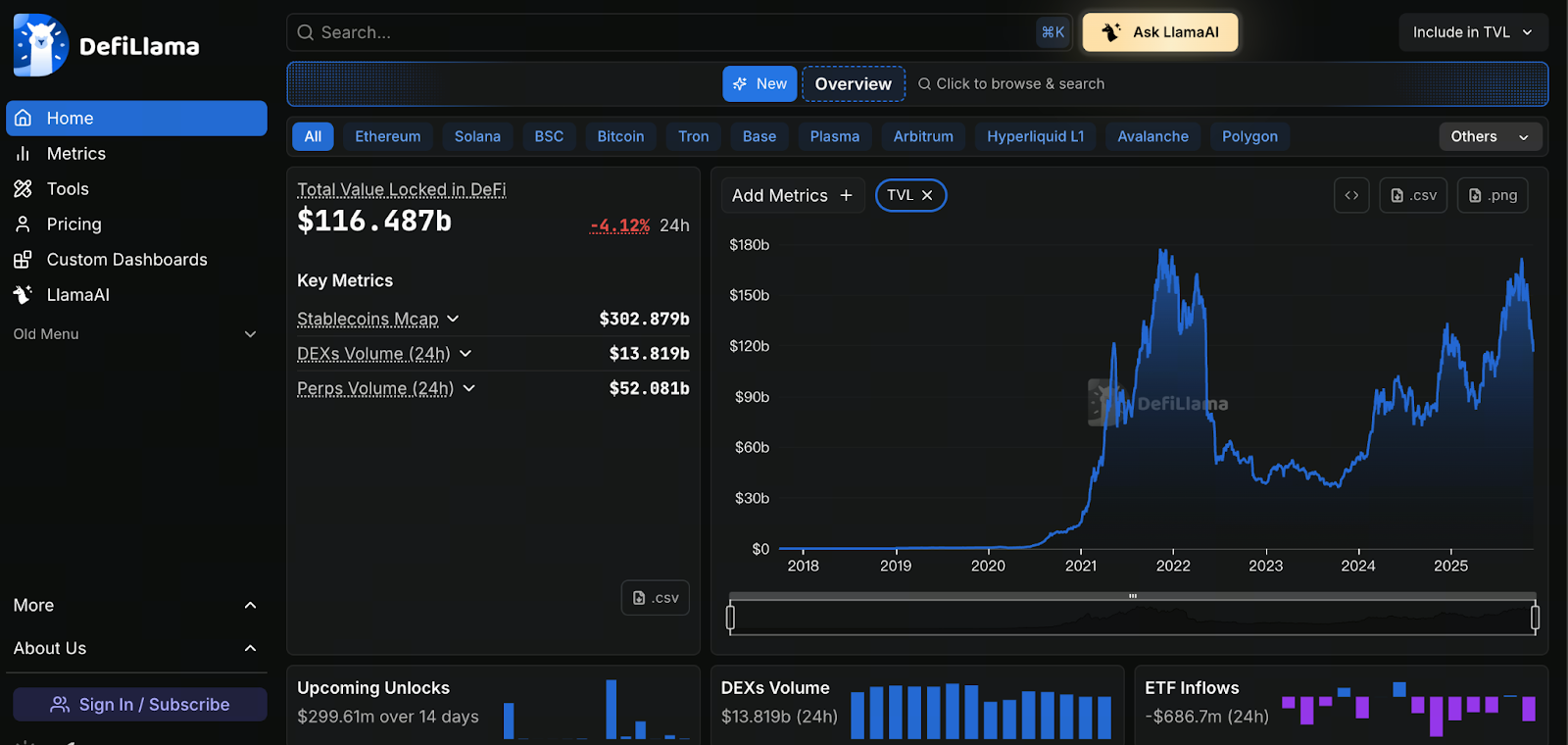
Image source: https://defillama.com/
TVL, or Total Value Locked, represents the total value of assets locked within a DeFi protocol. It is typically denominated in US dollars and indicates the aggregate amount of crypto assets that users have deposited into the protocol.
The standard calculation is: TVL = Amount of assets locked in the protocol × Current market price
For instance, if a user deposits 100 ETH into a lending protocol and ETH is priced at $2,000, that deposit contributes $200,000 to the TVL.
The Role of TVL in the DeFi Ecosystem
- Measuring liquidity: TVL is a key metric for evaluating the liquidity of a DeFi protocol. Higher TVL generally means the protocol holds more assets and users, supporting greater trading and lending volumes.
- Assessing project health: TVL provides insight into a project’s popularity and credibility. Consistent growth in locked assets usually signals user confidence and an active ecosystem.
- Attracting investors and developers: Protocols with high TVL are better positioned to attract venture capital, partnership opportunities, and developer engagement, fueling a virtuous cycle of growth.
TVL Applications Across Protocol Types
- Lending Protocols: For example, Aave and Compound, use TVL to represent the total value of deposited crypto assets.
- Decentralized Exchanges (DEXs): Such as Uniswap and SushiSwap, where TVL reflects the scale of liquidity pools, directly impacting trading slippage and fee revenue.
- Yield Farming and Staking Protocols: Protocols use TVL to determine the total locked value and reward distribution ratios.
- Synthetic Asset Protocols: For example, Synthetix, where TVL measures the total collateral supporting the synthetic asset ecosystem.
Limitations and Considerations of the TVL Metric
While TVL is a fundamental metric, it has notable limitations:
- Double counting: Protocols that utilize wrapped tokens or cross-chain assets may cause TVL to be counted more than once.
- Short-term incentive distortion: Elevated TVL does not always indicate lasting capital lock-up; it can be temporarily boosted by incentive programs.
- Market price fluctuations: Because TVL depends on market value, asset price volatility directly affects this metric.
Therefore, when considering TVL, investors should evaluate it alongside protocol security, user adoption, and long-term growth prospects. This approach provides a more comprehensive assessment.
Summary and Future Outlook
As a core DeFi metric, TVL (Total Value Locked) offers a clear view of protocol liquidity and market trust. As the DeFi ecosystem matures, TVL will remain a crucial benchmark for assessing protocol size, attracting investment, and driving ecosystem development. Looking ahead, greater on-chain data transparency and ongoing protocol innovation is likely to standardize how TVL is calculated and applied. This will provide more reliable decision-making tools for both investors and developers.
Related Articles
2026 Stablecoin Classification Deep Dive: From Fiat-Collateralized to Algorithmic Stablecoins, Market Landscape and Future Trends

What Are Fractional NFTs? Understanding the Mechanics of NFT Fractionalization and Its Real-World Use Cases
Top Telegram Games to Watch in 2026: The New Web3 Gaming Frontier and Investment Strategies

The Next 100x Coin? Low-Cap Crypto Gem Analysis

What Is Jupiter? A Complete Guide to Solana’s Leading Decentralized Exchange Aggregator
