


2025 Web3.0 Ecosystem Trends Explained: From Market Dynamics to Crypto Asset Price Analysis
What Is Web3.0? Core Technologies and Growth Drivers
Web3.0 represents the next generation of internet architecture, built on blockchain and other distributed ledger technologies. It empowers users with true data ownership and enables value exchange and collaboration through decentralized protocols. Unlike the centralized platforms of Web2.0, this new paradigm fosters user participation, value sharing, and community governance. Its core technologies include blockchain, public blockchains, smart contracts, decentralized finance (DeFi), non-fungible tokens (NFTs), and decentralized autonomous organizations (DAOs).
Web3.0 is not just a technological shift—it is a fundamental transformation of economic models. By advancing data ownership, transparency, and trustless mechanisms, Web3.0 is poised to drive significant change in content creation, financial services, supply chains, and digital identity.
Key Web3.0 Developments in 2025
By the end of 2025, the Web3.0 ecosystem continues to advance, marked by several key global trends:
- Countries and regions like Japan and Hong Kong are promoting local revitalization and industrial growth through policy support and pilot initiatives based on blockchain and Web3.0.
- Major industry events such as the Global Blockchain Summit and WebX2025 draw government and business leaders, underscoring Web3.0’s potential at the intersection of culture, technology, and the economy.
- Both startups and established enterprises are actively developing Web3.0 applications, ranging from digital content authentication and gamified economies to enterprise-grade blockchain solutions.
These developments show that Web3.0 has progressed beyond proof-of-concept and entered a more mature phase of commercial exploration and real-world deployment.
Mainstream Digital Asset Price Landscape and Market Sentiment
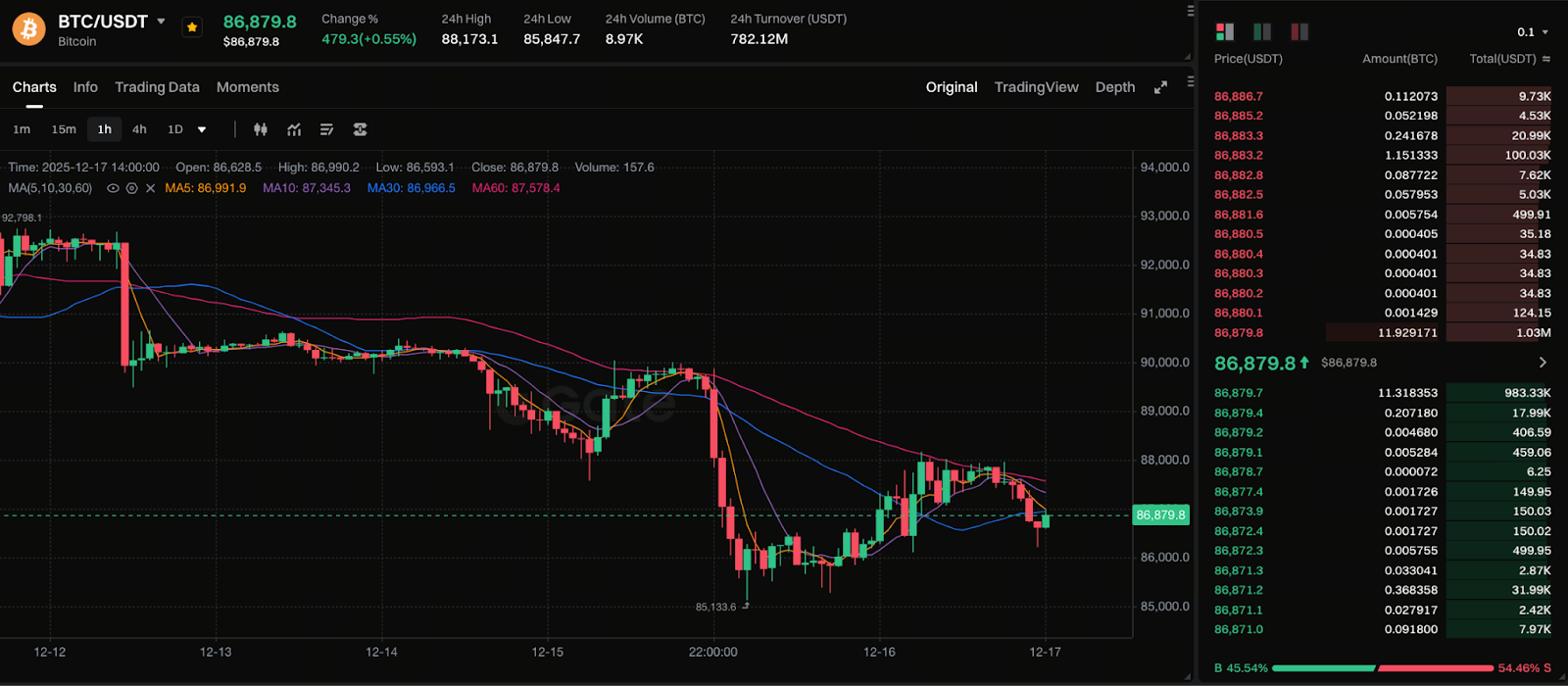
Chart: https://www.gate.com/trade/BTC_USDT
In the 2025 crypto market, Bitcoin (BTC) and Ethereum (ETH) remain the primary benchmark assets:
- As of mid-December 2025, Bitcoin trades around $87,400, following a significant rally and subsequent correction since the start of the year.
- Ethereum fluctuates between $2,900 and $3,300, demonstrating strong support levels.
- Market-wide volatility has intensified, with leading tokens like XRP and SOL also experiencing swings driven by macroeconomic factors and investor sentiment.
The Crypto Asset Market Sentiment Index (Fear & Greed Index) has at times fallen into the “Extreme Fear” zone, reflecting heightened caution toward short-term volatility.
The Relationship Between Web3.0 and Digital Asset Prices
Web3.0 and crypto asset prices are closely linked:
- Technological innovation drives asset demand. The growth of Web3.0 infrastructure—including Layer-1/2 solutions, DeFi protocols, and NFT markets—boosts demand for foundational assets like ETH.
- Policy and regulatory clarity. As countries refine stablecoin and digital asset regulations, institutional investor confidence increases, indirectly supporting price stability.
- Macro capital flows and sentiment. Economic indicators and interest rate expectations have a direct impact on demand for high-risk assets, influencing crypto price volatility.
As Web3.0 matures, it will create more real-world use cases for foundational tokens, shaping price discovery mechanisms.
Risk Warnings and Future Outlook
Although the Web3.0 ecosystem is advancing, several risks remain:
- Market volatility is high, with prices significantly affected by macroeconomic conditions and regulatory policies.
- Technological maturity varies, and challenges persist in user experience and security.
- Legal and compliance frameworks for decentralization are still in development.
Looking ahead, Web3.0 is expected to converge with technologies like artificial intelligence and the Internet of Things, further expanding its application landscape and driving digital asset prices toward value-based growth. As institutional adoption increases, Web3.0 may enter a more stable and scalable growth cycle.
Related Articles
2026 Stablecoin Classification Deep Dive: From Fiat-Collateralized to Algorithmic Stablecoins, Market Landscape and Future Trends

What Are Fractional NFTs? Understanding the Mechanics of NFT Fractionalization and Its Real-World Use Cases
Top Telegram Games to Watch in 2026: The New Web3 Gaming Frontier and Investment Strategies

The Next 100x Coin? Low-Cap Crypto Gem Analysis

What Is Jupiter? A Complete Guide to Solana’s Leading Decentralized Exchange Aggregator
