


Is the NFT PFP Market Fully Recovering in 2026? Blue-Chip Rebounds and the Rise of Niche Cultures
NFT PFP Market Positioning in 2026: Identity Symbolism Fades, Brand Value Surges
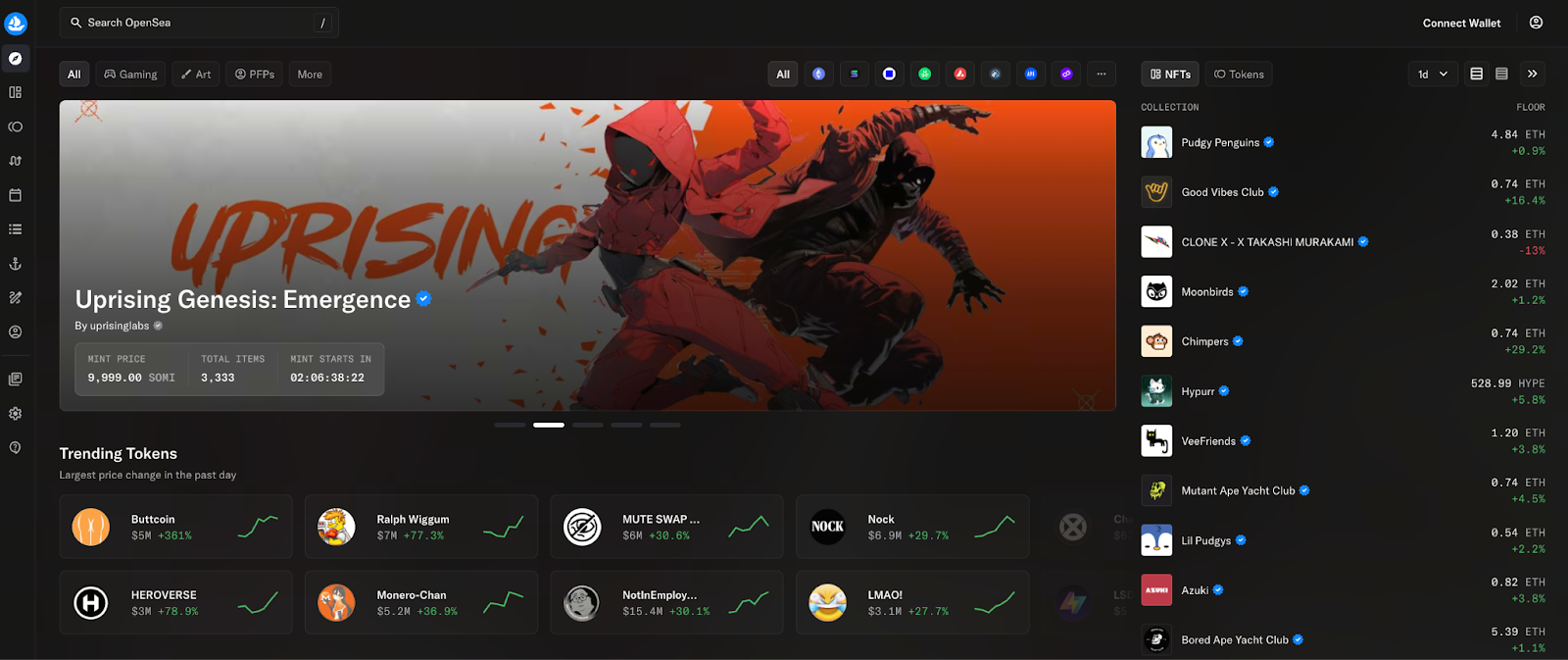
Source: https://opensea.io/
By 2026, PFPs have moved beyond the “social media avatar craze” of 2021–2022. Key factors driving this shift include:
- X (formerly Twitter) no longer prioritizes NFT avatar verification
- Speculative trading has dropped sharply
- The short-term financial appeal of most PFPs has diminished
At the same time, PFPs have gained cultural significance, emerging as essential tools for brands, key opinion leaders (KOLs), and communities to build “long-term identity assets.”
In the 2026 NFT landscape, PFP value is increasingly driven by:
- Brand partnerships (fashion, gaming, intellectual property)
- Sustained community engagement
- Integration with offline events (conferences, ticketing, membership benefits)
- Digital identity use in Web3 gaming and AI character systems
As a result, PFPs are evolving from the “avatar speculation era” into the “content and brand era.”
Blue-Chip PFPs: Latest Price Trends Show Steady Recovery, Still Below All-Time Highs
Since the beginning of 2026, most leading blue-chip PFPs have followed these trends:
- CryptoPunks: Trading volume remains stable, floor prices are gradually rebounding
In 2026, Punks are widely recognized as “OG collectible assets, akin to Bitcoin.”
- BAYC: Prices are still in a low range, but community activities are ramping up
Yuga Labs has scaled back ineffective expansion in 2026, refocusing on BAYC’s core narrative and driving market recovery.
- Pudgy Penguins: Boosted by continued growth in physical toy sales, emerging as the most valuable IP-driven project among PFPs in 2026
Pudgy Penguins remain the “most successful NFT IP transformation” in 2026, with prices holding firm. While blue-chip performance is still well below peak levels, 2026 clearly marks the start of a “value restoration phase.”
Niche Cultural PFPs See Surge in Trading Activity: 2026’s Defining Market Trend
The 2026 NFT market is witnessing a notable shift: small-scale, community-driven cultural PFPs are capturing high short-term attention.
Examples include:
- Small PFP projects with distinctive animation styles
- New series featuring AI-generated aesthetics
- Niche meme PFPs tailored for crypto-native communities
- Artist-led, creator-centric avatar projects
These projects typically offer:
- Limited supply structures, ranging from 500 to 5,000 units
- Strong KOL backing or compelling cultural storytelling
- Greater potential for localized market momentum amid 2026’s low liquidity environment
They have emerged as the most active segment of the PFP market this year.
Social Platform Shifts Reshape PFPs: Avatars Are No Longer the Main Arena
In 2026, PFP utility has shifted away from “social media avatars” toward:
- Web3 game character integration
- AI-powered personalized imagery
- Virtual personas and digital twins
- Brand membership identity
- Offline event access passes
While avatar usage has declined, the PFP market remains resilient. This trend has prompted project teams to focus on designing long-term value propositions.
Investment Risks and Opportunities: 2026 Demands Stronger Fundamentals and Clear Logic
The PFP market in 2026 still carries significant risks, primarily because:
- Liquidity is much lower than in 2021–2022
- Most projects lack stable operational capabilities
- Market sentiment is highly sensitive to narrative shifts
However, there are opportunities in:
- Long-term value recovery for blue-chip assets
- New projects with robust IP development may kick off fresh market cycles
- Niche cultural PFPs are poised for short-term momentum
- Projects integrated with gaming and AI offer strong long-term potential
2026 Outlook
The PFP market is undergoing a fundamental transformation:
- From “financial bubble” to “cultural content”
- From “avatar tool” to “identity and IP asset”
- From “major project dominance” to “community-driven culture”
In short, 2026 is the year PFPs redefine their value proposition.
Related Articles

2026 Stablecoin Classification Deep Dive: From Fiat-Collateralized to Algorithmic Stablecoins, Market Landscape and Future Trends

What Are Fractional NFTs? Understanding the Mechanics of NFT Fractionalization and Its Real-World Use Cases

Top Telegram Games to Watch in 2026: The New Web3 Gaming Frontier and Investment Strategies

The Next 100x Coin? Low-Cap Crypto Gem Analysis

What Is Jupiter? A Complete Guide to Solana’s Leading Decentralized Exchange Aggregator
