


Layer3 Market Outlook: Ecosystem Dynamics and Long-Term Value Behind Price Volatility
Layer3: Market Context and Development Drivers
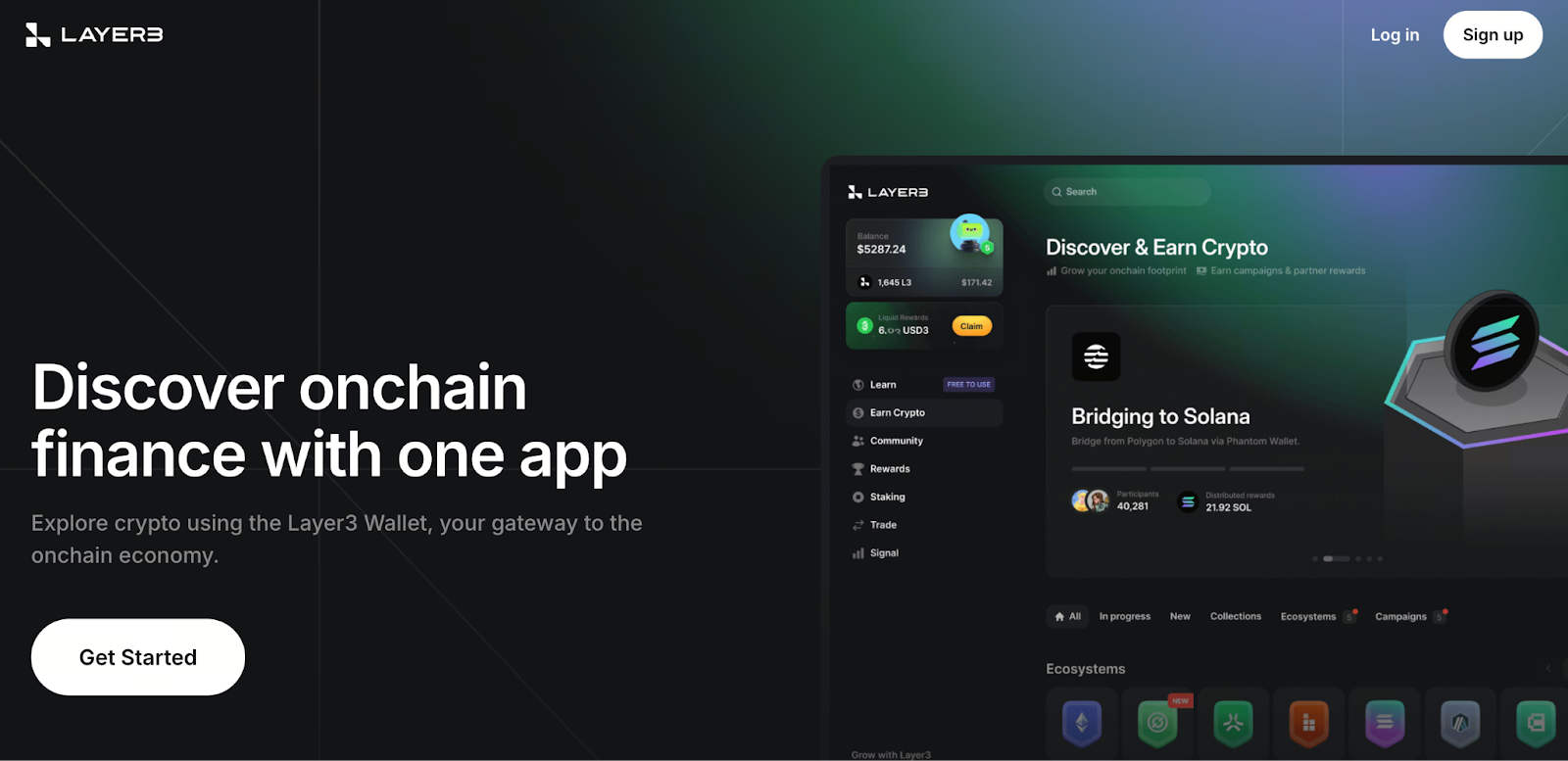
Image: https://layer3.xyz/
Early in the blockchain industry, scalability was the primary concern. Today, user experience and real-world application deployment have taken center stage. Layer3 was created to address the challenge of running applications more efficiently.
With Layer2 solutions reducing costs and boosting performance, the market is now focused on building flexible application architectures atop Layer2. Layer3 has emerged as a vital bridge between blockchain infrastructure and end users.
Layer3 and Its Relationship to Application Layer Blockchains
Layer3 does not seek to replace Layer1 or Layer2; instead, it complements them. By segmenting functions at the application layer, Layer3 enables complex processes to run in lower-cost environments while preserving main chain security.
This design is especially well-suited for use cases requiring frequent interactions, such as blockchain games, social platforms, and high-frequency DeFi operations. These sectors are where Layer3 is attracting significant attention.
Primary Factors Driving Layer3 Price Volatility
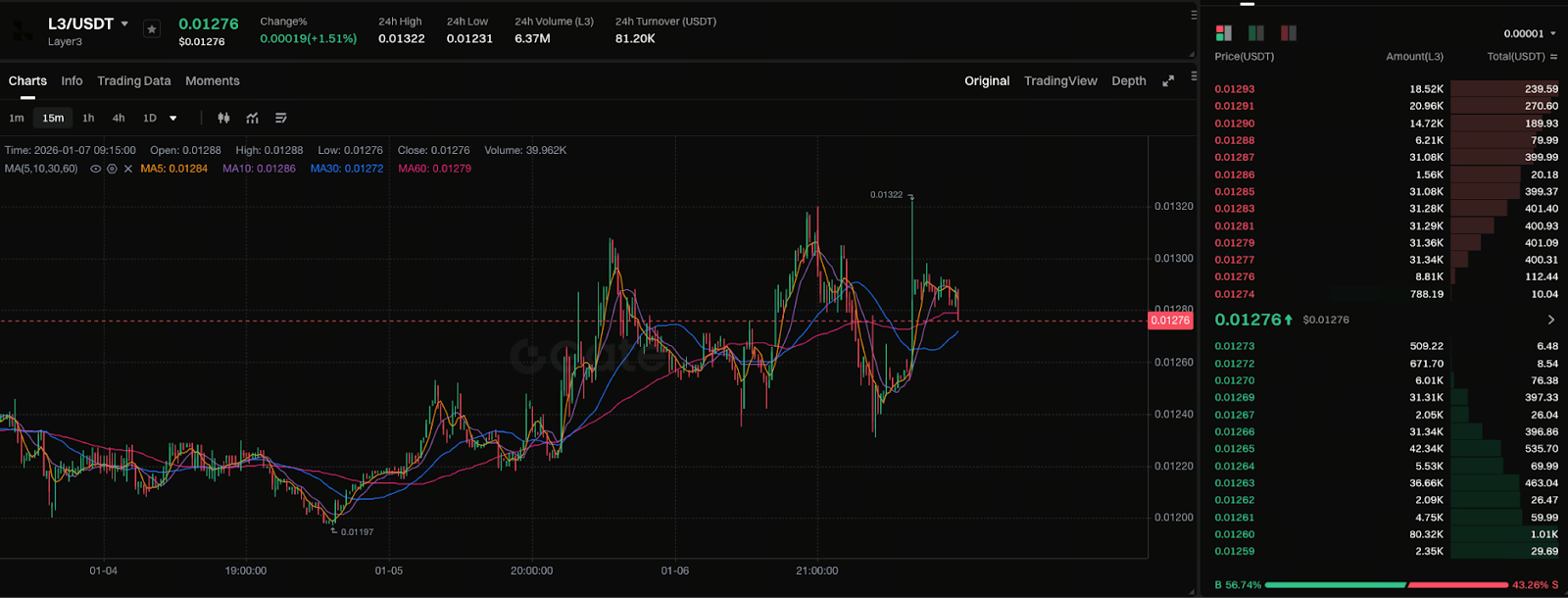
Image: https://www.gate.com/trade/L3_USDT
The price of Layer3 tokens is shaped by several factors, including overall market risk sentiment, project development speed, and news about ecosystem partnerships. Without a stable revenue model, prices are highly sensitive to market news.
As a result, Layer3’s short-term price movements do not fully reflect its long-term potential. Instead, its price serves as a reference point for market sentiment.
As of January 7, 2026, L3 traded at approximately $0.01276.
Impact of Ecosystem Development on Layer3’s Long-Term Value
Layer3’s core strength lies in its ability to integrate ecosystems. By aggregating users, applications, and data, Layer3 can generate powerful network effects. Once established, these effects ensure its value is no longer tied to any single application or short-term incentive.
As the ecosystem matures, Layer3 could become a default gateway for Web3 applications—an essential source of its long-term value.
Key Risks to Monitor When Investing in Layer3
Investing in Layer3 requires careful attention to technology adoption, tokenomics design, and market cycles. It is also critical to be wary of projects overly dependent on airdrops or short-term incentives, as the sustainability of such models remains uncertain.
Layer3’s Future Role and Industry Position
In the long term, Layer3 is likely to function as a service layer, offering standardized tools and user connectivity across ecosystems. If it fulfills this role, its position in the industry will become increasingly solid.
Conclusion
Layer3’s value lies not in short-term price swings, but in its ability to genuinely improve blockchain application usability. For those focused on the long-term evolution of Web3, Layer3 is a critical area for ongoing research and analysis.
Related Articles
2026 Stablecoin Classification Deep Dive: From Fiat-Collateralized to Algorithmic Stablecoins, Market Landscape and Future Trends

What Are Fractional NFTs? Understanding the Mechanics of NFT Fractionalization and Its Real-World Use Cases
Top Telegram Games to Watch in 2026: The New Web3 Gaming Frontier and Investment Strategies

The Next 100x Coin? Low-Cap Crypto Gem Analysis

What Is Jupiter? A Complete Guide to Solana’s Leading Decentralized Exchange Aggregator
