


Mastering On-Chain LTC Activity: Why You Should Start Using the Litecoin Blockchain Explorer Now
What Is Litecoin Explorer
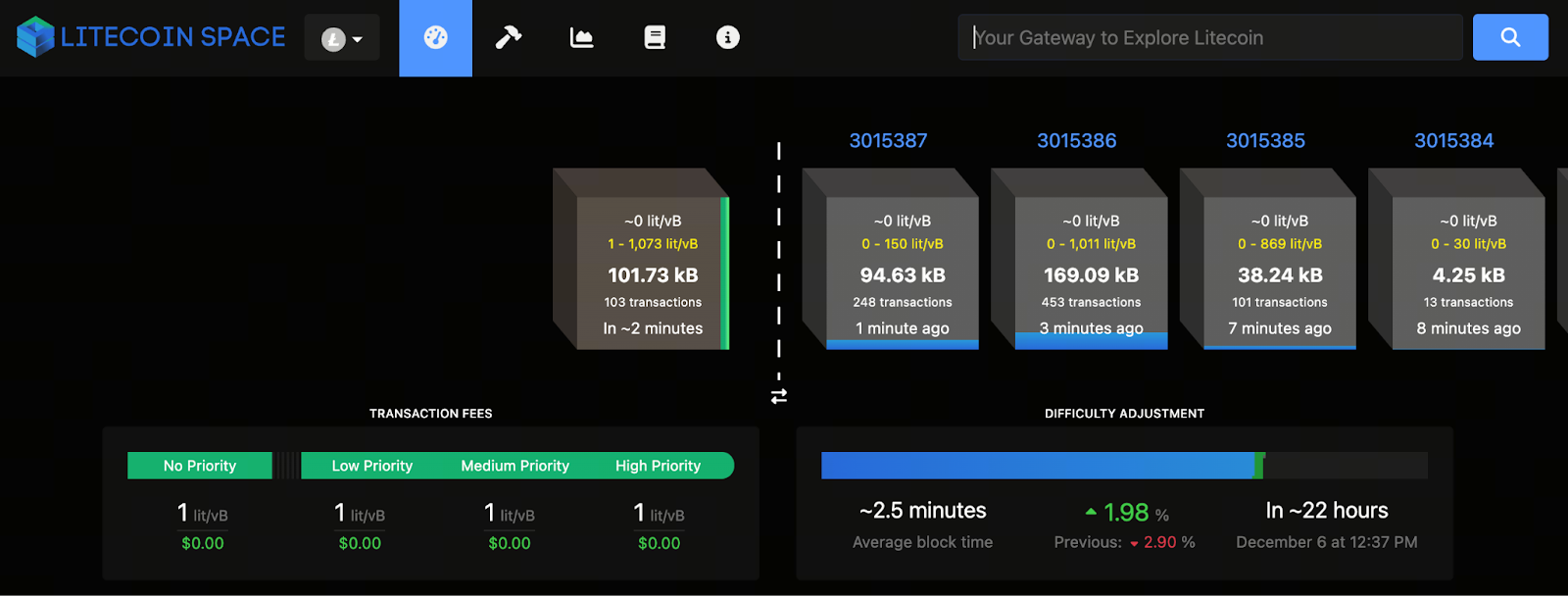
Image: https://litecoinspace.org/
Litecoin Explorer is a tool that lets users view all public on-chain data, including transaction history, block height, wallet address balances, miner information, and transaction fees. Users can instantly access transparent, verifiable blockchain data by entering a transaction hash (TxID), address, or block number.
In essence, it serves as a blockchain search engine, allowing anyone to clearly track fund flows and network status without depending on centralized wallets or exchange platforms.
2025 LTC Latest Price and Market Performance
According to recent data, LTC’s price ranges from $83 to $86, with a market cap of approximately $6 billion. It remains one of the most stable major assets in the crypto market. Trade here: https://www.gate.com/trade/LTC_USDT
While LTC has not yet reached its previous all-time high, its price structure in 2025 has stabilized compared to earlier downturns. There is now a clear upward trend driven by positive news. Key factors include:
- Rising on-chain activity
- Growth in payment partnerships
- Increasing institutional interest in established public chains with low fees and reliable performance
Together, these factors have brought renewed focus to the LTC network in 2025.
Drivers of Increased On-Chain Activity
In recent months, LTC’s daily transaction volume, active on-chain addresses, and miner participation have all risen significantly. This growth stems from several factors:
- Payment use cases recovering: LTC is known for low fees and fast confirmations, which benefits payment-related applications.
- More cross-chain demand: When BTC network fees spike, some users switch to LTC as an alternative.
- Upgrades to ecosystem tools: Improved wallets, cross-chain bridges, and explorer tools have made user experiences smoother.
Users now rely more on Litecoin Explorer as a result of these developments, as users depend on on-chain queries to verify transactions and activity.
Core Functions of Litecoin Explorer
Litecoin Explorer is designed for both technical users and everyday investors or users making transfers. Its main features include:
1. Check transaction status
Enter a TxID to immediately view:
- Whether the transaction is confirmed on the network
- Number of confirmations
- Transaction amount and transaction fees
- Sender and recipient addresses
2. View wallet address balance and history
Enter any address to see:
- Current balance
- Complete transaction history
- Received and sent transactions
3. View block details
Including:
- Block height
- Block timestamp
- Miner information
- All transactions within the block
4. Monitor overall network status
Users can track daily transaction volume, transaction fees, network congestion, mining pool distribution, and more. This information is useful for investors and analysts.
How to Quickly Track Transactions with Litecoin Explorer
Step 1: Open any Litecoin-compatible block explorer
Examples include Litecoin Space, Blockchair, such as.
Step 2: Enter one of the following query types:
- Transaction hash
- Wallet address
- Block height
Step 3: Review the details provided
You’ll see key data including transaction status, transaction amount, transaction fees, and number of confirmations.
Step 4: Investors may focus on the following metrics:
- Changes in active addresses
- Daily transaction volume trends
- Large transfers (whale activity)
- Fee trends
Related Articles
2026 Stablecoin Classification Deep Dive: From Fiat-Collateralized to Algorithmic Stablecoins, Market Landscape and Future Trends

What Are Fractional NFTs? Understanding the Mechanics of NFT Fractionalization and Its Real-World Use Cases
Top Telegram Games to Watch in 2026: The New Web3 Gaming Frontier and Investment Strategies

The Next 100x Coin? Low-Cap Crypto Gem Analysis

What Is Jupiter? A Complete Guide to Solana’s Leading Decentralized Exchange Aggregator
