


What Are Semi-Fungible Tokens (SFTs)? 2025 Updates and Investment Value Explained
What Are Semi-Fungible Tokens (SFTs)
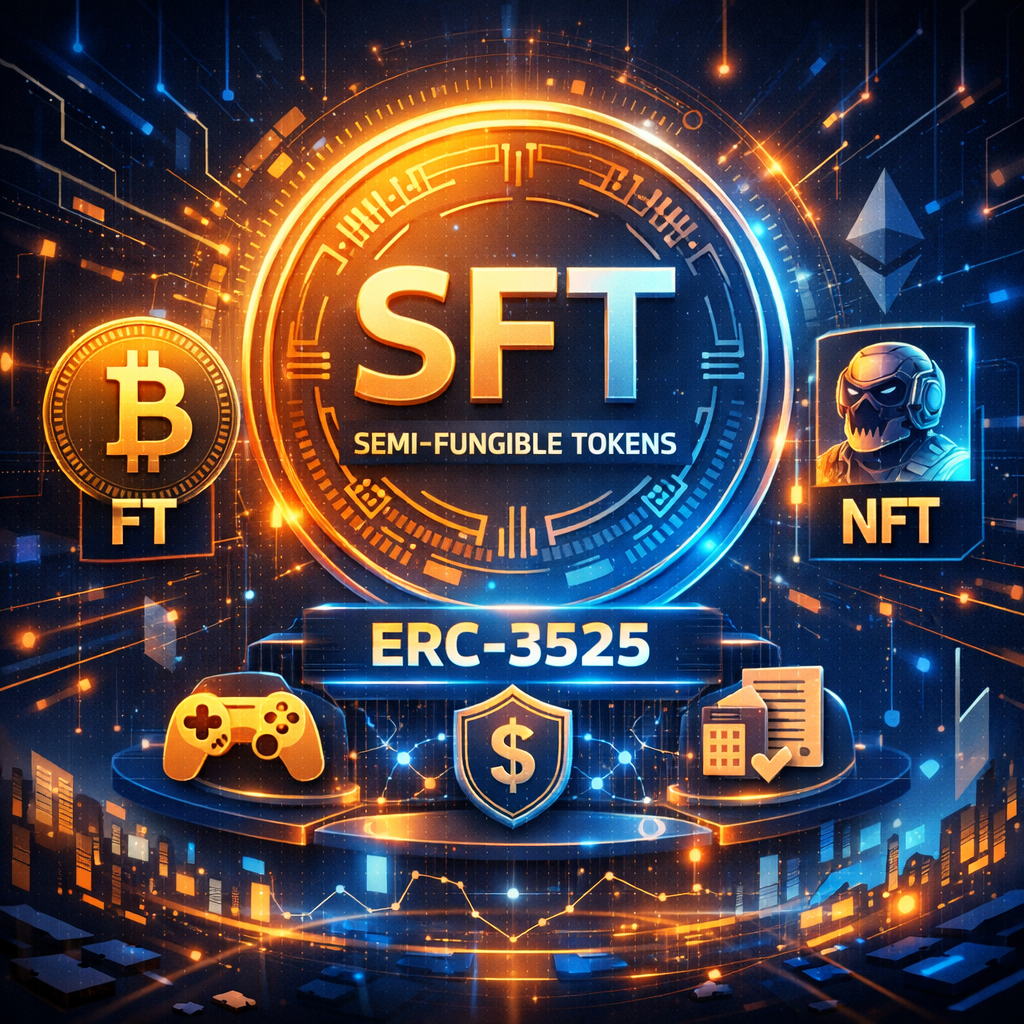
Semi-Fungible Tokens (SFTs) are a specialized class of blockchain tokens that exhibit both fungible token (FT) and non-fungible token (NFT) properties at different stages of their lifecycle. Typically, SFTs are interchangeable like FTs during certain periods, but under specific conditions, they become unique assets, much like NFTs.
For example, an event ticket can be freely exchanged before use, but after entry, it transforms into a one-of-a-kind NFT with commemorative value. In gaming, a generic item may be traded in bulk, but once upgraded, it becomes a unique piece of equipment.
How SFTs Combine the Strengths of FTs and NFTs
Unlike traditional cryptocurrencies such as BTC, ETH, and other FTs or NFTs, SFTs are innovative because their state can change. While fungible, they support batch processing and efficient transfers. Once non-fungible, they gain uniqueness and collectible value.
As a result, SFTs offer significant advantages in on-chain transaction efficiency, lower transfer costs, and greater asset flexibility. For instance, the ERC-1155 standard allows for batch transfers, reducing gas fees and improving transaction speed.
Latest Ecosystem Developments and Standards
One of the most important technical advancements for SFTs in recent years is the adoption of the ERC-3525 standard within the Ethereum ecosystem. Developed by Solv Protocol, this standard enables more flexible asset representation and quantity control for SFTs across multiple dimensions, including ID, slot, and value. ERC-3525 is positioned to become a foundational standard for financial NFTs and complex asset tokenization.
By 2025, as demand for more efficient asset types grows in the blockchain market, SFT-related standards are attracting increasing attention from developers and project teams. Applications are expanding into DeFi, gaming, ticketing, digital collectibles, and other sectors.
Market Trends and Investment Logic
While SFTs have not experienced the explosive price surges seen with NFT art collections, their value is steadily building from an infrastructure perspective. The core investment logic centers on functionality and real-world application. Once a use case scales—such as blockchain gaming, on-chain event ticketing, cross-chain assets, or RWA tokenization—the value of SFTs becomes clear.
When considering investments in the SFT ecosystem, focus on the following areas:
- Foundational ecosystem projects, such as protocols supporting ERC-3525 or SFT toolchains;
- Innovative application projects, especially those integrating SFTs with real-world assets like bonds or tickets;
- Growth in on-chain market demand, prioritizing SFT solutions with real users and practical applications.
Core Use Cases for SFTs
Semi-Fungible Tokens are currently used primarily in the following areas:
- Blockchain gaming and the metaverse: representing in-game generic assets and items, delivering enhanced user experience and transaction efficiency;
- Ticketing and event passes: the state transitions of tickets align perfectly with SFT lifecycle management;
- Digital rights and memberships: enabling the free trading of rights points, memberships, and similar assets;
- Financial assets/RWA representation: such as tokenizing bonds or fund shares.
Risks and Future Outlook
SFTs remain an emerging category of blockchain assets. Compared to NFTs and FTs, they are at an earlier stage in market education, standardization, and secondary market liquidity. Before investing, pay close attention to the following risks:
- Limited market maturity;
- Standard compatibility and cross-chain challenges;
- Uncertain regulatory and legal status.
Nonetheless, from a macro perspective, Semi-Fungible Tokens offer long-term value potential as an asset class bridging the gap between FTs and NFTs. They are likely to play a pivotal role as Web3 applications expand across multiple scenarios.
Related Articles
2026 Stablecoin Classification Deep Dive: From Fiat-Collateralized to Algorithmic Stablecoins, Market Landscape and Future Trends

What Are Fractional NFTs? Understanding the Mechanics of NFT Fractionalization and Its Real-World Use Cases
Top Telegram Games to Watch in 2026: The New Web3 Gaming Frontier and Investment Strategies

The Next 100x Coin? Low-Cap Crypto Gem Analysis

What Is Jupiter? A Complete Guide to Solana’s Leading Decentralized Exchange Aggregator
