


What Is a DApp? An In-Depth Look at the Core Value and Latest Trends of Decentralized Applications
What Is a DApp (Decentralized Application)?
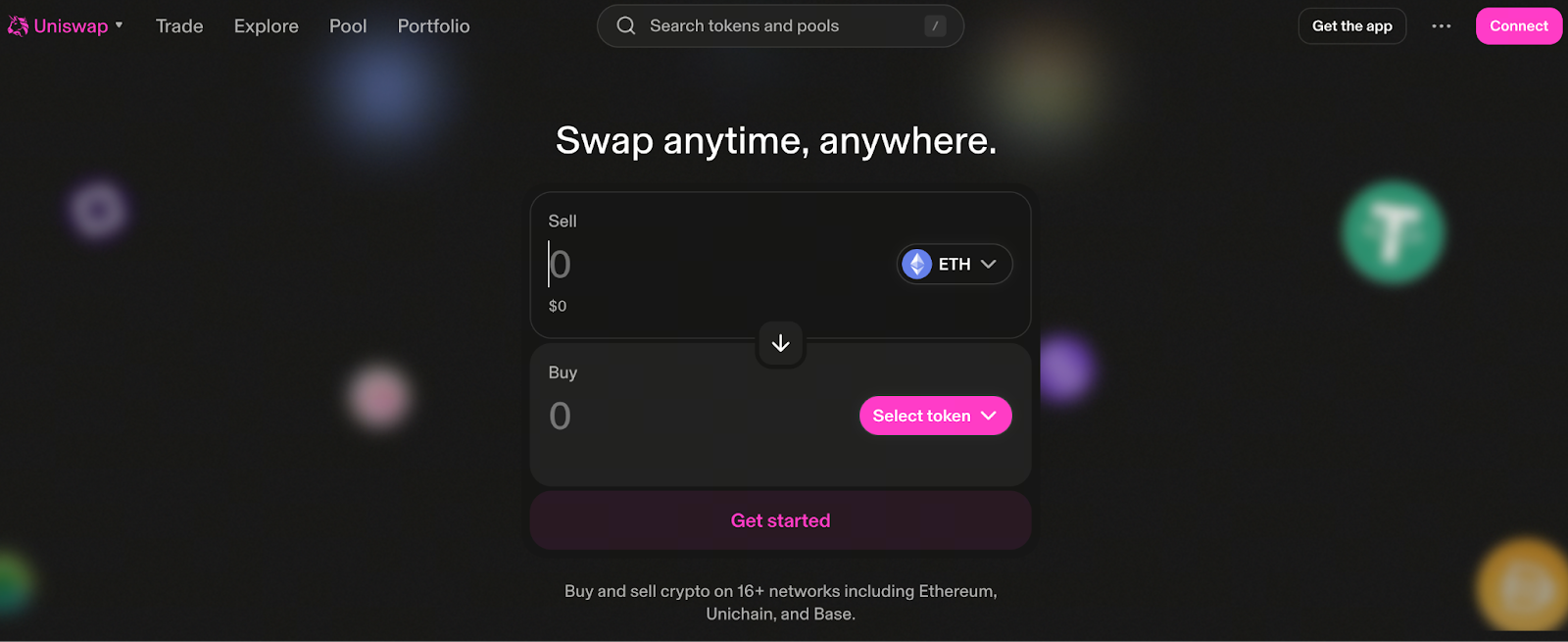
Image: https://app.uniswap.org/
A DApp, or Decentralized Application, is an application whose core logic operates on a blockchain and is executed by smart contracts, rather than relying on centralized servers. No single company or institution controls a DApp.
With DApps, users have full control over their assets and data. The rules of the application are transparently encoded in smart contracts on-chain, making them immutable. This structure ensures transparency, security, and censorship resistance—hallmarks of the Web3 ecosystem.
Today, many leading DeFi, NFT, blockchain gaming, and cross-chain protocols are DApps, including Uniswap, Aave, and OpenSea.
DApp Technical Architecture and Operating Logic
A complete DApp typically has three layers:
Layer 1: Front-End Interface
Like traditional websites or apps, users interact with the DApp through web or mobile interfaces.
Layer 2: Smart Contracts
This is the core of the DApp. Smart contracts define the application’s rules, execution processes, and asset states.
Layer 3: Blockchain Network
Blockchains such as Ethereum, BNB Chain, Polygon, and Solana store data and ensure decentralized operation.
Every user action—whether it’s a transaction, vote, or transfer—is submitted on-chain and validated collectively by network nodes. While this process is slower than Web2 systems, it guarantees full transparency and auditability for anyone.
How DApps Differ from Traditional Applications
The primary distinction between DApps and Web2 applications is control and data ownership. In traditional apps, platform companies manage all data and can ban accounts, freeze assets, or delete content at their discretion. In contrast, DApp logic is enforced by smart contracts, making arbitrary rule changes by platforms impossible.
Additional differences include:
- Users truly own assets in DApps, which are stored in blockchain wallets
- All transactions are fully transparent
- Functionality does not depend on centralized servers
- Once deployed, contract rules are difficult to alter
These features make DApps open, community-governed networks, not company-controlled applications.
Latest Industry Trends: Layer 2, Cross-Chain, and AI Fueling DApp Growth
As we approach 2025–2026, DApp growth is accelerating, driven by three key trends.
1. Layer 2 Solutions Alleviate High Costs and Scalability Limits
Ethereum Layer 2 solutions—like Optimism, Arbitrum, Base, and ZKSync—significantly reduce transaction fees and boost speed, making the DApp user experience comparable to Web2 platforms.
Lower costs directly lead to:
- Greater activity in transactional DApps
- Reduced operating costs for blockchain games
- Scalable user growth for NFT and social platforms
Layer 2 is now a central driver of DApp adoption.
2. Cross-Chain Interoperability Expands the DApp Ecosystem
Previously, DApps were often confined to a single blockchain. With maturing cross-chain bridges and messaging protocols, DApps can now:
- Integrate assets from multiple blockchains
- Support users across various chains simultaneously
- Enable new models like cross-chain governance and DeFi
Future DApps will operate as cross-chain ecosystem services, not limited to a single chain.
3. AI Integration with Smart Contracts
AI is being integrated into DApps for:
- Automated investment strategies
- Risk monitoring
- Asset management
- Game content generation
- AI-powered NPCs
AI and blockchain together mark the next major wave of application growth.
Key Application Scenarios for DApps
DApps are rapidly expanding into a variety of use cases, including:
Decentralized Finance (DeFi)
Use cases like lending, decentralized exchanges, and derivatives trading allow users to control their funds without banks or platform approval.
NFT and Digital Asset Applications
NFT marketplaces, in-game assets, and digital identity verification are all powered by DApps.
Blockchain Gaming and GameFi
Players own and can freely transfer or trade in-game assets, creating new digital economies.
Social and Identity Management (SocialFi)
Decentralized social applications give users true ownership of their content and connections.
DAO Governance Systems
Organizations are governed by token-based voting, not centralized management teams.
These scenarios highlight the core value of DApps: eliminating intermediaries and empowering user ownership.
Challenges and Future Directions
Despite rapid DApp innovation, several real-world challenges remain.
1. User Experience Remains Challenging
Complex wallet operations and high gas fees present major hurdles for new users.
2. Elevated Security Risks
Vulnerabilities in smart contracts can cause significant asset losses, making security audits increasingly critical.
3. Ecosystem Fragmentation and Regulatory Uncertainty
Inconsistent regulatory approaches across countries also impact DApp development speed.
Nevertheless, based on technological maturity and user adoption trends, the outlook for DApps remains highly positive.
Conclusion
DApps are the practical realization of blockchain technology, transforming both how applications operate and the relationship between users and their data. As Layer 2, AI, and cross-chain technologies advance, DApps are set for large-scale adoption. Understanding DApps is essential to grasping the core value of Web3.
Related Articles
2026 Stablecoin Classification Deep Dive: From Fiat-Collateralized to Algorithmic Stablecoins, Market Landscape and Future Trends
What Are Fractional NFTs? Understanding the Mechanics of NFT Fractionalization and Its Real-World Use Cases
Top Telegram Games to Watch in 2026: The New Web3 Gaming Frontier and Investment Strategies
The Next 100x Coin? Low-Cap Crypto Gem Analysis
What Is Jupiter? A Complete Guide to Solana’s Leading Decentralized Exchange Aggregator
