


What Is a Perpetual Contract (Perpetual Futures)? Mechanisms Explained and Latest Market Developments
What Are Perpetual Contracts?
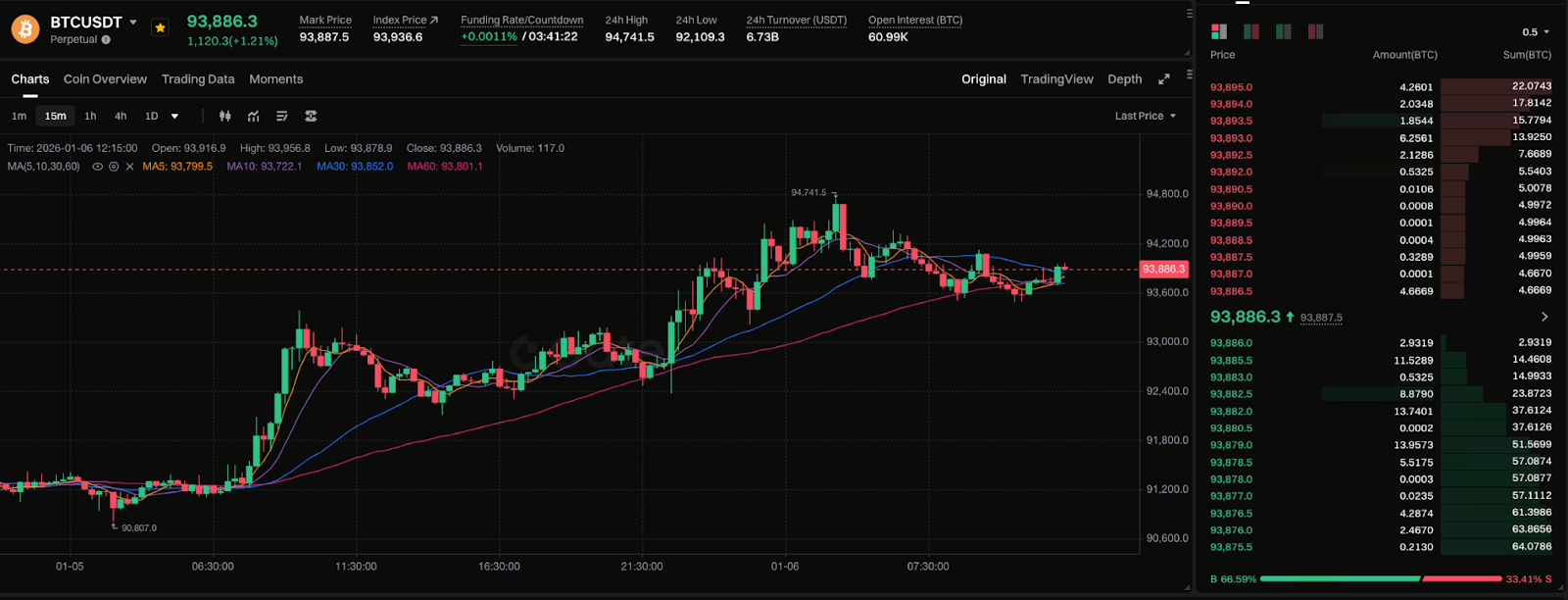
Image: https://www.gate.com/futures/USDT/BTC_USDT
Perpetual contracts, also known as perpetual swaps, are derivatives with no expiration date. They let traders take long or short positions on an underlying asset’s price without worrying about contract maturity or settlement. Unlike traditional futures, perpetual contracts allow for indefinite holding, so traders can adjust strategies flexibly as prices move.
Perpetual contracts—often called “perps”—are vital derivatives in the cryptocurrency market. They see especially high trading volumes for major assets like Bitcoin (BTC) and Ethereum (ETH).
Differences Between Perpetual Contracts and Traditional Futures
Traditional futures contracts have a set expiration date, requiring traders to close or roll over positions before expiry. Perpetual contracts, by contrast, have no fixed maturity—positions stay open until the trader decides to close them.
Since perpetual contracts don’t need to be settled at maturity, traders avoid the hassle of rolling contracts. This structure streamlines trading and boosts market flexibility.
Key Mechanisms of Perpetual Contracts: Funding Rate and Leverage
The funding rate is one of the core mechanisms of perpetual contracts. Exchanges periodically—often every 8 hours—facilitate small payments between long and short positions to keep perpetual prices in line with spot prices. When the perpetual price is above the spot price, longs pay shorts. When it’s below, shorts pay longs.
Perpetual contracts also typically offer high leverage, enabling traders to control larger positions with less capital. However, high leverage increases risk—price swings can trigger forced liquidations or steep losses.
Advantages and Risks of Perpetual Contracts
Advantages
- No expiration date: Traders can hold positions long-term without rolling over.
- Leverage: Boosts capital efficiency.
- Long and short strategies: Profit from both rising and falling prices.
- 24/7 trading: Especially relevant in crypto markets.
Risks
- High leverage risk: Increases the chance of forced liquidation.
- Market volatility: Large price swings can lead to significant losses.
- Funding rate costs: Holding positions long-term may accumulate expenses.
Understanding these risks and implementing sound risk management strategies is essential.
Latest Developments in the Perpetual Trading Market (2025)
By the end of 2025, perpetual contracts remain a core driver of the crypto derivatives market. Recent data shows that monthly trading volume for perpetual contracts on decentralized exchanges (DEXs) has surpassed $1 trillion, signaling robust market activity.
At the same time, the Singapore Exchange (SGX) announced it will launch perpetual futures on Bitcoin and Ethereum in November 2025, highlighting the growing interest of institutional investors in perpetual derivatives.
Summary and Key Takeaways
Perpetual contracts are financial derivatives with no expiration date. They offer high leverage, 24/7 trading, and both long and short strategies, making them an integral part of the crypto derivatives market. Investors should understand the funding rate mechanism and risk management techniques, and stay up to date with the latest market trends.
Related Articles

2026 Stablecoin Classification Deep Dive: From Fiat-Collateralized to Algorithmic Stablecoins, Market Landscape and Future Trends

What Are Fractional NFTs? Understanding the Mechanics of NFT Fractionalization and Its Real-World Use Cases

Top Telegram Games to Watch in 2026: The New Web3 Gaming Frontier and Investment Strategies

The Next 100x Coin? Low-Cap Crypto Gem Analysis

What Is Jupiter? A Complete Guide to Solana’s Leading Decentralized Exchange Aggregator
