


What Is Buying Power in Crypto?
What Is Buying Power?
Buying power is the amount of funds you can actually deploy when trading. Without leverage, your buying power is generally the same as your available account balance. However, when you use leverage, borrow funds, or pledge assets, your buying power can increase or decrease, and it may no longer equal your actual balance.
Simply put: Buying power is your real-time financial capacity to execute trades.
Why Doesn’t Account Balance Equal Buying Power?
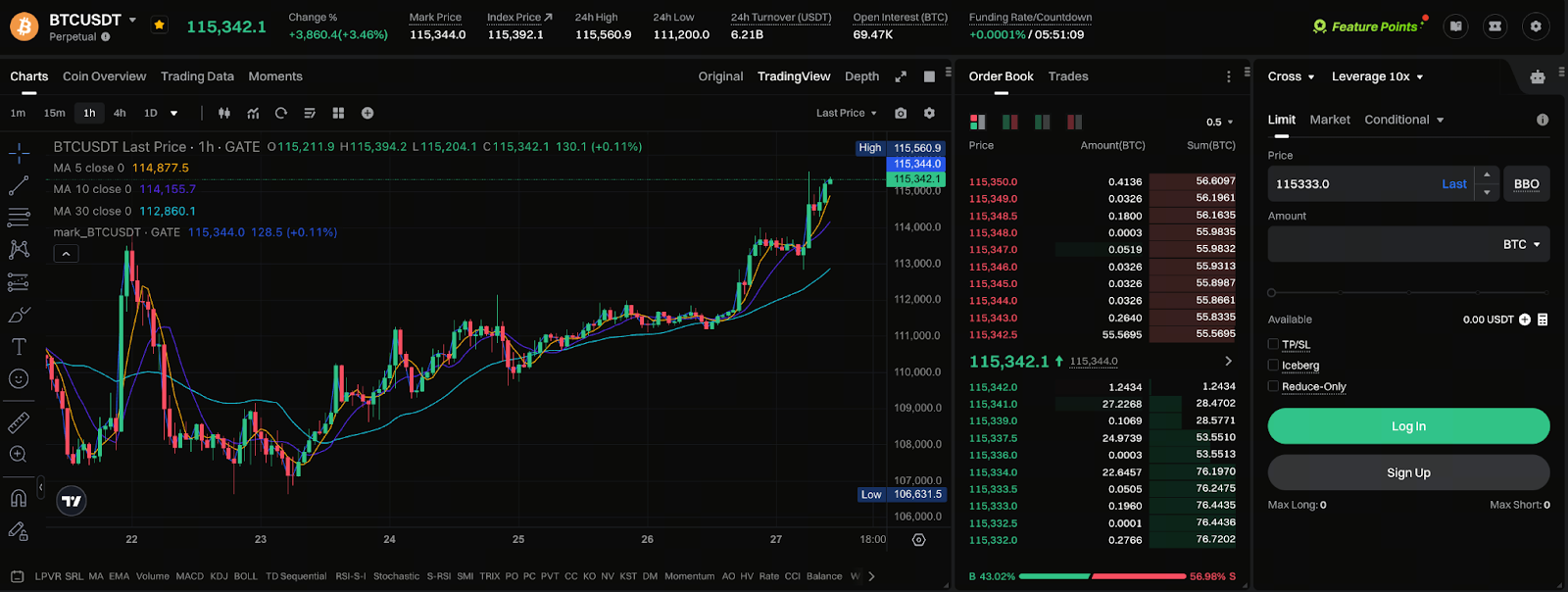
Figure: https://www.gate.com/futures/USDT/BTC_USDT
Many traders entering the crypto market see a 500 USDT account balance and assume they can purchase 500 USDT worth of tokens. However, if the platform offers leverage—such as 5x—you can trade with 2,500 USDT. This means your buying power is amplified.
The trade-off for increased buying power is higher risk. While profits increase as prices rise, losses can multiply when prices fall.
Buying Power Fluctuates in Crypto Trading
The crypto market is significantly more volatile than equities. When your positions are profitable, your buying power increases. When you incur losses, your buying power decreases. If losses erode your margin below required levels, the platform automatically liquidates your positions.
This process is called “liquidation.” Once liquidation criteria are met, the system automatically closes your position, leaving no time to react. Your assets do not need to hit zero for this to occur.
In summary: As your buying power increases, your leverage increases, which in turn leads to a faster potential for liquidation.
Three Mistakes Beginners Commonly Make
1. Using maximum leverage immediately: Many beginners use the maximum borrowing capacity offered by the platform. They experience satisfaction with small profits, but even a slight market decline can trigger liquidation.
2. Treating buying power as actual balance: Just because the platform shows you can place a 10,000 USDT order does not mean you actually own 10,000 USDT.
3. Failing to set stop-loss: When the market reverses, forced liquidation often happens before you can respond.
How to Use Buying Power Safely?
- Avoid leverage as a beginner: Keep your buying power aligned with your actual balance to minimize risk.
- Limit the funds used per trade: Always reserve additional margin, keeping at least 30% untouched.
- Set clear stop-loss: Even without advanced strategies, make sure you have basic risk management in place.
- Monitor margin ratio and risk alert indicators: If you approach the liquidation threshold, reduce your position immediately to avoid taking unnecessary risks based on market direction.
Conclusion
Buying power is not just your account balance—it is a dynamic capability that changes with market conditions. While it can help you amplify gains, it can also accelerate losses. For newcomers, do not blindly increase your position just because your buying power grows. Prudent decision-making is always preferable to aggressive trading.
Related Articles
2026 Stablecoin Classification Deep Dive: From Fiat-Collateralized to Algorithmic Stablecoins, Market Landscape and Future Trends

What Are Fractional NFTs? Understanding the Mechanics of NFT Fractionalization and Its Real-World Use Cases
Top Telegram Games to Watch in 2026: The New Web3 Gaming Frontier and Investment Strategies

The Next 100x Coin? Low-Cap Crypto Gem Analysis

What Is Jupiter? A Complete Guide to Solana’s Leading Decentralized Exchange Aggregator
