

LCP_hide_placeholder
fomox
MarketsPerpsSpotSwapMeme Referral
More
Smart Money Recruitment
Search Token/Wallet
/

Creating Powerful Decentralized Applications: A Guide to dApp Development

2025-12-03 04:03:27
Blockchain
DAO
DeFi
Ethereum
Web 3.0
Article Rating : 4.1
0 ratings
This article offers an insightful exploration into decentralized applications (dApps) and their growing influence in the digital landscape, highlighting their operational foundations, varied uses, and pros and cons. It addresses the burgeoning demand for dApp development, aiming at developers and tech enthusiasts interested in leveraging blockchain technology for advanced applications. Structured into sections on dApps fundamentals, functioning, uses, and analysis of benefits and challenges, the article enhances understanding and engagement with this transformative technology. Key topics include smart contracts, decentralized finance, gaming, and the implications of a decentralized internet.
Creating Powerful Decentralized Applications: A Guide to dApp Development

What Are dApps? Explaining Decentralized Applications

Decentralized applications, commonly known as dApps, represent a revolutionary shift in how we interact with digital services. As blockchain technology continues to evolve, dApps are emerging as a cornerstone of the Web3 movement, offering alternatives to traditional centralized applications. This article explores the fundamental concepts, mechanisms, applications, and implications of decentralized application development in the modern digital landscape.

What are dApps?

dApps are online protocols that leverage blockchain technology as their backend infrastructure. Unlike traditional applications that rely on centralized servers, dApps operate on distributed networks where no single entity has complete control. The concept was first introduced with the Bitcoin Network, which pioneered the use of blockchain for verifying and recording transactions across a decentralized network of computers, known as nodes.

The term "dApp" gained formal definition in 2014 when crypto developers published "The General Theory of Decentralized Applications, dApps," establishing clear characteristics that distinguish these applications from conventional web-based services. According to this framework, authentic dApps must be user-controlled, built on open-source code, utilize proprietary cryptocurrency tokens, and implement universally accessible governance procedures.

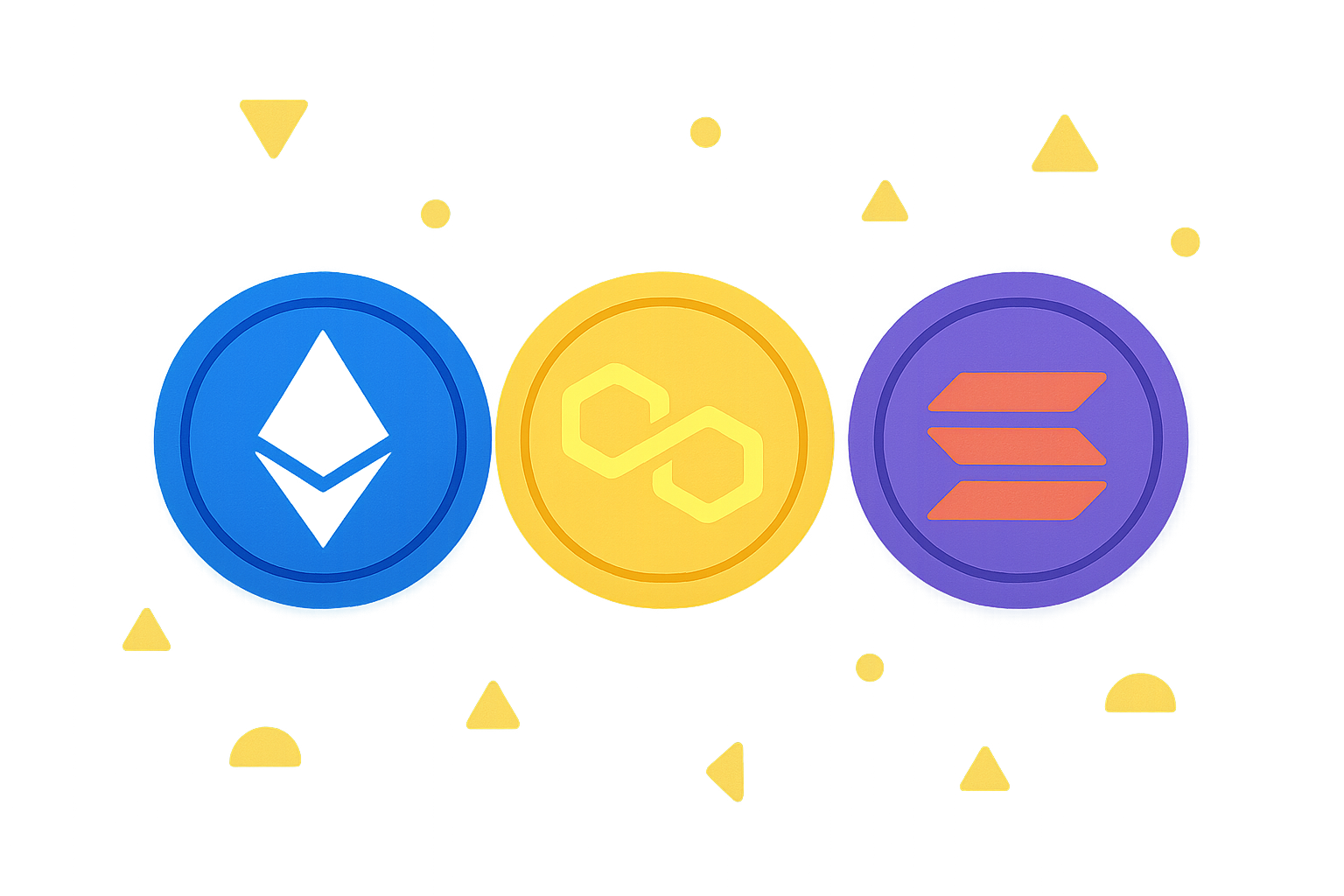
Ethereum revolutionized the dApp ecosystem by becoming the first blockchain platform to enable third-party decentralized application development at scale. Using Ethereum's Solidity programming language, developers can create sophisticated decentralized protocols that replicate the functionality of popular online applications—from social media platforms to financial services—but without centralized authorities. While Ethereum remains a dominant platform for decentralized application development, competing blockchains such as Solana, Polygon, and Tron have also entered the marketplace, expanding the dApp ecosystem significantly.

How do dApps Work?

The operational foundation of dApps rests on smart contracts—specialized blockchain-based programs that automatically execute predefined instructions. These smart contracts serve as the engine room of dApps, processing and recording all complex transactions and user interactions on distributed ledgers. Each smart contract contains precoded logic that monitors specific conditions and automatically fulfills designated tasks, such as transferring cryptocurrencies, approving trades, or minting digital collectibles.

To illustrate this mechanism, consider a crypto lending dApp like Aave. When a user deposits collateral into the platform, the smart contract automatically recognizes the deposit and processes the crypto loan transfer to the user's linked digital wallet—all without human intervention or centralized oversight.

Accessing dApps differs fundamentally from traditional applications. Instead of creating passwords and submitting personal information like email addresses, users connect their self-custodial crypto wallets, such as MetaMask, to interact with dApps. The crypto wallet essentially functions as both username and password, providing a unique identifier for each user. Most dApps feature a "Connect Wallet" button prominently displayed on their main webpage, allowing users to link their preferred wallet address and immediately access the platform's products and services.

What are the uses for crypto dApps?

The versatility of dApp technology has spawned applications across numerous sectors, rivaling the diversity of mainstream applications. Decentralized application development has enabled innovation in several categories that have emerged as particularly popular and impactful.

Decentralized Finance (DeFi) represents one of the most significant use cases for dApps. DeFi platforms provide financial services—including trading, lending, and borrowing—using blockchain technology instead of traditional banks or brokerage houses. Various peer-to-peer platforms enable cryptocurrency trading without intermediaries, while other protocols facilitate P2E crypto loans. Additionally, staking providers offer traders opportunities to earn rewards on proof-of-stake blockchains, showcasing the breadth of decentralized application development in the financial sector.

Video Games have embraced blockchain technology through play-to-earn (P2E) models that reward gamers with cryptocurrency for completing in-game tasks. Notable examples include Axie Infinity, a Pokémon-style game; CryptoKitties, an animated cat collection game; and Parallel, a trading card platform. These gaming dApps give players unprecedented ownership over their in-game assets and activities, demonstrating the creative potential of decentralized application development.

Fitness Trackers have evolved into move-to-earn (M2E) applications, incentivizing physical activity through crypto rewards. STEPN, built on Solana, exemplifies this category by rewarding users with GMT cryptocurrency for their daily walking habits, tracked through the mobile dApp.

Metaverse Experiences provide immersive and interactive online environments using virtual reality and augmented reality technologies. Ethereum dApps like Decentraland and The Sandbox offer players 3D open-world settings where they can own virtual property, interact with other gamers, and participate in collaborative events such as virtual concerts.

Non-Fungible Token (NFT) Trading has become a major dApp category, with various marketplace platforms serving creators and collectors who can mint, auction, and purchase unique digital assets. Unlike fungible cryptocurrencies, NFTs are distinctive digital items with individual blockchain addresses, capable of representing various forms of digital media.

Pros and Cons of dApps

While cryptocurrency enthusiasts view dApps as the inevitable evolution of the internet toward Web3, the technology presents both significant advantages and notable challenges in decentralized application development.

Pros of dApps

No Downtime or Centralized Points of Failure constitutes a primary advantage of dApps. Unlike traditional applications dependent on vulnerable centralized servers, dApps distribute data storage and processing across thousands of blockchain nodes. Each node maintains a complete copy of the network's transaction history, eliminating single points of failure. Even if hackers compromise several nodes, the dApp continues functioning unless they control the entire blockchain. Furthermore, the constant availability of blockchain nodes ensures dApps maintain consistent performance without lag or downtime.

Enhanced User Privacy distinguishes dApps from conventional applications. Users can access dApp services without sharing sensitive personal information such as home addresses, email addresses, or full names. dApps recognize users through their unique crypto wallet addresses without linking these accounts to individual identities, preserving anonymity and privacy.

Increased Participation from the Online Community occurs through decentralized autonomous organizations (DAOs), which grant users direct influence over protocol development. Token holders typically gain the right to propose upgrades and vote on protocol changes, democratizing the governance process and ensuring community input shapes platform evolution in decentralized application development.

Countless Use Cases emerge from the flexibility of smart contract technology, enabling developers to create innovative dApps across diverse fields. Beyond established sectors like DeFi and gaming, cutting-edge programmers are exploring new frontiers in social media, crowdfunding, and healthcare records management through advanced decentralized application development.

Cons of dApps

Vulnerability to Scams, Hacks, or Exploits represents a significant concern, as dApps are only as secure as their underlying code. Users must trust the competence of project programmers, and any bugs or glitches in smart contracts can enable hackers to manipulate protocols and steal user funds. The immutable nature of blockchain means that once deployed, flawed code can have lasting consequences in decentralized application development.

No Insurance Protections arise from the absence of central authorities in dApp ecosystems. Users cannot recover lost crypto assets, whether due to personal errors or security breaches. This lack of recourse contrasts sharply with traditional financial systems that offer various consumer protections and insurance mechanisms.

Longer Update Time results from decentralized voting procedures in DAOs, which prevent developers from implementing rapid changes without community consent. While DAOs democratize development processes, they can also hinder scalability as programmers await approval for every proposal, potentially slowing innovation and response to urgent issues in decentralized application development.

Clunky User Interface remains a barrier to widespread adoption, as the frontend user experience on dApps often lacks the seamlessness and intuitiveness of competing web-based applications. Users unfamiliar with crypto wallets, token transfers, and transaction signing face a steep learning curve that can discourage adoption.

Conclusion

Decentralized applications represent a transformative technology that challenges traditional models of internet services and digital interaction. By leveraging blockchain infrastructure and smart contracts, dApps offer unprecedented levels of decentralization, user privacy, and community governance. The continuous growth in dApp adoption demonstrates increasing public interest in these innovative platforms and the expanding field of decentralized application development.

Despite their revolutionary potential, dApps face significant challenges including security vulnerabilities, lack of insurance protections, slower update cycles, and user experience issues. As the technology matures and developers address these limitations through improved decentralized application development practices, dApps may indeed fulfill the promise of Web3—creating a more open, transparent, and user-controlled internet. Whether in DeFi, gaming, fitness tracking, metaverse experiences, or NFT trading, dApps continue to expand their influence across diverse sectors, gradually reshaping how we conceptualize and interact with digital services. The future success of dApps will depend on balancing their decentralized ideals with practical considerations of security, usability, and scalability, making decentralized application development an increasingly critical skill in the blockchain ecosystem.

FAQ

What is decentralized app development?

Decentralized app development is the process of creating applications that run on blockchain networks, offering increased security, transparency, and user control without central authorities.

What is an example of a decentralized application?

BitTorrent, a peer-to-peer file sharing network, is a classic example of a decentralized application.

How to build decentralized applications?

Use blockchain platforms like Ethereum, code smart contracts, create a frontend, and deploy on a decentralized network. Focus on security and user experience.

What is a DApp used for?

A DApp is used for creating decentralized, trustless applications on blockchain networks, enabling direct user interactions and automated processes through smart contracts.

* The information is not intended to be and does not constitute financial advice or any other recommendation of any sort offered or endorsed by Gate.

Share

Content

What are dApps?

How do dApps Work?

What are the uses for crypto dApps?

Pros and Cons of dApps

Pros of dApps

Cons of dApps

Conclusion

FAQ

Related Articles
Top Decentralized Exchange Aggregators for Optimal Trading

Top Decentralized Exchange Aggregators for Optimal Trading

Exploring top DEX aggregators in 2025, this article highlights their role in enhancing crypto trading efficiency. It addresses challenges faced by traders, such as finding optimal prices and reducing slippage, while ensuring security and ease of use. A practical overview of 11 leading platforms is provided, with guidance on selecting the right aggregator based on trading needs and security features. Designed for crypto traders seeking efficient and secure trading solutions, the article emphasizes the evolving benefits of using DEX aggregators in the DeFi landscape.
2025-12-24 07:01:19
Understanding Bitcoin's Supply Limit: How Many Bitcoins Exist?
Understanding Bitcoin's Supply Limit: How Many Bitcoins Exist?

The article delves into Bitcoin's finite supply of 21 million coins, shedding light on its implications for the cryptocurrency ecosystem. It explores how Bitcoin's halving mechanism controls supply, impacting mining rewards and inflation. The piece also discusses what happens after all coins are mined, the role of transaction fees, and introduces the Lightning Network's innovation for scalability. Addressing the loss and theft of bitcoins, it highlights security challenges and advancements. Ideal for crypto enthusiasts and investors, the article explains Bitcoin's value proposition rooted in scarcity and decentralization.
2025-12-04 15:56:34
What is OpenSea? Complete Guide to the Leading NFT Marketplace

What is OpenSea? Complete Guide to the Leading NFT Marketplace

# Comprehensive Guide to Understanding NFT Marketplaces OpenSea stands as the world's largest decentralized NFT marketplace, enabling users to buy, sell, and trade unique digital assets across multiple blockchain networks including Ethereum, Polygon, and Solana. This comprehensive guide equips beginners and experienced traders with essential knowledge about OpenSea's features, fee structure, security protocols, and practical trading strategies. From wallet setup and NFT purchasing to creating collections and navigating competitive advantages, the article addresses key questions for collectors, creators, and investors entering the digital asset space. With multi-blockchain support, user-friendly interfaces, and a thriving community of three million active users, OpenSea provides the infrastructure for exploring blockchain-based ownership and monetization opportunities. Whether you're an artist seeking new revenue streams, a collector building digital portfolios, or a curious investor, this guide delivers acti
2026-01-01 05:29:03
Layer 2 Scaling Made Easy: Bridging Ethereum to Enhanced Solutions

Layer 2 Scaling Made Easy: Bridging Ethereum to Enhanced Solutions

The article delves into Layer 2 solutions, focusing on optimizing Ethereum's transaction speed and cost efficiency through bridging. It guides users on wallet and asset selection, outlines the bridging process, and highlights potential fees and timelines. The article caters to developers and blockchain enthusiasts, providing troubleshooting advice and security best practices. Keywords like "Layer 2 scaling," "bridge services," and "optimistic rollup technology" enhance content scannability, aiding readers in navigating Ethereum's ecosystem advancements.
2025-12-24 10:25:40
What Is the Current Market Overview for Cryptocurrencies in December 2025?

What Is the Current Market Overview for Cryptocurrencies in December 2025?

In December 2025, cryptocurrencies exhibit notable trends, with Bitcoin maintaining its dominance at a market cap of $1.2 trillion. Total crypto market capitalization has surged to $3.18 trillion, driven by significant trading activity and Bitcoin's recovery. The top five cryptocurrencies account for 75% of market liquidity, showcasing concentrated activity among major assets like Ethereum, Solana, USDC, and XRP. Major exchanges, including Gate, now list over 500 assets, reflecting growth in asset diversity and institutional adoption. This article targets investors and financial institutions, providing insights into market dynamics, liquidity concentration, and asset diversification.
2025-12-04 02:18:11
How Does Solana (SOL) Compare to Ethereum and Bitcoin in 2025?

How Does Solana (SOL) Compare to Ethereum and Bitcoin in 2025?

The article offers a comprehensive comparison of Solana's performance against Ethereum and Bitcoin in 2025, highlighting its scalability, institutional adoption, and technological advantages. It addresses how Solana's high transaction speed, lower fees, and unique Proof of History consensus mechanism position it favorably in sectors like DeFi, NFTs, and prediction markets. Key issues discussed include regulatory challenges, asset tokenization, and institutional access. This analysis targets developers, investors, and industry analysts seeking insights into Solana's competitive positioning and growth trajectory. The article structure logically progresses from performance metrics to market growth, technology differentiation, and regulatory landscape.
2025-12-01 01:10:08
Recommended for You
What is BULLA coin: analyzing whitepaper logic, use cases, and team fundamentals in 2026

What is BULLA coin: analyzing whitepaper logic, use cases, and team fundamentals in 2026

BULLA coin introduces decentralized accounting and on-chain data management innovation built on BNB Smart Chain, eliminating intermediaries while ensuring real-time transaction verification. The platform addresses critical gaps in cryptocurrency infrastructure by embedding accounting logic directly into smart contracts, enabling transparent audit trails and regulatory compliance. Real-world applications include seamless transaction imports across multiple exchanges, comprehensive crypto portfolio tracking, and secure record-keeping for investors. Trade import tools enhance user experience by automating data categorization and consolidation. Founded in 2021 by blockchain architect Benjamin with support from experienced fintech designers and engineers, BULLA Networks demonstrates active development momentum with continuous smart contract iterations through early 2026. The 2026-2027 strategic roadmap prioritizes network infrastructure expansion and enhanced security protocols, positioning BULLA as a robust decen
2026-02-08 08:20:10
How does MYX token's deflationary tokenomics model work with 100% burn mechanism and 61.57% community allocation?

How does MYX token's deflationary tokenomics model work with 100% burn mechanism and 61.57% community allocation?

This article examines MYX token's innovative deflationary tokenomics, featuring a distinctive 61.57% community allocation and 100% burn mechanism. The community-focused distribution empowers token holders through MYX DAO governance while ensuring value flows back to ecosystem participants. The 100% burn mechanism systematically removes node-generated revenue from circulation, reducing the total supply from one billion tokens and creating genuine scarcity. This supply-driven deflation counters inflation pressures and strengthens long-term holder value without requiring external demand. The combination of broad community distribution and aggressive token elimination creates sustainable deflationary economics. Ideal for investors seeking to understand how MYX Finance aligns community interests with protocol success through structural value preservation and decentralized governance mechanisms on Gate exchange.
2026-02-08 08:12:23
What Are Derivatives Market Signals and How Do Futures Open Interest, Funding Rates, and Liquidation Data Impact Crypto Trading in 2026?

What Are Derivatives Market Signals and How Do Futures Open Interest, Funding Rates, and Liquidation Data Impact Crypto Trading in 2026?

This comprehensive guide decodes cryptocurrency derivatives market signals essential for 2026 trading success. Learn how futures open interest, funding rates, and liquidation data—such as ENA's $17 billion contract volume and $94 million daily position closures—reveal market sentiment and institutional positioning. The article explains how long-short ratios and liquidation heatmaps identify reversal opportunities, while options imbalance signals indicate smart money accumulation strategies. Discover why exchange outflows and funding rate extremes precede major price movements. From analyzing $46.45M ENA outflows to understanding leverage risks, this resource equips traders with actionable intelligence for predicting market turning points. Perfect for beginners and experienced traders leveraging Gate's analytics tools to navigate increasingly complex derivatives markets with informed entry and exit strategies.
2026-02-08 08:08:39
How do futures open interest, funding rates, and liquidation data predict crypto derivatives market signals in 2026?

How do futures open interest, funding rates, and liquidation data predict crypto derivatives market signals in 2026?

This article explores how three critical derivatives metrics—open interest exceeding $20 billion, funding rates shifting positive, and liquidation volume declining 30%—predict crypto derivatives market signals in 2026. The guide reveals institutional participation driving market maturation while positive funding rates signal strengthened bullish momentum. Long-short ratio stabilization at 1.2 with put-call ratio below 0.8 demonstrates sophisticated hedging strategies on Gate and other platforms. Reduced liquidation volumes indicate improved risk management and market resilience. By analyzing how these indicators combine—measuring position sizing, sentiment extremes, and forced selling pressure—traders gain precise tools for identifying trend reversals, leverage exhaustion, and market turning points with 55-65% AI-driven accuracy for 2026.
2026-02-08 08:05:14
What is a token economics model and how does GALA use inflation mechanics and burn mechanisms

What is a token economics model and how does GALA use inflation mechanics and burn mechanisms

This article explores GALA's innovative token economics model, examining how inflation mechanics and burn mechanisms create sustainable ecosystem growth. The guide covers GALA token distribution through 50,000 Founder's Nodes requiring 1 million GALA for 100% daily rewards, establishing long-term community participation. A dual-mechanism approach pairs controlled inflation with strategic annual supply reduction to establish deflationary pressure. The burn mechanism, powered by 100% transaction fee burning on GalaChain combined with NFT royalty enforcement averaging 6.1%, creates continuous supply reduction while incentivizing creator participation. Governance utility empowers node holders to vote on game launches through consensus mechanisms, transforming GALA holders into active stakeholders. Perfect for investors and ecosystem participants seeking to understand how GALA balances token scarcity with ecosystem vitality through integrated economic incentives and community governance on Gate.
2026-02-08 08:03:30
What is on-chain data analysis and how does it reveal whale movements and active addresses in crypto?

What is on-chain data analysis and how does it reveal whale movements and active addresses in crypto?

On-chain data analysis reveals cryptocurrency market dynamics by examining active addresses and transaction metrics that expose whale movements and investor behavior. This comprehensive guide explores how blockchain data serves as a critical market indicator, demonstrating the correlation between large holder activities and price movements—such as FLOKI's 950% surge in whale transactions. The article covers whale movement tracking, holder distribution patterns showing 73.47% concentration among major stakeholders, and on-chain fee trends as cycle indicators. Essential metrics include active addresses reflecting genuine network participation, transaction volumes revealing strategic positioning, and network congestion patterns during market cycles. By tracking these interconnected indicators through platforms like Glassnode and Gate, investors and traders can identify market sentiment shifts, anticipate price movements, and distinguish institutional activity from retail participation, making on-chain analysis i
2026-02-08 08:01:25