Cryptocurrency trading with Japanese candlesticks
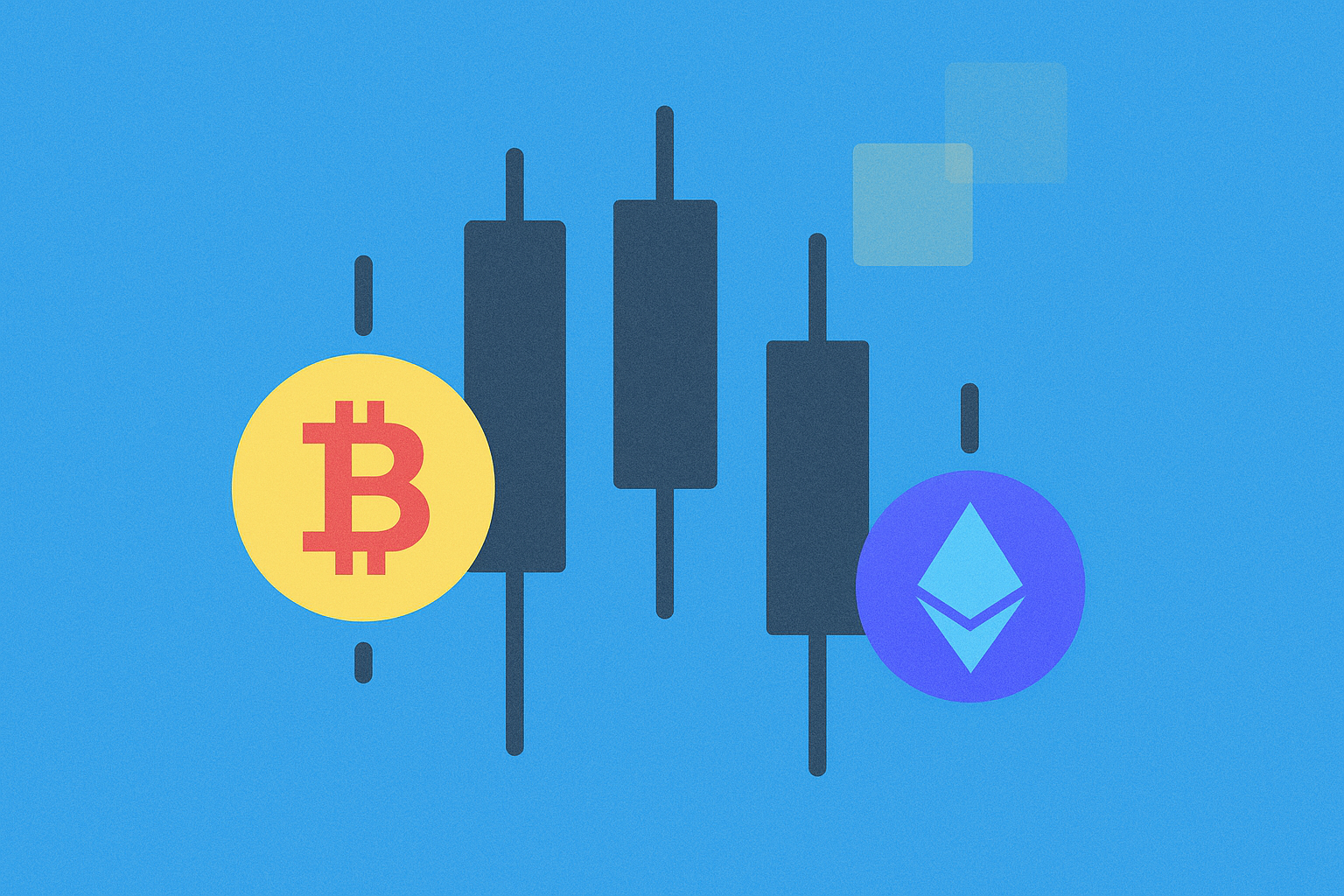
Japanese Candlesticks: What Are They, and How Do You Read and Analyze Candlestick Charts?
Japanese Candlesticks: A Beginner’s Guide
Japanese candlesticks are a visual method for tracking asset price movements on charts. Originating in 18th-century Japan for rice price analysis, this technique is now used across the entire financial sector, including digital asset trading platforms. Each candlestick represents price changes for a specific time period—such as one minute, one hour, one day, or any selected timeframe.
A Japanese candlestick has several essential components. The body is a rectangle that displays the range between the period’s opening and closing prices. A green (or white) body means the closing price is higher than the opening price—a bullish signal. A red (or black) body means the closing price is lower than the opening price—a bearish signal. Wicks (or shadows) are thin lines above and below the body, indicating the highest and lowest prices reached during the period.
For example, on an hourly Bitcoin chart, if the opening price was $42,000 and the closing price was $43,500, the candlestick will be green, with its body spanning the $42,000 to $43,500 range. If the hourly high was $44,000 and the low was $41,500, the wicks will mark those extremes.
Several factors drive the popularity of Japanese candlesticks. First, they’re easy to read—even for traders just starting technical analysis. Second, each candlestick provides a complete and informative snapshot of price action for its period. Third, Japanese candlesticks are highly versatile and can be used to analyze any financial asset—from digital currencies and stocks to commodities and forex pairs.
The Function of Japanese Candlesticks on Charts
Japanese candlesticks play a crucial role in helping traders make informed decisions based on technical analysis. Far from decorative, they offer powerful insights into market behavior.
Their first key function is showing price dynamics. Candlesticks clearly illustrate how an asset’s price changed during a specific timeframe, enabling traders to quickly gauge trend direction—whether it’s bullish (upward) or bearish (downward). The wick’s length indicates volatility: long wicks mean sharp price swings, while short wicks imply relative stability. The candlestick body’s size reflects the strength of market movement—a large body signals strong momentum; a small body points to weak momentum.
Second, candlesticks reflect market psychology. Each candlestick tells the story of market participants’ actions. A long green candlestick means buyers are in control and demand is climbing. A long red candlestick signals sellers dominance and increasing supply. Candlesticks with small bodies and long wicks are especially revealing—they highlight market indecision and fierce competition between bulls and bears over price setting.
Third, candlesticks form the foundation for pattern analysis. Certain combinations create patterns with predictive value for future price direction. Patterns like Hammer, Shooting Star, Bullish Engulfing, and others help traders spot signals for trend reversal or continuation.
How to Read Japanese Candlesticks: Step-by-Step
To leverage Japanese candlesticks effectively in technical analysis, you must learn to interpret them correctly. The following steps outline the analysis process:
Step one: Select the right timeframe. Most platforms offer intervals from one minute to one month. Your choice should match your trading strategy. For short-term trades, use 1-, 5-, or 15-minute timeframes. For medium-term, 1-hour and 4-hour intervals are optimal. For long-term investing and analysis, choose daily, weekly, or monthly charts.
Step two: Analyze the candlestick body. A green body means prices are rising and buyers are active for that period. A red body means prices are falling and sellers are dominant. A small body of any color signals market indecision and a lack of clear direction.
Step three: Evaluate the wicks. A long upper wick indicates buyers tried to push prices higher but failed, causing a retreat. A long lower wick means sellers attempted to drive prices down, but buyers pushed back and prices recovered. If wicks are absent or very short, it suggests a strong trend with little resistance.
Step four: Compare sequences of candlesticks. Examine several consecutive candlesticks. Multiple green candles in a row point to an uptrend. Multiple reds signal a downtrend. Alternating green and red candlesticks reflect sideways movement with no clear direction.
Key Candlestick Patterns: Analysis Essentials
Candlestick patterns are specific combinations of Japanese candlesticks that often predict future price direction. Patterns may involve one, two, or three candlesticks.
Single-candle patterns use only one candlestick. The Hammer pattern features a small body (either green or red) and a long lower wick, signaling a bullish reversal after a downtrend. This pattern suggests sellers drove prices down, but buyers stepped in with strong support, pushing the close far above the low.
The Shooting Star pattern signals the opposite. It has a small body and a long upper wick, pointing to a bearish reversal after an uptrend. Sellers tried to take control, but despite resistance, the close ended far below the period’s high.
The Doji pattern forms when the opening and closing prices are nearly equal, resulting in an almost nonexistent or tiny body. This pattern reveals market indecision and often comes before a sharp move in either direction. Confirmation from the following candlestick is recommended when interpreting Doji.
Two-candle patterns analyze two consecutive candlesticks. The Bullish Engulfing pattern features a red candle followed by a larger green candle that completely engulfs the previous one’s price range—a strong bullish signal, suggesting upward momentum. The Bearish Engulfing pattern is the reverse: a green candle followed by a larger red candle covering the earlier range, signaling a potential price drop.
Three-candle patterns involve three consecutive candlesticks. The Morning Star comprises a red candle, a small candle (often a Doji), and a green candle—indicating a bullish reversal after a downtrend. The Evening Star mirrors this, but in reverse order: green, small, then red, signaling a bearish reversal after an uptrend.
Practical Candlestick Analysis
Applying Japanese candlestick insights to trading requires a structured approach and clear steps.
Step one: Open the price chart for your chosen asset. Select the trading pair and switch to candlestick chart mode.
Step two: Identify the main trend. Use broader timeframes like 4-hour or daily charts. Study the sequence of candlesticks: if green dominates, the trend is upward; if red dominates, it’s downward. Watch the direction of highs and lows as well.
Step three: Search for candlestick patterns. On shorter timeframes such as 1-hour, look for Hammer or Shooting Star patterns for short-term trades. On daily charts, identify Engulfing patterns for longer-term positions.
Step four: Confirm signals with additional indicators. Candlestick analysis is most effective when combined with technical indicators. The Relative Strength Index (RSI) helps validate overbought or oversold conditions. MACD provides insight into trend strength and direction. Support and resistance levels pinpoint optimal entry and exit points.
Step five: Make your trading decision. If you spot a Bullish Engulfing pattern in an uptrend and RSI is rising, that may signal it’s time to open a long (buy) position. If you see a Bearish Engulfing pattern in a downtrend, it may be a signal to open a short (sell) position or close an existing long.
Conclusion
Japanese candlesticks remain one of the most fundamental and effective tools for technical analysis on financial markets. Their enduring popularity comes from simplicity, informativeness, and universal applicability to all asset classes. Mastering candlestick reading and pattern analysis gives traders a competitive edge when making trading decisions. However, Japanese candlesticks deliver the most value when combined with additional technical indicators and sound risk management practices. Ongoing practice and refining analytical skills empower traders to use candlestick analysis successfully in reaching their financial goals.
FAQ
What are Japanese candlesticks in plain language?
Japanese candlesticks are charting tools used to analyze cryptocurrency prices. Each candlestick displays the opening, closing, highest, and lowest prices for a set time period. A green candlestick signals price gains; a red candlestick signals losses. They’re the main tool for forecasting price movements.
What are Japanese candlesticks?
Japanese candlesticks are a graphical method for displaying crypto asset prices over a specific period. Each candlestick shows the opening, closing, high, and low prices. Green means price is rising, red means it’s falling. This tool helps traders analyze trends and make informed trading decisions.
How do you use Japanese candlesticks?
Japanese candlesticks illustrate the opening, closing, high, and low prices for a period. Green signals upward movement; red signals downward movement. Study candlestick patterns to identify trends and entry points when trading cryptocurrencies.
What types of Japanese candlestick patterns are there?
The main Japanese candlestick patterns include: Hammer, Inverted Hammer, Doji Star, Engulfing, Piercing, Cloud Cover, Three White Soldiers, and Three Black Crows. Each pattern can signal potential changes in price direction on the cryptocurrency market.

Moving Average Convergence Divergence (MACD Indicator) │ Technical Analysis in Cryptocurrency Investing

Moving Average Convergence Divergence (MACD Indicator) | Applying Technical Analysis in Cryptocurrency Investment
MACD指標是什麼?

Decoding the KDJ Indicator: A Comprehensive Guide

Understanding Bullish Candlestick Patterns for Effective Trading Strategies

How to Interpret MACD and RSI Signals for Cryptocurrency Trading?

How to Evaluate Crypto Community and Ecosystem Activity: Twitter Followers, Developer Contributions, and DApp Growth in 2026

What is cryptocurrency regulatory compliance and why does it matter for investors in 2026

What is the fundamental analysis of cryptocurrency projects: whitepaper logic, use cases, technical innovation, and team background explained

XEN Crypto and Major Wallet Platform Collaboration: Pioneering Gas Subsidy Initiative

What impact do cryptocurrency regulatory compliance and KYC/AML policies have on crypto market adoption in 2026