

Blockchain Basics: How It Works

What Is Blockchain? A Beginner’s Guide to How It Works and Real-World Applications
What Is Blockchain?
Blockchain is a groundbreaking technology that’s changing how we store and share information online. At its core, blockchain is a secure digital ledger that anyone in the network can view, but no one can alter without majority consensus. It’s the foundation for building trust without middlemen in today’s digital world.
Unlike traditional systems where a single entity controls the data, blockchain distributes identical copies of its ledger across multiple computers (nodes) within the network. This decentralization makes fraud or hacking extremely difficult, since any attempt to change data would require altering every copy of the ledger on all network nodes simultaneously.
Blockchain technology works by grouping transactions into blocks that are cryptographically linked together in sequence. Each block contains transaction data, a timestamp, and a unique cryptographic hash connecting it to the previous block. Once data is added to a block and included in the chain, it’s nearly impossible to change or remove without modifying every subsequent block and winning approval from most network participants.
Blockchain’s most important feature is its ability to foster trust between unfamiliar parties—without intermediaries like banks or governments. Trust is hardwired into the technology through consensus mechanisms and cryptographic security.
History and Evolution of Blockchain
Blockchain’s history tracks the rise of a disruptive technology that began with the release of the Bitcoin white paper in 2008. Authored by the anonymous Satoshi Nakamoto, it proposed a radically new approach to digital money—a system where users could transact without financial intermediaries.
Blockchain’s first major milestone came on January 3, 2009, when the inaugural block of the first digital currency’s blockchain—known as the genesis block—was mined. Embedded in its code was a reference to the financial crisis: “Times 03/Jan/2009 Chancellor on brink of second bailout for banks.” This statement reflected criticism of legacy financial systems and inspired the development of alternative technology.
Blockchain technology took a leap forward with the launch of the second major blockchain platform. The decentralized application platform officially launched on July 30, 2015, with the mining of its first block. This new blockchain introduced programmable smart contracts, enabling automated, complex agreements without intermediaries.
Blockchain’s positive evolution continued as it reached beyond finance. In 2016, the Republic of Georgia pioneered a blockchain-based land registry system, demonstrating practical government use.
By 2017, innovative projects like blockchain-based freelancer platforms appeared, creating some of the first decentralized labor markets. In recent years, blockchain has grown from a niche tool understood by a few specialists to a global phenomenon with mainstream adoption in nearly every economic sector.
How Blockchain Works
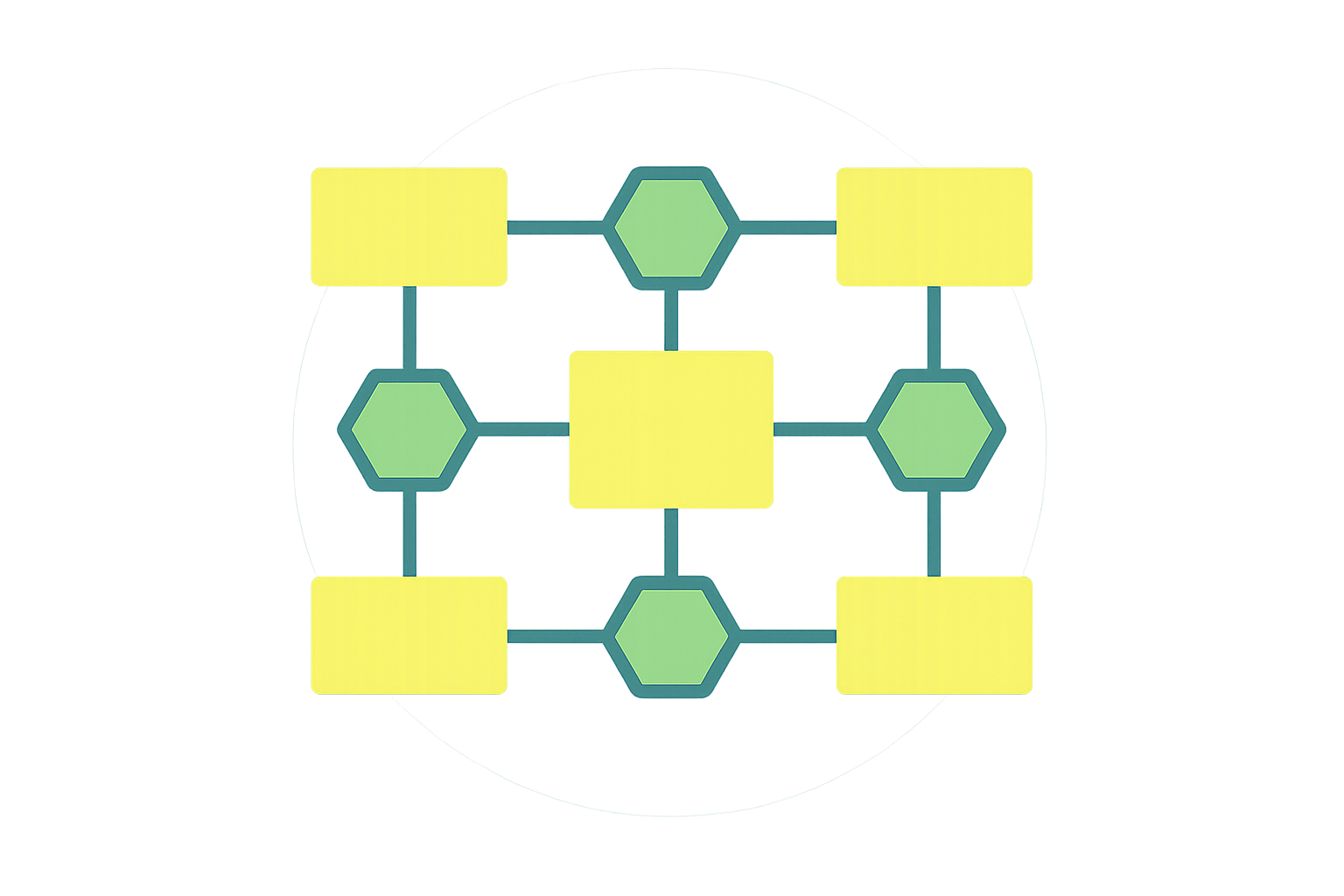
Imagine a digital ledger duplicated thousands of times across a network of computers. This network regularly updates and synchronizes the data, ensuring all copies remain identical. This architecture guarantees the integrity and immutability of the information.
Blockchain fuses several tech concepts: distributed databases, cryptography, and consensus mechanisms. The system builds a chain of informational blocks, with each new block mathematically linked to its predecessor. This creates a growing, unbroken sequence of data that becomes even more secure as the chain lengthens.
The process for adding new transactions to a blockchain involves several key steps:
Transaction Recording: When someone initiates a transaction—such as transferring funds—it’s instantly broadcast to all network computers (nodes). This ensures everyone on the network knows about the new transaction.
Validation: Network participants called validators or miners check the transaction using preset algorithms. This step confirms the transaction is legitimate, that the sender has enough funds, and that the digital signatures are authentic.
Block Creation: Multiple validated transactions are bundled into a single block. Each block holds several transactions, a timestamp, a sequential number, and a cryptographic link back to the previous block.
Chain Addition: The new block is cryptographically attached to the existing blockchain via a process that requires consensus among network members. Blockchain networks use different methods to reach consensus, including Proof of Work and Proof of Stake.
Immutability: Once added to the blockchain, information becomes permanent and nearly impossible to alter. Changing a block’s data would require rewriting every subsequent block and gaining consensus from most of the network—a practically impossible feat.
This design creates a transparent, chronological record of all transactions that’s both secure and resistant to tampering. That makes blockchain ideal for storing sensitive data, financial transactions, and critical records.
Types of Blockchain Networks
Blockchain networks come in several formats, each tailored for specific purposes with unique levels of access and control.
Public blockchains are fully open networks that anyone can join. The first digital currency and decentralized application platforms are prime examples. Public blockchains are permissionless, meaning anyone can access the network, submit transactions, and participate in consensus. These networks offer maximum decentralization and security thanks to thousands of independent users, but often trade off processing speed and energy efficiency.
Private blockchains strictly limit access to a select group of pre-approved participants. Unlike public blockchains, a single organization or small group decides who can join and what permissions each member has. Private blockchains deliver greater confidentiality and operational efficiency, but are more centralized. Companies often choose private blockchains for internal recordkeeping and managing sensitive business processes.
Permissioned blockchains blend the benefits of public and private systems. Anyone can view the blockchain or verify transaction history, but only authorized users can add new blocks. This hybrid approach is ideal for use cases requiring both transparency and controlled access, such as healthcare or government systems.
Consortium blockchains are managed by a group of pre-selected organizations or institutions instead of a single entity. These partners jointly maintain the blockchain and collectively set operational rules, access rights, and development priorities. Industries with many stakeholders—like banking, insurance, or supply chain management—often choose consortium blockchains to facilitate collaboration while keeping control over sensitive information.
Major Blockchain Platforms
The first digital currency blockchain was the original blockchain and remains the most widely recognized network. Launched in 2009, it mainly serves as a peer-to-peer electronic cash system without intermediaries. The first digital currency introduced the concept of a decentralized ledger and still commands the largest market capitalization among all digital assets, proving its enduring relevance.
Decentralized application development platform radically changed the blockchain space in 2015 by enabling programmable smart contracts. Unlike the first digital currency—which is focused on money—the platform is designed for building decentralized applications (dApps) and executing automated agreements without intermediaries.
High-throughput platform has become popular for its exceptional transaction speed and ultra-low fees. It can process thousands of transactions per second, making it ideal for high-frequency trading and large-scale gaming applications.
Layer 2 solutions for the main platform are scalability solutions that help ease network congestion and reduce transaction fees on the core decentralized app platform. These solutions enable faster, cheaper transactions with full compatibility with the main platform’s ecosystem.
Scientifically-driven blockchain takes a research-based approach to development, emphasizing peer review and formal verification. Its goal is to achieve optimal security, scalability, and long-term system resilience.
Messenger-integrated blockchain has gained attention thanks to backing from major messaging apps. Originally built by the creators of a leading messenger, it offers extremely high throughput and seamless integration with a vast mobile user base.
Content exchange blockchain focuses on content sharing and entertainment. Its mission is to remove intermediaries between creators and audiences, enabling direct rewards for creators without platform commissions.
Latest Layer 2 solution is among the newest Layer 2 scaling technologies for the main decentralized app platform, developed by a company specializing in crypto services. It provides ultra-low transaction fees while preserving the parent blockchain’s security guarantees.
Digital asset blockchain is built specifically for applications centered on digital assets, offering high throughput for transaction processing. It’s particularly well-suited for digital collectible marketplaces and blockchain games with many users.
Key Features and Benefits of Blockchain
Superior Security is one of blockchain’s most important strengths. Advanced cryptography protects all data, and decentralization means there’s no single point of failure for hackers. Every transaction is encrypted and cryptographically linked to prior ones, creating a highly secure chain of information. This security model makes blockchain ideal for handling sensitive data and financial transactions.
Transparency and Traceability are ensured because every transaction is recorded in a distributed ledger, shared by all network members. This provides an immutable audit trail, making every operation easy to track and verify. For example, in supply chains, blockchain lets companies trace products from producer to consumer, guaranteeing authenticity and minimizing fraud risk.
Greater Efficiency and Lower Costs result from eliminating middlemen and automating processes with smart contracts—self-executing agreements coded directly into the blockchain. Transactions settle faster and with much lower overhead. This streamlining is especially valuable in international payments, which traditionally relied on multiple intermediaries and lengthy processing times.
Trust Without Intermediaries is perhaps blockchain’s most disruptive advantage. The technology enables trust between unfamiliar parties without a central authority. Consensus mechanisms validate every transaction, so all parties can trust blockchain data—no need for third-party guarantors.
Data Integrity is guaranteed because information recorded on the blockchain is practically impossible to change or erase. This permanence ensures records remain accurate and reliable indefinitely, which is vital for contracts, important documents, and financial histories.
Blockchain vs. Digital Assets
People often confuse blockchain and digital assets, but knowing the difference is crucial. Blockchain is the foundational technology that makes digital assets possible; digital assets are just one application of blockchain.
Blockchain is a distributed ledger system that securely records transactions across a decentralized network of computers. It’s a special database architecture usable for countless purposes beyond digital currency.
Digital assets are digital or virtual currencies secured by cryptography and powered by blockchain networks.
The link between digital assets and blockchain can be confusing for newcomers. While the first digital currency was the first practical blockchain use, today’s blockchain ecosystem includes thousands of projects with diverse goals. Decentralized app platforms introduced programmable smart contracts, enabling complex automated applications far beyond simple payments. Smart contracts are self-executing agreements coded directly into the blockchain. They automatically fulfill all terms when preset conditions are met, eliminating middlemen in many business processes.
Real-World Applications of Blockchain
Finance and Banking are rapidly modernizing with blockchain. Banks and financial institutions use blockchain to streamline back-office settlements, speed up interbank transaction verification, and cut operational costs. Removing intermediaries allows international payments to settle in minutes instead of days, transforming global finance.
Supply Chain Management has been revolutionized by blockchain. Leading retailers and tech providers use blockchain to trace products from manufacturing to store shelves. This technology provides unprecedented visibility, enabling companies to verify ethical sourcing, spot inefficiencies, and rapidly track contaminated or faulty goods during outbreaks.
Healthcare is seeing major benefits from blockchain adoption. It secures patient medical data and makes sharing records between healthcare providers safer. Blockchain protects sensitive information, ensuring vital medical data is available when needed. It also helps track medical supply chains, verify drug authenticity, and dramatically cut the prevalence of counterfeit medicines.
Real Estate stands to gain from blockchain’s transformative potential. Property transactions usually involve extensive paperwork, third-party checks, and public records. Blockchain can simplify this process by securely storing ownership records, automating title verification, reducing fraud risk, and speeding up property transfers.
Voting Systems can reach new levels of integrity with blockchain. Blockchain-based electronic voting can secure elections, prevent fraud, and boost turnout. Each vote is recorded as an immutable transaction, creating proof that can’t be forged or changed—ensuring true democratic integrity.
Identity Management is being empowered by blockchain. It lets individuals create secure, self-managed digital identities without relying on central authorities. This is especially valuable for the 1.4 billion people worldwide who lack formal ID, giving them access to banking, contracts, and other essential services.
Blockchain Technology Challenges
Scalability is one of blockchain’s biggest hurdles. Most blockchains process transactions far slower than traditional payment networks. For example, the first digital currency handles about seven transactions per second, while Visa processes up to 65,000. This major limitation restricts blockchain’s use for high-volume commercial applications.
Energy Consumption is another pressing issue. Proof-of-Work consensus mechanisms, used by the first digital currency and others, demand vast computing power and electricity. Mining digital assets consumes huge amounts of energy, raising concerns about environmental sustainability. Fortunately, newer consensus methods like Proof-of-Stake are much more energy efficient.
Regulatory Uncertainty is a significant challenge for blockchain growth. As adoption rises, governments are still figuring out how best to regulate the technology. Unclear and fragmented regulatory frameworks create uncertainty for businesses and investors. Regulations also vary widely across regions, making international compliance difficult for blockchain projects.
Technical Complexity remains a barrier to mass adoption. Many users find blockchain difficult to understand and use. Deep technical knowledge is often required, creating high entry hurdles—especially for small businesses or individuals without crypto or distributed systems experience.
Integration requires major updates to existing systems and processes. Blockchain implementation often demands fundamental changes to data structures and workflows. Integrating blockchain with legacy systems, while maintaining business continuity, is a tough challenge for established organizations.
Interoperability poses technical problems. Different blockchains frequently can’t communicate or exchange data easily. The lack of standards and interoperability tools limits blockchain’s effectiveness across systems and blocks the creation of a seamless global blockchain ecosystem.
The Future of Blockchain Technology
Growing Interoperability is a top priority for developers and researchers. New projects focus on connecting different blockchains directly, allowing seamless data exchange without intermediaries. This progress will let blockchains operate in sync, not isolation, dramatically increasing their usefulness and accessibility.
Integration with Other Technologies is unlocking new possibilities. Combining blockchain with artificial intelligence, IoT, and machine learning is generating powerful new applications. These synergies deliver capabilities far beyond what any single technology could achieve.
Scalability Solutions are being developed to overcome today’s limitations. Innovations are improving transaction speeds, reducing congestion, and optimizing resource use. These advances are making blockchain much more practical for high-volume mass-market use cases, like global payments.
Enterprise Adoption is accelerating across industries. Major companies are moving from blockchain pilots to full-scale commercial deployment, integrating blockchain into their core business operations.
Regulatory Evolution is bringing greater clarity. As blockchain matures, clearer and more coordinated rules are emerging worldwide. This clarity will speed up mass adoption, giving businesses the confidence to invest in blockchain infrastructure.
Sustainability is a rising priority. As environmental awareness grows, developers are shifting from energy-intensive consensus mechanisms to more eco-friendly alternatives. Many new blockchains are adopting Proof-of-Stake over Proof-of-Work, sharply reducing their environmental impact.
Conclusion
Blockchain technology is one of the most significant and transformative innovations of our time, shaping how we build trust in the digital world. From its beginnings with the first digital currencies in 2009 to its expansion into finance, supply chains, healthcare, and government, blockchain’s security, transparency, and efficiency continue to reinvent how we record, verify, and store vital information.
While blockchain still faces major challenges—like scalability, energy use, and regulatory ambiguity—rapid innovation is steadily overcoming these hurdles. Understanding blockchain’s core principles and potential offers valuable insight into the future of digital transactions and trust in a world without intermediaries. The future will be digital, decentralized, and built on blockchain.
FAQ
Where Is Blockchain Used?
Blockchain is used in finance, logistics, healthcare, and government. It provides secure data storage, transparent transactions, and cost savings. Crypto assets, smart contracts, and decentralized systems are transforming traditional business processes.
What Is Crypto in Simple Terms?
Crypto is digital money created on a blockchain. It works without banks, letting people exchange value directly. Crypto is secured by math and cryptography, making it safe and transparent.
How Is Blockchain Technology Implemented?
Blockchain is a distributed database where data is stored in blocks linked by cryptographic hashes. Each block includes transaction records, the previous block’s hash, and a timestamp. A network of nodes verifies and approves new blocks through consensus, providing security and transparency without centralized control.
What Is a Block in Blockchain?
A block is a data container within a blockchain that holds transaction records, a creation time, and the previous block’s crypto hash. Each new block builds on the last, forming an unbreakable chain. Blocks are validated by the network and added in sequence, ensuring security and transparency.
What Are the Main Advantages of Blockchain Compared to Traditional Databases?
Blockchain brings decentralization (no central server), data immutability (historical records can’t be altered), transparency (all participants see transactions), and security via cryptography. Traditional databases are controlled by one organization and are more vulnerable to manipulation.
Is Blockchain Secure and What Are Its Potential Vulnerabilities?
Blockchain is highly secure thanks to cryptography and decentralization. Potential risks include 51% attacks, smart contract bugs, and user phishing. However, the core technology remains robust and time-tested.
What is OpenSea? Complete Guide to the Leading NFT Marketplace

Comprehensive Guide to Effective DeFi Yield Farming Strategies

Decoding the KDJ Indicator: A Comprehensive Guide

Understanding the NFT Creation Process: A Step-by-Step Guide

Enhancing Cross-Chain Connectivity with Advanced Bridge Solutions
Comprehensive Guide to Detecting Crypto Scams with Token Analysis

What is BULLA coin: analyzing whitepaper logic, use cases, and team fundamentals in 2026

How does MYX token's deflationary tokenomics model work with 100% burn mechanism and 61.57% community allocation?

What Are Derivatives Market Signals and How Do Futures Open Interest, Funding Rates, and Liquidation Data Impact Crypto Trading in 2026?

How do futures open interest, funding rates, and liquidation data predict crypto derivatives market signals in 2026?

What is a token economics model and how does GALA use inflation mechanics and burn mechanisms
