How Does Litecoin (LTC) Price Volatility Compare to Bitcoin: Historical Trends and Support/Resistance Levels in 2026
LTC Price Stability: How Litecoin at $77.78 Compares to Bitcoin's Volatility in 2026
At $77.78, Litecoin demonstrates a measured price trajectory that reflects controlled market dynamics despite broader cryptocurrency volatility. The daily ATR of $3.69 provides quantifiable evidence of this stability, suggesting price movements remain within predictable ranges rather than experiencing explosive swings. This technical indicator reveals how Litecoin's daily fluctuations align with sustainable trading patterns, supporting price discovery without erratic jumps that could destabilize investor confidence.
While Litecoin maintains relative equilibrium, Bitcoin's volatility profile in 2026 presents a contrasting picture. Bitcoin's realized volatility remained notably lower during this period, with drawdowns sitting near historical medians and substantially contained compared to previous market cycles. However, historical data shows Litecoin trades approximately 1.43 times more volatile than Bitcoin, reflecting its smaller market capitalization and higher sensitivity to capital flows. Both assets navigate similar macroeconomic pressures and regulatory developments, including institutional participation patterns and potential policy changes. The comparative stability at current levels stems partly from market maturity, where institutional involvement and expanded trading infrastructure absorb volatility more efficiently than earlier cryptocurrency cycles.
Technical Support and Resistance Levels: Key Price Zones Between $76.80 and $80.20
Litecoin's consolidation between $76.80 and $80.20 represents a critical technical trading zone that has become increasingly significant as 2026 unfolds. The $76.80 support level has emerged as a crucial floor, preventing LTC from extending losses further during recent market weakness, while the $80.20 resistance marks the upper boundary of this tight trading range. This narrow price band reflects institutional accumulation patterns and represents a transitional phase before the next directional move.
From a technical perspective, the key price zones between these levels serve multiple functions in Litecoin price action. When LTC trades near $76.80, this support acts as a stabilizing force that has repeatedly arrested selling pressure, demonstrating strong buyer interest at this level. Conversely, the $80.20 resistance continues to cap upside momentum, creating a compressed trading environment that typically precedes breakout opportunities.
Traders monitoring LTC price levels should recognize that sustaining above $80.20 would signal bullish intentions toward the broader $87-$95 recovery target cited in multiple technical forecasts. Breaking below the $76.80 support, however, would threaten invalidation of the near-term bullish thesis. The tight consolidation within these support and resistance levels combined with neutral technical indicators suggests a waiting period before the next significant Litecoin move materializes.
Correlation Analysis: Litecoin's Strong BTC Linkage and 24-Hour Trading Volume of $303.82M
Litecoin demonstrates a remarkably strong relationship with Bitcoin, with an 88% price correlation that positions it among the most closely linked major cryptocurrencies to BTC price movements. This high correlation coefficient reflects how Litecoin's price trajectory mirrors Bitcoin's market behavior, indicating that when Bitcoin experiences significant rallies or corrections, Litecoin typically follows suit with corresponding directional movements. The 30-day rolling correlation data consistently validates this strong BTC linkage, making Litecoin's price action a reliable secondary indicator for Bitcoin's broader market sentiment.
Beyond correlation metrics, the 24-hour trading volume of $303.82 million demonstrates substantial market participation and liquidity depth. This trading volume reflects the active engagement across multiple exchanges and trading pairs, providing traders with confidence in execution quality and minimal slippage during significant position adjustments. The combination of 88% correlation to Bitcoin with robust daily volume creates a unique market dynamic—Litecoin moves in tandem with Bitcoin's price direction while maintaining independent trading momentum and volume patterns that characterize mature cryptocurrency assets with established market infrastructure.
Historical Volatility Patterns: From $22.35 Low to $401.47 Peak and Current Market Consolidation
Litecoin's price journey reveals substantial volatility since its inception, with the cryptocurrency experiencing a dramatic range from its historical low of $22.35 to an all-time peak of $401.47. This wide disparity reflects the inherent unpredictability of digital assets and demonstrates how significantly LTC price movements can swing across different market cycles. The volatility patterns observed throughout Litecoin's trading history provide valuable insights for investors analyzing cryptocurrency market dynamics.
Currently in early 2026, LTC is experiencing a consolidation phase within the $87-$95 range, following the earlier corrections from higher valuations. This consolidation period represents a critical phase where buyers and sellers reach equilibrium before potential directional moves. Technical analysis indicates that the $82 level serves as a crucial support barrier; if this support breaks, further downside pressure may emerge. Conversely, resistance near $95-$100 presents levels where selling interest typically concentrates.
Market forecasts suggest mixed signals for 2026, with some analysts projecting a potential peak around $221.91 based on Fibonacci retracements. However, current market conditions suggest cautious momentum, as traders navigate between the established support and resistance zones. Understanding these historical volatility patterns and current technical levels helps investors position themselves effectively within Litecoin's evolving market structure, particularly as the asset continues its consolidation and prepares for potential breakout scenarios.
FAQ
What are the characteristics of Litecoin (LTC) price volatility compared to Bitcoin? Historically, is LTC's volatility typically larger or smaller than BTC?
Litecoin typically exhibits higher price volatility than Bitcoin. LTC's historical fluctuations are generally larger than BTC's, reflecting greater market risk. This higher volatility presents both amplified opportunities and risks for traders.
From 2020 to 2025, what was Litecoin's price trend? How is it correlated with Bitcoin's price cycles?
From 2020 to 2025, Litecoin followed Bitcoin's trend pattern with lower volatility amplitude. LTC peaked in 2021, declined through 2022-2023, then recovered in 2024-2025. Litecoin typically mirrors Bitcoin's cycles but with delayed reactions and softer corrections.
Where are Litecoin's likely support and resistance levels in 2026? How to predict based on historical data?
Based on historical trends, LTC support levels are around 84 USD while resistance levels sit near 96-97 USD in 2026. Predictions derive from six-month price momentum analysis and technical pattern formations including symmetric triangles forming throughout mid-2026.
How do halving cycles of Litecoin and Bitcoin affect price volatility? When will the next LTC halving occur?
Bitcoin halving cycles typically drive price increases by reducing supply. Litecoin's last halving occurred in August 2015. The next LTC halving is expected around August 2027, which should create upward price pressure similar to Bitcoin's pattern.
Why is Litecoin's price volatility typically higher than Bitcoin's? Are differences in market liquidity and trading volume the main reasons?
Yes. Litecoin has smaller market liquidity and trading volume than Bitcoin, making it more susceptible to price swings. Large transactions create greater price impact, amplifying volatility significantly.
How to identify key support/resistance levels of Litecoin from a technical analysis perspective? What are the commonly used analysis methods?
Identify LTC support/resistance using Pivot Point, moving averages, and Fibonacci levels. Pivot Point calculates key levels from prior high, low, close prices. Moving averages confirm trends. Bollinger Bands and RSI indicate overbought/oversold zones for precise level identification.
FAQ
What is LTC coin? What are the characteristics of Litecoin?
Litecoin (LTC) is a cryptocurrency created in 2011 to solve Bitcoin's slow transaction speeds and high fees. Key features include: a fixed supply of 84 million coins, fast and low-cost transactions with 54 TPS, support for Lightning Network and SegWit technology, and point-to-point payment functionality. LTC serves as payment, investment, and value storage.
What is the difference between Litecoin (LTC) and Bitcoin (BTC)?
Litecoin offers faster transaction speeds and lower fees for payments, while Bitcoin serves as a long-term store of value. LTC was created from Bitcoin but features quicker block generation and reduced transaction costs. Bitcoin remains the leading cryptocurrency for value storage.
How to buy and trade Litecoin?
Purchase Litecoin through cryptocurrency exchanges or CFD platforms. You'll need a digital wallet for direct ownership. Trading involves opening positions to speculate on LTC price movements. Compare platforms by trading volume, fees, and security features before selecting one.
How to choose and use a Litecoin wallet?
Select official or trusted third-party Litecoin wallets. Download the app, create your wallet following the guide, and securely backup your recovery phrase. Use the wallet address to receive LTC and verify addresses before sending funds.
Can Litecoin mining still make money?
Yes, Litecoin mining remains profitable in 2026 with efficient hardware and low electricity costs. Mining profitability depends on equipment efficiency, energy prices, and market conditions. Regular profitability assessments are essential for success.
What are the security features and risks of Litecoin?
Litecoin offers robust security through its proven blockchain technology and decentralized network. Main risks include market volatility, potential private key loss, and network vulnerabilities. Its faster transaction speed and established infrastructure provide strong security fundamentals for users.
What are the future prospects and development directions of Litecoin?
Litecoin demonstrates strong potential as a payments solution with faster transaction speeds and lower fees. Its established ecosystem, MimbleWimble upgrade roadmap, and institutional adoption continue driving growth. The coin is positioned for increased utility in cross-border transactions and e-commerce integration.
LTC的交易费用和确认速度相比其他币种怎样?
LTC交易费用低廉,确认速度快。区块生成时间仅2.5分钟,相比比特币的10分钟更高效。交易确认快速,降低成本,提供优越的交易体验。
What is ASR crypto price volatility and how does it compare to Bitcoin in 2025?
How Does Litecoin (LTC) Price Volatility Compare to Bitcoin in 2026?
How Does Macroeconomic Policy and Market Volatility Impact Crypto Prices?
What Causes Bitcoin Gold (BTG) Price Volatility: Analysis of Support Levels, Trading Volume, and Market Trends in 2026
Understanding Bitcoin Dominance: A Comprehensive Overview of 2025 Trends, Forecasts, and Strategic Investment Insights
Understanding Bitcoin's Market Influence: An In-Depth Guide to BTC Dominance

What Happened to SafeMoon on Trust Wallet
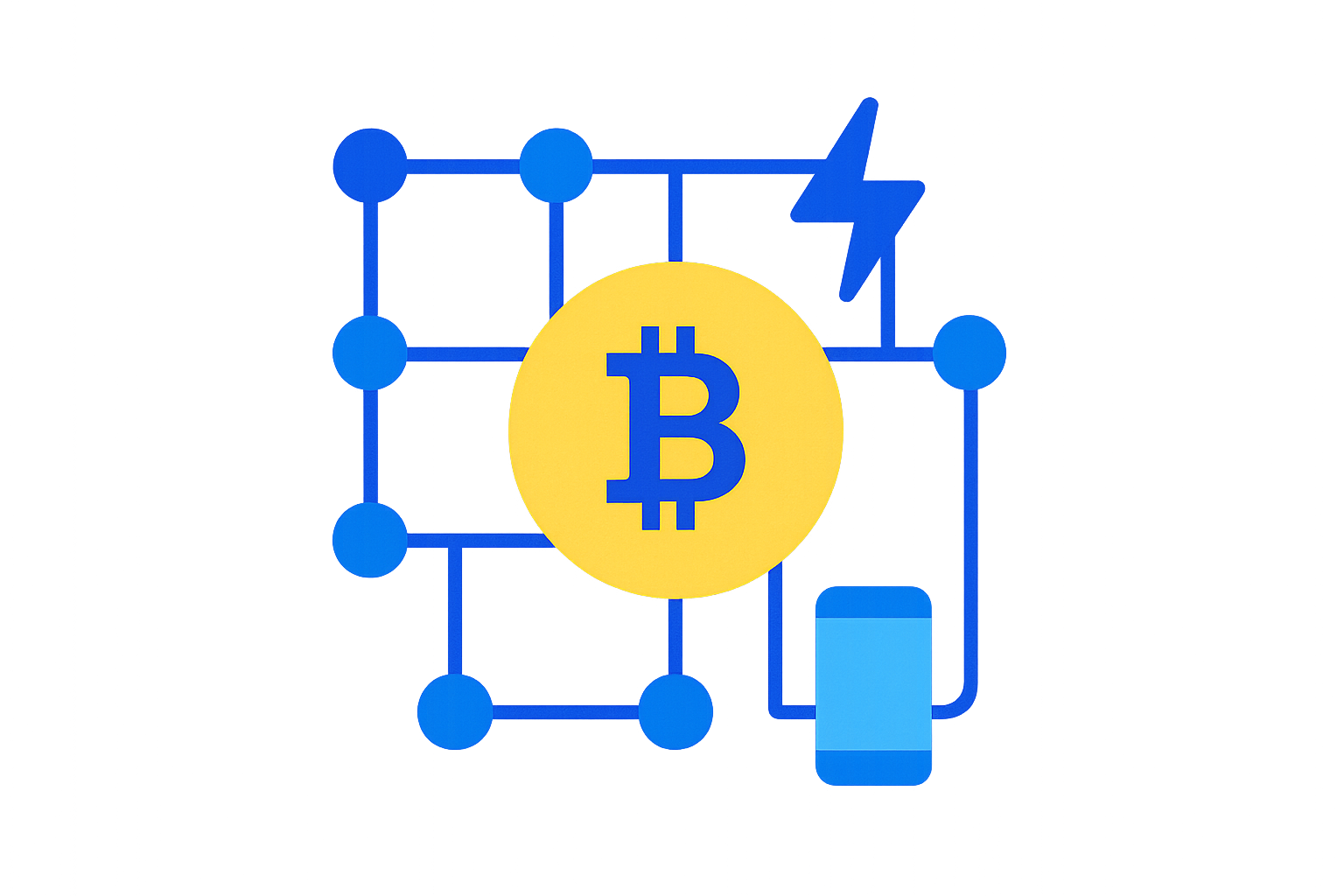
How to Send Bitcoin Lightning on Cash App

What Happens if You Blow a Funded Account?
Is cryptocurrency mining legal in Venezuela?
Can I Buy OSRS Membership With Gold: Complete Guide