

LCP_hide_placeholder
fomox
MarketsPerpsSpotSwap
Meme
Referral
More
Become a Smart Money on Tracker
Search Token/Wallet
/

How does macroeconomic policy impact ONDO token price and crypto market volatility in 2026?


2026-01-14 02:39:29
Altcoins
Crypto Insights
DeFi
Macro Trends
RWA
Article Rating : 3.5
half-star
169 ratings
This article examines how macroeconomic policy shapes ONDO token price and crypto market volatility in 2026. It analyzes Federal Reserve interest rate decisions and monetary tightening effects on liquidity conditions, exploring how inflation data correlates with cryptocurrency valuations and risk-asset sentiment. The piece reveals ONDO's divergence from traditional equities—showing only 23% correlation with S&P 500—while highlighting sensitivity to risk-on/risk-off market dynamics. Institutional capital flows accelerated following EU regulatory approval under MiCA framework, enabling institutional participation through tokenized asset platforms like Gate. The article synthesizes how central bank policy transmission, inflation expectations, geopolitical tensions, and regulatory certainty collectively drive ONDO volatility, providing investors strategic insights for evaluating macroeconomic risks and opportunities in tokenized finance ecosystems.
How does macroeconomic policy impact ONDO token price and crypto market volatility in 2026?

Federal Reserve Policy Transmission: How Interest Rate Decisions and Monetary Tightening Drive ONDO Volatility in 2026

The Federal Reserve's policy stance acts as a critical transmission mechanism that reshapes liquidity conditions throughout financial markets, directly influencing ONDO token volatility. When the Federal Reserve adjusts interest rate decisions—currently maintaining the federal funds rate between 3.75% and 4%—these changes ripple through the broader financial system, affecting capital allocation toward risk assets like cryptocurrency tokens. The ongoing balance sheet normalization through quantitative tightening, coupled with anticipated further rate cuts in 2026, creates significant liquidity dynamics that impact how investors allocate capital to digital assets.

The 2026 Reverse Monetary Policy (RMP) program represents a pivotal shift from traditional quantitative tightening to active liquidity injection, designed to stabilize financial systems amid unprecedented $8 trillion money market fund surges. This monetary expansion injects liquidity into markets, creating conditions that amplify cryptocurrency volatility, including ONDO price movements. The transmission channels operate through multiple pathways: lower interest rates reduce opportunity costs of holding non-yielding assets like tokens, while expanded central bank liquidity increases speculative capital flowing into digital assets.

Derivatives dynamics and money market mechanics amplify these monetary policy effects on ONDO volatility. As the Federal Reserve signals shifts in monetary tightening stance, institutional traders adjust hedging strategies and derivatives positions, creating cascading price movements in crypto markets. The interplay between Treasury yields, dollar liquidity indicators, and central bank communications creates heightened volatility periods when markets reassess Fed policy transmission implications for risk asset valuations.

Inflation Data Impact on Crypto Markets: Analyzing CPI-to-ONDO Price Correlation Amid Traditional Finance Fluctuations

The relationship between inflation data and cryptocurrency valuations has become increasingly pronounced as institutional capital flows into digital assets. When Consumer Price Index readings exceed expectations, they typically trigger a strengthening of the U.S. dollar and raise prospects for higher Federal Reserve interest rates, which reduces investor appetite for risk-on assets like crypto. Conversely, cooler-than-expected CPI figures often catalyze upward momentum by signaling potential rate cuts and improved liquidity conditions.

CPI Scenario Typical Market Impact Risk Appetite
Higher-than-expected Downward pressure, increased volatility Risk-off
Lower-than-expected Supportive for gains, reduced volatility Risk-on
In-line with forecast Neutral to mixed sentiment Balanced

ONDO price movements demonstrate sensitivity to these macro-driven sentiment shifts, though the relationship proves more nuanced than traditional finance correlation. While December 2025 CPI data did not create immediate direct correlation with ONDO specifically, the token's volatility pattern aligns with broader crypto market reactions to inflation expectations and Fed policy signals. At $0.4576, ONDO reflects institutional investors' assessments of macroeconomic conditions alongside Ondo's expanding real-world asset tokenization ecosystem. The token's response to inflation data ultimately depends on whether such releases reinforce or challenge institutional confidence in the regulatory and economic environment surrounding blockchain-based financial products.

Risk-On Risk-Off Dynamics: ONDO's Performance During S&P 500 and Gold Market Swings as Macroeconomic Indicators

ONDO token's performance in 2024-2026 reveals a striking divergence from traditional equity benchmarks, offering valuable insights into crypto sensitivity to macroeconomic dynamics. While the S&P 500 delivered a 14% return in 2024, ONDO declined nearly 70% during the same period, demonstrating its independent response to market conditions. This divergence intensifies when examining correlation metrics: the S&P 500-ONDO relationship showed only 23% correlation by 2026, the lowest single-stock reading in 23 years, indicating that tokenized assets behave fundamentally differently from traditional equities during macroeconomic swings.

The token exhibits pronounced sensitivity to risk-on and risk-off regimes. During risk-on periods, when investor optimism drives capital toward growth assets, ONDO responds variably depending on broader crypto sentiment and institutional participation. Conversely, risk-off environments—triggered by geopolitical tensions or economic slowdowns—often amplify ONDO's downside volatility, as investors rotate toward safe havens like gold and dollar-denominated assets. Gold's 70% rally in 2025 showcased traditional hedging behavior, yet ONDO failed to benefit proportionally, suggesting the token responds to different macroeconomic signals. Understanding these dynamics is essential for investors analyzing how tokenized products interact with market swings driven by Federal Reserve policy, inflation expectations, and geopolitical developments.

Institutional Capital Flows and Regulatory Approval: EU Compliance and $1.27B Market Cap Evolution in Response to Macro Shifts

Regulatory approval has emerged as a critical catalyst for institutional capital flows into tokenized finance platforms. When the Liechtenstein Financial Market Authority granted Ondo regulatory clearance under the Markets in Crypto-Assets Regulation (MiCA) framework, it unlocked access for over 500 million investors across 30 European nations, fundamentally reshaping institutional confidence in tokenized asset offerings. This EU compliance milestone directly influenced how traditional finance institutions allocate capital toward on-chain infrastructure, as it provided the legal certainty required for large-scale deployment. Institutional participants including JPMorgan and BlackRock have intensified engagement with tokenized product ecosystems, with Ondo's platform facilitating over $873 million in real-world asset tokenization by 2026. The $1.27 billion market cap evolution reflects this institutional capital concentration, as macroeconomic policy decisions increasingly validate blockchain-based settlement mechanisms. When central banks signal supportive monetary conditions or regulatory bodies approve compliant frameworks, institutional investors respond by rebalancing portfolios toward tokenized equities and treasury instruments on platforms like gate, amplifying both capital inflows and token price appreciation. This dynamic demonstrates how macro policy shifts translate into concrete institutional deployment patterns that directly move market cap metrics.

FAQ

What is ONDO token? What are its uses and value proposition in the cryptocurrency market?

ONDO is a DeFi-native token enabling decentralized finance infrastructure and governance. It powers real-world asset tokenization and yield generation, serving as utility for protocol participation. Its value proposition lies in bridging traditional finance with blockchain through institutional-grade DeFi solutions and sustainable yield mechanisms.

How do macroeconomic policies such as interest rates, inflation, and monetary policy impact overall cryptocurrency market volatility?

Macroeconomic policies directly influence crypto volatility through liquidity and risk appetite. Higher interest rates reduce liquidity and increase capital costs, pressuring valuations. Inflation data drives policy expectations, triggering significant price swings. Traditional finance correlations amplify crypto volatility during market stress periods.

How might expected global macroeconomic policy changes in 2026, such as Federal Reserve and ECB decisions, impact ONDO token price?

Expected 2026 policy shifts may create moderate to strong selling pressure on ONDO short-term, risking temporary pullbacks. However, if the ecosystem absorbs well, it could present buying opportunities for long-term holders seeking entry points during volatility.

Which major economic policy events have caused significant fluctuations in the cryptocurrency market historically?

Federal Reserve rate hikes and inflation data have significantly impacted crypto volatility. The 2021-2022 rate hike cycle triggered sharp Bitcoin and Ethereum declines. Loose monetary policy and QE expansion typically support crypto prices, while tightening cycles drive market downturns through increased opportunity costs and risk-off sentiment shifts.

How sensitive is ONDO token to macroeconomic policy changes compared to other DeFi tokens?

ONDO demonstrates higher sensitivity to macroeconomic policy shifts than most DeFi tokens due to its real asset tokenization focus. It responds more sharply to regulatory changes and traditional financial trends, making it more volatile during policy shifts than Bitcoin or Ethereum.

How should investors evaluate the impact of macroeconomic risks on ONDO token investments?

Investors should monitor interest rate changes and global economic stability, as these directly affect ONDO demand. Rising rates may reduce risk asset appeal, while economic instability increases volatility. Conversely, falling rates could boost on-chain adoption and investor interest in ONDO tokens.

Regulatory clarity in 2026 will significantly boost ONDO's price, as its real asset tokenization focus benefits from institutional adoption. Favorable RWA regulations could drive ONDO to $1.04 or higher, while stricter compliance requirements may stabilize but temper growth. ONDO remains sensitive to regulatory shifts more than Bitcoin and Ethereum.

* The information is not intended to be and does not constitute financial advice or any other recommendation of any sort offered or endorsed by Gate.

Share

Content

Federal Reserve Policy Transmission: How Interest Rate Decisions and Monetary Tightening Drive ONDO Volatility in 2026

Inflation Data Impact on Crypto Markets: Analyzing CPI-to-ONDO Price Correlation Amid Traditional Finance Fluctuations

Risk-On Risk-Off Dynamics: ONDO's Performance During S&P 500 and Gold Market Swings as Macroeconomic Indicators

Institutional Capital Flows and Regulatory Approval: EU Compliance and $1.27B Market Cap Evolution in Response to Macro Shifts

FAQ

Related Articles
What Do Derivatives Market Signals Reveal About MON Token's Future Price in 2030?

What Do Derivatives Market Signals Reveal About MON Token's Future Price in 2030?

The article delves into the current and future market dynamics of the MON token, focusing on its impressive debut following Monad's mainnet launch and subsequent price volatility. It explores derivatives market signals reflecting cautious sentiment despite significant liquidity, indicative of broader macroeconomic complexities. Readers will gain insights into the challenges that potential macro and geopolitical uncertainties pose on MON's 2030 price trajectory. Suitable for investors and analysts, the structured analysis equips stakeholders with critical knowledge to navigate MON's unpredictable market environment. Key themes include Monad's mainnet impact, derivatives market sentiment, and 2030 price uncertainties.
2025-12-06 03:55:18
How Does the Federal Reserve Policy Impact AVAX Price in 2025?

How Does the Federal Reserve Policy Impact AVAX Price in 2025?

This article analyzes how the Federal Reserve's policy impacts AVAX's price in 2025, focusing on significant downturns and volatility influenced by macroeconomic conditions. It addresses AVAX's market performance, inflation mechanisms, and investor sentiment during periods of restrictive monetary policy actions. Readers seeking insights into AVAX's price movements, tokenomics resilience, and macroeconomic factors affecting cryptocurrencies will find valuable analyses. The structured breakdown covers price trends, pivotal factors, inflation impacts, and volatility mapping, with seamlessly integrated thematic keywords for enhanced readability and comprehension.
2025-12-04 04:55:26
How Does Macroeconomic Data Impact Avalanche (AVAX) Price Predictions for 2030?

How Does Macroeconomic Data Impact Avalanche (AVAX) Price Predictions for 2030?

This article examines the influence of macroeconomic data on Avalanche (AVAX) price predictions for 2030, with an emphasis on Federal Reserve policies, inflation trends, and traditional market volatility. It explores how rate adjustments and inflation correlate with AVAX's historical price movements and addresses how traditional market indicators like S&P 500 and gold impact its $30 support level. The content is targeted at investors and analysts looking to understand how external economic factors shape AVAX's market trajectory. Keywords such as "Federal Reserve," "AVAX," and "macroeconomic data" are optimized for quick scanning, enhancing the article's accessibility and readability.
2025-11-20 04:54:13
How Do MACD, RSI, and Bollinger Bands Predict ONDO Price Movement in 2026?

How Do MACD, RSI, and Bollinger Bands Predict ONDO Price Movement in 2026?

# How Do MACD, RSI, and Bollinger Bands Predict ONDO Price Movement in 2026? This comprehensive guide analyzes ONDO's price dynamics through three essential technical indicators: MACD, RSI, and Bollinger Bands. The article addresses the critical divergence between short-term bearish signals and robust fundamental strength, helping traders navigate ONDO's 2026 price trajectory on Gate. Readers will discover how the 200-day SMA projects to $0.735 while on-chain liquidity surges to $1.926 billion TVL, creating unique trading opportunities. The analysis balances technical analysis limitations with practical application frameworks, exploring volume divergence patterns and moving average convergence strategies. Perfect for cryptocurrency traders, institutional investors, and ONDO token holders seeking data-driven price movement predictions and risk management insights for 2026.
2025-12-27 03:04:20
How Does WLFI Compare to Its Competitors in Performance, Market Cap, and User Base?

How Does WLFI Compare to Its Competitors in Performance, Market Cap, and User Base?

This article delves into WLFI's positioning within the DeFi landscape, comparing its performance metrics to key competitors. It highlights WLFI's unique value proposition based on regulatory compliance and innovative infrastructure. Key topics include WLFI's market cap, user base, and potential growth dynamics within the evolving cryptocurrency market. The text addresses investor needs for regulated DeFi solutions, emphasizing its strategic advantage in a niche segment. Keywords focus on DeFi, WLFI, governance tokens, USD-backed stablecoins, and regulatory compliance, ensuring readability for quick scanning.
2025-12-06 04:44:37
How Does Cryptocurrency Competitor Analysis Impact Market Share in 2025?

How Does Cryptocurrency Competitor Analysis Impact Market Share in 2025?

This article explores the comparative analysis of top cryptocurrencies in 2025, focusing on Hedera (HBAR)'s market resilience and growth. It highlights Hedera's unique technical advantages, such as its hashgraph consensus mechanism, and its appeal to institutional investors through enterprise-grade security and governance model. The article examines the impact of competitor strategies on market dynamics, particularly noting how exchange policy changes influence trading patterns. Targeted for traders and investors, it offers insights into Hedera's strategic position and response to market volatility, emphasizing Gate's role in maintaining competitive spreads.
2025-11-14 02:11:58
Recommended for You
How to analyze QUAI on-chain data: active addresses, whale movements, and transaction trends

How to analyze QUAI on-chain data: active addresses, whale movements, and transaction trends

This comprehensive guide equips investors with essential on-chain analysis techniques for QUAI Network. With QUAI demonstrating 15.71% daily price growth and $66.6M market cap, understanding network fundamentals becomes critical. The article covers active address monitoring to gauge genuine user engagement, transaction volume analysis revealing market liquidity and dynamics, and whale movement tracking to identify institutional positioning and accumulation patterns. You'll learn how large holder distribution signals long-term confidence versus short-term speculation, and how QUAI's three-tier fee structure across Prime, Region, and Zone chains optimizes transaction costs while maintaining 50,000 TPS scalability. The guide includes practical tools like blockchain explorers and real-time analytics platforms for monitoring on-chain data. Whether identifying bullish signals through growing active addresses or detecting whale alerts before major price movements, this resource provides traders and analysts with act
2026-01-14 06:32:52
How to use MACD, RSI, and Bollinger Bands to trade crypto technical indicators effectively in 2026

How to use MACD, RSI, and Bollinger Bands to trade crypto technical indicators effectively in 2026

This comprehensive guide teaches crypto traders how to master MACD, RSI, and Bollinger Bands for effective technical analysis in 2026. Learn to identify bullish momentum through MACD golden cross patterns with expanding histogram columns before price breakouts occur. Discover why high RSI readings don't always signal reversals, with data showing sustained uptrends continue 77% of the time in overbought zones. Master Bollinger Bands upper band breakouts confirmed by volume spikes for reliable entry signals on platforms like Gate. Leverage moving average alignment—MA5, MA10, MA20—for dynamic support and golden cross strategies that improve risk-to-reward ratios. This article combines practical examples and professional trading techniques to help traders filter false signals and construct profitable trading strategies in volatile crypto markets.
2026-01-14 06:28:23
What Time Does the Stock Market Open Pacific Standard Time

What Time Does the Stock Market Open Pacific Standard Time

This comprehensive guide helps Pacific Standard Time traders master stock market opening hours and optimize their trading strategy. The article covers critical information: NYSE and NASDAQ open at 6:30 AM PST, while international markets like LSE and TSE operate on different schedules. Understanding market opening times directly impacts trading profitability, enabling traders to react to overnight developments and capitalize on peak volatility periods. The guide addresses why timing matters, provides practical schedule management tips including pre-market preparation and extended hours trading considerations, and clarifies common misconceptions about daylight saving time and after-hours liquidity. Whether you trade equities or cryptocurrencies on Gate or other platforms, mastering these opening hours establishes the foundation for disciplined, successful trading in Pacific time zones.
2026-01-14 06:25:49
How does FOGO compare to Solana and other Layer 1 blockchains in performance and market share?
How does FOGO compare to Solana and other Layer 1 blockchains in performance and market share?

This article examines FOGO's competitive positioning within the Layer 1 blockchain ecosystem, specifically against Solana and other major chains. FOGO demonstrates exceptional technical performance with sub-40ms block times and 48,000 TPS capacity, significantly outpacing Ethereum's 15 TPS and Bitcoin's 7 TPS. The platform strategically targets institutional DeFi investors, differentiating from Solana's broader developer focus through specialized high-frequency trading optimization. FOGO's Q2 2025 mainnet launch and the 2026 regulatory framework create accelerated adoption pathways. With blockchain-AI markets expanding toward $4 billion by 2033 and tokenization reaching $10 trillion, FOGO possesses credible trajectories for top 10 Layer 1 status. Available on Gate exchange, FOGO offers lower fees and superior performance compared to Solana and Arbitrum alternatives.
2026-01-14 06:24:58
How Long Do Litecoin Transactions Take?

How Long Do Litecoin Transactions Take?

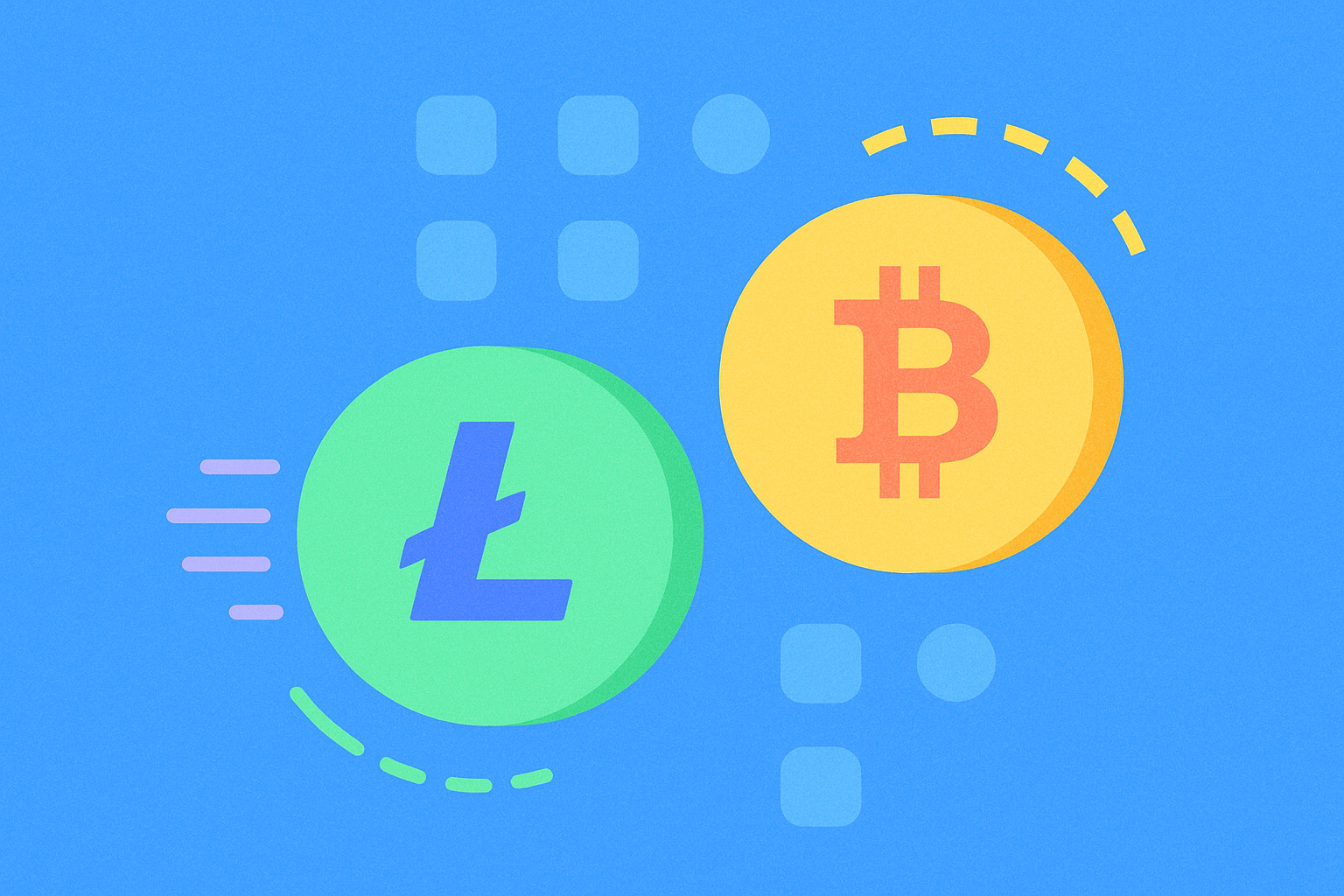
This comprehensive guide explains Litecoin transaction timing and how it compares to other cryptocurrencies. Litecoin transactions typically confirm within 2-3 minutes due to its 2.5-minute block time—four times faster than Bitcoin. The article covers how blockchain confirmations work, examining the mempool and mining processes that determine transaction speed. Key factors affecting timing include network congestion, transaction fees, confirmation requirements, and wallet software capabilities. Most LTC transfers complete within 2-10 minutes under normal conditions. The guide also explores Litecoin's protocol developments, performance consistency, and practical optimization strategies such as dynamic fee adjustment, network monitoring via blockchain explorers, and choosing reliable platforms. Additionally, it compares Litecoin's speed advantages against Bitcoin and other networks while emphasizing the balance between transaction speed, security, and decentralization. Ideal for users on Gate and newcomers seek
2026-01-14 06:22:34
What is WEMIX price today and how does its market cap rank at #124 with $163M circulation supply?

What is WEMIX price today and how does its market cap rank at #124 with $163M circulation supply?

This article provides a comprehensive overview of WEMIX's current market position, detailing its #124 market cap ranking with $164.37M valuation and $0.36 price as of January 2026. It examines the token's circulating supply of 461M against total supply of 551M, demonstrating controlled distribution through vesting schedules and strategic allocation. The analysis covers WEMIX's moderate 24-hour trading volume of $1.26-1.59M and accessibility across 13 major exchanges including Gate, KuCoin, Crypto.com, and Bitget. The article addresses key investor questions regarding tokenomics, liquidity, market risks, and practical applications within blockchain ecosystems, offering essential metrics for evaluating WEMIX's role in the cryptocurrency market landscape.
2026-01-14 06:21:08