Is It a Good Time to Buy Bitcoin? What You Need to Know
Bitcoin's price movements keep investors guessing about the right moment to enter the market. This article examines the key factors that influence Bitcoin investment decisions, including market conditions, timing strategies, and risk management approaches. Whether you're a complete beginner or reconsidering your position, you'll find practical guidance on evaluating if the current moment makes sense for your Bitcoin purchase, along with proven strategies that remove the guesswork from crypto investing.
Key Takeaways
-
Bitcoin's long-term potential stems from its fixed supply of 21 million coins and growing institutional adoption through spot ETFs approved in early 2024.
-
Dollar-cost averaging removes timing pressure by spreading purchases across regular intervals, reducing the impact of short-term volatility.
-
Financial readiness matters more than market timing—only invest disposable funds you can afford to hold for 3-5 years minimum.
-
Most financial advisors suggest limiting Bitcoin exposure to 1-10% of your portfolio depending on your risk tolerance and investment timeline.
-
Bitcoin's mid-2024 halving reduced new supply from 6.25 to 3.125 BTC per block, creating potential upward price pressure as scarcity increases.
Is It a Good Time to Buy Bitcoin? Key Factors
Deciding whether it's an appropriate time to buy Bitcoin depends less on market timing and more on understanding your personal circumstances alongside current market realities. Bitcoin has demonstrated remarkable growth over the years, trading at significant price levels while maintaining its characteristic volatility. The question isn't simply about price levels but about whether Bitcoin aligns with your financial goals and risk tolerance.
Understanding the optimal entry point requires analyzing multiple factors that extend beyond simple price charts. Market sentiment, regulatory developments, technological advancements, and macroeconomic conditions all play crucial roles in shaping Bitcoin's investment landscape. Successful investors recognize that Bitcoin operates within a complex ecosystem where traditional financial metrics often fail to capture the full picture.
Bitcoin's Current Market Position
Bitcoin has evolved from a fringe digital asset into a mainstream investment option, marking a significant shift in how traditional finance views cryptocurrency. Institutional adoption has accelerated dramatically, with spot Bitcoin ETFs attracting substantial institutional capital. Major asset management firms have entered the space, with some trusts holding tens of billions in assets under management. This institutional validation represents a fundamental change from Bitcoin's early days when it was primarily held by individual enthusiasts.
Major corporations continue accumulating Bitcoin in their treasury reserves, viewing it as a hedge against inflation and currency devaluation. Some publicly traded companies have allocated significant portions of their cash reserves to Bitcoin, setting precedents for corporate treasury management. Governments worldwide are also exploring Bitcoin as a strategic asset, with some nations even adopting it as legal tender. The approval of Bitcoin ETFs in early 2024 marked a turning point, making Bitcoin accessible through traditional brokerage accounts and bringing regulatory clarity to the space.
The maturation of Bitcoin's market infrastructure has also improved significantly. Trading volumes have grown exponentially, liquidity has deepened across major exchanges, and price discovery mechanisms have become more efficient. Derivative markets for Bitcoin now offer sophisticated tools for hedging and speculation, attracting professional traders and institutional investors who require robust risk management capabilities.
Bitcoin's Long-Term Potential
Bitcoin's fundamental value proposition centers on its fixed supply of 21 million coins, with nearly 95% already mined. This scarcity model, combined with increasing demand, creates upward price pressure over time. Unlike fiat currencies that can be printed indefinitely by central banks, Bitcoin's supply schedule is mathematically predetermined and cannot be altered without consensus from the entire network.
The mid-2024 halving event reduced mining rewards from 6.25 to 3.125 BTC per block, further constraining new supply entering the market. Historically, halving events have preceded significant bull markets as the reduction in new supply meets growing demand. This supply shock mechanism has played out consistently across Bitcoin's history, though the magnitude of price increases has varied with each cycle.
Historically, Bitcoin has recovered from every major crash and reached new all-time highs, though past performance never guarantees future results. Each market cycle has brought Bitcoin to higher lows and higher highs, suggesting a long-term upward trajectory despite significant volatility. The cryptocurrency's resilience through multiple bear markets, regulatory challenges, and technological hurdles demonstrates its staying power as a digital asset class.
Beyond price appreciation, Bitcoin's utility continues to expand. The Lightning Network enables near-instant, low-cost transactions, making Bitcoin more practical for everyday payments. Layer-2 solutions are addressing scalability concerns while maintaining Bitcoin's core security properties. As the technology matures and user experience improves, Bitcoin's adoption as both a store of value and medium of exchange could accelerate significantly.
Are You Ready to Buy Bitcoin? Financial Checklist
Before buying Bitcoin, assess whether you can afford to hold through volatility. The cryptocurrency has experienced multiple drawdowns exceeding 50% throughout its history, demonstrating the importance of investing only disposable funds. These dramatic price swings are not anomalies but inherent characteristics of Bitcoin's market structure, driven by its relatively small market capitalization compared to traditional assets and its 24/7 trading nature.
Your investment timeline should extend at least three to five years to ride out market cycles. Bitcoin's price movements follow four-year cycles roughly aligned with halving events, meaning short-term holders often experience significant unrealized losses. Patient investors who maintain positions through complete market cycles have historically been rewarded, while those who panic-sell during downturns lock in losses and miss subsequent recoveries.
Bitcoin suits investors comfortable with dramatic price swings and prepared to maintain positions during downturns. If seeing your investment drop 30% in a single week would cause you to lose sleep or make impulsive decisions, Bitcoin may not match your risk tolerance. Understanding your emotional response to volatility is as important as understanding Bitcoin's technical fundamentals.
A solid emergency fund and diversified portfolio should already be in place before allocating capital to Bitcoin. Financial advisors typically recommend maintaining three to six months of living expenses in liquid, low-risk assets before considering speculative investments. Your core portfolio should include traditional assets like stocks, bonds, and real estate that provide stability and income. Bitcoin should represent additional risk capital that enhances your portfolio's growth potential without threatening your financial security.
Consider your knowledge level and willingness to learn. Bitcoin requires understanding concepts like private keys, wallet security, blockchain technology, and cryptocurrency market dynamics. Investors who take time to educate themselves make better decisions and avoid costly mistakes like sending Bitcoin to wrong addresses or falling victim to scams.
Best Time to Buy Bitcoin: Smart Investment Strategies
The most successful Bitcoin investors focus on strategy rather than trying to time perfect entry points. Market timing consistently proves difficult even for professionals, while systematic approaches help manage volatility and remove emotional decision-making from the equation. Developing a clear investment strategy before making your first purchase prevents impulsive decisions driven by fear or greed.
Successful strategies share common elements: they define clear entry and exit criteria, manage position sizing appropriately, and maintain discipline through market cycles. Whether you choose dollar-cost averaging, lump sum investing, or a hybrid approach, consistency and patience typically outperform attempts to predict short-term price movements.
Dollar-Cost Averaging
Dollar-cost averaging means investing fixed amounts at regular intervals regardless of Bitcoin's price. Instead of investing $1,200 at once, you might buy $100 worth of Bitcoin monthly for a year. This approach averages your purchase price across different market conditions, reducing the impact of buying at temporary peaks.
The psychological benefits of dollar-cost averaging often outweigh the mathematical considerations. By committing to regular purchases, you remove the paralysis that comes from trying to identify the perfect entry point. You'll buy more Bitcoin when prices are low and less when prices are high, automatically implementing a contrarian strategy that buys the dips without requiring perfect market timing.
For example, historical analysis shows that investors who used dollar-cost averaging during major bear markets eventually achieved substantial returns. Even starting purchases near market peaks, consistent buying through downturns resulted in profitable positions once markets recovered. This demonstrates how systematic accumulation can overcome poor initial timing through persistence and discipline.
Dollar-cost averaging works particularly well for investors with regular income who can allocate a portion of each paycheck to Bitcoin. Automating these purchases removes the temptation to skip investments during fearful market conditions or over-invest during euphoric periods. Many platforms now offer automatic recurring purchases that execute your strategy without requiring ongoing decisions.
Lump Sum Investing
Lump sum investing involves putting a significant amount into Bitcoin at once. This strategy can outperform dollar-cost averaging during sustained bull markets, as your entire position benefits immediately from price appreciation. Historical data suggests that lump sum investing often produces higher returns than dollar-cost averaging over long time horizons, primarily because markets tend to rise over time.
However, lump sum investing carries substantially higher risk. If Bitcoin drops sharply after your purchase, your entire position suffers immediately. The emotional impact of seeing a large investment decline can trigger panic selling at the worst possible time. This psychological challenge makes lump sum investing unsuitable for many investors, regardless of its potential mathematical advantages.
Lump sum investments work best when you have strong conviction about Bitcoin's direction and can emotionally handle seeing large unrealized losses. Investors considering this approach should have deep understanding of Bitcoin's fundamentals, high risk tolerance, and sufficient financial resources that a significant loss wouldn't impact their lifestyle. Most beginners should start with dollar-cost averaging before considering lump sum purchases.
A middle-ground approach involves splitting large investments into several smaller lump sums deployed over weeks or months. This modified strategy captures some benefits of immediate market exposure while reducing the risk of poorly timed single purchases. For instance, dividing a $10,000 investment into four $2,500 purchases over two months provides some averaging while maintaining more immediate exposure than pure dollar-cost averaging.
Portfolio Allocation
Financial advisors typically suggest limiting Bitcoin exposure to 1-10% of your investment portfolio depending on risk tolerance. Conservative investors might start with just 1-2%, while those with higher risk appetite and longer time horizons could allocate 5-10%. This range balances Bitcoin's growth potential against its volatility, ensuring that even worst-case scenarios don't devastate your overall financial position.
Start small and increase your position gradually as you gain experience and confidence. Many successful Bitcoin investors began with minimal allocations, learned through experience, and increased positions as they understood the asset better. This gradual approach allows you to develop conviction through personal experience rather than blindly following others' recommendations.
Never let Bitcoin dominate your portfolio to the point where its volatility threatens your financial stability. Even if you're bullish on Bitcoin's long-term prospects, concentration risk can force you to sell at inopportune times if you need liquidity during a downturn. Maintaining appropriate diversification ensures you can hold Bitcoin through complete market cycles without financial stress.
Regularly rebalance your portfolio to maintain target allocations. If Bitcoin appreciates significantly and grows to represent 20% of your portfolio when you intended 5%, consider taking some profits to restore balance. Rebalancing enforces disciplined profit-taking during bull markets and contrarian buying during bear markets, improving risk-adjusted returns over time.
Consider your overall financial picture when determining allocation. Younger investors with decades until retirement and stable income can typically afford higher Bitcoin allocations than those approaching retirement with fixed income needs. Your allocation should reflect not just your beliefs about Bitcoin but your entire financial situation, including other assets, income stability, and future obligations.
Daily and Weekly Patterns
While perfect timing remains impossible, certain patterns can inform your purchases. Historical analysis suggests Bitcoin prices tend to show weekly patterns, with some days averaging lower prices than others. Early morning hours often see less volatility than peak trading times when major markets overlap. However, these patterns aren't guarantees and shouldn't override a consistent investment strategy.
Some traders observe that Bitcoin prices sometimes dip on weekends when institutional trading activity decreases, though this pattern has become less pronounced as cryptocurrency markets mature. Others note that month-end and quarter-end periods can bring increased volatility as institutional investors rebalance portfolios. While these observations might inform tactical decisions, they shouldn't form the foundation of your investment approach.
If you believe in Bitcoin's long-term potential, waiting for the "perfect" dip often means missing out entirely. Markets frequently rise while investors wait for pullbacks that never materialize, or when corrections do occur, fear prevents them from buying. A dollar-cost averaging approach naturally captures various price points without requiring you to predict movements.
For those who insist on tactical timing, consider setting price alerts rather than constantly monitoring markets. Determine in advance what price levels you'd find attractive, set alerts, and execute purchases when those levels are reached. This approach provides some timing flexibility while preventing obsessive market watching that often leads to poor decisions.
What to Know Before You Buy Bitcoin
Starting your Bitcoin journey requires more than just deciding to invest. You'll need to choose where to buy, how to store your Bitcoin securely, and understand the costs involved. Security should be your top priority, as cryptocurrency transactions are irreversible and you bear full responsibility for protecting your assets.
The cryptocurrency ecosystem offers numerous options for purchasing and storing Bitcoin, each with distinct advantages and tradeoffs. Centralized exchanges provide convenience and user-friendly interfaces but require trusting third parties with your assets. Decentralized platforms offer greater control but demand more technical knowledge. Understanding these options helps you make informed choices that match your needs and capabilities.
Consider starting with a small amount while you learn the mechanics of buying, storing, and managing Bitcoin. This learning investment allows you to make mistakes with minimal financial consequences while building confidence and competence. Many successful investors describe their early Bitcoin purchases as "tuition" for learning how cryptocurrency works, accepting that some losses are inevitable during the learning process.
Understanding wallet types is essential: hot wallets offer convenience for frequent transactions, while cold wallets provide superior security for long-term holdings. Hot wallets connect to the internet, making them accessible but vulnerable to hacking. Cold wallets store private keys offline, providing maximum security at the cost of convenience. Most investors use both types, keeping small amounts in hot wallets for accessibility and larger holdings in cold storage.
Tax implications vary by country, but most jurisdictions treat Bitcoin as property subject to capital gains tax. Keep detailed records of all transactions, including purchase dates, amounts, and prices. Many investors underestimate the complexity of cryptocurrency tax reporting, leading to problems during tax season. Using dedicated cryptocurrency tax software can simplify record-keeping and ensure compliance with local regulations.
Common beginner mistakes include panic selling during dips, investing more than you can afford to lose, and neglecting security practices. Panic selling locks in losses and often occurs at market bottoms when patient investors are accumulating. Over-investing creates financial stress that leads to poor decisions. Neglecting security exposes you to theft or loss through hacking, phishing, or simple user error.
Take time to educate yourself continuously, as the cryptocurrency space evolves rapidly with new developments affecting both opportunities and risks. Follow reputable news sources, join communities of experienced investors, and remain skeptical of get-rich-quick schemes. The most successful Bitcoin investors view learning as an ongoing process rather than a one-time event, adapting their strategies as markets and technology evolve.
FAQ
Is it a good time to buy Bitcoin now? How should you judge?
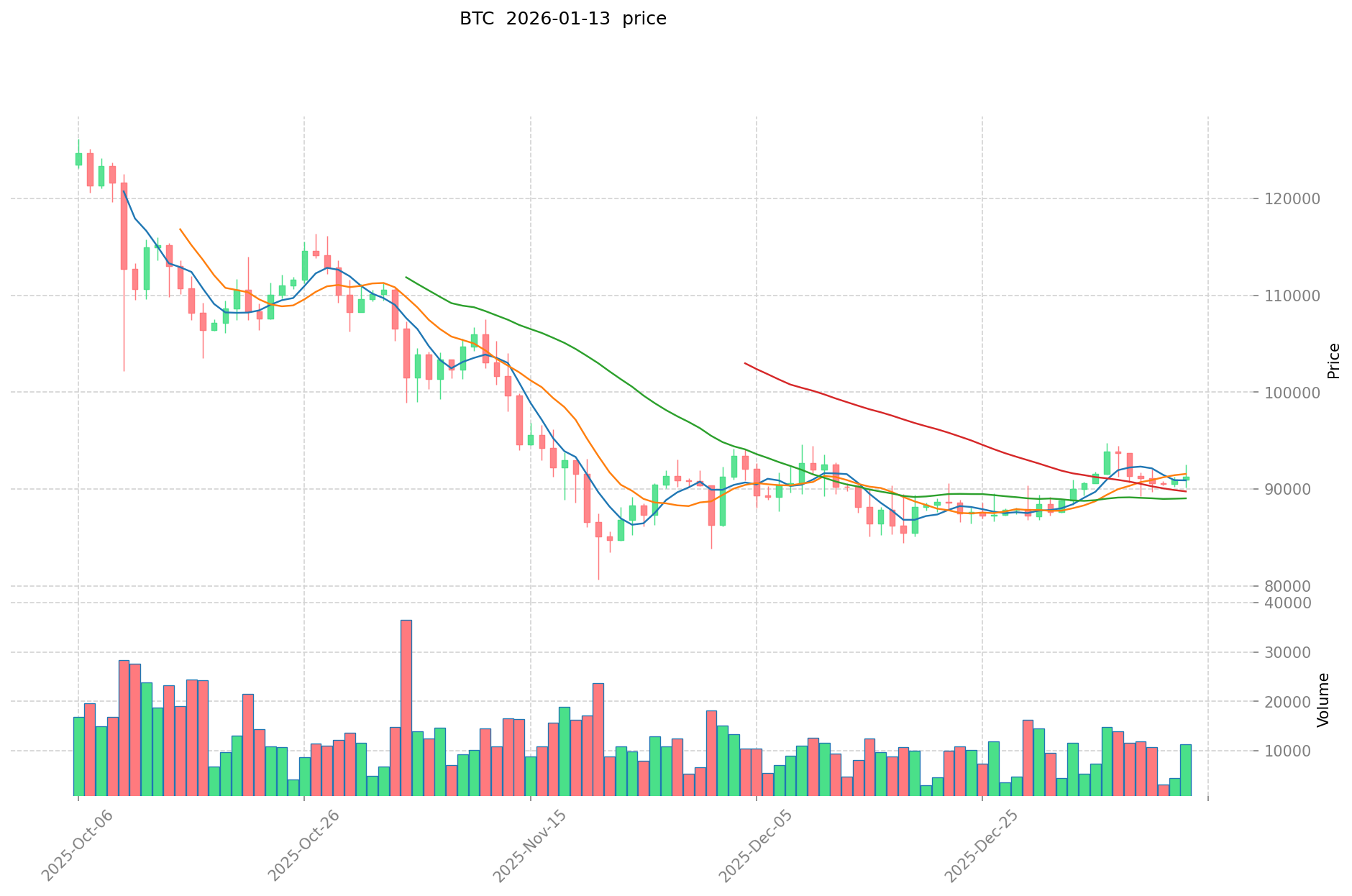
Buying Bitcoin depends on market conditions and technical indicators like RSI and moving averages. When RSI enters oversold territory, it signals potential buying opportunities. Monitor market trends, trading volume, and price momentum to make informed decisions.
What are the main factors affecting Bitcoin price?
Bitcoin price is influenced by market demand and supply, investor sentiment, technology development, macroeconomic factors, market liquidity, major events, halving cycles, and institutional investor participation.
What risks should you understand before buying Bitcoin?
Before buying Bitcoin, understand market volatility risks, security vulnerabilities in digital wallets, and exchange hacking threats. Use cold storage solutions and enable strong authentication to protect your assets from cyber attacks and potential losses.
How can beginners safely buy and store Bitcoin?
Purchase Bitcoin from reputable platforms, then transfer it to a cold storage wallet like a hardware wallet for maximum security. Enable two-factor authentication and use strong passwords. Avoid keeping funds on online wallets as they are more vulnerable to hacking.
What are the advantages of Bitcoin compared to other cryptocurrencies?
Bitcoin leads as the first and most recognized cryptocurrency with the strongest network effect. It offers superior security, decentralization, and wider adoption for payments and investments. Its established market dominance and trust make it the most reliable store of value in the crypto space.
What are the long-term investment prospects of holding Bitcoin?
Bitcoin's long-term prospects remain strong. Historical data demonstrates consistent value growth over multi-year cycles. As institutional adoption increases and supply remains capped at 21 million coins, long-term holders benefit from potential appreciation and scarcity-driven demand.
How to analyze Bitcoin's market trends and technical aspects?
Analyze Bitcoin using technical indicators like moving averages and RSI. Monitor trading volume and price levels. Short-term: watch for potential rebounds to $130k with pullback risks. Long-term: combine market trends with macroeconomic factors for comprehensive analysis.
Guide to Safely Purchasing Cryptocurrency Associated with Elon Musk

Exploring Opportunities in Bitcoin ETF Options Trading

How to Invest in Bitcoin for Your Retirement Plan

Understanding Crypto ETFs: A Simple Guide

Bitcoin Options ETF: A New Financial Opportunity
Bitcoin and Ethereum Market Trends for Late 2025
What Time of Day is Crypto Lowest

How to Transfer Money from DeFi Wallet to Bank Account

How to Transfer Crypto to Bank Account

1 Pi Coin Value in Indian Rupees: Market Analysis and Future Outlook
Where are Bitcoin Servers?