

LCP_hide_placeholder
fomox
Search Token/Wallet
/

P2P Blockchain Technology: A Revolution in Decentralized Interaction

2025-11-22 05:45
Blockchain
Crypto Ecosystem
Crypto Tutorial
P2P Trading
Web 3.0
Article Rating : 4.4
0 ratings
Explore peer-to-peer blockchain technology—a decentralized revolution that is reshaping data sharing and security. Learn how P2P networks drive greater scalability and provide strong resistance to censorship, with practical insights into use cases such as cryptocurrencies and decentralized applications. This content is ideal for crypto enthusiasts, developers, and fintech professionals looking to understand the future of blockchain.
P2P Blockchain Technology: A Revolution in Decentralized Interaction

What Is Peer-to-Peer?

What Is a Peer-to-Peer Network?

Peer-to-peer (P2P) networks are online protocols that operate without a centralized server for data storage or transfer. Unlike the traditional client-server model, where users connect to a central server, every participant in a P2P network also acts as a local server. Once a user downloads P2P software, they immediately become part of the network’s database or node system.

P2P networks do not have a privileged node for storing or transmitting data. All participants have equal access to information and share responsibility for maintaining and managing data within the protocol. Well-known examples of P2P networks include file-sharing systems and decentralized communication protocols.

What Are the Uses of Peer-to-Peer Networks?

P2P networks support a wide range of applications. Organizations can deploy P2P networks for internal data recording and sharing, streamlining workflows without depending on third-party servers. Some charitable platforms use peer-to-peer fundraising to transfer digital assets directly between users.

Importantly, P2P protocols serve as the foundation for decentralized cryptocurrencies. The possibilities for application are virtually limitless, provided enough computers participate in the network.

What Is the Peer-to-Peer Model in Blockchain?

Blockchain is a P2P network that secures cryptocurrencies without a central authority. Introduced by cryptographer Satoshi Nakamoto in 2008, this P2P network uses a consensus algorithm that participating nodes follow to join and maintain the protocol.

For certain cryptocurrencies, a proof-of-work (PoW) system requires nodes or miners to solve mathematical problems to add the next block of transactions to a distributed payment ledger.

Beyond the most prominent cryptocurrencies, numerous other projects leverage blockchain technology. Some are dedicated to using blockchain’s P2P software to decentralize web applications, enabling the development of decentralized applications (dApps) that handle complex functions without intermediaries.

What Are the Benefits and Drawbacks of Peer-to-Peer Networks?

Potential benefits of P2P networks include:

  • No single point of failure, making it more difficult for hackers to compromise the entire system.
  • Censorship resistance, since the system lacks privileged authorities.
  • Scalability, as there is no requirement for large-scale server investments.

Potential drawbacks include:

  • Vulnerability to Sybil attacks, where attackers corrupt a node to create the appearance of controlling multiple nodes.
  • Challenges in data backup, since there is no centralized location to organize and store network data.

Conclusion

Peer-to-peer networks offer a decentralized model for online communication and data sharing. While they present unique challenges—such as exposure to specific attack vectors and data management hurdles—they provide considerable advantages in censorship resistance, scalability, and eliminating single points of failure. As technology advances, P2P networks remain integral to the development of cryptocurrencies, decentralized applications, and the drive toward a more open and resilient internet.

FAQ

What Is a Peer-to-Peer (P2P) Network?

A peer-to-peer network is a decentralized online protocol where each participant acts as a local server, eliminating the need for a central server to store or transfer data.

How Are P2P Networks Used in Blockchain?

In blockchain, P2P networks provide decentralized security for cryptocurrencies, utilizing consensus algorithms—such as proof of work—to validate transactions.

What Are the Main Benefits and Drawbacks of P2P Networks?

Benefits include the elimination of single points of failure, censorship resistance, and scalability. Drawbacks include vulnerability to Sybil attacks and difficulties with data backup.

* The information is not intended to be and does not constitute financial advice or any other recommendation of any sort offered or endorsed by Gate.

Share

Content

What Is a Peer-to-Peer Network?

What Are the Uses of Peer-to-Peer Networks?

What Is the Peer-to-Peer Model in Blockchain?

What Are the Benefits and Drawbacks of Peer-to-Peer Networks?

Conclusion

FAQ

Related Articles
Understanding Spot Trading in Cryptocurrency Markets

Understanding Spot Trading in Cryptocurrency Markets

This article provides a comprehensive overview of spot trading in cryptocurrency markets, elucidating its core mechanisms, benefits, and limitations. It caters to beginners seeking simplicity and direct ownership of digital assets while highlighting the differences between spot and derivative trading for more seasoned investors. Readers will learn about centralized and decentralized exchanges on platforms like Gate, and the specifics of OTC spot trading. The concise structure ensures clarity by systematically exploring spot market fundamentals, operational dynamics, and pros and cons, enhancing keyword density for optimal search visibility.
2025-11-16
Top Platforms for Decentralized Trading
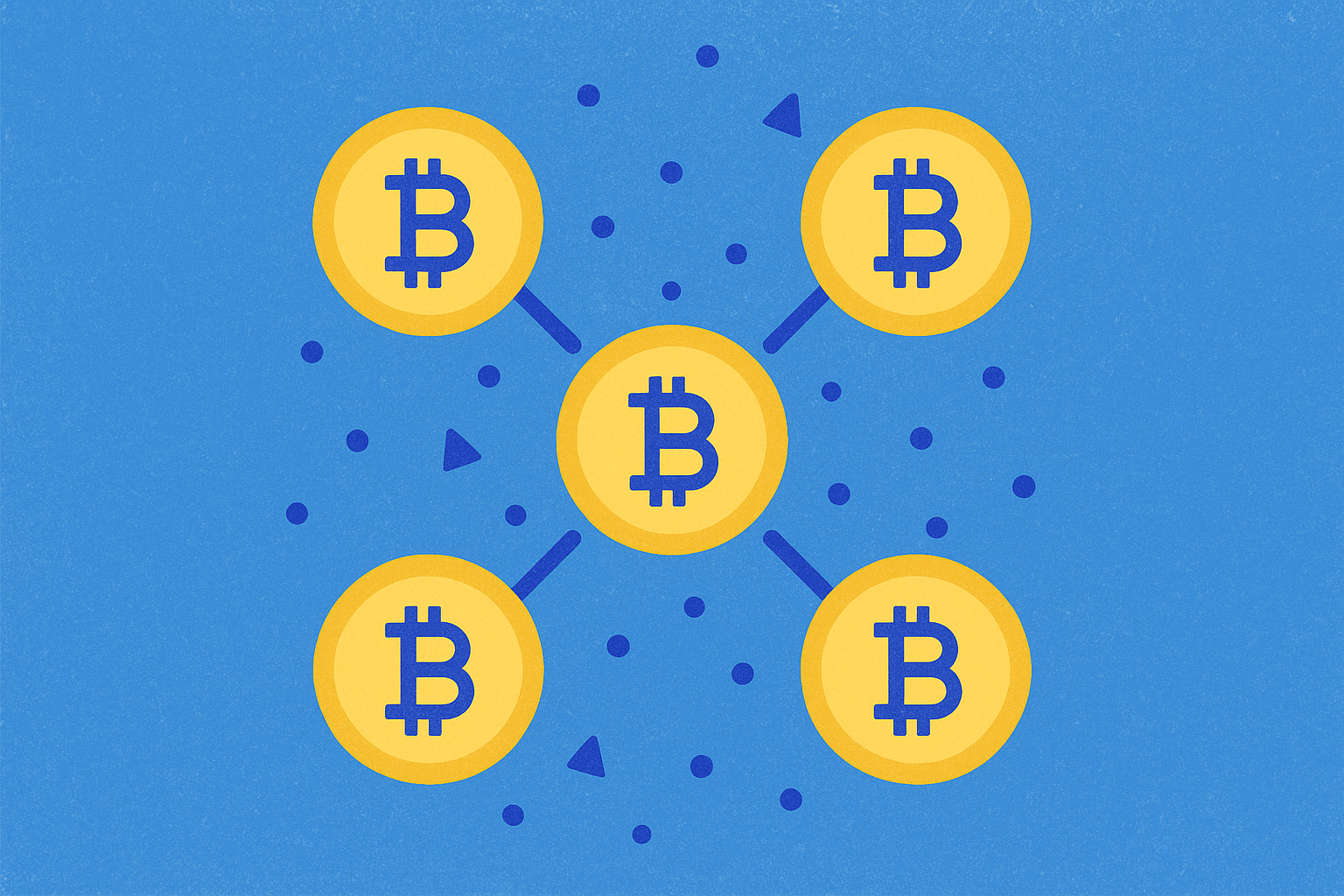
Top Platforms for Decentralized Trading

Discover the leading decentralized exchanges shaping the cryptocurrency landscape, presenting secure and peer-to-peer trading without intermediaries. This article delves into the top 19 DEXs, offering insights into their functionality, advantages, and unique features. Key platforms include Gate for its high liquidity and governance, alongside numerous others focusing on efficiency and security. Learn the benefits and risks associated with DEXs, catering to traders seeking privacy, control, and access to diverse tokens. Stay informed and make well-researched trading decisions on these cutting-edge platforms.
2025-11-20
Understanding Peer-to-Peer Bitcoin Transactions

Understanding Peer-to-Peer Bitcoin Transactions

This article delves into the principles and functionalities of peer-to-peer (P2P) technology, emphasizing its role in Bitcoin transactions. It examines the decentralized structure of P2P networks, their historical significance, and applications beyond file sharing. Readers will learn about Bitcoin's P2P model in blockchain and the advantages and challenges of P2P systems. The piece clarifies potential legalities and security concerns, providing insight into the technological evolution towards more democratic and secure digital ecosystems. Key topics include P2P, Bitcoin, blockchain, decentralization, security, and scalability.
2025-12-20
Top Decentralised Trading Platforms for Seamless Transactions
Top Decentralised Trading Platforms for Seamless Transactions

Explore the evolving landscape of decentralized exchanges (DEXs) in 2025, focusing on peer-to-peer trading platforms that enhance security, reduce fees, and provide direct asset control. This article presents a detailed overview of the top 19 DEXs, including Uniswap with its high liquidity, the cross-chain aggregator for optimal transactions, and Gate renowned for leveraged trading options. Addressing the benefits and limitations of DEXs, it guides traders on navigating these platforms efficiently, ensuring informed decisions in trading strategies. The article is essential reading for cryptocurrency enthusiasts seeking alternative trading solutions.
2025-11-12
如何安全購入 USDT:穩定幣購買全攻略

如何安全購入 USDT:穩定幣購買全攻略

本文提供如何安全購買USDT的全面指南,包括常見的交易平台和支付方式選擇。詳細分析中心化平台如Gate、P2P場外交易和去中心化平台的優缺點,並探討安全性、手續費和交易限額等重要因素。適合新手和有經驗的加密貨幣投資者,有助於選擇最符合需求的購買方法。文章結構清晰,從基本操作到風險提示應有盡有,適合快速了解和應用。
2025-12-21
Best Platforms for Peer-to-Peer Crypto Trading

Best Platforms for Peer-to-Peer Crypto Trading

This article delves into the evolving world of decentralized exchanges (DEXs), spotlighting the top 19 platforms in 2025. It explains the fundamental nature of DEXs, emphasizing their peer-to-peer, non-custodial trading benefits such as enhanced security and lower fees. Readers will discover unique features of leading DEXs like Uniswap, Curve, and 1inch. The piece also discusses the advantages and challenges of trading on DEXs, guiding users on the suitability of these platforms for their trading needs. It serves anyone interested in crypto trading, offering insights into making informed decisions in the decentralized finance landscape.
2025-11-06
Recommended for You
What is BULLA coin: analyzing whitepaper logic, use cases, and team fundamentals in 2026

What is BULLA coin: analyzing whitepaper logic, use cases, and team fundamentals in 2026

BULLA coin introduces decentralized accounting and on-chain data management innovation built on BNB Smart Chain, eliminating intermediaries while ensuring real-time transaction verification. The platform addresses critical gaps in cryptocurrency infrastructure by embedding accounting logic directly into smart contracts, enabling transparent audit trails and regulatory compliance. Real-world applications include seamless transaction imports across multiple exchanges, comprehensive crypto portfolio tracking, and secure record-keeping for investors. Trade import tools enhance user experience by automating data categorization and consolidation. Founded in 2021 by blockchain architect Benjamin with support from experienced fintech designers and engineers, BULLA Networks demonstrates active development momentum with continuous smart contract iterations through early 2026. The 2026-2027 strategic roadmap prioritizes network infrastructure expansion and enhanced security protocols, positioning BULLA as a robust decen
2026-02-08
How does MYX token's deflationary tokenomics model work with 100% burn mechanism and 61.57% community allocation?

How does MYX token's deflationary tokenomics model work with 100% burn mechanism and 61.57% community allocation?

This article examines MYX token's innovative deflationary tokenomics, featuring a distinctive 61.57% community allocation and 100% burn mechanism. The community-focused distribution empowers token holders through MYX DAO governance while ensuring value flows back to ecosystem participants. The 100% burn mechanism systematically removes node-generated revenue from circulation, reducing the total supply from one billion tokens and creating genuine scarcity. This supply-driven deflation counters inflation pressures and strengthens long-term holder value without requiring external demand. The combination of broad community distribution and aggressive token elimination creates sustainable deflationary economics. Ideal for investors seeking to understand how MYX Finance aligns community interests with protocol success through structural value preservation and decentralized governance mechanisms on Gate exchange.
2026-02-08
What Are Derivatives Market Signals and How Do Futures Open Interest, Funding Rates, and Liquidation Data Impact Crypto Trading in 2026?

What Are Derivatives Market Signals and How Do Futures Open Interest, Funding Rates, and Liquidation Data Impact Crypto Trading in 2026?

This comprehensive guide decodes cryptocurrency derivatives market signals essential for 2026 trading success. Learn how futures open interest, funding rates, and liquidation data—such as ENA's $17 billion contract volume and $94 million daily position closures—reveal market sentiment and institutional positioning. The article explains how long-short ratios and liquidation heatmaps identify reversal opportunities, while options imbalance signals indicate smart money accumulation strategies. Discover why exchange outflows and funding rate extremes precede major price movements. From analyzing $46.45M ENA outflows to understanding leverage risks, this resource equips traders with actionable intelligence for predicting market turning points. Perfect for beginners and experienced traders leveraging Gate's analytics tools to navigate increasingly complex derivatives markets with informed entry and exit strategies.
2026-02-08
How do futures open interest, funding rates, and liquidation data predict crypto derivatives market signals in 2026?

How do futures open interest, funding rates, and liquidation data predict crypto derivatives market signals in 2026?

This article explores how three critical derivatives metrics—open interest exceeding $20 billion, funding rates shifting positive, and liquidation volume declining 30%—predict crypto derivatives market signals in 2026. The guide reveals institutional participation driving market maturation while positive funding rates signal strengthened bullish momentum. Long-short ratio stabilization at 1.2 with put-call ratio below 0.8 demonstrates sophisticated hedging strategies on Gate and other platforms. Reduced liquidation volumes indicate improved risk management and market resilience. By analyzing how these indicators combine—measuring position sizing, sentiment extremes, and forced selling pressure—traders gain precise tools for identifying trend reversals, leverage exhaustion, and market turning points with 55-65% AI-driven accuracy for 2026.
2026-02-08
What is a token economics model and how does GALA use inflation mechanics and burn mechanisms

What is a token economics model and how does GALA use inflation mechanics and burn mechanisms

This article explores GALA's innovative token economics model, examining how inflation mechanics and burn mechanisms create sustainable ecosystem growth. The guide covers GALA token distribution through 50,000 Founder's Nodes requiring 1 million GALA for 100% daily rewards, establishing long-term community participation. A dual-mechanism approach pairs controlled inflation with strategic annual supply reduction to establish deflationary pressure. The burn mechanism, powered by 100% transaction fee burning on GalaChain combined with NFT royalty enforcement averaging 6.1%, creates continuous supply reduction while incentivizing creator participation. Governance utility empowers node holders to vote on game launches through consensus mechanisms, transforming GALA holders into active stakeholders. Perfect for investors and ecosystem participants seeking to understand how GALA balances token scarcity with ecosystem vitality through integrated economic incentives and community governance on Gate.
2026-02-08
What is on-chain data analysis and how does it reveal whale movements and active addresses in crypto?

What is on-chain data analysis and how does it reveal whale movements and active addresses in crypto?

On-chain data analysis reveals cryptocurrency market dynamics by examining active addresses and transaction metrics that expose whale movements and investor behavior. This comprehensive guide explores how blockchain data serves as a critical market indicator, demonstrating the correlation between large holder activities and price movements—such as FLOKI's 950% surge in whale transactions. The article covers whale movement tracking, holder distribution patterns showing 73.47% concentration among major stakeholders, and on-chain fee trends as cycle indicators. Essential metrics include active addresses reflecting genuine network participation, transaction volumes revealing strategic positioning, and network congestion patterns during market cycles. By tracking these interconnected indicators through platforms like Glassnode and Gate, investors and traders can identify market sentiment shifts, anticipate price movements, and distinguish institutional activity from retail participation, making on-chain analysis i
2026-02-08
