fomox
MarketsPerpsSpotSwap
Meme
Referral
More
Search Token/Wallet
/

Understanding Peer-to-Peer Bitcoin Transactions
2025-12-20 16:32:57
Bitcoin
Blockchain
DeFi
P2P Trading
Web 3.0
Article Rating : 4
115 ratings
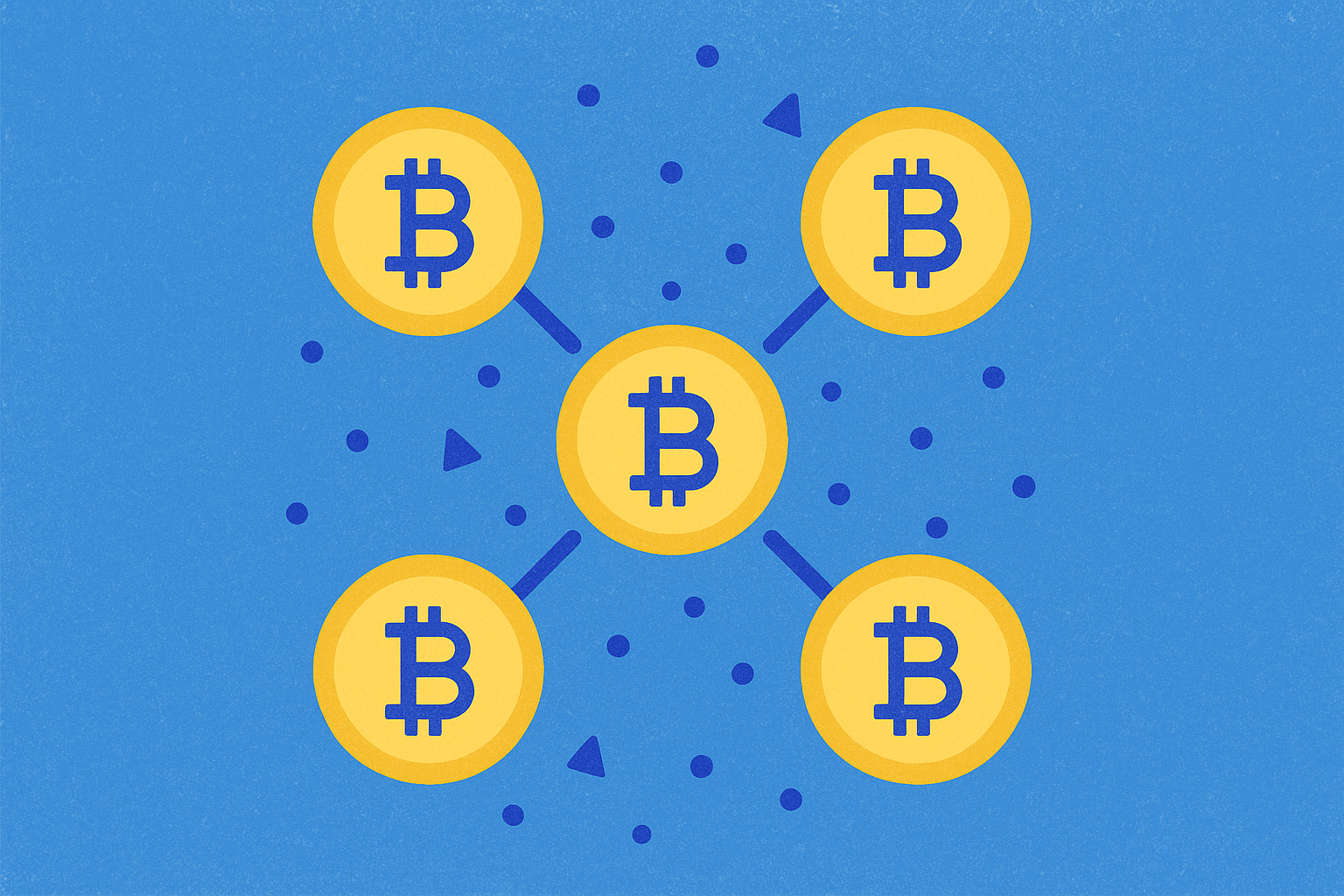
This article delves into the principles and functionalities of peer-to-peer (P2P) technology, emphasizing its role in Bitcoin transactions. It examines the decentralized structure of P2P networks, their historical significance, and applications beyond file sharing. Readers will learn about Bitcoin's P2P model in blockchain and the advantages and challenges of P2P systems. The piece clarifies potential legalities and security concerns, providing insight into the technological evolution towards more democratic and secure digital ecosystems. Key topics include P2P, Bitcoin, blockchain, decentralization, security, and scalability.
Understanding Peer-to-Peer Bitcoin Transactions

What is Peer-to-Peer?

Peer-to-peer (P2P) technology represents a fundamental shift in how computer networks operate and share information. The concept emerged from the early days of the internet, when decentralization was a core principle of network design. Unlike traditional centralized systems where a single authority controls data flow, P2P networks distribute power and responsibility equally among all participants, creating a more democratic and resilient digital infrastructure.

What is a Peer-to-Peer Network?

A peer-to-peer network is a distributed computing architecture where each participant, called a node, acts simultaneously as both a client and a server. In this model, there is no centralized authority or privileged server controlling data storage and transmission. When a user downloads P2P software onto their computer, they become an integral part of the network's infrastructure, with equal access to information and equal responsibility for maintaining the system.

This architecture fundamentally differs from the traditional client-server model used by major technology companies. In centralized systems like Amazon's AWS cloud, users must connect to a central server to access and transfer data, creating a single point of control and potential failure. P2P networks eliminate this dependency by distributing data across all participating nodes.

The technology gained mainstream attention in the late 1990s with the launch of Napster, a revolutionary music-sharing platform created by Sean Parker and Shawn Fanning. Napster demonstrated the practical applications of P2P technology by allowing users to share music files directly without intermediaries. Although Napster was shut down in 2001 following legal action from the Recording Industry Association of America (RIAA), it paved the way for subsequent P2P file-sharing platforms such as BitTorrent, Gnutella, and Kazaa.

What Are the Uses of Peer-to-Peer Networks?

Peer-to-peer networks offer diverse applications across various sectors and industries. The versatility of P2P technology extends far beyond file sharing, enabling innovative solutions for data management, financial transactions, and organizational workflows.

In corporate environments, companies can implement P2P networks for internal data recording and sharing, streamlining workflows without depending on third-party servers. This approach reduces costs, improves efficiency, and enhances data security by eliminating external dependencies. Charitable organizations have also adopted P2P models through peer-to-peer fundraising platforms, enabling direct digital money transfers between donors and recipients without intermediary payment processors.

The most transformative application of P2P technology is in decentralized cryptocurrencies, particularly Bitcoin. Bitcoin peer-to-peer protocols form the foundational architecture that enables these digital currencies to operate without central banks or financial institutions. The scalability and flexibility of P2P networks mean that as more computers join the network, developers can create an unlimited variety of applications and services using this decentralized model.

What Is Bitcoin Peer-to-Peer Model in Blockchain?

Blockchain technology represents the evolution of P2P networks into a sophisticated system for securing digital transactions and information. Introduced by the pseudonymous cryptographer Satoshi Nakamoto in 2008, the Bitcoin peer-to-peer system leverages P2P architecture to create a decentralized, trustless system for recording and verifying transactions.

In Bitcoin's implementation, the blockchain uses a proof-of-work (PoW) consensus mechanism where network participants, called miners, solve complex mathematical problems approximately every 10 minutes to add new blocks of transactions to the distributed ledger. Miners who successfully solve these problems receive Bitcoin rewards, creating economic incentives for network participation. For enhanced security, the Bitcoin protocol requires six confirmations from different nodes before a transaction is considered final, making it extremely difficult to manipulate the transaction history.

The Bitcoin peer-to-peer network operates without any central authority, allowing users to send and receive digital currency directly between one another. This peer-to-peer electronic cash system eliminates the need for trusted third parties to process payments, fundamentally changing how value can be transferred over the internet.

Beyond cryptocurrencies, blockchain's P2P model has expanded into numerous applications. Ethereum, for instance, utilizes blockchain technology to decentralize web applications through smart contracts—automated programs that execute predefined actions when specific conditions are met. This innovation has spawned the decentralized finance (DeFi) ecosystem, where users can trade, lend, and borrow cryptocurrencies without traditional financial intermediaries.

Decentralized applications (dApps) built on blockchain networks exemplify the power of P2P technology. In DeFi, platforms enable peer-to-peer lending by using smart contracts to automatically manage cryptocurrency deposits, withdrawals, and loan terms. Decentralized trading platforms allow users to trade cryptocurrencies directly from their self-custodial wallets, eliminating the need for centralized intermediaries.

The applications of blockchain-based P2P systems continue to expand into gaming, social media, and e-commerce, enabling users to create, sell, and transfer digital assets and collectibles without third-party intervention.

What Are the Benefits and Drawbacks of Peer-to-Peer Networks?

While P2P networks offer significant advantages in terms of privacy, autonomy, and censorship resistance, they also present certain challenges and vulnerabilities that users and developers must consider.

The primary benefits of Bitcoin peer-to-peer networks and other P2P systems include the elimination of single points of failure, as every node functions as an independent server. This distributed architecture makes it significantly more difficult for malicious actors to compromise the entire network, as they would need to control a majority of nodes rather than simply attacking one centralized server. Additionally, P2P systems are inherently censorship-resistant because no central authority can restrict users' ability to share or access data. The scalability of P2P networks is another major advantage, as they don't require massive server infrastructure—anyone can join the network by running the appropriate software, allowing for rapid and cost-effective growth.

Bitcoin's peer-to-peer architecture specifically provides users with full control over their transactions without requiring permission from banks or payment processors. This financial sovereignty represents a fundamental shift in how individuals can store and transfer value globally.

However, P2P networks also face notable risks and limitations. Sybil attacks represent a significant security concern, where hackers compromise a single node and create the illusion of controlling multiple nodes, potentially gaining disproportionate influence over the network. Data backup and recovery present another challenge, as the absence of a centralized server means there is no single, organized repository for network data. During system-wide attacks or malware infections, recovering essential data becomes considerably more complex than in centralized systems with comprehensive backup protocols.

Conclusion

Peer-to-peer networks represent a paradigm shift in how we conceptualize and implement digital communication and data sharing. From their origins in the early internet through their evolution into blockchain-based cryptocurrencies and decentralized applications, P2P systems have consistently challenged the centralized models that dominate Web 2.0. The Bitcoin peer-to-peer system stands as the most prominent example of how P2P technology can create alternative financial infrastructure that operates independently of traditional institutions.

While these networks offer compelling advantages in terms of resilience, censorship resistance, and scalability, they also introduce unique security challenges and data management complexities. As Web 3.0 continues to develop, Bitcoin peer-to-peer technology and other P2P innovations will likely play an increasingly central role in creating more democratic, transparent, and user-controlled digital ecosystems. Understanding both the capabilities and limitations of peer-to-peer networks, particularly what Bitcoin peer-to-peer technology offers, is essential for anyone seeking to participate in or develop the next generation of internet technologies.

FAQ

What is peer-to-peer in Bitcoin?

Peer-to-peer in Bitcoin refers to a decentralized network where users directly exchange Bitcoins without intermediaries. Each participant can transact and validate transactions independently through a network of nodes maintaining the blockchain.

Is a P2P transaction illegal?

No, P2P transactions are not illegal. They are legitimate peer-to-peer transfers of cryptocurrency. However, using P2P transactions for illegal activities such as fraud or money laundering is illegal and subject to criminal penalties.

* The information is not intended to be and does not constitute financial advice or any other recommendation of any sort offered or endorsed by Gate.

Share

Content

What is a Peer-to-Peer Network?

What Are the Uses of Peer-to-Peer Networks?

What Is Bitcoin Peer-to-Peer Model in Blockchain?

What Are the Benefits and Drawbacks of Peer-to-Peer Networks?

Conclusion

FAQ

Related Articles
What is the Future of ICP: A Fundamental Analysis of the Internet Computer Protocol in 2025?

What is the Future of ICP: A Fundamental Analysis of the Internet Computer Protocol in 2025?

This article explores the future prospects of the Internet Computer Protocol (ICP) as a decentralized cloud computing platform by 2025. It highlights ICP’s revolutionary approach, including Chain Key cryptography, Proof-of-Useful-Work, and WebAssembly-based canisters, which promise efficiency and security. The piece addresses ICP's applications for Web3 across social media, gaming, DeFi, and enterprise sectors, emphasizing interoperability and resource-rich environments. It details the technical innovations of ICP, contrasting features with other blockchain platforms, and marks crucial milestones such as Bitcoin network integration, expanding cross-chain functionality.
2025-12-07 05:05:04
Exploring Decentralized Social Networking with Nostr Protocol

Exploring Decentralized Social Networking with Nostr Protocol

Explore the transformative Nostr protocol, a decentralized solution emphasizing privacy and security in social networking. Learn how Nostr offers a censorship-resistant alternative to traditional social media, utilizing key pair authentication for user control and seamless Bitcoin payments integration for enhanced functionality. The article discusses the evolution of Nostr since 2020 and compares it to platforms like Mastodon, highlighting unique opportunities and challenges. Ideal for privacy-conscious users, discover Nostr's versatile applications and potential in reshaping social networking paradigms.
2025-12-04 05:31:52
How Can We Measure the Vibrancy of a Cryptocurrency's Community and Ecosystem?

How Can We Measure the Vibrancy of a Cryptocurrency's Community and Ecosystem?

This article examines how to measure the vibrancy of a cryptocurrency's community and ecosystem, focusing on Bitcoin Cash (BCH). It analyzes social media metrics, community interaction, developer contributions, and DApp ecosystem development to highlight BCH's active community presence and decentralized development efforts. Readers will gain insights into crucial indicators like follower counts, engagement rates, GitHub activities, and DApp usage, reflecting both technical progress and user interest. The content targets crypto enthusiasts, developers, and investors seeking an understanding of BCH's ecosystem health and its role as a payment-focused digital currency.
2025-11-21 02:31:38
Bitcoin Trading on Decentralized Platforms: A Guide

Bitcoin Trading on Decentralized Platforms: A Guide

This guide explores the rise of decentralized exchanges (DEXs) as pivotal platforms for cryptocurrency trading. It details the 19 leading DEXs, offering insights into their unique features and advantages. Aimed at users seeking more secure, transparent, and low-fee trading options, the article explains the concept and operational benefits of DEXs, while addressing challenges such as liquidity and user experience. Optimized for Bitcoin transactions, this resource offers practical advice for traders considering DEXs for crypto dealings, emphasizing the importance of understanding each platform's risks. Some of the exchanges mentioned include Gate and others.
2025-11-24 07:01:36
Peer-to-Peer Bitcoin Trading Platforms

Peer-to-Peer Bitcoin Trading Platforms

Explore the dynamic world of peer-to-peer Bitcoin trading platforms, specifically focusing on decentralized exchanges (DEXs). This article offers an insightful overview of DEXs, detailing the top 19 platforms rising in 2025, which includes Uniswap and Gate. Ideal for traders and crypto enthusiasts seeking lower fees, enhanced security, and immediate settlement. It addresses critical aspects of DEXs, from their unique advantages to the challenges they pose. The informative FAQ section sheds light on leading decentralized coins and Bitcoin's inherent decentralization. Dive in for a comprehensive understanding of decentralized trading.
2025-11-20 04:17:28
Effortless Cross-Chain Trading with Atomic Swaps

Effortless Cross-Chain Trading with Atomic Swaps

The article explores the innovation of atomic swaps, which facilitate secure, direct, and decentralized cryptocurrency exchanges without intermediaries. It addresses the growing demand for cross-chain trading, highlighting the advantages of enhanced security, reduced fees, and increased privacy. The article examines the history, mechanics, and types of atomic swaps, as well as their benefits and limitations. Aimed at cryptocurrency traders and enthusiasts, it presents atomic swaps as a transformative technology poised to impact mainstream adoption, despite current challenges like compatibility and scalability. This discussion fosters an understanding of how atomic swaps support decentralized finance's future growth.
2025-12-04 10:01:57
Recommended for You
What Is BNB Chain?

What Is BNB Chain?

This comprehensive guide explores BNB Chain, a decentralized blockchain ecosystem powered by BNB token, developed to foster innovation through its dual-chain architecture. BNB Chain distinguishes itself with high-speed transaction processing, low fees, and EVM compatibility, supporting diverse applications across DeFi, gaming, and NFTs. The guide covers the thriving ecosystem hosting hundreds of active projects including PancakeSwap, Venus, and CryptoBlades, alongside key tokens like Injective, Gala, and CAKE. Learn how to acquire BNB through major exchanges like Gate, select optimal wallets with multi-chain support, and understand investment considerations. Explore BNB's long-term prospects driven by continuous infrastructure development, increasing institutional adoption, and expanding Web3 integration, while recognizing inherent cryptocurrency market risks and volatility.
2026-01-11 14:28:14
All You Need To Know About Yescoin

All You Need To Know About Yescoin

YesCoin is an innovative blockchain-based gaming platform built on The Open Network (TON) that combines accessible mobile gaming with Web3 mechanics. This comprehensive overview explores how YesCoin's unique swipe-to-earn mechanism attracts over 18 million players globally by blending nostalgic gameplay with cryptocurrency rewards. The guide covers core gameplay systems including coin collection, treasure chests, task completion, and passive earning through YesPac robots. Key differentiators include TON blockchain integration for transparency, vibrant community engagement, and the speculative YES native token launch. The article provides step-by-step onboarding instructions, airdrop eligibility strategies, wallet selection guidance, and addresses frequently asked questions about security, tokenomics, and future development prospects within the emerging play-to-earn economy.
2026-01-11 14:25:25
How to Buy Baron ($BARRON) Coin: What is Baron Trump Cryptocurrency?

How to Buy Baron ($BARRON) Coin: What is Baron Trump Cryptocurrency?

This comprehensive guide explores $BARRON, a Solana-based meme coin inspired by Barron Trump that surged nearly 500-fold after launch. The article examines the token's community-driven appeal, technical infrastructure on Solana, and its intersection with Trump family cryptocurrency ventures including World Liberty Financial. Key sections detail $BARRON's high-speed transactions, liquidity across exchanges, and cultural significance within political cryptocurrency circles. The guide thoroughly addresses investment risks associated with unconfirmed celebrity connections, analyzing real examples of token collapses and market manipulation. Finally, it provides practical purchasing instructions, price analysis, and essential risk management strategies for potential investors considering this highly volatile speculative asset.
2026-01-11 14:23:18
What Is AI Dev Agent (AIDEV)? No-Code Platform for Building Products

What Is AI Dev Agent (AIDEV)? No-Code Platform for Building Products

AI Dev Agent (AIDEV) is an innovative no-code platform powered by artificial intelligence that democratizes digital product creation by enabling anyone to build fully functional products through natural language descriptions. The platform combines zero-code automation with integrated blockchain tokenization, allowing creators to launch cryptocurrency tokens alongside their digital creations without technical expertise. Core capabilities include AI-powered asset generation, multi-product support for websites, games, and applications, and a community marketplace for asset sharing and monetization. AIDEV tokens unlock premium features, enhanced AI capabilities, and commercial rights to generated content. The platform operates through a streamlined process—idea input, AI generation, iterative refinement, tokenization, and deployment—while delivering substantial cost reductions and accelerated time-to-market for digital entrepreneurs. Strategic partnerships with GameSwift, Polkastarter, and Cookie3 enhance technol
2026-01-11 14:16:26
Iceberg (ICEBERG): What Is It? AI-Driven Decentralized Yield

Iceberg (ICEBERG): What Is It? AI-Driven Decentralized Yield

Explore Iceberg, the decentralized productivity platform enhanced by AI, seamlessly integrating blockchain technology for exceptional performance. Facilitate cross-border collaboration, ensure secure document management, and optimize workflows for Web3. Discover the ICEBERG token and its real-world use cases on Gate.
2026-01-11 14:11:47
How to Remove a Wallet Address from Crypto Wallet?

How to Remove a Wallet Address from Crypto Wallet?

This comprehensive guide explains how to safely remove wallet addresses from your crypto wallet application while protecting your digital assets. The article clarifies that deleting a wallet from your app only removes local access—the blockchain address remains permanently intact. Learn critical security precautions including backing up private keys, transferring all assets, and disconnecting linked services before deletion. Follow step-by-step instructions to navigate wallet management settings and confirm removal safely. Understand important post-deletion considerations about cold wallets, credential security, and permanent blockchain records. Whether you're consolidating wallets, addressing security concerns, or organizing your portfolio, this guide ensures you manage wallet deletion without risking permanent loss of funds or unauthorized access to your cryptocurrency holdings.
2026-01-11 14:07:20