Understanding Directed Acyclic Graphs in Blockchain Technology
What is a directed acyclic graph (DAG)?
Directed acyclic graph (DAG) technology represents a significant innovation in the cryptocurrency and blockchain space. As an alternative data structure to traditional blockchain technology, DAG offers unique advantages in transaction processing, scalability, and energy efficiency. This article explores the fundamentals of what is a directed acyclic graph, its operational mechanisms, and how it compares to conventional blockchain systems.
TL;DR
Understanding what is a directed acyclic graph begins with recognizing its key advantages over traditional blockchain systems. DAG technology achieves faster transaction speeds and enhanced scalability by eliminating the need to create and mine blocks. Unlike blockchains that organize data in sequential blocks, DAGs structure transactions as interconnected nodes, which significantly improves efficiency and reduces energy consumption. The technology also features very low or no transaction fees, making it particularly suitable for micropayments. While DAG shows considerable promise, it is not intended to replace blockchain entirely but rather to offer an alternative solution for specific projects. Despite its advantages, DAGs face certain challenges, including centralization concerns, and have yet to demonstrate they can fully supplant blockchain technology in all use cases.
DAG vs blockchain technology
To understand what is a directed acyclic graph, it's essential to compare it with traditional blockchain technology. A directed acyclic graph is a specialized data modeling and structuring tool that certain cryptocurrencies utilize as an alternative to traditional blockchain architecture. The term "blockchain killer" is sometimes applied to DAG technology, reflecting the belief among some experts that it could potentially supersede blockchain systems. However, whether this transformation will occur remains uncertain, as blockchain technology continues to maintain a strong presence in the cryptocurrency industry.
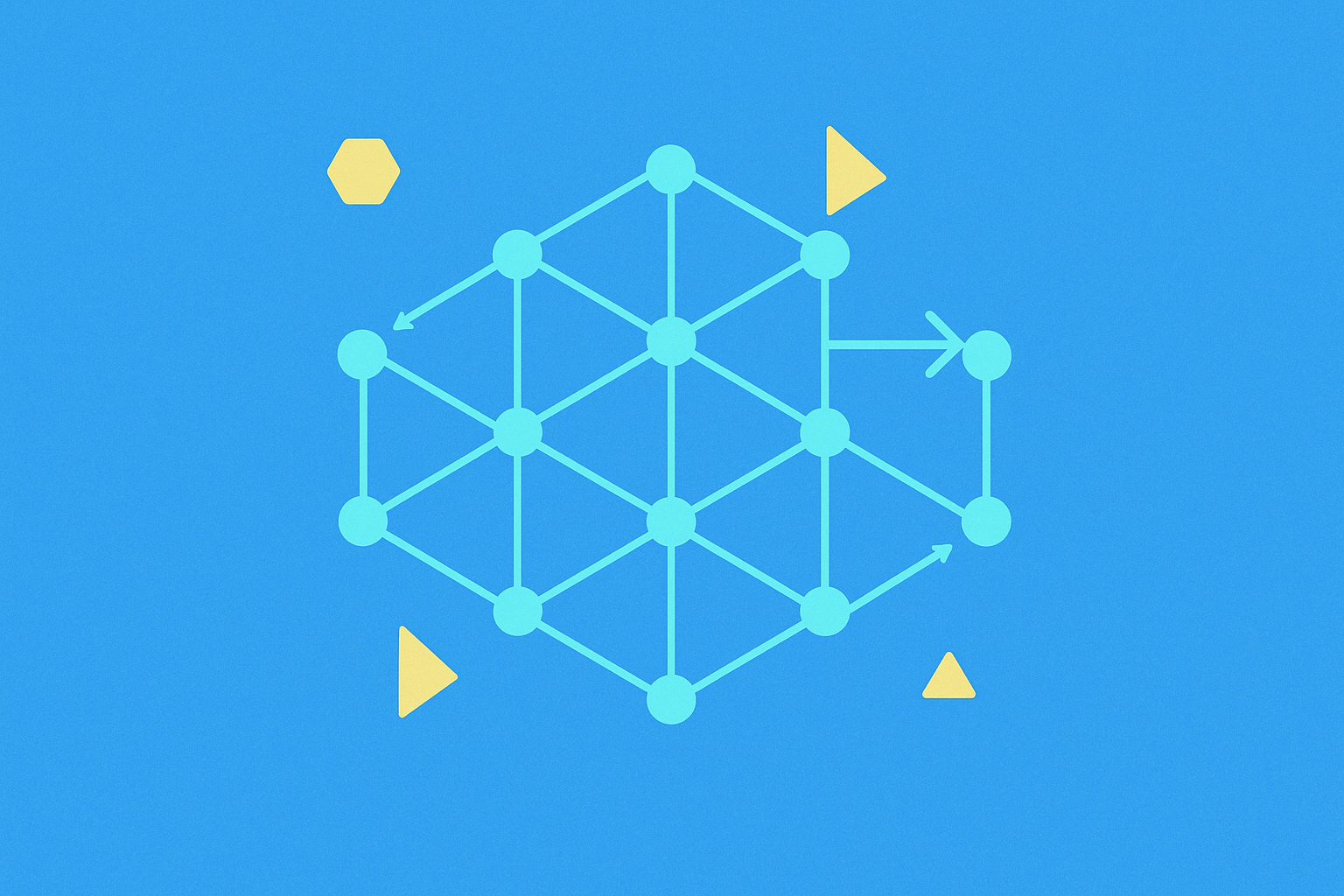
The DAG architecture operates on a fundamentally different principle than blockchain. It relies on a structure composed of circles and lines, where each circle (vertex) represents an activity or transaction that needs to be added to the network. Every line (edge) indicates the order in which transactions are approved and moves in only one direction. This unidirectional flow is the origin of the term "directed acyclic graph" – directed because the flow moves in one direction, and acyclic because the vertices never loop back on themselves.
This data structure proves particularly valuable for data modeling, as it enables users to observe relationships between multiple variables and determine how these variables influence one another. In the cryptocurrency context, DAGs help projects achieve consensus in distributed networks. A crucial distinction is that transactions are not gathered into blocks but are built directly on top of one another, resulting in significantly improved transaction speeds compared to traditional blockchain systems.
What's the difference between a DAG and a blockchain?
When exploring what is a directed acyclic graph, understanding its differences from blockchain is crucial. While DAGs and blockchains serve similar roles in the cryptocurrency industry, fundamental differences distinguish these two technologies. The most significant difference is that DAGs do not create blocks as blockchains do. Instead, they build transactions directly on top of previous ones, creating a continuous flow of validated transactions.
Structurally, DAGs are composed of circles and lines rather than blocks. This architectural difference results in blockchains appearing as a chain of connected blocks, while DAGs resemble graph structures with multiple interconnected nodes. This structural variance has profound implications for how each technology processes transactions, achieves consensus, and scales to accommodate growing network demands.
How does DAG technology work?
The operational mechanism of what is a directed acyclic graph is elegantly simple yet highly efficient. DAG-based systems consist of circles (vertices) and lines (edges), where each vertex represents an individual transaction. These transactions are constructed on top of one another in a continuous, flowing manner.
When a user initiates a transaction, they must first confirm a transaction that was submitted before theirs. These prior, unconfirmed transactions are called "tips." To submit your own transaction, you must validate these tips, after which your transaction becomes the new tip awaiting confirmation from the next user. This process creates a continuous cycle where the community builds layer upon layer of transactions, allowing the system to grow organically.
DAG technology incorporates a robust system to prevent double-spending attacks. When nodes confirm older transactions, they assess the entire transaction path back to the initial transaction. This comprehensive verification ensures that the account balance is sufficient and all previous transactions are legitimate. Users who attempt to build on an invalid transaction path risk having their own transactions ignored, even if their transaction is legitimate. This happens because if the balance doesn't verify due to previous invalid transactions, the entire chain is compromised.
What is DAG used for?
Understanding what is a directed acyclic graph includes recognizing its practical applications. DAG technology finds its primary application in processing transactions more efficiently than traditional blockchain systems. The absence of blocks eliminates waiting times associated with block creation and mining, allowing users to submit numerous transactions rapidly. Users need only confirm previous transactions before proceeding with their own.
Energy efficiency represents another significant advantage of DAG technology. Unlike blockchains using Proof of Work (PoW) consensus algorithms that require substantial computational power, cryptocurrencies utilizing DAGs consume only a fraction of the energy while still maintaining security through a modified PoW approach.
DAGs prove particularly valuable for processing micropayments. Traditional blockchain-based distributed ledgers often struggle with small transactions, as processing fees can exceed the payment amount itself. With DAGs, minimal or no processing fees are required, only a small node fee that remains stable even during network congestion.
Which cryptocurrencies use DAG?
Although many experts believe DAGs offer superior efficiency compared to blockchain, only a select number of projects have adopted this technology. IOTA stands as a prominent example, with its name serving as an acronym for Internet of Things Application.
Launched in 2016, IOTA (MIOTA) has gained recognition for its fast transaction speeds, scalability, security, privacy, and data integrity. The project uses nodes and tangles – combinations of multiple nodes used to validate transactions. Users must verify two other transactions to have their own approved, ensuring all users participate in the consensus algorithm and maintain complete network decentralization.
Nano represents another project leveraging DAG technology, though it takes a hybrid approach by combining DAG and blockchain elements. All data transmits through nodes, with each user maintaining their own blockchain-based wallet. Both sender and receiver must verify payments, and the system is known for fast transaction speeds, scalability, security, privacy, and zero transaction fees.
BlockDAG also utilizes DAG technology, offering energy-efficient mining rigs and a mobile application for mining BDAG tokens. Unlike Bitcoin's four-year halving cycle, BDAG implements a twelve-month halving schedule.
DAG pros and cons
Like any technology, understanding what is a directed acyclic graph requires examining both advantages and disadvantages that must be carefully considered.
DAG advantages include exceptional speed, as the technology is not restricted by block time constraints, allowing transactions to be processed at any time without limits on transaction numbers. The system features zero or minimal fees since there is no traditional mining requiring miner rewards, though some DAGs require small fees for specialized nodes. This low-cost structure proves particularly beneficial for microtransactions. DAGs also eliminate traditional mining operations, resulting in minimal power consumption and a reduced carbon footprint. Additionally, the absence of block times means no lengthy waiting periods, effectively eliminating scalability issues.
However, DAG technology faces certain disadvantages. Decentralization remains a concern, as some protocols incorporating DAGs contain elements of centralization. Many projects have accepted this as a temporary solution to bootstrap their networks, but DAGs have yet to demonstrate they can thrive without third-party interventions. Without these safeguards, networks could become vulnerable to attacks. Furthermore, DAG technology has not been tested at scale to the same extent as blockchain protocols. Despite existing for several years, DAG has not achieved the widespread adoption of other solutions such as Layer-2 scaling technologies.
Conclusion
Understanding what is a directed acyclic graph reveals an innovative and promising technology with significant potential in the cryptocurrency space. Directed acyclic graphs represent a breakthrough approach that offers clear advantages such as lower fees, greater scalability, and improved energy efficiency compared to traditional blockchain systems. However, DAGs remain relatively underdeveloped and face challenges that prevent them from fully challenging established blockchain technology. The technology is still in its developmental stage, with many limitations and possibilities yet to be explored. However, the advantages demonstrated by DAG systems appear promising, and many within the cryptocurrency community are eager to observe how this technology evolves as new use cases emerge and the technology matures. Rather than replacing blockchain technology entirely, understanding what is a directed acyclic graph shows that DAGs may ultimately serve as a complementary solution, offering alternatives for specific applications where their unique characteristics provide distinct advantages.
FAQ
What is meant by directed acyclic graph?
A Directed Acyclic Graph (DAG) is a graph with one-way connections between nodes and no cycles. It's used in crypto for efficient data structuring and transaction processing.
What is DAG used for?
DAG is used for representing data workflows, optimizing task sequences, and enhancing efficiency in distributed systems and cryptocurrencies.
What is DAG with example?
A DAG is a directed acyclic graph with nodes and edges. It has no cycles. Example: a workflow where tasks have dependencies, flowing in one direction without loops.
What is the difference between a directed acyclic graph and a directed graph?
A directed graph has edges with direction, while a directed acyclic graph (DAG) has no cycles or loops. DAGs are a subset of directed graphs with no circular paths.

Exploring the Polkadot Ecosystem: A Comprehensive Guide to Blockchain Innovation
Exploring Directed Acyclic Graphs in Blockchain Technology

How to Measure Crypto Community Engagement: Key Metrics Revealed

Exploring Directed Acyclic Graph Technology in Blockchain Systems

Exploring DAG Technology in Blockchain: A New Frontier
Exploring The Benefits of DAG Technology in Blockchain Systems
Polymarket: A Decentralized Prediction Market Platform

Leading Web3 Wallet Launches K-NFT Week to Strengthen Presence in Asian Markets
Buy U.S. Stocks with Crypto: How to Use xStock Feature in Web3 Wallets
Social Metaverse Launchpad: Daoversal Subscription Launching Soon

What Is Goggles (GOGLZ)? Exploring the Meme-Powered Token on Sonic Blockchain