LCP_hide_placeholder
fomox
Search Token/Wallet
/

Understanding Solana: A Comprehensive Guide to SOL Blockchain Technology
2025-12-22 21:22:56
Blockchain
Crypto staking
DeFi
NFTs
Solana
Article Rating : 3
150 ratings
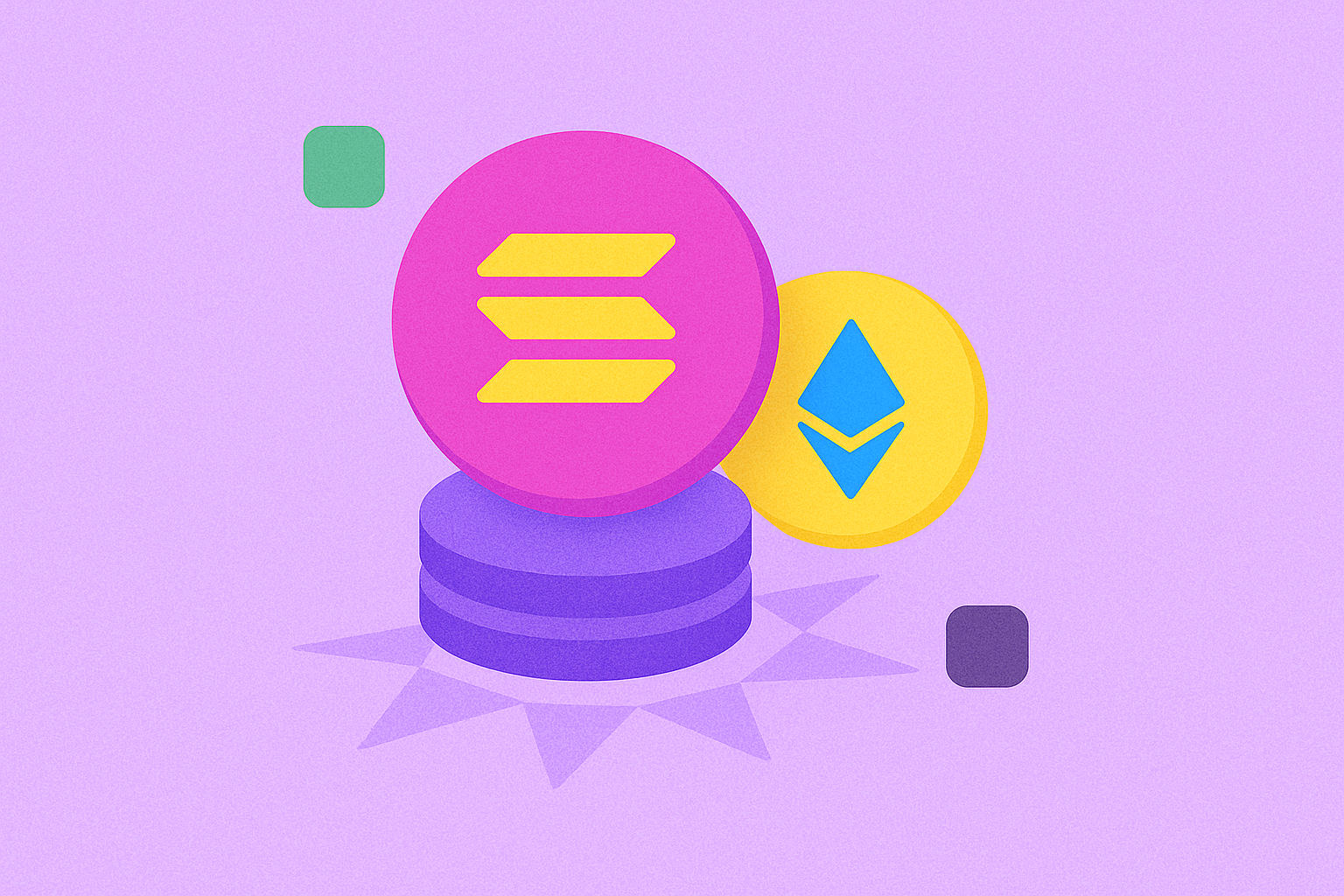
Explore the Solana blockchain, renowned for its speed, low-cost transactions, and scalability. Understand its unique features, consensus mechanism, and global accessibility, making it ideal for financial services and decentralized applications. The guide covers SOL cryptocurrency, wallets, validators, and smart contracts, offering insights for individuals, developers, and businesses seeking to leverage the technology. Dive into Solana's potential use cases in sending money, trading digital assets, NFT collection, gaming, and more, showcasing its edge over competitors like Ethereum for DeFi and NFT applications.
Understanding Solana: A Comprehensive Guide to SOL Blockchain Technology

What is Solana?

Solana is a high-performance blockchain network that enables fast, secure, and economical digital transactions. It powers thousands of applications ranging from payments and gaming to digital art and financial services, making it one of the most accessible and efficient blockchain platforms available.

Understanding Solana

Solana is a global network of computers working in concert to process transactions and maintain a distributed ledger. The network is designed with three fundamental objectives: to process transactions in less than one second, to maintain exceptionally low costs at a fraction of a cent per transaction, and to execute applications that anyone can use while maintaining a transparent, shared record of all activities.

At its core, Solana functions as a decentralized platform where thousands of nodes validate transactions and ensure network security. This distributed architecture eliminates the need for a central authority while maintaining the speed and efficiency that traditional centralized systems require. The network's commitment to accessibility means that anyone with an internet connection can participate in Solana, democratizing access to financial services and digital applications.

What Makes Solana Different

Speed

Solana's most distinctive feature is its exceptional transaction speed. Transactions on Solana complete in less than one second, enabling real-time experiences that are impossible on other blockchain platforms. This rapid confirmation time makes Solana suitable for applications requiring immediate feedback, such as point-of-sale systems, real-time gaming, and interactive decentralized applications. The speed is achieved through innovative consensus mechanisms and network architecture that prioritize throughput without sacrificing security.

Cost

Transaction fees on Solana remain remarkably low, typically costing fractions of a cent per transaction. This economic efficiency means you could execute thousands of transactions for minimal cost, making micropayments and frequent interactions practical and viable through Solana. The low cost structure removes barriers to entry and enables use cases that would be economically unfeasible on more expensive networks, such as frequent small transfers, automated systems, and high-volume applications.

Scale

Solana can process thousands of transactions per second, a capacity comparable to major payment networks like Visa and Mastercard. This scalability is achieved without sacrificing decentralization or security, allowing the network to handle enterprise-grade transaction volumes while remaining accessible to individual users. The Solana network architecture is specifically optimized to process multiple transactions in parallel, maximizing throughput and efficiency.

Global Access

Anyone with internet access can use Solana without requiring a bank account, credit check, or facing geographic restrictions. This global accessibility is particularly significant for the unbanked and underbanked populations worldwide, providing access to financial services and digital opportunities regardless of location or banking status. The permissionless nature of Solana ensures equal opportunity for participation and innovation.

What You Can Do on Solana

Send Money Worldwide

Transfer value to anyone, anywhere, instantly. Whether sending remittances to family members in another country or conducting international business transactions, Solana eliminates intermediaries and reduces both time and costs associated with traditional cross-border transfers.

Trade Digital Assets

Exchange among thousands of different tokens directly from your wallet. Solana's ecosystem supports decentralized trading platforms where users can swap assets with minimal fees, providing access to diverse investment opportunities and financial instruments.

Collect Digital Art

Buy, sell, and showcase NFTs—unique digital objects that represent ownership of collectibles, art, and virtual items. Solana's efficient network makes NFT trading practical and affordable compared to other blockchain platforms, enabling creators and collectors to participate without prohibitive transaction costs.

Play Games

Experience play-to-earn games where you genuinely own your in-game items and can trade them with other players or external markets. Solana's low latency and costs make complex gaming experiences possible, from competitive multiplayer games to immersive metaverse environments.

Earn Yield

Participate in financial services that offer returns on your digital assets through staking, lending, and yield farming programs. Solana's decentralized finance ecosystem provides diverse opportunities for users to generate passive income on their cryptocurrency holdings.

Participate in Communities

Gain access to exclusive groups through tokens and participate in decentralized autonomous organizations (DAOs). Token-gating enables communities to organize, govern, and reward members based on shared interests and ownership, fostering new forms of collective organization.

Key Concepts

SOL

SOL is Solana's native cryptocurrency, used for paying transaction fees and participating in network validation. SOL holders can stake their tokens to earn rewards while contributing to network security and decentralization.

Wallets

Wallets are software applications that store your digital assets and enable you to interact with Solana applications. They function as your secure gateway to the blockchain, allowing you to send transactions, manage multiple tokens, and authenticate interactions with decentralized applications.

Tokens

Tokens are digital assets representing anything from currencies to ownership shares. On Solana, tokens can represent utility, governance rights, collectibles, or any value imaginable, enabling innovation in how value is created and transferred.

Validators

Validators are computers that process transactions and ensure network security by reaching consensus on transaction validity. Over 1,000 validators worldwide are distributed globally, ensuring that Solana remains decentralized, resilient, and trustworthy. Validators earn rewards for their service in securing the network.

Smart Contracts

Smart contracts are programs that run on Solana, powering everything from simple token transfers to complex decentralized applications. These self-executing programs enable automation, transparency, and trustless interactions without intermediaries.

How Solana Works

The process of a Solana transaction is elegantly straightforward: First, you initiate an action—such as sending SOL—from your wallet, creating a signed transaction. Your transaction then propagates to validators in the network, who receive and verify that it is legitimate and properly formatted. Within less than a second, validators reach consensus on the transaction's validity through Solana's innovative Proof of History consensus mechanism. Once consensus is achieved, your transaction is confirmed and permanently recorded in the blockchain's immutable ledger. The recipient immediately sees the result, with the transaction finalized and irreversible.

Getting Started

Beginning your journey on Solana involves three straightforward steps. First, create a wallet by downloading free wallet software that takes just minutes to install and set up. Second, acquire some SOL—a small amount to cover transaction fees and enable your first interactions with the Solana network. Third, execute your first transaction by sending SOL to another address or interacting with a decentralized application, experiencing firsthand the speed and efficiency that Solana provides.

Why People Choose Solana

For Individuals

Solana offers economical access to financial services without requiring a traditional bank account, providing real ownership and direct control of digital assets. The global participation opportunity ensures equal access to the same financial services regardless of location, with minimal barriers to entry—users can begin with modest amounts. This democratization of financial access through Solana is particularly transformative for populations previously excluded from traditional banking systems.

For Developers

Developers choose Solana for its exceptional performance, enabling creation of applications that feel instantaneous and responsive. The low cost structure ensures users aren't excluded due to transaction fees, while composability allows developers to combine existing Solana programs like building blocks. The developing ecosystem offers a vibrant community and abundant resources for learning and building innovative applications.

For Businesses

Businesses benefit from Solana through improved efficiency and reduced payment processing costs, enabling new business models previously economically unfeasible. The global reach allows serving customers anywhere without geographic restrictions, while building on Solana's cutting-edge technology positions businesses at the forefront of blockchain innovation. Companies can implement decentralized solutions that improve transparency, reduce costs, and create new revenue opportunities.

Conclusion

Solana represents a significant advancement in blockchain technology, combining speed, affordability, and scalability in a manner that previous blockchain platforms could not achieve. By enabling fast transactions at minimal cost with global accessibility, Solana democratizes access to financial services and digital applications. Whether you are an individual seeking affordable financial services, a developer building the next generation of applications, or a business implementing innovative solutions, Solana provides the infrastructure and ecosystem to realize your vision. The Solana network's commitment to performance without sacrificing decentralization or security makes it a compelling choice for anyone seeking to participate in the digital economy.

FAQ

What is Solana? What advantages does it have compared to Ethereum?

Solana is a high-speed blockchain platform using Proof of History consensus. Compared to Ethereum, Solana offers faster transaction speeds (up to 4,000 TPS versus Ethereum's 15-45 TPS), lower fees, and higher transaction throughput, making it ideal for DeFi and NFT applications.

Solana network transaction speed and fees?

Solana processes over 65,000 TPS with significantly lower fees than Ethereum. Transaction costs typically range from $0.00025 to $0.0025, making it highly efficient for high-frequency trading and decentralized applications.

Solana生态中有哪些主要的DeFi和NFT项目?

Major DeFi projects include Jupiter, Drift, and JITO. Leading NFT platforms are Magic Eden and Tensor. Solana's ecosystem supports diverse financial and digital asset applications.

Solana's security? What major incidents happened?

Solana's blockchain is secure with no protocol-level vulnerabilities. However, it faced a supply chain attack in July 2022 targeting the @solana/web3.js library, attempting to steal private keys. The malicious package was quickly removed. Most losses stemmed from application-level exploits, not blockchain flaws.

What is Solana's validation mechanism and how to participate in staking?

Solana uses Proof of Stake consensus. Validators secure the network by staking SOL as collateral. You can delegate your SOL to validators and earn approximately 5-7% annual rewards. Rewards are distributed every epoch (2-3 days). Choose validators based on uptime and commission fees, then delegate through your wallet.

* The information is not intended to be and does not constitute financial advice or any other recommendation of any sort offered or endorsed by Gate.

Share

Content

Understanding Solana

What Makes Solana Different

What You Can Do on Solana

Key Concepts

How Solana Works

Getting Started

Why People Choose Solana

Conclusion

FAQ

Related Articles
Top Decentralized Exchange Aggregators for Optimal Trading
Top Decentralized Exchange Aggregators for Optimal Trading

Exploring top DEX aggregators in 2025, this article highlights their role in enhancing crypto trading efficiency. It addresses challenges faced by traders, such as finding optimal prices and reducing slippage, while ensuring security and ease of use. A practical overview of 11 leading platforms is provided, with guidance on selecting the right aggregator based on trading needs and security features. Designed for crypto traders seeking efficient and secure trading solutions, the article emphasizes the evolving benefits of using DEX aggregators in the DeFi landscape.
2025-12-24 07:01:19
Understanding Bitcoin's Supply Limit: How Many Bitcoins Exist?

Understanding Bitcoin's Supply Limit: How Many Bitcoins Exist?

The article delves into Bitcoin's finite supply of 21 million coins, shedding light on its implications for the cryptocurrency ecosystem. It explores how Bitcoin's halving mechanism controls supply, impacting mining rewards and inflation. The piece also discusses what happens after all coins are mined, the role of transaction fees, and introduces the Lightning Network's innovation for scalability. Addressing the loss and theft of bitcoins, it highlights security challenges and advancements. Ideal for crypto enthusiasts and investors, the article explains Bitcoin's value proposition rooted in scarcity and decentralization.
2025-12-04 15:56:34
What is OpenSea? Complete Guide to the Leading NFT Marketplace

What is OpenSea? Complete Guide to the Leading NFT Marketplace

# Comprehensive Guide to Understanding NFT Marketplaces OpenSea stands as the world's largest decentralized NFT marketplace, enabling users to buy, sell, and trade unique digital assets across multiple blockchain networks including Ethereum, Polygon, and Solana. This comprehensive guide equips beginners and experienced traders with essential knowledge about OpenSea's features, fee structure, security protocols, and practical trading strategies. From wallet setup and NFT purchasing to creating collections and navigating competitive advantages, the article addresses key questions for collectors, creators, and investors entering the digital asset space. With multi-blockchain support, user-friendly interfaces, and a thriving community of three million active users, OpenSea provides the infrastructure for exploring blockchain-based ownership and monetization opportunities. Whether you're an artist seeking new revenue streams, a collector building digital portfolios, or a curious investor, this guide delivers acti
2026-01-01 05:29:03
Layer 2 Scaling Made Easy: Bridging Ethereum to Enhanced Solutions

Layer 2 Scaling Made Easy: Bridging Ethereum to Enhanced Solutions

The article delves into Layer 2 solutions, focusing on optimizing Ethereum's transaction speed and cost efficiency through bridging. It guides users on wallet and asset selection, outlines the bridging process, and highlights potential fees and timelines. The article caters to developers and blockchain enthusiasts, providing troubleshooting advice and security best practices. Keywords like "Layer 2 scaling," "bridge services," and "optimistic rollup technology" enhance content scannability, aiding readers in navigating Ethereum's ecosystem advancements.
2025-12-24 10:25:40
What Is the Current Market Overview for Cryptocurrencies in December 2025?

What Is the Current Market Overview for Cryptocurrencies in December 2025?

In December 2025, cryptocurrencies exhibit notable trends, with Bitcoin maintaining its dominance at a market cap of $1.2 trillion. Total crypto market capitalization has surged to $3.18 trillion, driven by significant trading activity and Bitcoin's recovery. The top five cryptocurrencies account for 75% of market liquidity, showcasing concentrated activity among major assets like Ethereum, Solana, USDC, and XRP. Major exchanges, including Gate, now list over 500 assets, reflecting growth in asset diversity and institutional adoption. This article targets investors and financial institutions, providing insights into market dynamics, liquidity concentration, and asset diversification.
2025-12-04 02:18:11
How Does Solana (SOL) Compare to Ethereum and Bitcoin in 2025?

How Does Solana (SOL) Compare to Ethereum and Bitcoin in 2025?

The article offers a comprehensive comparison of Solana's performance against Ethereum and Bitcoin in 2025, highlighting its scalability, institutional adoption, and technological advantages. It addresses how Solana's high transaction speed, lower fees, and unique Proof of History consensus mechanism position it favorably in sectors like DeFi, NFTs, and prediction markets. Key issues discussed include regulatory challenges, asset tokenization, and institutional access. This analysis targets developers, investors, and industry analysts seeking insights into Solana's competitive positioning and growth trajectory. The article structure logically progresses from performance metrics to market growth, technology differentiation, and regulatory landscape.
2025-12-01 01:10:08
Recommended for You
What is BULLA coin: analyzing whitepaper logic, use cases, and team fundamentals in 2026

What is BULLA coin: analyzing whitepaper logic, use cases, and team fundamentals in 2026

BULLA coin introduces decentralized accounting and on-chain data management innovation built on BNB Smart Chain, eliminating intermediaries while ensuring real-time transaction verification. The platform addresses critical gaps in cryptocurrency infrastructure by embedding accounting logic directly into smart contracts, enabling transparent audit trails and regulatory compliance. Real-world applications include seamless transaction imports across multiple exchanges, comprehensive crypto portfolio tracking, and secure record-keeping for investors. Trade import tools enhance user experience by automating data categorization and consolidation. Founded in 2021 by blockchain architect Benjamin with support from experienced fintech designers and engineers, BULLA Networks demonstrates active development momentum with continuous smart contract iterations through early 2026. The 2026-2027 strategic roadmap prioritizes network infrastructure expansion and enhanced security protocols, positioning BULLA as a robust decen
2026-02-08 08:20:10
How does MYX token's deflationary tokenomics model work with 100% burn mechanism and 61.57% community allocation?

How does MYX token's deflationary tokenomics model work with 100% burn mechanism and 61.57% community allocation?

This article examines MYX token's innovative deflationary tokenomics, featuring a distinctive 61.57% community allocation and 100% burn mechanism. The community-focused distribution empowers token holders through MYX DAO governance while ensuring value flows back to ecosystem participants. The 100% burn mechanism systematically removes node-generated revenue from circulation, reducing the total supply from one billion tokens and creating genuine scarcity. This supply-driven deflation counters inflation pressures and strengthens long-term holder value without requiring external demand. The combination of broad community distribution and aggressive token elimination creates sustainable deflationary economics. Ideal for investors seeking to understand how MYX Finance aligns community interests with protocol success through structural value preservation and decentralized governance mechanisms on Gate exchange.
2026-02-08 08:12:23
What Are Derivatives Market Signals and How Do Futures Open Interest, Funding Rates, and Liquidation Data Impact Crypto Trading in 2026?

What Are Derivatives Market Signals and How Do Futures Open Interest, Funding Rates, and Liquidation Data Impact Crypto Trading in 2026?

This comprehensive guide decodes cryptocurrency derivatives market signals essential for 2026 trading success. Learn how futures open interest, funding rates, and liquidation data—such as ENA's $17 billion contract volume and $94 million daily position closures—reveal market sentiment and institutional positioning. The article explains how long-short ratios and liquidation heatmaps identify reversal opportunities, while options imbalance signals indicate smart money accumulation strategies. Discover why exchange outflows and funding rate extremes precede major price movements. From analyzing $46.45M ENA outflows to understanding leverage risks, this resource equips traders with actionable intelligence for predicting market turning points. Perfect for beginners and experienced traders leveraging Gate's analytics tools to navigate increasingly complex derivatives markets with informed entry and exit strategies.
2026-02-08 08:08:39
How do futures open interest, funding rates, and liquidation data predict crypto derivatives market signals in 2026?

How do futures open interest, funding rates, and liquidation data predict crypto derivatives market signals in 2026?

This article explores how three critical derivatives metrics—open interest exceeding $20 billion, funding rates shifting positive, and liquidation volume declining 30%—predict crypto derivatives market signals in 2026. The guide reveals institutional participation driving market maturation while positive funding rates signal strengthened bullish momentum. Long-short ratio stabilization at 1.2 with put-call ratio below 0.8 demonstrates sophisticated hedging strategies on Gate and other platforms. Reduced liquidation volumes indicate improved risk management and market resilience. By analyzing how these indicators combine—measuring position sizing, sentiment extremes, and forced selling pressure—traders gain precise tools for identifying trend reversals, leverage exhaustion, and market turning points with 55-65% AI-driven accuracy for 2026.
2026-02-08 08:05:14
What is a token economics model and how does GALA use inflation mechanics and burn mechanisms

What is a token economics model and how does GALA use inflation mechanics and burn mechanisms

This article explores GALA's innovative token economics model, examining how inflation mechanics and burn mechanisms create sustainable ecosystem growth. The guide covers GALA token distribution through 50,000 Founder's Nodes requiring 1 million GALA for 100% daily rewards, establishing long-term community participation. A dual-mechanism approach pairs controlled inflation with strategic annual supply reduction to establish deflationary pressure. The burn mechanism, powered by 100% transaction fee burning on GalaChain combined with NFT royalty enforcement averaging 6.1%, creates continuous supply reduction while incentivizing creator participation. Governance utility empowers node holders to vote on game launches through consensus mechanisms, transforming GALA holders into active stakeholders. Perfect for investors and ecosystem participants seeking to understand how GALA balances token scarcity with ecosystem vitality through integrated economic incentives and community governance on Gate.
2026-02-08 08:03:30
What is on-chain data analysis and how does it reveal whale movements and active addresses in crypto?

What is on-chain data analysis and how does it reveal whale movements and active addresses in crypto?

On-chain data analysis reveals cryptocurrency market dynamics by examining active addresses and transaction metrics that expose whale movements and investor behavior. This comprehensive guide explores how blockchain data serves as a critical market indicator, demonstrating the correlation between large holder activities and price movements—such as FLOKI's 950% surge in whale transactions. The article covers whale movement tracking, holder distribution patterns showing 73.47% concentration among major stakeholders, and on-chain fee trends as cycle indicators. Essential metrics include active addresses reflecting genuine network participation, transaction volumes revealing strategic positioning, and network congestion patterns during market cycles. By tracking these interconnected indicators through platforms like Glassnode and Gate, investors and traders can identify market sentiment shifts, anticipate price movements, and distinguish institutional activity from retail participation, making on-chain analysis i
2026-02-08 08:01:25