fomox
MarketsPerpsSpotSwap
Meme
Referral
More
Search Token/Wallet
/

What is Avalanche (AVAX): A Complete Fundamentals Analysis of Whitepaper Logic, Use Cases, and Technical Innovation
2025-12-21 03:34:14
Altcoins
Blockchain
DeFi
Gaming
Layer 2
RWA
Solana
Article Rating : 3
102 ratings
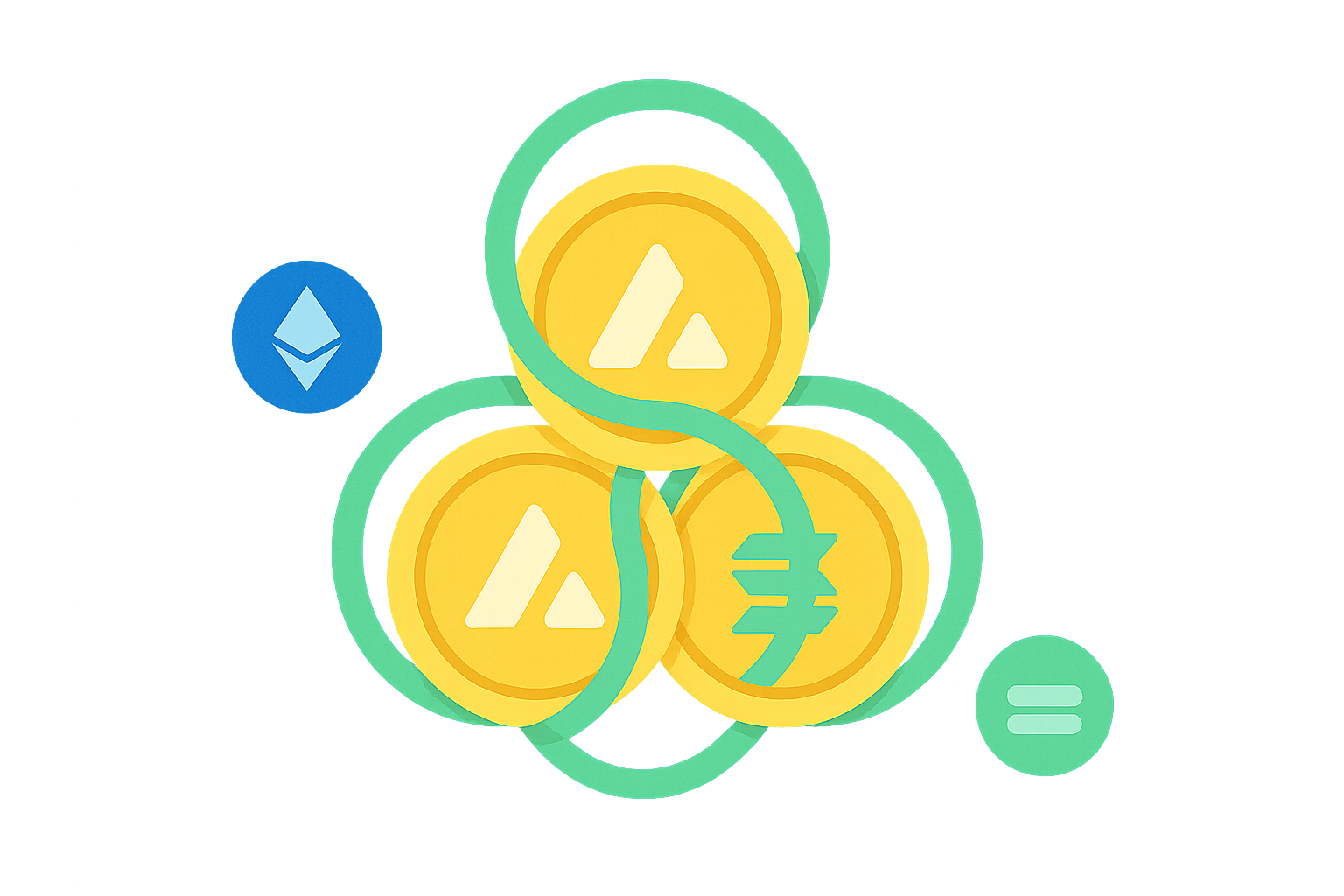
This article offers an in-depth analysis of Avalanche (AVAX) covering its three-chain architecture innovation, token utility, ecosystem expansion, and competitive positioning. It explores how Avalanche enables high transaction throughput, efficient governance, and diverse use cases in DeFi, RWA, and gaming sectors. Targeted at developers and blockchain enthusiasts, the article details the strategic roadmap and contrasts Avalanche's performance against rivals like Solana and Ethereum. Key themes include AVAX's versatile design and institutional adoption, providing essential insights for understanding this emerging blockchain platform.
What is Avalanche (AVAX): A Complete Fundamentals Analysis of Whitepaper Logic, Use Cases, and Technical Innovation

Three-Chain Architecture: The Core Innovation Behind Avalanche's 4,500+ TPS Performance

Avalanche's revolutionary three-chain architecture represents a fundamental departure from traditional single-chain blockchain design, delivering exceptional performance that sets it apart in the cryptocurrency landscape. The platform operates three specialized blockchains working in concert: the X-Chain handles transactions using a Directed Acyclic Graph structure, the C-Chain manages smart contracts with full Ethereum Virtual Machine compatibility, and the P-Chain oversees governance, validator management, and subnet deployment.

This architectural innovation directly enables Avalanche's remarkable throughput capabilities. The parallel processing nature of the three-chain system allows the network to theoretically validate transactions significantly faster than conventional blockchain networks. While Ethereum processes transactions over extended timeframes measured in minutes at Layer 1, Avalanche achieves transaction confirmation in one to two seconds, with many transactions finalizing even more rapidly.

The performance differential becomes evident when examining real-world metrics. On its fastest operational day, the network processed approximately 405 transactions per second, while maintaining daily averages exceeding 13 transactions per second during standard conditions. More impressively, the network regularly handles over 8 million transactions daily, demonstrating sustained, production-grade performance rather than theoretical potential.

The X-Chain's Directed Acyclic Graph architecture proves particularly crucial for this efficiency, handling thousands of transactions per second independently. Meanwhile, the C-Chain's separation from consensus mechanisms reduces network congestion, and the P-Chain's dedicated governance functions prevent throughput degradation. This tripartite design eliminates the bottleneck problems that plague traditional single-chain networks, establishing a scalable foundation for decentralized applications, DeFi protocols, gaming platforms, and enterprise blockchain solutions.

Token Utility Across Payments, Staking, and Governance: AVAX's Multi-Functional Design

AVAX serves as the backbone of the Avalanche ecosystem, performing critical functions that extend far beyond simple value transfer. The token's architecture enables users to pay transaction fees across all Avalanche-based applications and subnets, with fees subject to community voting, ensuring the network remains responsive to participant preferences. This payment mechanism operates efficiently within Avalanche's three-chain structure, supporting the platform's capacity to process approximately 13.43 transactions per second on average, with peak performance reaching 405 transactions per second on optimal network conditions.

The staking function represents another essential utility layer. Validators securing the Avalanche network must maintain a minimum stake of 2,000 AVAX tokens, creating a tangible commitment mechanism that aligns validator incentives with network integrity. Participants who stake AVAX earn rewards proportional to their staking duration and amount, facilitating a sustainable security model without implementing slashing penalties that punish negligent validators. This approach reduces operational risk while maintaining network integrity through computational resource expenditure requirements.

Governance participation forms the third pillar of AVAX's design. Token holders exercise decentralized control over network parameters and protocol upgrades through voting mechanisms, enabling community-driven decision-making. The capped supply structure, reaching a maximum of 720 million tokens, provides economic certainty and scarcity assurance. This tripartite utility framework—combining transactional efficiency, security through staking, and democratic governance—demonstrates how AVAX creates interconnected incentive structures that sustain Avalanche's operational excellence and ecosystem development.

Ecosystem Expansion in DeFi, RWA, and Gaming: Current Use Cases and Adoption Progress

Avalanche's ecosystem has undergone substantial expansion across decentralized finance, real-world assets, and gaming sectors, demonstrating its versatility as a blockchain infrastructure. In the DeFi segment, Avalanche now hosts advanced protocols with significant total value locked exceeding $6.8 billion, establishing itself as a meaningful participant in the broader DeFi landscape. This growth reflects developer confidence in the platform's technical capabilities and transaction efficiency.

The real-world asset tokenization market represents an increasingly important use case for Avalanche. Currently, the network supports over $163 million in tokenized RWA volume distributed across 24 distinct assets, positioning it among the leading platforms for bridging traditional financial instruments with blockchain technology. This volume demonstrates institutional interest in tokenizing yield-bearing assets and other financial primitives on the network.

Gaming integration has emerged as a significant adoption driver. Avalanche's partnership with FIFA exemplifies mainstream gaming adoption, alongside broader integration across the gaming ecosystem. These collaborations showcase how the platform's technical architecture—featuring one-second transaction finality and Ethereum compatibility—serves practical entertainment and commercial applications beyond purely financial use cases.

The ecosystem's growth is underpinned by substantial developer support, with over 500 active contributors shaping platform development. Combined with recent infrastructure improvements including 99.9 percent fee reductions on the C-Chain and $40 million in developer incentives, Avalanche has created compelling conditions for continued ecosystem expansion. These metrics collectively indicate a maturing platform transitioning from early-stage adoption to broader institutional and consumer integration across multiple industry verticals.

Roadmap Milestones and Competitive Positioning Against Solana, Polkadot, and Ethereum L2 Solutions

Avalanche's 2025 roadmap prioritizes infrastructure enhancement with the Granite mainnet upgrade scheduled for November 19, 2025, introducing pay-as-you-go validation for subnet operators. This strategic evolution reinforces Avalanche's commitment to developer attraction through the Retro9000 grants program and significantly reduced subnet deployment costs.

Performance comparison reveals distinct competitive positioning across major Layer 1 solutions:

Metric Avalanche Solana Polkadot Ethereum L2
Transaction Throughput 4,500+ TPS Ultra-fast TPS Variable Variable
Average Finality <1 second <1 second Moderate 12-15 minutes
Transaction Fees ~$0.01 ~$0.001 Moderate $0.01-$0.10
Validator Requirements Moderate hardware High-performance Balanced Ethereum-dependent

Avalanche differentiates through its modular subnet architecture, enabling customized blockchain deployment for specialized applications, while maintaining institutional-grade security. The ecosystem's expansion targeting over 500 subnets positions Avalanche between Solana's speed-centric approach and Polkadot's interoperability emphasis. Recent developments including MapleStory integration with 250+ million players and VanEck's $100 million tokenized asset fund demonstrate tangible ecosystem growth supporting long-term competitive viability.

FAQ

What is AVAX coin?

AVAX is the native token of the Avalanche blockchain, a third-generation layer one protocol using Proof-of-Stake consensus. It powers decentralized applications with faster transactions and lower fees compared to traditional blockchains.

Is AVAX Coin a good investment?

AVAX demonstrates strong potential for long-term growth with its high-speed blockchain, low transaction costs, and robust ecosystem partnerships. Market fundamentals suggest it could be a solid investment for those believing in blockchain innovation.

Can AVAX reach $100 dollars?

Yes, AVAX has strong potential to reach $100. With continued network adoption, ecosystem growth, and favorable market conditions, this price target is achievable. Key catalysts include increased transaction volume and developer activity on the platform.

What will AVAX be worth in 5 years?

AVAX is projected to experience significant growth over the next five years, potentially reaching $100-$300 per token by 2030, driven by ecosystem expansion and mainstream adoption. However, actual prices depend on market conditions and technological developments.
* The information is not intended to be and does not constitute financial advice or any other recommendation of any sort offered or endorsed by Gate.

Share

Content

Three-Chain Architecture: The Core Innovation Behind Avalanche's 4,500+ TPS Performance

Token Utility Across Payments, Staking, and Governance: AVAX's Multi-Functional Design

Ecosystem Expansion in DeFi, RWA, and Gaming: Current Use Cases and Adoption Progress

Roadmap Milestones and Competitive Positioning Against Solana, Polkadot, and Ethereum L2 Solutions

FAQ

Related Articles
How does MON compare to its competitors in performance and market share?

How does MON compare to its competitors in performance and market share?

The article explores Monad&#39;s (MON) competitive performance and market share compared to its top layer 1 blockchain rivals. It highlights MON&#39;s impressive market capitalization, technical advantages, and its architectural design that boosts transaction speed and scalability. Readers will gain insight into MON&#39;s unique market advantages, including frictionless trading on the Solana chain and strong customer service differentiation. Furthermore, the article details MON&#39;s recent price momentum and market share trends, emphasizing its powerful presence among decentralized applications. Suitable for investors and blockchain enthusiasts seeking insights into MON&#39;s competitive positioning and growth potential.
2025-11-26 01:03:32
Exploring Solana RWA Tokens: A Guide to Investing in Fast-Growing Assets

Exploring Solana RWA Tokens: A Guide to Investing in Fast-Growing Assets

The article explores XVM technology and its significant impact on blockchain interoperability. It details how XVM enables seamless cross-chain operations, addresses security concerns, and enhances decentralized applications. The content focuses on the advantages of integrating XVM in DeFi and gaming, with technical insights into its architecture and use cases. The article is valuable for developers and blockchain enthusiasts interested in multi-chain solutions and offers guidance on implementing and leveraging XVM for expanding ecosystem reach. Key topics include cross-virtual machine technology, smart contract execution, and blockchain interoperability challenges.
2025-12-21 08:24:00
How Does Avalanche (AVAX) Compare to Competitors Like Solana and BSC in 2025?

How Does Avalanche (AVAX) Compare to Competitors Like Solana and BSC in 2025?

This article provides a comprehensive analysis of Avalanche&#39;s competitive position against Solana and BNB Chain in 2025. Readers will gain insights into the performance metrics, market shifts, and ecosystem growth driving each blockchain&#39;s adoption and application suitability. Addressed needs include understanding transaction speed, cost efficiency, and market share dynamics among leading Layer 1 blockchains. Structured into comparative analysis, unique advantages, and market trends, the article fosters informed blockchain decision-making with optimized readability for quick scanning. Key themes include transaction processing, finality time, network adoption, and subnet technology.
2025-11-03 05:11:11
Blockchain EVM for Real Asset Tokenization and DeFi Lending

Blockchain EVM for Real Asset Tokenization and DeFi Lending

Explore Pharos Network, a cutting-edge Layer-1 EVM blockchain designed for tokenizing real-world assets and enabling DeFi lending. Take advantage of a high-performance, secure, and user-friendly platform, perfect for both developers and investors in the crypto space. Be part of the digital finance revolution with scalable, EVM-compatible infrastructure.
2025-12-21 09:44:37
What is Monad (MON)? A Deep Dive Into the Layer 1 Blockchain's Whitepaper Logic, Use Cases, and 10,000 TPS Technology

What is Monad (MON)? A Deep Dive Into the Layer 1 Blockchain's Whitepaper Logic, Use Cases, and 10,000 TPS Technology

# Article Overview: What is Monad (MON)? Monad is an EVM-compatible Layer 1 blockchain delivering 10,000 TPS throughput through parallel execution architecture and MonadBFT consensus. This comprehensive guide explores how Monad achieves unprecedented performance while maintaining full developer compatibility, making it ideal for traders, developers, and institutional investors seeking high-speed blockchain solutions. The article examines Monad's groundbreaking technical architecture, $90M TVL ecosystem traction, MIT-led team credentials from Jump Trading, and strategic token economics with 50.6% lock until 2029. Readers will understand Monad's competitive advantages over Ethereum, Solana, and Polygon, discover real-world use cases in gaming and DeFi, and learn MON token staking opportunities on Gate. Whether you're evaluating Layer 1 investments or building next-generation dApps, this deep dive provides essential insights into why Monad represents a fundamental breakthrough in blockchain scalability.
2026-01-07 03:11:41
How Does Cryptocurrency Competitive Landscape Compare in 2025: Market Share, Performance, and Key Advantages

How Does Cryptocurrency Competitive Landscape Compare in 2025: Market Share, Performance, and Key Advantages

# How Does Cryptocurrency Competitive Landscape Compare in 2025: Market Share, Performance, and Key Advantages This comprehensive analysis examines the 2025 cryptocurrency competitive landscape, where Bitcoin, Ethereum, BNB, and Solana command over 70% market dominance through established infrastructure and network effects. The article evaluates key differentiators including transaction speed, network security, and developer adoption across leading Layer-1 platforms, while revealing how emerging challengers strategically capture niche segments in DeFi and Web3 infrastructure. Designed for investors and developers, this guide clarifies market concentration dynamics, performance metrics comparison, and valuation trends shaping cryptocurrency competition. Whether trading on Gate or analyzing blockchain ecosystems, readers gain actionable insights into market share distribution, competitive advantages, and emerging opportunities in today's mature crypto market.
2025-12-30 02:47:45
Recommended for You
MPC Wallet: Experience a new level of secure and seamless crypto asset management

MPC Wallet: Experience a new level of secure and seamless crypto asset management

Your complete guide to MPC wallet security and practical applications. Discover how Multi-Party Computation technology uses private key sharding, a 2-of-3 signature protocol, and Reshare mechanisms to provide enterprise-level protection for Web3 users. Find out how to create, back up, and restore your MPC wallet on Gate, achieving the ideal balance of robust security and user-friendly experience.
2026-01-11 23:38:10
Roam Listing Details: Launch Date, Price Predictions, and How to Buy $ROAM

Roam Listing Details: Launch Date, Price Predictions, and How to Buy $ROAM

Roam (ROAM) is a decentralized wireless network token revolutionizing global connectivity through its 1.21 million hotspots and blockchain-based infrastructure. This comprehensive guide covers ROAM's official listing on Gate with ROAM/USDT trading pair, market insights, and investment essentials. Learn how Roam combines eSIM services, OpenRoaming protocols, and token-based incentives to reward users for sharing bandwidth. Discover the project's innovative tokenomics with 1 billion total supply, strategic partnerships with industry leaders, and clear Q1-Q3 2025 roadmap including Roam Loan and Innovator Hub launches. Whether you're a crypto investor or DePIN enthusiast, this guide provides step-by-step purchasing instructions, price analysis, and use cases for earning rewards through network participation in the expanding decentralized infrastructure ecosystem.
2026-01-11 23:35:13
DePIN: Hardware Set to Transform Web3

DePIN: Hardware Set to Transform Web3

This comprehensive guide introduces Decentralized Physical Infrastructure Networks (DePINs), innovative Web3 systems that democratize infrastructure by incentivizing global participants to share resources like storage, computing power, and bandwidth. DePINs utilize blockchain-based token economies and smart contracts to create self-sustaining, transparent networks that distribute ownership and profits equitably among contributors. Unlike traditional centralized infrastructure controlled by corporations, DePINs offer open participation, cost-effectiveness, and collective governance, addressing limitations such as single points of failure and geographic constraints. The article explores DePIN mechanics including node deployment and tokenomics, compares them with traditional blockchain networks, and examines practical applications across storage, computing, energy, and IoT sectors. While DePINs face technical, regulatory, and market challenges, they represent a transformative shift toward decentralized, user-cen
2026-01-11 23:24:52
MACD指標是什麼?

MACD指標是什麼?

本文深入探討MACD指標(平滑異同移動平均線指標),此為加密貨幣交易中最常用的趨勢追蹤工具。文章系統介紹MACD的三個核心組成元素(快線DIF、慢線DEA及柱狀圖),闡述黃金交叉與死亡交叉的形成機制與實戰應用,並深度解析背離現象、柱狀圖變化及零軸位置等進階技巧。無論您是在Gate進行短線波段操作或中長期投資,本指南均提供完整策略框架與風險管理建議,幫助您精準識別買賣時機,優化交易決策。
2026-01-11 23:22:33
Bitget Wallet Valued at $300 Million After Investment from Mainstream Exchange, Boasts 10 Million Users

Bitget Wallet Valued at $300 Million After Investment from Mainstream Exchange, Boasts 10 Million Users

Bitget Wallet achieves a major milestone with $300 million valuation following a $30 million strategic investment, solidifying its position as a leading Web3 multi-chain wallet solution. The platform surpasses 10 million users globally across 168 countries, with impressive monthly growth of 560,000 new users. The wallet demonstrates strong ecosystem momentum through successful partnerships with networks like Arbitrum, featuring integrated DeFi trading, NFT marketplace capabilities ranking first on BNB Chain, and support for 75+ decentralized exchanges. With rebranding from BitKeep to Bitget Wallet and plans to explore MPC technology, Account Abstraction, and ZK-Rollup support, the platform positions itself as a comprehensive Web3 gateway supporting 255,400+ crypto assets across 90+ blockchain networks, attracting institutional confidence and mainstream adoption.
2026-01-11 23:21:06
How to Buy $LUNA Coin and What is the Lynk's Cat Token?

How to Buy $LUNA Coin and What is the Lynk's Cat Token?

This comprehensive guide introduces Lynk's Cat (LUNA), a meme-based cryptocurrency launched on the Solana blockchain via Pump.fun, which rapidly achieved a $30M market cap within hours of launch. LUNA combines viral internet culture with blockchain technology, offering speculative trading opportunities for Web3 enthusiasts through decentralized exchanges like Raydium and Meteora. The token operates on Solana's fast, low-cost infrastructure, benefiting from strong community engagement and grassroots adoption within the ecosystem. While currently lacking announced utility features, the project aspires to introduce staking, governance, and NFT integrations in future phases. This guide provides step-by-step instructions for purchasing LUNA on digital wallets, essential risk management strategies, and detailed insights into the project's vision, team, and development roadmap. Investors should approach LUNA with realistic expectations, understanding its high volatility nature and allocating only funds they can affo
2026-01-11 23:19:02