Understanding the Difference Between USD and USDC
USD vs. USDC
To understand the fundamental distinction between these two financial instruments, we must first examine their core characteristics and underlying mechanisms.
USD, or United States Dollar, represents the official fiat currency of the United States. As a fiat currency, it derives its value from government decree and regulation rather than any physical commodity backing. The Federal Reserve, as the central banking system, controls the issuance and monetary policy of USD. This traditional currency serves as the world's primary reserve currency and is widely accepted across global markets for international trade, commodity pricing, and cross-border transactions.
In contrast, USDC (USD Coin) represents a revolutionary approach to digital currency through the stablecoin model. Launched as a cryptocurrency built on blockchain technology, USDC maintains a 1:1 peg with the US Dollar, meaning each USDC token is backed by an equivalent amount of USD held in reserve.
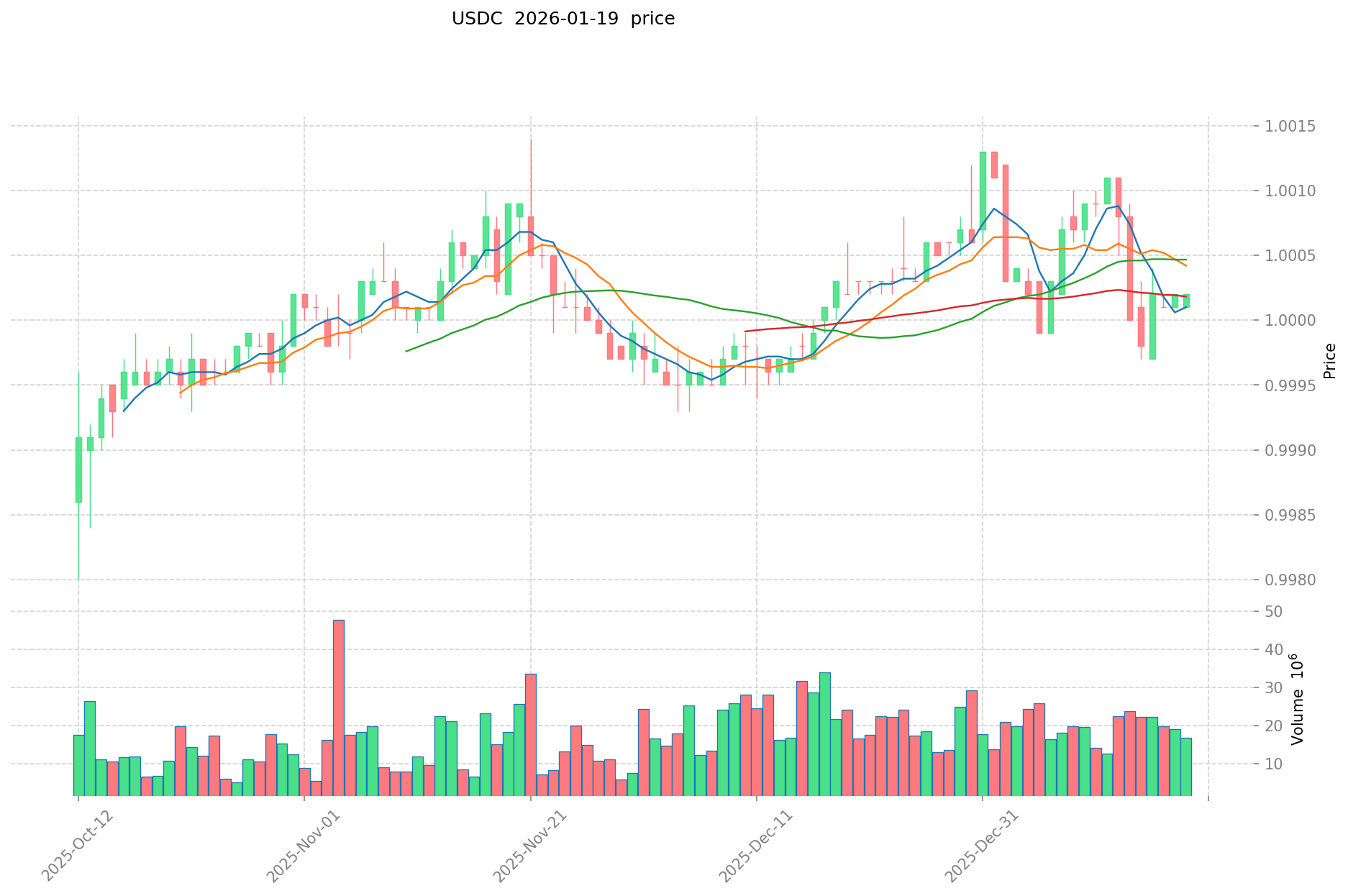 This backing mechanism is regularly audited and verified, ensuring transparency and trust in the system. Unlike volatile cryptocurrencies such as Bitcoin or Ethereum, USDC combines the stability of traditional fiat currency with the efficiency and programmability of blockchain technology.
The technical implementation of USDC involves smart contracts deployed on multiple blockchain networks, including Ethereum, Solana, and others. This multi-chain presence enables seamless integration with various decentralized applications and platforms. The issuance process requires users to deposit USD with authorized financial institutions, which then mint equivalent USDC tokens on the blockchain. Conversely, users can redeem USDC for USD at any time, maintaining the stable peg.
Use Cases
The practical applications of USD and USDC differ significantly, reflecting their distinct natures and the ecosystems they serve.
USD functions as the backbone of traditional financial systems. In everyday commerce, USD facilitates countless transactions ranging from small retail purchases to large corporate deals. International trade heavily relies on USD as the standard settlement currency, with commodities like crude oil, gold, and agricultural products typically priced in dollars. Central banks worldwide hold substantial USD reserves to stabilize their own currencies and manage foreign exchange risks. Additionally, USD serves as the benchmark for currency exchange rates and plays a crucial role in global monetary policy.
The traditional banking system processes USD transactions through established networks like SWIFT, ACH, and wire transfers. While reliable, these systems often involve multiple intermediaries, resulting in slower processing times and higher fees, especially for cross-border payments. Settlement can take several business days, and transactions are subject to banking hours and holiday schedules.
USDC, however, opens up entirely new possibilities within the digital asset ecosystem. In the cryptocurrency trading sphere, USDC serves as a stable trading pair, allowing traders to quickly move in and out of volatile positions without converting back to fiat currency. This eliminates the delays and fees associated with traditional banking transfers. For example, a trader can sell Bitcoin for USDC and immediately use those funds to purchase other digital assets across different platforms.
Decentralized finance (DeFi) platforms extensively utilize USDC for various applications. Users can deposit USDC into lending protocols to earn interest, often at rates higher than traditional savings accounts. Borrowers can use USDC as collateral to access loans without credit checks or lengthy approval processes. Yield farming strategies frequently involve USDC liquidity provision, enabling users to earn rewards by facilitating trading on decentralized exchanges.
Cross-border payments represent another significant use case for USDC. Traditional international transfers can be expensive and slow, often taking 3-5 business days and incurring fees of 3-7% or more. USDC transactions, by contrast, settle within minutes regardless of geographic location, with minimal fees typically measured in cents rather than percentages. This makes USDC particularly valuable for remittances, freelance payments, and international business transactions.
Implications
The coexistence of USD and USDC carries profound implications for the evolution of global finance and monetary systems.
From a monetary policy perspective, USD remains subject to inflation and deflation based on economic conditions and Federal Reserve decisions. Over the past several decades, USD has experienced varying degrees of inflation, affecting purchasing power and savings value. Government policies, interest rate adjustments, and quantitative easing programs all influence USD's value. This dynamic nature means that holding USD involves exposure to macroeconomic risks and policy decisions.
USDC, while pegged to USD and therefore indirectly affected by its inflation, offers unique advantages in terms of transparency and auditability. The blockchain-based nature of USDC means every transaction is recorded on a public ledger, enabling unprecedented visibility into money flows. Regular attestations by accounting firms verify that issued USDC tokens are fully backed by reserves, providing assurance that traditional fiat systems cannot easily match.
The rise of stablecoins like USDC signals a potential paradigm shift in how we conceptualize and use money. By merging the stability of fiat currencies with the technological advantages of blockchain—including programmability, composability, and 24/7 availability—stablecoins create new possibilities for financial innovation. Smart contracts can automatically execute complex financial operations using USDC, enabling sophisticated strategies that would be impractical with traditional currencies.
Regulatory considerations remain a critical factor in this evolving landscape. While USD operates within well-established regulatory frameworks, stablecoins like USDC exist in a more ambiguous space. Regulators worldwide are developing frameworks to govern stablecoins, focusing on issues like reserve requirements, redemption rights, and consumer protection. The regulatory evolution will significantly impact how stablecoins integrate with traditional financial systems.
For institutional adoption, USDC offers compelling advantages. Financial institutions can leverage USDC for faster settlement, reduced counterparty risk, and improved capital efficiency. Treasury management becomes more flexible when assets can be moved instantly across platforms and jurisdictions. However, institutions must also consider regulatory compliance, custody solutions, and integration with existing systems.
The broader implications extend to financial inclusion and access. USDC can reach unbanked or underbanked populations who have internet access but lack traditional banking relationships. This democratization of financial services could transform how billions of people interact with money, savings, and investment opportunities.
Looking toward the future, the relationship between traditional fiat currencies like USD and digital stablecoins like USDC will likely become increasingly intertwined. Central bank digital currencies (CBDCs) represent another evolution in this space, potentially combining government backing with digital infrastructure. The competition and collaboration between these various forms of money will shape the financial landscape for decades to come.
In conclusion, while USD remains the cornerstone of global finance with its established trust and universal acceptance, USDC represents an innovative bridge between traditional and digital finance. Understanding the distinction between these two instruments—their mechanisms, use cases, and implications—is essential for anyone navigating the modern financial ecosystem. As blockchain technology matures and regulatory frameworks develop, the interplay between fiat currencies and stablecoins will continue to redefine how value is stored, transferred, and utilized in our increasingly digital world.
FAQ
What is the difference between USD and USDC?
USD is traditional currency backed by government; USDC is a cryptocurrency stablecoin pegged to the US dollar, enabling faster transfers and blockchain-based transactions with greater flexibility.
What is USDC? How is it pegged to the US dollar?
USDC is a stablecoin pegged 1:1 to the US dollar, meaning each token equals one dollar. It maintains stable value through backing by reserve assets, ensuring price stability in the crypto market.
Should I use USD or USDC for trading?
Choose USDC for decentralized finance (DeFi) platforms due to its stability and wider acceptance. USDC offers better compatibility with blockchain-based protocols and smart contracts, making it ideal for most crypto trading scenarios.
What are the advantages of USDC compared to traditional USD?
USDC offers 24/7 blockchain transactions, instant cross-border transfers, transparent 1:1 USD reserve backing, lower fees, and financial accessibility without traditional banking constraints, making it more efficient for digital economies.
Is USDC safe? What are its risks?
USDC is among the safest stablecoins, backed by full dollar reserves and regular third-party audits. Main risks include regulatory changes, market volatility, and smart contract vulnerabilities.
How to exchange USD for USDC?
You can exchange USD for USDC through crypto platforms by depositing USD and using their conversion tools. Simply log in, select the conversion option, enter your USD amount, and complete the transaction. USDC will be credited to your wallet instantly.
Where can USDC be used across platforms and wallets?
USDC is widely supported across major cryptocurrency exchanges, decentralized finance platforms, and digital wallets. You can use it for trading, swapping, lending, and payments on thousands of platforms including popular wallet applications, DeFi protocols, and blockchain-based services globally.
USD and USDC: What are the differences in transaction fees and speed?
USDC typically offers lower transaction fees with faster settlement on blockchain networks. USD as fiat currency processes through traditional banking systems, which are slower and may incur higher fees. USDC transactions settle within minutes on-chain, while USD transfers can take 1-3 business days.

Understanding Stablecoins: A Comprehensive Guide to Circle Crypto

Understanding the Stablecoin USDC
Điều gì làm cho USDC trở thành một lựa chọn ổn định trong thị trường tiền điện tử?

Innovative Neobank Boosts Interest-Bearing USD Accounts with Blockchain Technology
Jeremy Allaire

What is Pieverse (PIEVERSE) and How Does it Aim to Revolutionize Blockchain Payments?
Bitcoin Production Cost Rises to $112,084 as Mining Companies Face Profitability Pressure

Are NFTs Worth Anything?
Can Bonk ($BONK) Reach $1? A Comprehensive Analysis for Crypto Investors
When Did Bitcoin Launch and What Was Its Initial Value
Why Is MATIC Going Down?