Understanding the Stages of Cryptocurrency Market Cycles

The Crypto Carousel: Explaining Cryptocurrency Cycles
Cryptocurrency markets have long fascinated traders and investors with their dramatic price swings and seemingly unpredictable nature. However, beneath the surface of apparent chaos, many market participants believe there exists a fundamental rhythm—a cyclical pattern that governs the rise and fall of digital asset prices. This article explores the concept of cryptocurrency life cycle, examining the theoretical framework behind these patterns and the tools traders use to navigate them.
Understanding crypto market cycles
Crypto market cycles represent observable long-term price patterns and recurring trading behaviors within the cryptocurrency ecosystem. These cycles are not random occurrences but rather structured movements that reflect both market psychology and historical precedent. Understanding the cryptocurrency life cycle helps traders analyze extensive historical data on cryptocurrency prices, combined with fundamental principles of trading psychology, to identify correlations and forecast potential market scenarios.
The concept of market cycles is rooted in the belief that human behavior, particularly in financial markets, tends to repeat itself over time. During periods of rising prices, optimism and greed dominate trader sentiment, while falling markets breed fear and pessimism. These emotional extremes create patterns that technical analysts can map and study. Proponents of crypto cycle theory argue that despite the influence of macroeconomic events, regulatory changes, and technological developments, cryptocurrencies consistently move through predictable phases—what they describe as the market's "seasonality."
It's important to note that while historical patterns provide valuable context, they do not guarantee future outcomes. The cryptocurrency market is still relatively young and subject to unprecedented events that may disrupt established patterns. Nevertheless, understanding the cryptocurrency life cycle provides traders with a framework for making more informed decisions and managing risk in this volatile asset class.
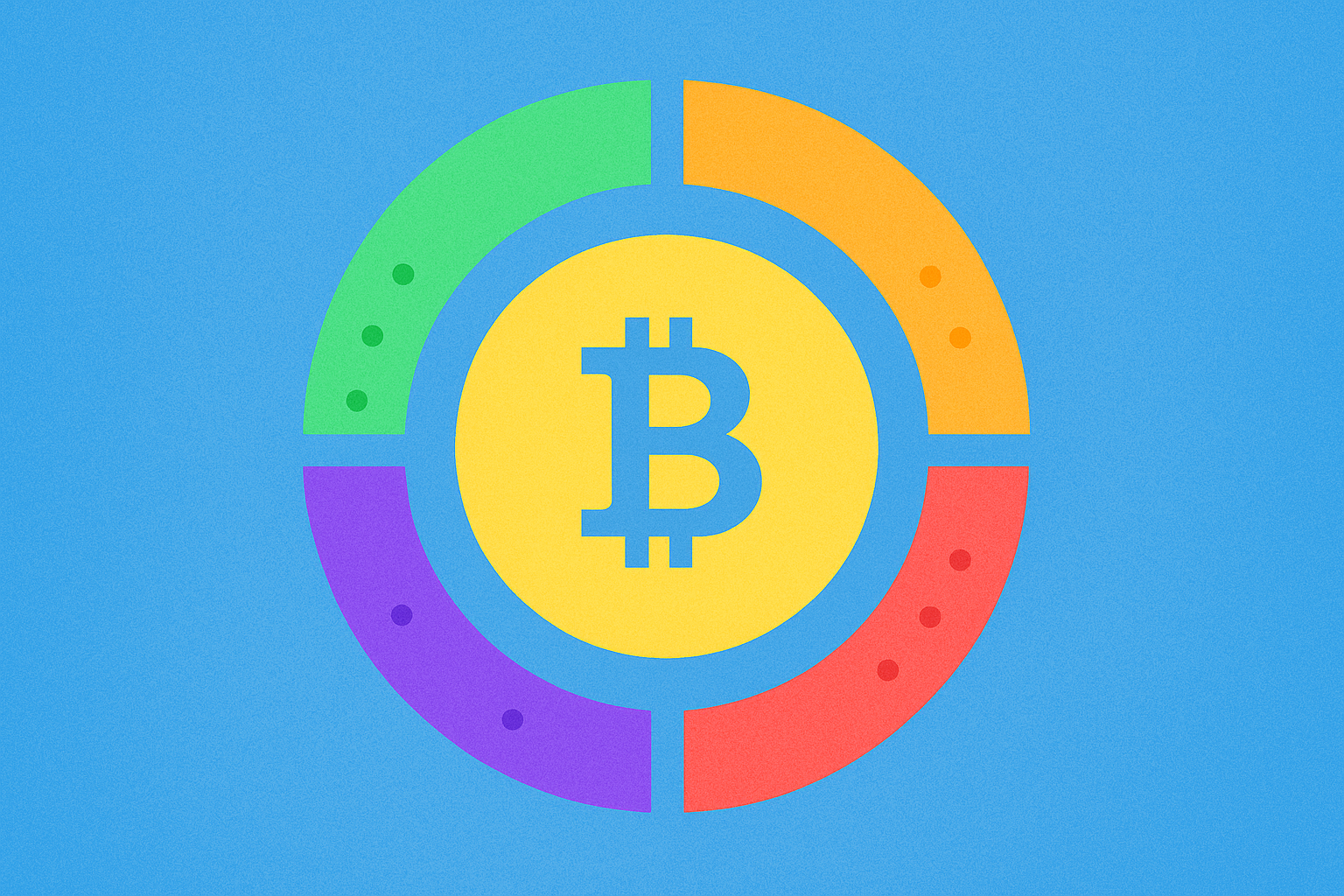
The purported four phases of a crypto cycle chart
According to cryptocurrency life cycle theory, the market moves through four distinct phases, each characterized by unique price action, trading volume, and psychological sentiment. Recognizing these phases helps traders position themselves advantageously within the market.
The quiet consolidation phase
The consolidation phase, often referred to as accumulation, represents the market's bottom—a period of minimal activity and low investor interest. Following a significant bear market, prices stabilize at depressed levels, and trading volumes diminish substantially. Media coverage of cryptocurrencies wanes, and public sentiment turns decidedly negative or indifferent. Within the crypto community, this phase is colloquially known as "crypto winter," a reference to the cold, dark, and seemingly endless period of stagnation.
Despite the pessimistic atmosphere, the consolidation phase presents opportunities for long-term investors. Experienced traders recognize this period as an ideal time to accumulate digital assets at discounted prices. Those with strong convictions in cryptocurrency's future potential—often called HODLers (holders)—build positions during this phase, understanding that patient capital tends to be rewarded when the cycle eventually turns.
The markup phase "to the moon"
As the market transitions from consolidation, the markup phase begins—a period characterized by rising optimism and increasing prices. This phase often starts subtly, with gradual price improvements that attract little attention initially. However, as momentum builds, more participants enter the market, driving trading volumes significantly higher than during consolidation.
The markup phase typically coincides with positive catalysts such as favorable regulatory developments, institutional adoption, technological breakthroughs, or network upgrades. As prices reach new highs, media coverage intensifies, drawing mainstream attention to cryptocurrencies. The fear of missing out (FOMO) becomes a dominant psychological force, prompting even cautious investors to enter the market. During peak markup periods, emotional and irrational trading behaviors become more common, with some assets experiencing parabolic price increases that defy traditional valuation metrics.
Distribution divergence
The distribution phase represents a critical transition period within the cryptocurrency life cycle—a battle between bulls and bears for market control. After the significant gains of the markup phase, early accumulation buyers begin considering profit-taking opportunities. While prices may continue reaching new highs, the rate of appreciation slows noticeably, and market momentum weakens.
During distribution, sentiment becomes mixed. Optimistic traders remain convinced that further gains are possible, while more cautious participants recognize warning signs of market exhaustion. Increased selling pressure from profit-takers creates resistance to further price advances, even as new buyers continue entering the market. Technical analysts often observe divergences during this phase—price makes new highs while momentum indicators fail to confirm the strength of the move. This phase is particularly challenging to navigate, as the line between healthy consolidation and the beginning of a downturn remains unclear.
The markdown meltdown
The markdown phase begins when selling pressure overwhelms buying interest, and the bull market definitively breaks down. Prices decline rapidly, sometimes precipitously, as panic spreads through the market. The psychological shift is dramatic—the optimism and greed that characterized earlier phases give way to fear, uncertainty, and doubt (FUD).
Media narratives turn negative, with coverage focusing on market crashes, failed projects, and regulatory concerns. Scandals and bad news seem to multiply during markdown phases, further eroding confidence. As prices fall, traders who entered during the markup or distribution phases face mounting losses, leading to capitulation selling. Eventually, after most sellers have exited their positions and fear reaches its peak, trading activity diminishes, prices stabilize at lower levels, and the market enters a new consolidation phase, beginning the cycle anew.
How long do crypto cycles last?
While crypto cycles lack a precisely fixed duration, many traders subscribe to the four-year cycle theory, which suggests that major market cycles align approximately with Bitcoin halving events. Bitcoin halving is a programmed reduction in the rate at which new bitcoins are created, occurring roughly every four years. During a halving, the rewards that Bitcoin miners receive for validating transactions are cut in half, effectively reducing Bitcoin's inflation rate by 50%.
Historical evidence provides some support for this cryptocurrency life cycle theory. The crypto market experienced a major bull run in 2017, with Bitcoin reaching nearly $20,000 per coin, followed by a prolonged bear market throughout 2018 and 2019. The next significant bull market emerged in 2020-2021, approximately four years after the previous peak. A subsequent bull run occurred in 2024-2025, again following the four-year pattern. These patterns have corresponded with Bitcoin halvings that occurred in 2012, 2016, 2020, and 2024, each followed by substantial price appreciation.
Bitcoin's dominant position in the cryptocurrency market—it maintains the largest market capitalization and serves as a benchmark for the entire industry—means that events affecting Bitcoin tend to influence the broader crypto ecosystem. The supply shock created by halving events, combined with sustained or growing demand, creates favorable conditions for price appreciation according to basic economic principles.
However, it's essential to approach the four-year cryptocurrency life cycle theory with appropriate skepticism. While past correlations are noteworthy, cryptocurrency markets continue evolving. Increasing institutional participation, regulatory developments, macroeconomic conditions, and technological changes may alter traditional patterns. Additionally, as the crypto market matures and diversifies, Bitcoin's influence may diminish, potentially weakening the halving cycle's impact on overall market dynamics.
How to identify a crypto market cycle
While determining the current phase of a cryptocurrency life cycle remains challenging in real-time, traders employ various analytical tools to make educated assessments. These tools combine quantitative data with psychological indicators to provide insights into market positioning and sentiment.
Bitcoin halving cycle chart
Tracking Bitcoin's halving schedule provides a temporal framework for anticipating potential market phases. Historically, significant price appreciation has followed halving events, with bull markets typically lasting approximately 12-18 months post-halving before transitioning to markdown phases. The most recent halving occurred in 2024, and market participants continue monitoring price action relative to this event. While past performance doesn't guarantee future results, the psychological impact of halvings on market participants cannot be dismissed. The media attention, reduced supply growth, and historical precedent create expectations that often influence trading behavior, potentially creating self-fulfilling prophecies.
Bitcoin dominance chart
The Bitcoin dominance metric measures Bitcoin's market capitalization as a percentage of the total cryptocurrency market capitalization. This indicator provides insights into risk appetite within the crypto ecosystem. When Bitcoin dominance rises, it suggests capital is flowing toward the relatively more established and less volatile asset, indicating a risk-off environment typical of markdown or consolidation phases. Conversely, declining Bitcoin dominance—as capital rotates into alternative cryptocurrencies (altcoins)—suggests increased risk appetite characteristic of markup or distribution phases. This metric serves as a valuable tool for understanding where the market sits within the cryptocurrency life cycle.
Average trading volume
Trading volume serves as a crucial confirmation tool for price movements. High volumes during price advances confirm buyer conviction, while high volumes during price declines indicate serious distribution or capitulation. The consolidation phase typically features diminished trading activity and narrow price ranges, reflecting low market participation. As cycles transition toward markup or markdown phases, volume expands dramatically, signaling increased trader engagement and conviction. Volume analysis helps traders distinguish between meaningful price movements and insignificant fluctuations that lack follow-through.
Crypto Fear and Greed Index
The Crypto Fear and Greed Index synthesizes multiple market metrics into a single sentiment indicator. This index considers factors including price volatility, market momentum, social media sentiment, Bitcoin dominance, and survey data to generate a daily score from 0 (extreme fear) to 100 (extreme greed). While not a precise scientific instrument, this tool provides valuable context about prevailing market psychology within the cryptocurrency life cycle. Extreme fear readings often coincide with consolidation phases and potential buying opportunities, while extreme greed suggests markets may be overheated and approaching distribution or markdown phases. Contrarian traders often use this indicator to identify potential turning points, buying when others are fearful and selling when greed dominates.
Conclusion
Cryptocurrency market cycles represent a fascinating intersection of market mechanics, human psychology, and technological innovation. Understanding the cryptocurrency life cycle provides a useful framework for comprehending market dynamics, though traders must approach cycle theory with both appreciation and skepticism. Historical patterns offer valuable context, but the cryptocurrency market's youth and rapid evolution mean that unprecedented developments can disrupt established trends.
The tools available for cycle identification—from Bitcoin halving charts to sentiment indicators—provide multiple perspectives on market positioning. However, successful trading requires combining these analytical approaches with disciplined risk management, emotional control, and continuous learning. Whether the cryptocurrency life cycle represents fundamental market truths or self-fulfilling prophecies driven by collective belief, understanding their theoretical basis helps traders navigate the volatile world of digital assets with greater confidence and strategic awareness. As the cryptocurrency ecosystem continues maturing, market participants must remain adaptable, recognizing that while history rhymes, it rarely repeats exactly. By studying the cryptocurrency life cycle and applying these insights thoughtfully, traders can better position themselves for long-term success in this dynamic market.
FAQ
What is the life cycle of cryptocurrency?
The cryptocurrency life cycle consists of four phases: Accumulation, Markup, Distribution, and Markdown. These phases reflect price movements and market sentiment cycles that repeat over time.
What if you put $1000 in Bitcoin 5 years ago?
If you invested $1000 in Bitcoin 5 years ago, it would now be worth over $50,000. Bitcoin has delivered substantial returns through its long-term appreciation, making early investments highly profitable.
What are the 4 phases of the crypto market cycle?
The crypto market cycle consists of four phases: accumulation, markup, distribution, and markdown. Accumulation occurs when prices fluctuate within a range. Markup is when prices rise significantly. Distribution happens as sellers emerge. Markdown is the downtrend phase before the next cycle begins.
How long is a cryptocurrency cycle?
A cryptocurrency cycle typically lasts about four years. It includes a halving event, bull run, crash, and readjustment period before the next cycle begins.
When Will the Crypto Market Recover?
2024 Cryptocurrency Trading Volume Hits New Yearly Lows

How Does the Crypto Market's Price Volatility Compare to Traditional Assets in 2025?

How Does Exchange Ownership Impact Cryptocurrency Capital Flows?

How do futures open interest and funding rates signal crypto derivatives market shifts?

How Do Crypto Derivatives Market Signals Predict Price Movements: Funding Rates, Open Interest, and Liquidation Data Explained

What is COMMON (COMMON) coin price today and market cap overview?
How does crypto exchange inflow and outflow affect token price and market cap in 2026?

What is Hashflow (HFT) market overview: price, market cap, trading volume, and liquidity

What is KOGE tokenomics: token distribution, inflation mechanism, and governance utility explained
How Does Fed Policy and Inflation Impact Crypto Prices in 2026: The Macroeconomic Connection