LCP_hide_placeholder
fomox
MarketsPerpsSpotSwap
Meme
Referral
More
Smart Money Recruitment
Search Token/Wallet
/

Which Coin Will Be the Next Bitcoin?

2026-01-15 08:23:25
Altcoins
Bitcoin
BNB
Ethereum
Solana
Article Rating : 3.5
half-star
39 ratings
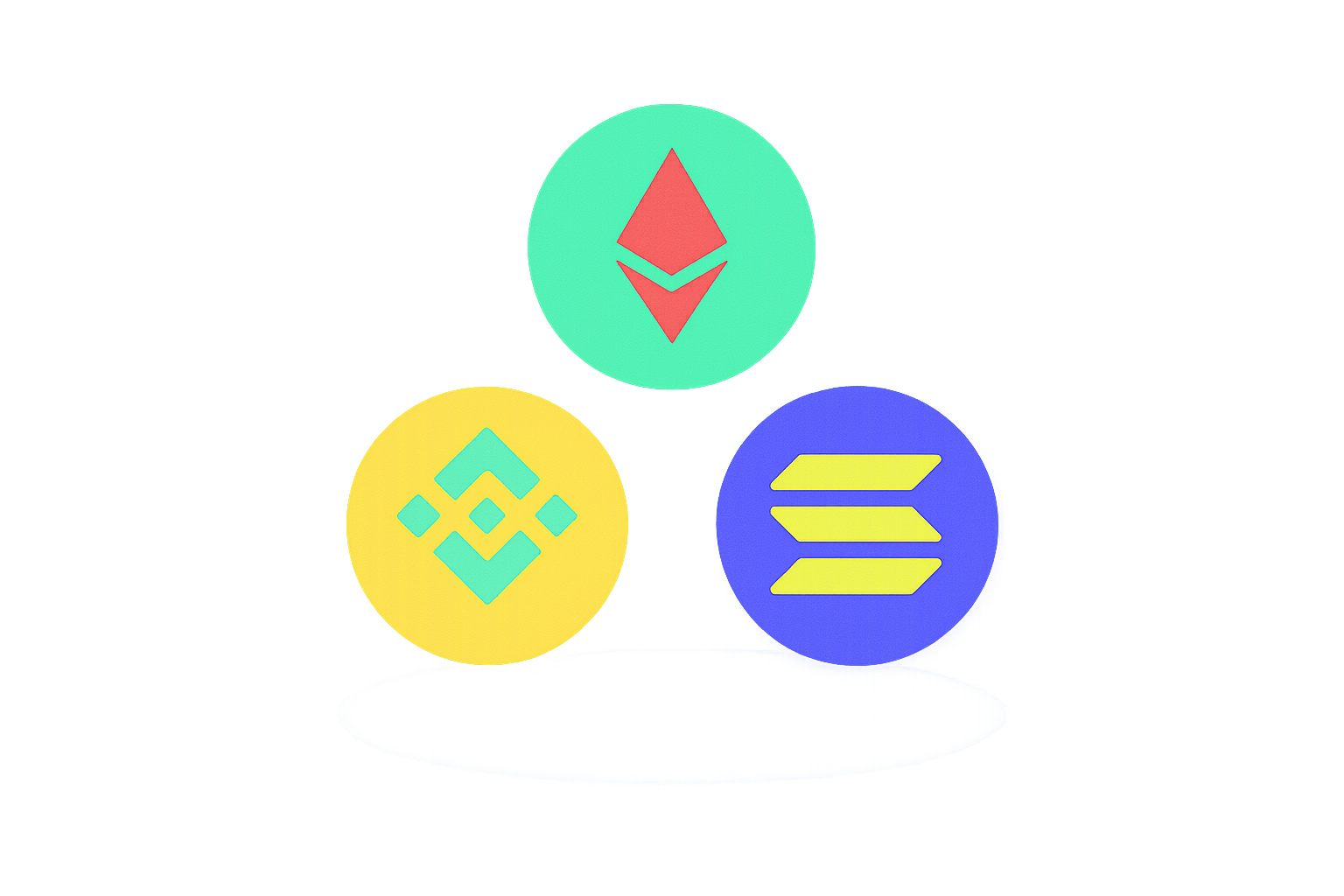
This comprehensive guide examines the most promising cryptocurrency contenders in 2024, analyzing their potential to rival Bitcoin's market dominance. Ethereum leads through its smart contract platform and Layer 2 scaling solutions, supporting thousands of DApps across DeFi and NFT sectors. BNB offers faster transactions and lower fees via its blockchain ecosystem, backed by institutional credibility. Solana delivers exceptional speed with 65,000+ transactions per second, enabling mass adoption at minimal costs. The article evaluates technological innovation, real-world adoption metrics, and ecosystem strength across these platforms. Through transaction data analysis and development updates, it demonstrates how diversified blockchain networks serve distinct use cases. Ideal for investors seeking informed decisions on emerging cryptocurrency opportunities beyond Bitcoin, the guide emphasizes thorough research and risk assessment before market participation.
Which Coin Will Be the Next Bitcoin?

Significance of Identifying the Next Bitcoin

Recognizing which coin could become the next Bitcoin is a complex and speculative endeavor, as no cryptocurrency has yet matched Bitcoin's revolutionary impact and widespread acceptance. However, several strong contenders, including Ethereum, BNB, and Solana, demonstrate significant potential due to their unique features and evolving ecosystems.

For investors, traders, and users, the search for the next Bitcoin is driven by the prospect of substantial returns and the opportunity to be at the forefront of technological innovations. The cryptocurrency market has evolved significantly since Bitcoin's inception, with new projects addressing various limitations of the original blockchain, such as scalability, transaction speed, and energy efficiency. Understanding these emerging technologies and their potential applications is crucial for making informed investment decisions and participating in the future of digital finance.

Real-World Examples and Recent Developments

Ethereum (ETH)

Ethereum is often considered the primary contender to Bitcoin, having established itself as the leading platform for decentralized applications (DApps) and smart contracts. Over recent years, Ethereum's transition to a proof-of-stake (PoS) system through the Ethereum 2.0 upgrade has significantly improved its scalability and reduced its environmental impact.

The platform's robust ecosystem supports thousands of DApps across various sectors, including decentralized finance (DeFi), non-fungible tokens (NFTs), and gaming. Ethereum's programming language, Solidity, has become the standard for smart contract development, attracting a vast community of developers and entrepreneurs. The network's ability to facilitate complex financial instruments and autonomous organizations demonstrates its potential to revolutionize traditional business models.

Furthermore, Ethereum's Layer 2 scaling solutions, such as Optimism and Arbitrum, have enhanced transaction throughput while maintaining the security of the main chain. These innovations address previous concerns about high gas fees and network congestion, making Ethereum more accessible for everyday users and enterprise applications.

BNB

Originally created to offer discounts on trading fees within a major cryptocurrency exchange, BNB has significantly expanded its utility beyond its initial purpose. The token now serves as the native currency of BSC, a blockchain network that operates parallel to another prominent chain, offering faster transaction times and lower fees compared to Ethereum.

BSC has attracted numerous projects and developers due to its EVM compatibility, allowing easy migration of Ethereum-based applications. The ecosystem has grown to include DeFi protocols, NFT marketplaces, and gaming platforms, creating a comprehensive blockchain infrastructure. The token's utility extends to transaction fees, staking rewards, and governance participation within the network.

The backing by one of the world's largest cryptocurrency trading platforms provides BNB with substantial liquidity and market credibility. Regular token burns, which reduce the total supply, create deflationary pressure that may support long-term value appreciation. Additionally, the integration with various payment systems and merchant services has expanded BNB's real-world applications beyond cryptocurrency trading.

Solana (SOL)

Solana has emerged as one of the fastest blockchains, thanks to its unique consensus mechanism that combines proof-of-history (PoH) with proof-of-stake (PoS). This innovative approach enables the network to process over 65,000 transactions per second (TPS), providing infrastructure capable of supporting high-demand applications without compromising decentralization or security.

The platform's exceptional performance has attracted developers building next-generation applications in DeFi, NFTs, Web3, and gaming. Solana's low transaction costs, typically fractions of a cent, make it economically viable for microtransactions and high-frequency trading applications. The network's architecture allows for parallel transaction processing, significantly improving efficiency compared to sequential processing models.

Solana's growing ecosystem includes prominent projects in various sectors, from decentralized exchanges to prediction markets and social media platforms. The Solana Foundation's commitment to developer support through grants and educational programs has fostered innovation and community growth. Despite experiencing occasional network outages in its earlier stages, ongoing improvements to network stability have strengthened confidence in the platform's long-term viability.

Data and Statistics

In recent years, Ethereum's network has been processing approximately 1.2 million transactions daily, demonstrating sustained user engagement and platform utility. This volume reflects the diverse range of activities occurring on the network, from simple token transfers to complex DeFi operations and NFT trading.

BSC reports similar activity levels, with approximately 1 million daily transactions, indicating strong adoption and practical use cases. The network's lower fees have made it particularly attractive for retail users and smaller transactions that might be cost-prohibitive on other platforms. This transaction volume supports a vibrant ecosystem of decentralized applications and services.

Solana, with its high throughput capacity, continues to attract new projects and users, hosting over 400 active DApps across various categories. The platform's ability to maintain low fees while processing high transaction volumes positions it as a scalable solution for mass adoption. The growing number of validators and increasing stake in the network demonstrate confidence in Solana's long-term prospects.

These statistics illustrate the practical utility and market acceptance of these platforms, providing concrete evidence of their potential to compete with or complement Bitcoin's position in the cryptocurrency ecosystem. The sustained transaction volumes and growing developer communities suggest these networks are building the foundation for long-term success.

Conclusion and Key Takeaways

While predicting with certainty which coin will be the next Bitcoin remains challenging, Ethereum, BNB, and Solana present compelling cases for their potential:

  • Ethereum: Its established network and recent upgrades position it as the leader in DApps and smart contracts. The platform's first-mover advantage in programmable blockchain technology, combined with continuous innovation, provides a strong foundation for future growth. Ethereum's transition to proof-of-stake has addressed environmental concerns while improving scalability, making it more sustainable and efficient for long-term adoption.

  • BNB: Supported by one of the world's largest cryptocurrency trading platforms, BNB benefits from high liquidity and extensive utility. The token's integration across multiple services and platforms creates diverse use cases beyond simple speculation. The deflationary tokenomics and strong institutional backing provide stability and potential for value appreciation.

  • Solana: Known for its exceptional speed and scalability, Solana is well-positioned to support future high-demand applications. The platform's technical architecture addresses key limitations of earlier blockchains, offering a solution for applications requiring high throughput and low latency. As Web3 and decentralized applications continue to evolve, Solana's performance advantages may prove crucial for mass adoption.

Investors and users should continue monitoring these platforms, considering their technological developments, community and developer ecosystem strength, regulatory landscape, and market adoption. Diversification across multiple promising projects may be prudent, as the cryptocurrency space continues to evolve rapidly. It's essential to conduct thorough research, understand the risks involved, and consider one's investment goals and risk tolerance before making any financial decisions in the cryptocurrency market.

The future of cryptocurrency extends beyond simply finding the "next Bitcoin." Instead, the market is likely to support multiple successful platforms, each serving different use cases and user needs. The coexistence of various blockchain networks, each with unique strengths, may ultimately prove more valuable than a single dominant cryptocurrency, creating a diverse and resilient digital economy.

FAQ

What is Bitcoin and why has it become the king of cryptocurrencies?

Bitcoin is a decentralized digital currency secured by blockchain technology. It became crypto's king through over 15 years of stable operations, global trust, superior security, and network effects. Its pioneering status and immutable ledger establish unmatched market leadership and adoption.

How to assess whether a cryptocurrency project has the potential to become the next Bitcoin?

Evaluate the project's technological innovation, team expertise, and real-world adoption. Compare its fundamentals with established cryptocurrencies in the top rankings. Monitor transaction volume, community growth, and market trends. Strong use cases and continuous development are key indicators of long-term potential.

Which cryptocurrencies are currently considered most likely to be the next Bitcoin?

Ethereum and Solana are viewed as strong contenders. Ethereum's technological advancement and market performance demonstrate significant potential, while Solana's high transaction efficiency attracts considerable attention in the crypto space.

What are the additional risks of investing in emerging cryptocurrencies compared to Bitcoin?

Emerging cryptocurrencies face higher volatility, unproven technology, lower market liquidity, regulatory uncertainty, and limited adoption compared to Bitcoin. These factors increase price fluctuation and project failure risks significantly.

What is the impact of blockchain technology innovation and application scenarios on the future value of cryptocurrencies?

Blockchain innovation drives cryptocurrency value through enhanced scalability, security, and decentralized applications. Future value depends on technological breakthroughs, real-world adoption, and regulatory clarity. Strong technical fundamentals and broad market applications will determine long-term cryptocurrency growth and market leadership.

What is the difference between Bitcoin and Ethereum, and why hasn't Ethereum surpassed Bitcoin?

Bitcoin serves as digital gold for value storage, while Ethereum is a versatile smart contract platform enabling DeFi and dApps. Ethereum hasn't surpassed Bitcoin due to Bitcoin's stronger institutional adoption, deeper liquidity, and established "digital gold" narrative, though Ethereum's utility and ecosystem growth continue to challenge Bitcoin's dominance.

How do market size, liquidity, and adoption rates of cryptocurrencies affect their long-term value?

Larger market size and higher liquidity enhance credibility and price stability, while broader adoption increases demand and utility. These three factors work together to drive sustainable long-term value growth.
* The information is not intended to be and does not constitute financial advice or any other recommendation of any sort offered or endorsed by Gate.

Share

Content

Significance of Identifying the Next Bitcoin

Real-World Examples and Recent Developments

Data and Statistics

Conclusion and Key Takeaways

FAQ

Related Articles
How Does Cryptocurrency Competitive Landscape Compare in 2025: Market Share, Performance, and Key Advantages
How Does Cryptocurrency Competitive Landscape Compare in 2025: Market Share, Performance, and Key Advantages

# How Does Cryptocurrency Competitive Landscape Compare in 2025: Market Share, Performance, and Key Advantages This comprehensive analysis examines the 2025 cryptocurrency competitive landscape, where Bitcoin, Ethereum, BNB, and Solana command over 70% market dominance through established infrastructure and network effects. The article evaluates key differentiators including transaction speed, network security, and developer adoption across leading Layer-1 platforms, while revealing how emerging challengers strategically capture niche segments in DeFi and Web3 infrastructure. Designed for investors and developers, this guide clarifies market concentration dynamics, performance metrics comparison, and valuation trends shaping cryptocurrency competition. Whether trading on Gate or analyzing blockchain ecosystems, readers gain actionable insights into market share distribution, competitive advantages, and emerging opportunities in today's mature crypto market.
2025-12-30 02:47:45
How Does Bitcoin Compare to Other Cryptocurrencies in Market Cap and Performance?

How Does Bitcoin Compare to Other Cryptocurrencies in Market Cap and Performance?

# Article Introduction **Bitcoin dominates the cryptocurrency market with over 40% market capitalization, maintaining its commanding position despite thousands of competing digital assets.** This comprehensive guide compares Bitcoin's performance against major altcoins including Ethereum, BNB, and Solana, analyzing their distinct market trajectories and competitive dynamics. Readers will discover how Bitcoin's market share has evolved from historical highs while retaining bellwether status for the entire crypto ecosystem. The article examines ranking differentials within the top 10 cryptocurrencies on Gate and other platforms, revealing performance gaps and investor allocation patterns. Perfect for cryptocurrency investors, traders, and market analysts seeking to understand Bitcoin's competitive advantages, network effects, and long-term value stability relative to emerging blockchain alternatives. Essential insights into market cap trends, price correlations, and strategic positioning empower informed inves
2025-12-28 04:52:15
What Is the Current Crypto Market Overview: Top Coins, Volume, and Liquidity?

What Is the Current Crypto Market Overview: Top Coins, Volume, and Liquidity?

This article offers a comprehensive analysis of the current cryptocurrency market by focusing on top coins, trading volume, and liquidity. It highlights the dominance of the leading cryptocurrencies, Bitcoin and Ethereum, in terms of market capitalization and influence. The piece further examines the emerging token LONG, detailing its volatility and liquidity patterns across Gate and other exchanges. It also explores the strategic token supply model, providing insights into market presence and developmental strategy. This is essential reading for investors and traders seeking informed insights into market trends and trading opportunities.
2025-11-16 03:34:16
Maximize Blockchain Performance: Exploring High TPS Capabilities
Maximize Blockchain Performance: Exploring High TPS Capabilities

This article explores the critical metric of Transactions Per Second (TPS) in blockchain technology, emphasizing its impact on network performance and user experience. It addresses the challenges of scalability and transaction speed, comparing top-performing networks like Solana and Ethereum, and highlights the importance of efficient transaction handling as cryptocurrency adoption grows. By examining TPS capabilities, the article serves as a guide for developers and financial experts seeking high-speed, scalable blockchain solutions. Enhanced readability and keyword density make it suitable for quick scanning, ensuring readers quickly grasp the key insights into TPS dynamics.
2025-12-04 05:12:24
What is HACHI Price Volatility and How Does It Compare to BTC and ETH in 2025?

What is HACHI Price Volatility and How Does It Compare to BTC and ETH in 2025?

The article explores the volatility dynamics of Hachiko ($HACHI) compared to Bitcoin (BTC) and Ethereum (ETH) in 2025, highlighting its unique challenges as a low-cap token. It examines HACHI's extreme price fluctuations driven by liquidity concentration and market participant sentiment rather than fundamental metrics. The piece also provides an analysis of how ultra-micro cap markets struggle with reliable predictions due to minimal liquidity and pronounced slippage. Furthermore, the article discusses the decoupling of $HACHI from BTC and ETH, establishing its independent volatility regime on the Solana platform. Finally, the article offers a long-term price outlook for $HACHI in 2025, suggesting potential consolidation influenced by broader market trends and community sentiment.
2025-12-21 03:29:52
What are the Key Differences Between Competing Cryptocurrencies in 2025?

What are the Key Differences Between Competing Cryptocurrencies in 2025?

This article delves into the key differences among leading cryptocurrencies in 2025, focusing on their performance metrics, unique value propositions, and market adoption trends. It examines Bitcoin, Ethereum, Solana, and Decred, highlighting Ethereum's developer activity and Solana's impressive YTD performance. The piece further explores Decred's hybrid PoW/PoS consensus mechanism and governance model, emphasizing financial independence and security features. Readers seeking insights into cryptocurrency market dynamics will find analyses on market cap variations, staking yields, and shifts in transaction volume in the context of decentralized finance.
2025-11-04 02:38:00
Recommended for You
What Year Did FTV Open Their IPO? Understanding the Impact on Crypto

What Year Did FTV Open Their IPO? Understanding the Impact on Crypto

FTV Capital, founded in 1998, remains a distinguished private equity firm that has strategically avoided pursuing an Initial Public Offering, contrary to common industry practices. This article examines FTV Capital's deliberate decision to maintain private status while establishing significant influence in fintech, blockchain, and enterprise technology sectors. The comprehensive analysis explores how remaining private enables FTV to operate with greater agility, maintain confidentiality in competitive negotiations, and take longer-term views on investments without public market pressures. The article details FTV's focused growth strategy, investment philosophy in emerging technologies, and its substantial impact on the blockchain ecosystem through patient capital deployment. Additionally, it clarifies misconceptions about FTV's IPO timeline and demonstrates how strategic independence has positioned the firm as a transformational force in financial technology innovation, ultimately illustrating that sustainabl
2026-01-15 09:31:47
Will Luna Classic Reach 50 Cents?

Will Luna Classic Reach 50 Cents?

This comprehensive analysis examines Luna Classic's potential to reach the 50-cent milestone by evaluating multiple critical factors shaping its price trajectory. The article explores Luna Classic's core utility within the Terra ecosystem, including staking mechanisms, governance participation, and stablecoin collateralization, which drive sustained demand beyond mere speculation. Market dynamics, technological innovations, expert perspectives, and community engagement emerge as decisive elements influencing price movements. The analysis also addresses inherent cryptocurrency risks including extreme volatility, regulatory uncertainty, and market manipulation possibilities. Investors considering Luna Classic should recognize both significant growth opportunities and substantial challenges, practicing sound investment principles with diversified portfolios and realistic expectations. Success on Gate and other platforms depends on ecosystem adoption, continuous technological development, and strengthened communi
2026-01-15 09:29:43
How to Get Credits in NFL Rivals: A Comprehensive Guide
How to Get Credits in NFL Rivals: A Comprehensive Guide

NFL Rivals is a blockchain-based gaming platform combining fantasy sports with digital assets, where credits serve as the essential in-game currency driving progression and strategic success. This guide explores proven strategies for earning and maximizing credits to build a competitive team. Learn how daily logins and challenges provide consistent income, while competitive tournaments and limited-time events offer substantial rewards. Discover how strategic trading in the secondary market can significantly boost your credit balance by identifying undervalued player cards and capitalizing on market trends. The guide also covers premium package investments, in-game achievement systems, and common pitfalls to avoid such as over-spending and ignoring market dynamics. Success requires patience, research, and community engagement rather than rapid spending. By combining consistent effort with smart decision-making across daily activities, trading opportunities, and event participation, players can build sustainabl
2026-01-15 09:26:52
AWS Lists Ripple as Verified Partner, Boosts Cross-Border Payments Integration

AWS Lists Ripple as Verified Partner, Boosts Cross-Border Payments Integration

This article explores the strategic collaboration between AWS and Ripple Labs, a significant development reshaping cross-border payment infrastructure. AWS's verification of Ripple as a partner integrates RippleNet's payment solutions—xCurrent, xRapid, and xVia—directly into AWS cloud infrastructure, enabling financial institutions to access blockchain-based payment technology without substantial hardware investment. The partnership delivers substantial benefits including faster transaction settlement in seconds rather than days, dramatically reduced intermediary fees, and enterprise-grade security across jurisdictions. By combining Ripple's distributed ledger technology with AWS's scalable cloud infrastructure, financial institutions can optimize international payments through real-time gross settlement and on-demand liquidity via XRP bridge currency. This collaboration accelerates blockchain adoption among traditional financial services, validates innovative fintech solutions, and demonstrates how technolog
2026-01-15 09:06:43
What is a cryptocurrency wallet?

What is a cryptocurrency wallet?

The complete beginner’s guide to cryptocurrency wallets. Discover the differences between hot and cold wallets, how to safeguard your assets, select a trusted wallet on Gate, and secure your private keys. Includes essential tips for storing your cryptocurrencies.
2026-01-15 09:05:14
Blume 2000 Rabattcode Influencer: Fintech Impacts Explored

Blume 2000 Rabattcode Influencer: Fintech Impacts Explored

This comprehensive guide explores how cryptocurrency content creators and blockchain projects leverage influencer discount codes to drive user acquisition and engagement. The article explains how traditional e-commerce referral strategies have evolved into sophisticated blockchain-based incentive systems powered by smart contracts and Web3 wallets. Discover the working mechanisms behind discount code distribution, automated reward tracking via Gate and other platforms, and transparent revenue sharing that benefits influencers, users, and projects alike. Learn the key advantages including accelerated adoption, enhanced transparency, reduced entry barriers, and scalable community building. The guide positions influencer-driven discount codes as a transformative marketing tool that combines trust-based influencer reach with blockchain's trustless verification, fundamentally reshaping how fintech companies acquire and retain users in decentralized ecosystems.
2026-01-15 09:03:13