A Complete Guide to Managing Cryptocurrency Price Fluctuations

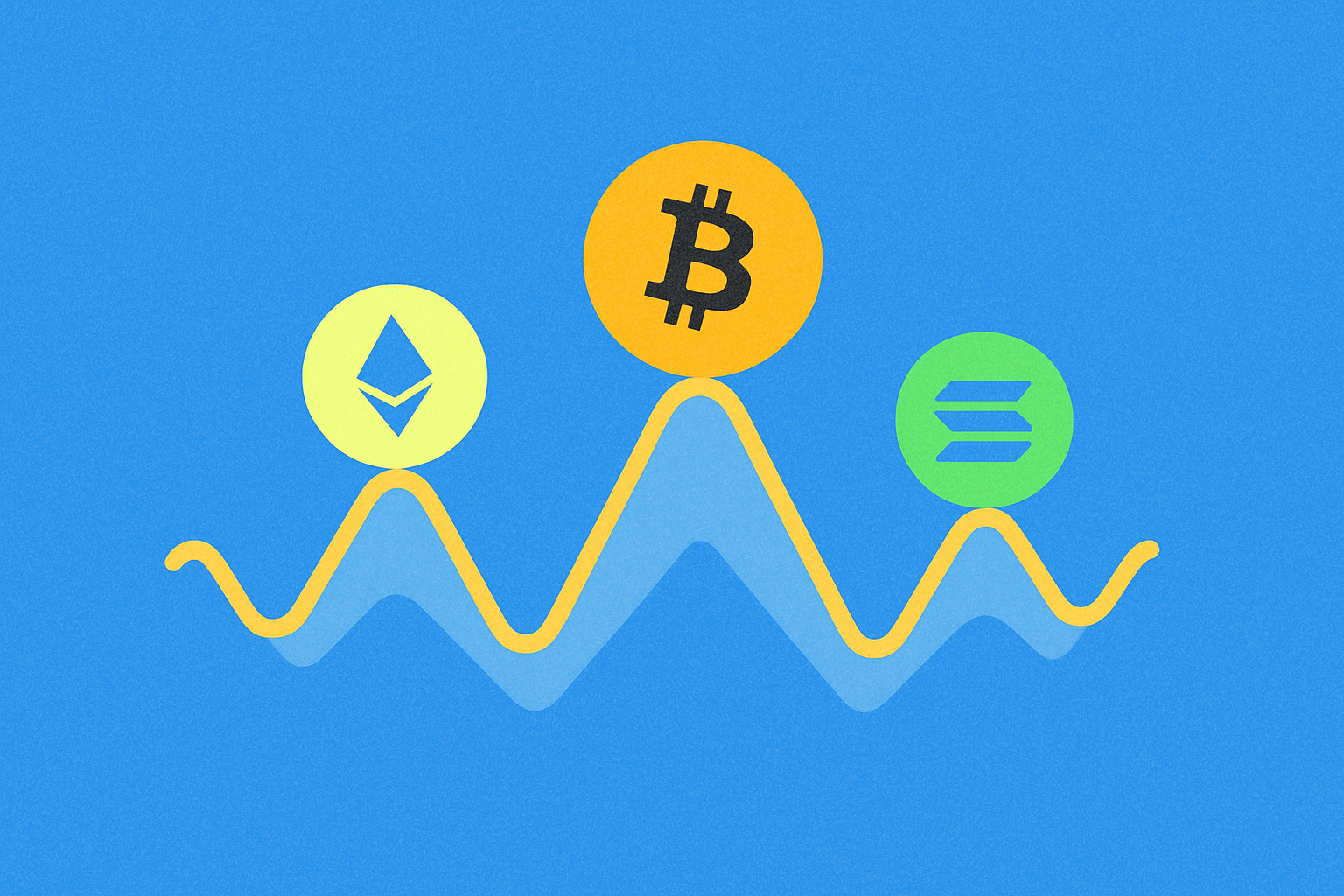
Crypto Volatility: Understanding the Crypto Market's Price Dynamics
Cryptocurrency markets are characterized by dramatic price movements that can challenge even experienced traders. Understanding cryptocurrencies volatility is essential for anyone participating in the digital asset ecosystem, as it directly impacts trading strategies, risk management, and investment outcomes.
What Does Volatility Mean in Crypto?
Volatility in the cryptocurrency market refers to the measurement of average price changes in digital assets such as Bitcoin and Ethereum. When analysts describe a cryptocurrency as "more volatile," they indicate that the asset experiences wider and more frequent price fluctuations compared to "less volatile" alternatives.
Higher cryptocurrencies volatility increases the probability of unexpected and substantial price movements, creating both opportunities and risks. While volatile cryptocurrencies carry greater risk of underperformance or failure, they also possess the potential for significant gains during favorable market conditions, commonly referred to as bull runs.
Traders employ several methods to assess volatility. The primary approach involves analyzing historical price trends and calculating average percentage fluctuations to understand an asset's risk profile. By examining standard price deviations, traders can compare different cryptocurrencies and identify those with the highest volatility levels.
Volume bar charts provide another valuable tool for assessing cryptocurrencies volatility. These charts display the number of participants trading a crypto asset during specific sessions. Unusual spikes in trading volume frequently correlate with increased price volatility, as more market participants rush to buy or sell the cryptocurrency.
Additionally, specialized instruments like the Crypto Volatility Index (CVI) monitor average price changes across the crypto market and present these fluctuations in accessible graphical formats, making it easier for traders to track market conditions.
Why is Crypto so Volatile?
Although Bitcoin's average volatility has moderated over the years, sharp and sudden price changes remain a defining characteristic of all cryptocurrencies. Several factors contribute to this inherent cryptocurrencies volatility.
First, cryptocurrencies represent a relatively young asset category. Bitcoin launched in 2009, and alternative coins (altcoins) have even shorter market histories. This limited historical data makes it challenging for traders to determine the "fair" value of virtual assets, potentially increasing emotion-driven price speculation.
Second, the overall cryptocurrency market capitalization, while growing substantially, remains comparatively modest within the global financial sector. This market size means that capital flows can significantly influence digital currency prices, contributing to cryptocurrencies volatility.
Third, most cryptocurrencies lack tangible backing such as precious metals or government bonds. Digital assets like Bitcoin derive their value solely from market participants' willingness to pay for network access, making it more difficult to assess the intrinsic value of different crypto projects.
Fourth, the absence of centralized authority distinguishes crypto from traditional assets. While governments, banks, and corporations may influence cryptocurrency prices, they cannot directly control these assets. The evolving regulatory landscape in the crypto market allows for dynamic trading activity, potentially contributing to price instability.
Finally, social media exerts substantial influence on cryptocurrency prices. Platforms like X (formerly Twitter) and Discord shape crypto culture and can trigger irrational trading behavior. Online crypto influencers occasionally amplify fear or greed through news and rumors, prompting emotion-driven traders to panic buy or sell their digital assets.
How do Traders Handle Volatility in Cryptocurrency?
The most straightforward strategy for managing cryptocurrencies volatility involves holding favorite cryptocurrencies in a private wallet and waiting for long-term appreciation. Known as the HODL (Hold On for Dear Life) method, this popular approach assumes that digital asset prices will continue rising over a multi-year period.
While HODL appeals to passive investors with extended time horizons, active traders employ several alternative strategies to reduce portfolio volatility.
Diversification involves purchasing multiple digital assets with varying risk profiles rather than concentrating funds in a single cryptocurrency. For example, traders might combine Bitcoin's relative stability with more speculative altcoins. By mixing established cryptocurrencies with higher-risk projects across different segments of the crypto industry, traders can mitigate overall portfolio cryptocurrencies volatility.
Dollar-cost averaging (DCA) entails purchasing small amounts of cryptocurrencies over an extended period rather than investing a lump sum initially. Some DCA practitioners buy crypto at predetermined intervals (such as weekly), while others purchase only when their preferred coin or token declines by a specific percentage to capitalize on discounts. This strategy aims to lower the average purchase price per cryptocurrency over time, reducing exposure to cryptocurrencies volatility.
Hedging involves opening positions contrary to a trader's current holdings. For instance, if you hold substantial Cardano (ADA) but anticipate a near-term price decline, you can bet against ADA using trading instruments such as put options, futures, or crypto perpetual contracts available on major trading platforms. Even if ADA's value drops, profits from the negative position offset losses, reducing total portfolio impact from cryptocurrencies volatility.
How Does Leverage in Crypto Impact Volatility?
Leverage fundamentally increases a trader's risk profile and amplifies cryptocurrencies volatility exposure. When crypto trading platforms offer leverage, they enable traders to expand position sizes, often using borrowed funds. For example, with $2,000 in capital and 2x leverage, a trader controls $4,000 worth of buying power. This provides rapid access to additional capital and doubles potential gains when trades move favorably.
However, leverage carries significant downside risks. Traders using leverage risk losing their entire investment (liquidation) if cryptocurrency prices move contrary to their predictions. While 2x leverage magnifies gains, it equally amplifies losses by a factor of two, meaning a cryptocurrency doesn't need to reach zero for a trader to lose all their capital.
Given that leverage increases cryptocurrencies volatility exposure, traders should carefully evaluate the risks associated with this method and implement protective strategies such as stop-loss orders to prevent liquidation.
Conclusion
Cryptocurrencies volatility represents both opportunity and risk in the digital asset ecosystem. Understanding volatility measurement methods, underlying causes, and management strategies is crucial for successful crypto trading. Whether adopting passive HODL strategies or active approaches involving diversification, dollar-cost averaging, and hedging, traders must develop robust risk management practices suited to their investment goals and time horizons. The dramatic price swings that Bitcoin and other cryptocurrencies have experienced historically underscore the importance of preparation, discipline, and strategic planning. By mastering cryptocurrencies volatility management techniques and carefully considering leverage risks, traders can better navigate the crypto market's inherent price dynamics and position themselves for long-term success in this evolving financial landscape.
FAQ
What is the volatility of cryptocurrency?
Cryptocurrency volatility refers to rapid and dramatic price fluctuations driven by market sentiment, regulatory news, and adoption trends. Bitcoin and altcoins experience significant swings within hours or days, reflecting the market's speculative nature and relatively smaller trading volume compared to traditional assets.
Which cryptocurrencies have the highest volatility?
Monero, Bitcoin, and Ripple typically exhibit the highest volatility among major cryptocurrencies. Monero led with exceptional volatility in early 2025, followed by Bitcoin and Ripple, making them preferred choices for volatility traders.
Why is crypto so volatile now?
Crypto volatility stems from its smaller market cap compared to traditional assets, high speculation from investors, and limited liquidity. Regulatory uncertainty and rapid sentiment shifts in the market further amplify price swings.
What is the 1% rule in crypto?
The 1% rule means risking no more than 1% of your total portfolio on a single trade. This risk management strategy limits potential losses and protects your capital. For example, on a $10,000 portfolio, risk only $100 per trade. Use stop-loss orders to enforce this discipline automatically.

How Do Derivatives Market Signals Indicate ZEC's Recent Price Surge?

How Do Derivative Market Signals Impact Crypto Trading Decisions in 2025?

How Will Derivative Market Signals Impact LUNC's Price in 2030?

How Do Crypto Derivatives Market Signals Predict Price Movements?

How Do Derivatives Market Signals Impact Crypto Price Movements?
How Do Dash Derivatives Market Signals Indicate Future Price Trends?

Understanding Advanced Crypto Wallet Solutions
Arbitrum Airdrop Guide – Cross-Chain Bridges

Hold NFT Airdrop Alert: Check Your Wallet Immediately | Power of B

How to Easily Obtain TON Tokens?

Mainstream NFT Market Now Supports Theirsverse Official