Cutting-Edge Blockchain Scalability Solution with Caldera

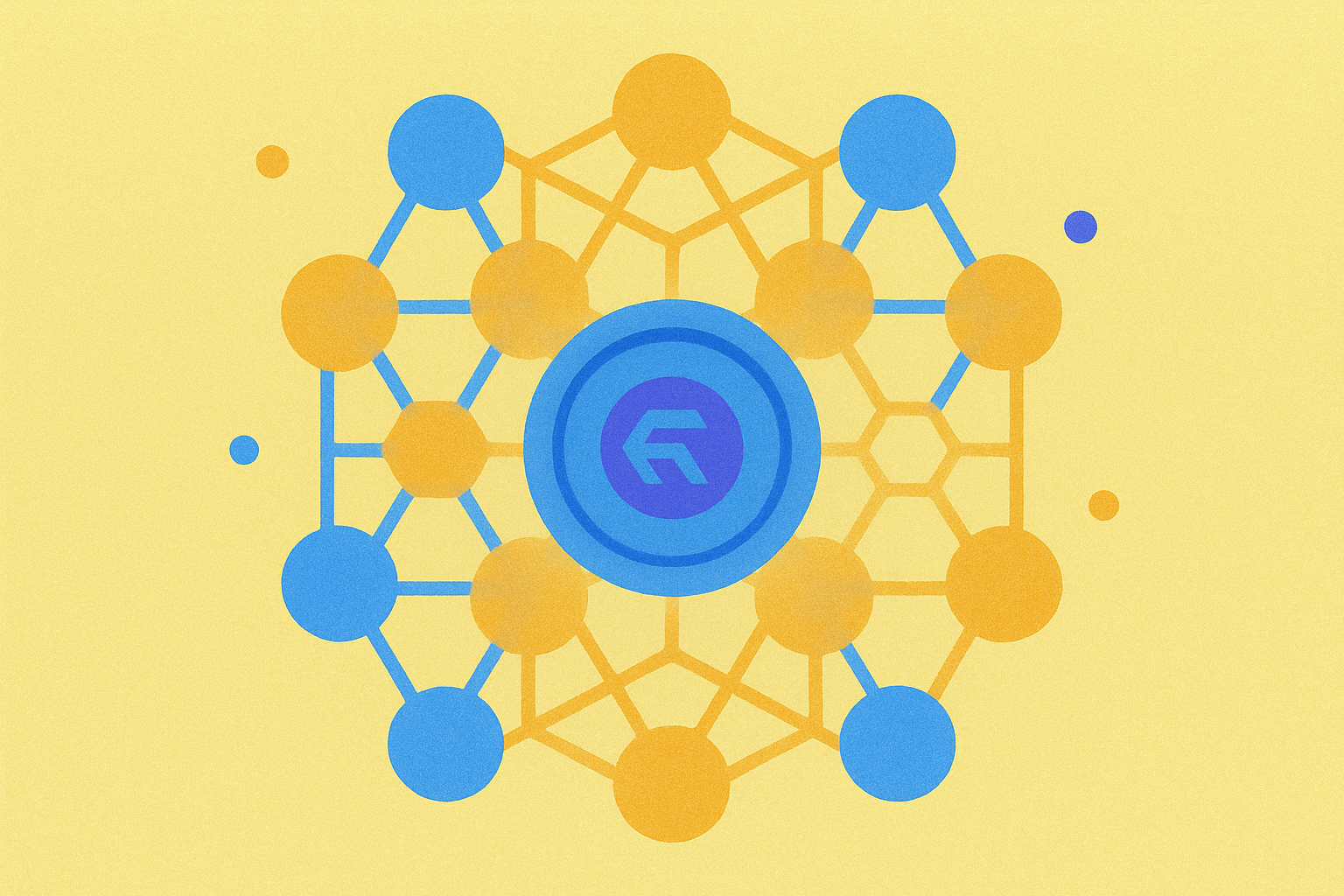
What Is Caldera Crypto (Token ERA)? Complete Guide to Ethereum's Metalayer
Caldera
As Ethereum scalability solutions advance, fragmentation threatens the ecosystem’s potential for widespread adoption. Caldera delivers a groundbreaking infrastructure platform featuring Metalayer—a unified solution for Ethereum rollups. This guide explores how Caldera’s native ERA token powers this innovative system, with an overview of its tokenomics, practical use cases, and the technology’s potential to reshape blockchain interoperability and scalability.
What Is Caldera Crypto (Token ERA)?
Caldera started as a leading rollup platform and has grown into the creator of Ethereum’s first Metalayer. Launched in 2023 as a Rollup-as-a-Service (RaaS) solution, Caldera enables projects to deploy customizable rollups with one click across platforms such as Optimism, Arbitrum, ZKsync, and Polygon.
The platform rapidly evolved into one of the fastest-growing rollup ecosystems, empowering web3 teams to build and operate over 60 high-performance rollups. The Caldera ecosystem now boasts millions of unique wallets holding billions in total value locked (TVL) and millions of completed transactions. Key chains include Manta Pacific, Injective’s inEVM, ApeChain, Treasure, Plume Network, Towns, Kinto, RARI Chain, and Zerion’s Zero Network.
ERA is Caldera’s native token, forming the foundation for the Metalayer protocol by providing functionality and governance. The ecosystem is shifting from a simple RaaS platform to a comprehensive abstraction layer for rollups. ERA holders gain rights including governance participation, network security staking, and facilitating cross-chain operations.
Caldera vs. Token ERA: Key Differences
Caldera is the full platform and ecosystem, serving as infrastructure for 60+ rollups on various platforms, enabling creation, customization, and unification for developers building atop Caldera.
Token ERA is a utility and governance asset, used to participate in the network, facilitate cross-chain operations, and protocol governance for users who hold and stake ERA. This mirrors the relationship between Ethereum (platform) and ETH (native token).
What Problems Does Caldera Crypto Solve?
Fragmentation Crisis in Ethereum Scalability
Ethereum’s rollup-centric roadmap has driven explosive growth in layer 2 and 3 adoption. Yet, this progress introduced a new challenge: rollup fragmentation, which threatens the ecosystem’s longevity.
Isolated Rollup Ecosystems
Rollups today operate as isolated “city-states,” facing three major limitations:
First, rollups are isolated from each other. Native interoperability only happens through Ethereum’s expensive, slow layer 1. Cross-rollup interactions demand costly, slow processes, hampering user experience and developer capabilities.
Second, rollups are isolated from infrastructure. Building bridges or oracles means separate deployments for each rollup, treating each chain as an independent island instead of a cohesive ecosystem.
Third, rollups are isolated from users. Traditional architectures restrict meaningful user involvement in network operations or validation, limiting community engagement and decentralization.
Historical Parallel
Caldera takes inspiration from the early Internet, where disconnected networks faced connectivity challenges. Just as protocols like TCP/IP fueled Internet growth by providing a common language, Caldera’s Metalayer seeks to establish unified network protocols for Ethereum rollups.
Caldera Crypto Project History
Caldera was founded on the belief that simply building a faster blockchain isn’t enough to scale Ethereum. Instead, its founders envisioned enabling true web-scale scalability through horizontal scaling with rollups.
The platform debuted in 2023 with a revolutionary approach—allowing projects to launch customizable rollups with one click, no engineering team required. Caldera manages deployment, configuration, ongoing maintenance, and security, freeing projects to focus on their ideas instead of infrastructure complexity.
This vision was quickly validated as Caldera became one of the fastest-growing rollup ecosystems. Its flexibility to support frameworks like Optimism, Arbitrum, ZKsync, and Polygon attracted projects seeking custom scalability solutions.
As fragmentation grew more evident, Caldera evolved beyond its original RaaS model. The team recognized that scaling Ethereum with rollups required a unifying layer to avoid splitting the ecosystem into isolated protocols. This led to the Metalayer concept and the launch of ERA as the native utility token supporting unified infrastructure.
Key Features and Benefits of Caldera Crypto (Token ERA)
Metalayer: Unified Infrastructure
Caldera’s Metalayer marks a paradigm shift in rollup architecture. It unifies all Ethereum rollups, supporting seamless coordination, communication, and resource sharing, while preserving each rollup’s unique features.
Core Technical Capabilities
Message relaying works through a decentralized validator network that transmits messages between chains using M-of-N threshold signatures—where no single party can censor or relay messages alone.
Fast finality and pre-confirmations accelerate transaction speed and security, delivering a web2-like experience with advanced finality mechanisms that reduce settlement times between rollups.
Guardian nodes add extra security and community participation in rollup operations, enabling web3 teams to uphold Ethereum’s decentralization across the network.
Advanced State Management
Metalayer validators publish aggregated state root hashes from all participating chains, enabling users to submit Merkle proofs of state across chains—unlocking unprecedented cross-chain state access with strong security guarantees.
Native Revenue Distribution Mechanism
Metalayer provides building blocks for native ecosystem economies, distributing accumulated value to the most committed participants and fostering long-term economic incentives.
Developer-Friendly Platform
Metalayer enhances Ethereum’s developer experience by offering tools for high-performance, user-friendly applications, leveraging the strengths of different rollups and minimizing their individual limitations.
Caldera Crypto Real-World Use Cases
Multi-Rollup Application Development
Developers can build complex apps that run on multiple rollups simultaneously, leveraging unique system advantages for seamless user experiences. This enables previously impossible use cases, such as apps using optimistic rollups for speed and ZK rollups for privacy-sensitive operations.
Cross-Chain DeFi Protocols
Financial apps can access liquidity and operate across all Ethereum rollups, not just individual chains. This boosts capital efficiency and enables sophisticated products tailored to rollup features.
Infrastructure Provisioning Solutions
Web3 infrastructure providers can deploy once and serve the whole rollup ecosystem via Metalayer, rather than maintaining separate deployments for each rollup—reducing complexity and enabling more integrated services.
Enterprise Integration Solutions
Enterprises can deploy rollups that instantly benefit from the connectivity and shared security of the broader ecosystem, making adoption more attractive by eliminating the isolation typical of private blockchains.
Gaming and Metaverse Applications
Gaming protocols can use Metalayer to create cross-rollup experiences, where complex mechanics leverage different chains for different purposes—such as one rollup for high-frequency actions and another for secure asset storage.
ERA Tokenomics and Distribution
ERA token distribution supports long-term ecosystem growth and balanced stakeholder participation:
Airdrops target key Caldera community members, chain users, and layer 2 mainnet participants to reward early adoption and engagement.
The Community and Treasury Fund is a major allocation, managed by the Caldera Fund for protocol and ecosystem development. Much of it will transition to community governance via DAO mechanisms.
Research and development receives dedicated allocation for core developers to support future research, ecosystem growth, protocol maintenance, team expansion, and developer support programs for rollup builders, infrastructure providers, and node operators.
The core team receives an allocation, distributed among Constellation Labs contributors—Caldera’s primary core team—aligning long-term interests with project success.
Investors are allocated tokens across funding rounds for Constellation Labs, providing capital for platform growth.
The unlock schedule is structured to prevent market disruptions and ensure sustainable distribution, with vesting and cliff periods for different allocations, while airdrop tokens are available immediately to drive engagement and adoption.
ERA Crypto Functions and Utility
Omnichain Gas Token
ERA is the standard gas token for Metalayer operations, fueling cross-chain transactions. Fees for initiating cross-chain interactions and data propagation are denominated in ERA, creating unified economic incentives for all rollups.
Network Staking and Security
Nodes must stake ERA to join Metalayer, with consensus participation proportional to the tokens staked or delegated. This mechanism secures the network and enables robust participation.
Subnetwork Participation
Specialized subnets can be launched alongside Metalayer to serve unique rollup needs, such as generating on-chain zero-knowledge proofs. These subnets also use ERA for consensus.
Governance and Protocol Evolution
ERA holders participate in on-chain governance for the Caldera protocol and ecosystem solutions. All Metalayer protocol changes require DAO voting, ensuring community-led evolution. Token holders can propose and vote on treasury usage, grants, branding, intellectual property, and strategic initiatives. They also influence Caldera Fund director selection, appoint special council members, and select technical experts for protocol upgrades and rollup security.
The Future of Caldera
Caldera’s roadmap aims to establish Metalayer as the backbone for Ethereum rollups, evolving from a connector of existing rollups to the foundation for next-generation blockchain applications.
Key development priorities include expanding subnet functionality for specialized use cases, advancing cross-rollup communication, and deploying sophisticated governance to decentralize community control. As rollup ecosystems expand, Metalayer will scale to support hundreds of chains with seamless interoperability.
Caldera’s vision is a self-sustaining ecosystem where rollups innovate independently while benefiting from shared security, liquidity, and infrastructure—positioning Caldera as the core of Ethereum scalability, much like TCP/IP underpins Internet communication.
Caldera’s ultimate measure of success is its ability to eliminate rollup fragmentation while preserving the innovation and customization that make rollups attractive for developers and custom blockchain projects.
Caldera Crypto Competitors: Token ERA vs. Other Projects
Caldera’s Competitive Landscape
Caldera operates in the fast-moving layer 2 infrastructure space, competing with projects tackling Ethereum scalability from different angles.
Leading competitors include Polygon (MATIC), with its multifaceted ecosystem; Arbitrum (ARB), focused on optimistic rollups; and Optimism (OP), a pioneer in optimistic rollup deployment. These typically offer standalone scalability solutions rather than unified infrastructure.
Other infrastructure competitors include Cosmos, with Inter-Blockchain Communication (IBC), and Polkadot’s parachain architecture—both tackling blockchain interoperability via distinct technical approaches.
Caldera’s Unique Advantages
Unlike competitors focused on single rollup solutions, Caldera unifies all Ethereum rollup types, regardless of tech stack.
While others force users into specific rollup implementations, Caldera supports Optimism, Arbitrum, ZKsync, and Polygon stacks for unmatched flexibility.
Caldera’s RaaS platform lowers technical barriers, allowing more projects to launch custom rollups and democratizing access to blockchain infrastructure.
Metalayer was purpose-built for multi-rollup environments, not retrofitted onto single-chain architectures.
With over 60 active rollups and millions of transactions processed, Caldera shows real traction lacking in many theoretical competitors.
Caldera’s vision is to unify, not compete with, existing rollups—creating a stronger collective ecosystem where each rollup retains its strengths and gains unmatched interoperability.
Conclusion
Caldera offers a transformative answer to Ethereum rollup fragmentation through its Metalayer protocol. By unifying diverse rollup frameworks while preserving their unique benefits, Caldera addresses one of the greatest hurdles to mainstream blockchain adoption.
The ERA token is more than a utility asset—it anchors a new economic model aligning incentives across Ethereum rollups. With robust tokenomics, governance, and a proven track record supporting 60+ rollups, Caldera is positioned as a foundational infrastructure for decentralized applications.
As blockchain evolves toward a multi-network future, Caldera’s unified rollup infrastructure provides a compelling solution—maintaining Ethereum’s security while enabling scalability and unprecedented interoperability. This innovation promises to reshape how developers and users engage with blockchain, equipping them for the next era of decentralized application development.
FAQ
What is a caldera in simple terms?
A caldera is a modular blockchain platform that lets developers create custom chains quickly and efficiently. It provides scalable infrastructure for decentralized applications, combining robust security with operational flexibility.

Understanding the Blockchain Trilemma: Solutions and Insights

Understanding the Blockchain Scalability Challenge
Vitalik Buterin: Inside the Mind of a Cryptocurrency Genius
Personal Life and Hobbies: Behind the Scenes with Vitalik Buterin—Founder of Ethereum
Who is Vitalik Buterin? The Complete Guide to Ethereum's Co-Founder
Who is Vitalik Buterin? The Complete Guide to Ethereum's Founder
When is Elon Musk's Birthday

What Are Frontrunners and MEV When It Comes to Crypto Trading?

Dropee Question of the Day and Daily Combo Code: Your Complete Guide

Bearish Market Signal: Key Indicators You Need to Watch Now
Is Cryptocurrency Legal in Fiji?